
Lawyers, academics and activists have turned on the Good Law Project, accusing it of “selling hope” through fundraising to fight for transgender rights, despite being repeatedly defeated in court.
In a letter to Bridget Phillipson, the equalities minister, more than 30 barristers and legal academics accused the project, a non-profit campaign organisation, of publishing “egregiously false” claims about a High Court ruling on single-sex spaces last week.
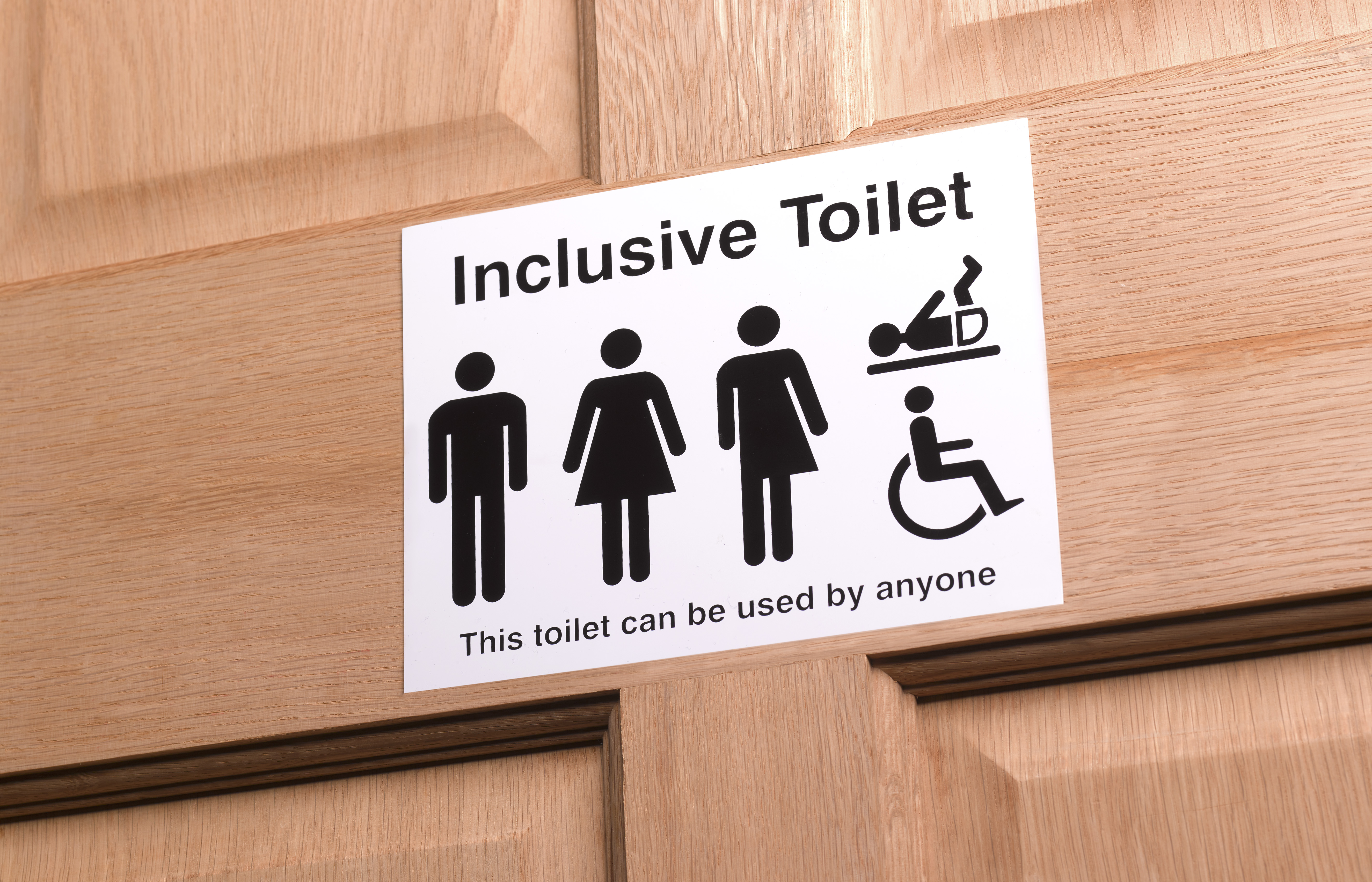
Mr Justice Swift on Friday dismissed a legal challenge brought by the project against Britain’s rights watchdog over a now-removed update on its website, which said that trans women “should not be permitted to use the women’s facilities” in workplaces or public-facing services such as shops and hospitals. The same applied for trans men using men’s lavatories.
PETER DAZELEY/GETTY IMAGES
The Equality and Human Rights Commission (EHRC) published the update in April last year, just over a week after the UK’s highest court ruled in April that the words “woman” and “sex” in the Equality Act 2010 referred to a biological woman and biological sex.
The judge said the decision to publish the update “promptly” contained “no error of law”.
Jolyon Maugham, the founder and executive director of the Good Law Project, said after the judgment that “the judiciary can’t be trusted always” in a reaction that critics have dubbed “Trumpian”.
The project claimed the ruling meant that Phillipson must reject guidance submitted by the EHRC on single-sex spaces, and started a fundraiser that has brought in tens of thousands of pounds to appeal.
Separately, it has crowdfunded more than £150,000 for its “fighting fund for trans rights”.
In their letter to Phillipson, the lawyers and academics said GLP had made inaccurate conclusions about the ruling, specifically in claiming “the High Court makes clear that service providers are not obliged to exclude trans people from gendered spaces and services”.

Bridget Phillipson, the equalities minister
LUCY NORTH/PA
The lawyers said: “Nowhere in his judgment did Swift J conclude that ‘service providers are not obliged to exclude trans people from gendered spaces and services’. The phrase ‘gendered spaces’ is absent from the judgment and has no legal meaning.”
The project also claimed the court had said it was “not true” that allowing a woman-only space to be accessed by biological women and transgender women was “very likely to amount to unlawful sex discrimination”. The lawyers’ letter said: “The Good Law Project’s assertion to the contrary is straightforwardly false.”
The letter said any “uncertainty or complexity” around the Supreme Court judgment last year was “compounded (if not directly caused) by the dissemination of false information, such as that now promulgated by the Good Law Project”.
It added: “We are aware of no other organisation that has ever published such egregiously false material about the judgment in a case that it has lost.”
Some of those supportive of the project’s aims have also started to question it.
Posting on a popular pro-transgender forum, one user said: “Maugham always pretends he’s had some sort of win even when he has unambiguously and comprehensively lost. He did the same with his Brexit cases. I’m fed up of this turd polisher claiming he does so much for us.”
In response to a comment saying “GLP seem to be lording this as a win”, another poster said: “They do that a lot, normally for incredibly minor things that don’t actually affect much.” Other comments included accusing the organisation of being “manipulative”. Another said: “Their fundraising makes me really uneasy.”
Another added: “They take an awful lot of money from our community and allies by selling hope, and then make things worse by poking in the wrong places with weak legal arguments.”
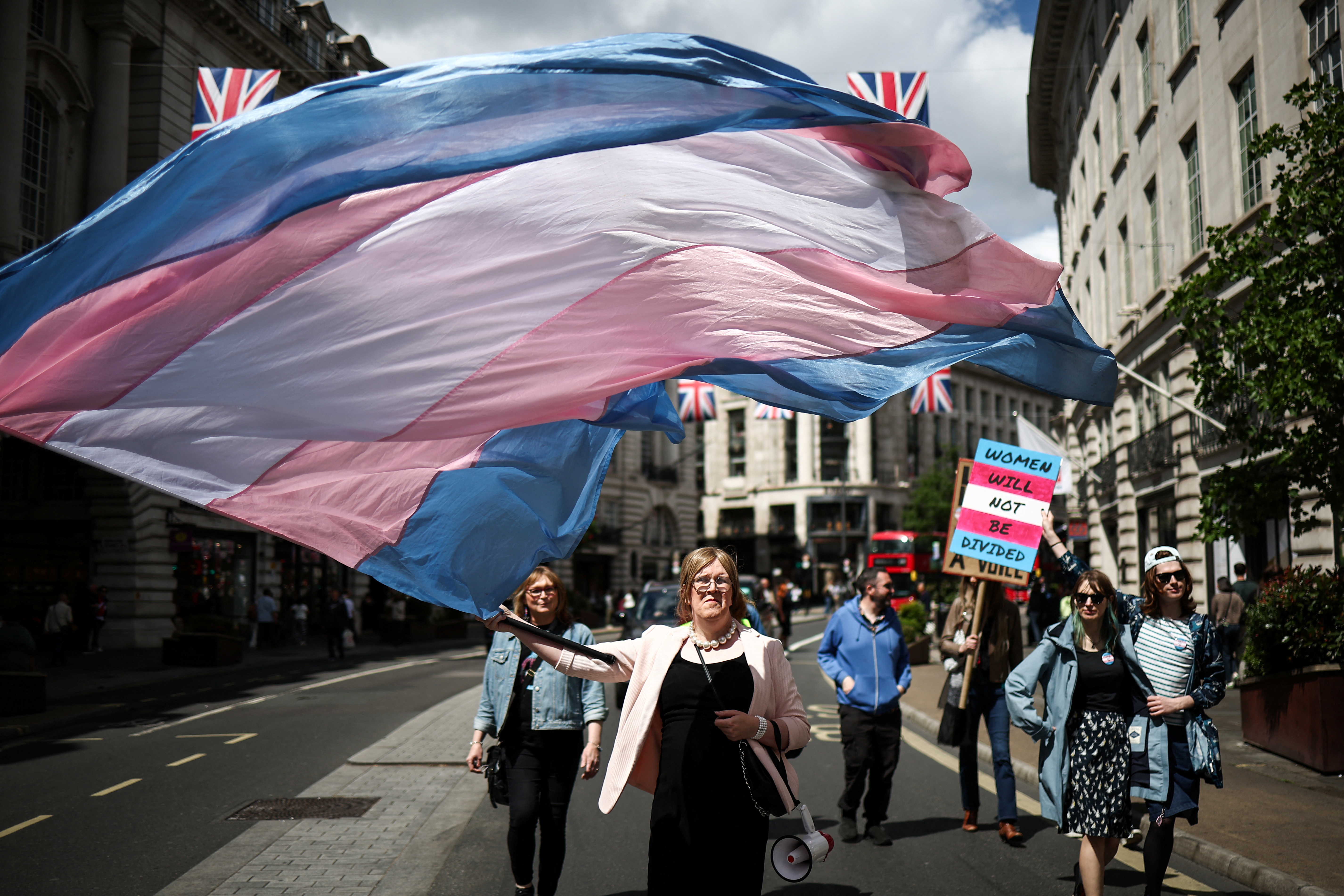
A protester waves a transgender pride flag during a march in London in May last year
HENRY NICHOLLS/AFP/GETTY IMAGES
However, others defended the organisation and said: “I do not see a single other organisation actually challenging any of this at court. They’re taking on the claims, and they’re staking their reputation on it.”
Some blamed “the systems of state that maintain the status quo”, while one commenter said: “They have great conviction and I don’t doubt their support of trans people, but I’m not sure they’re very good lawyers.”
A government spokesman said: “We have always supported the protection of single-sex spaces based on biological sex and expect everyone to uphold the law and follow the clarity that the Supreme Court ruling provides.
“We note the judgment on the withdrawn and interim update provided by the EHRC.
“The EHRC has submitted a separate draft code of practice for services, public functions and associations to ministers, and we are working as quickly as we can to review it with the care it deserves.”
The Good Law Project was contacted for comment.