
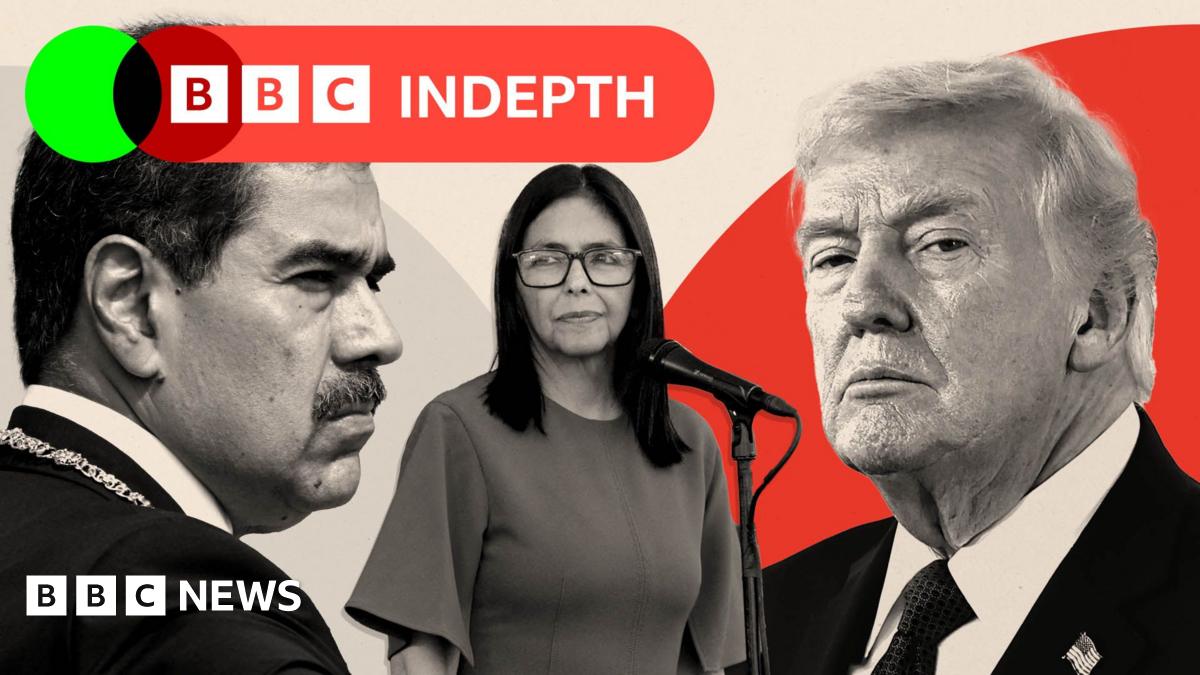
Rodríguez has avoided making inflammatory remarks against Trump. But she has used language deeply rooted in Latin American communist opposition to US expansionism, referring to the US as a “lethal nuclear power”, “invader” and, “imperialist”.
Phil Gunson, senior analyst at the International Crisis Group think tank based in Caracas, says: “Washington must understand that she must continue with this rhetoric. It is a way of maintaining cohesion in the Chavista project, even though it is known that it is not real.”
All experts we spoke to agree that the pressure and threat from the US on Venezuela and Rodríguez is real.
“US pressure may escalate,” says Ana Milagros Parra, a Venezuelan political scientist. She says options for the US could include further intervention in Venezuelan territory, more economic sanctions and further oil blockades.
While Rodríguez must keep the leftist Chavismo grassroots happy, they only represent 15-20% of society and there are many Venezuelans who were never supportive of Maduro.
During his 13 years in power, Maduro’s popularity waned. His 2024 election win was called into question after widespread international accusations that the vote was rigged. Opposition tallies collected by their election observers – which were independently reviewed – showed their candidate won 67% of the vote compared with Maduro’s 30%. But nevertheless, Maduro assumed office claiming a 53% victory.
More than 7.9m Venezuelans have left the country since 2014, with 6.5m counted as refugees by the UNHCR, showing the scale of the civil and economic crisis that has gripped the country.