
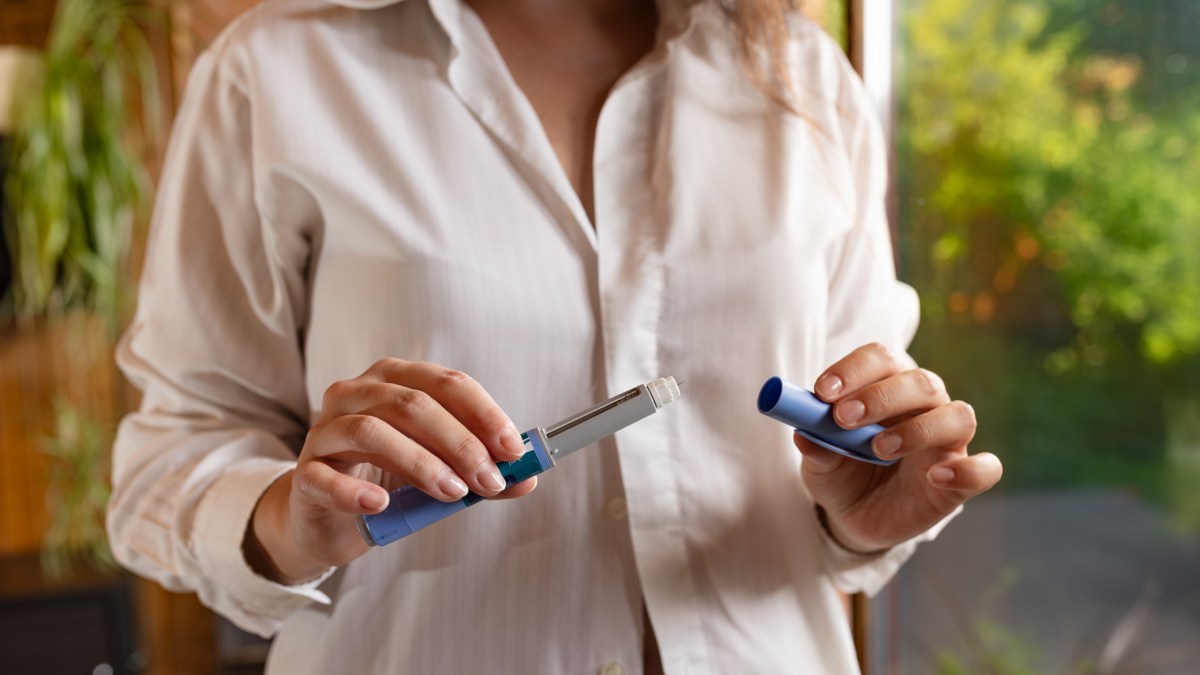
Middle-class women in their thirties and forties make up the bulk of those taking weight-loss jabs, a study has revealed.
More than two million people in the UK are on medications such as Mounjaro and Wegovy, with the vast majority spending hundreds of pounds each month to buy them online from private pharmacies.
Analysis of data by the Health Foundation shows that 79 per cent of prescriptions are for women, with uptake peaking in the 30-39 age group.

Women make up 79 per cent of the more than two million Britons using weight-loss medications
GETTY IMAGES
It revealed a “stark” class divide, with people living in wealthy areas much more likely to use weight-loss injections, despite obesity rates being significantly higher in poorer regions.
People in the most deprived regions were a third less likely to be getting the jabs, and also tended to be much heavier when they started on the medication.
Weight-loss jabs cost about between £144 and £325 per month privately, depending on the medication and dose. The NHS has begun rolling out Mounjaro for free to a cohort of 220,000 severely obese patients. Experts say this should be targeted at “people most in need” in deprived areas.
The new report was based on analysis of 113,630 patients who used the online weight management provider Voy, between November 2024 and October 2025. The data provides the first detailed demographic breakdown of who is taking Mounjaro and Wegovy.
Only 21 per cent of prescriptions are for men, which the authors said reflected men being less proactive in seeking medical help, and the social pressures women face to stay slim. Female celebrities have spoken out about being on the drugs, including the tennis player Serena Williams, the reality TV star Gemma Collins and the presenter Oprah Winfrey.

Serena Williams used medication to lose weight after giving birth to two daughters
KEVIN MAZUR/GETTY IMAGES
There were also stark divides by age. More than half of all prescriptions were for people aged in their thirties and forties. Uptake declined as people got older, with over-70s only responsible for one in 60 prescriptions.
The report divided patients into ten groups, or deciles, based on deprivation levels in their postcode.
Those in the tenth decile, the most deprived, were 38 per cent less likely to be taking weight-loss jabs than those in the second or third decile, which had the highest uptake.
Samantha Field, a senior fellow in prevention at the Health Foundation and co-author of the research, said: “With an estimated 2.4 million people in the UK already prescribed weight-loss medications, our findings reveal a stark divide.

Oprah Winfrey said she has used weight-loss medication
GETTY IMAGES
“The groups bearing the greatest burden of obesity are seeking GLP-1 treatments less frequently, and often at higher BMIs.
“The NHS should be taking these findings into account as the rollout of these medications progresses to ensure they are reaching the people who are most in need of them.
“Ensuring fair public provision is essential, but these medications address a problem that is preventable.
“It’s more important than ever that government retains focus on making the changes to our food environment that will prevent obesity occurring in the first place.”
The study found that people in more deprived areas tend to start treatment when they are heavier, suggesting further inequalities in access to the drugs. About 45 per cent of those in deprived areas began treatment with a body mass index (BMI) of 35 or above, compared with about 30 per cent in the least deprived areas.
Dr David Huang, the director of clinical innovation at Voy, said: “We’re pleased to have collaborated with the Health Foundation on this analysis to help improve transparency of health inequality in the UK.
“By providing real-world patient insights we can bring greater visibility and awareness to the barriers within the UK’s health system, and ultimately inform measurable steps to address the obesity crisis.
“Weight-loss medication can have a life changing impact for eligible patients.
“Private providers like Voy play a crucial role in delivering clinically led and safe treatment to those looking for immediate care and as NHS rollout evolves, we’re aware of our responsibility to enhance access to this type of care and this extends beyond our private offering too.”
An NHS spokesman said: “The NHS is rightly prioritising the rollout of weight-loss drugs for those in the greatest clinical need and is exploring ways to accelerate the offering so that eligible people can benefit from safe and effective treatment wherever they live in England.
“The NHS also offers a wide range of other support for people to lose weight, which has helped tens of thousands of people achieve a healthier weight and wider lifestyle benefits.”