
(Credits: Far Out / Kreepin Deth / José Goulão)
Tue 17 February 2026 22:15, UK
Los Angeles thrash titans Metallica have always kept an ear to the ground of metal’s evolving trends.
Such an open mind has largely been the ingredient to their world-conquering success. Formed as a reaction against the spandex buffoonery dominating the early 1980s’ MTV, a veneration for the old new wave of British heavy metal and a twist of hardcore punk’s burning urgency saw Metallica lead the thrash fore along with Megadeth, Anthrax, and Slayer, 1983’s debut Kill ‘Em All title aimed at stuffy record distributors but could just as easily stand as a declaration of war against the hair metal clogging the day’s rock charts.
Yet, despite lending an essential hand in establishing the thrash formula, Metallica could never stay pigeonholed for long.
First triggering accusations of selling out heresy among the scene’s many purists, Metallica would move away from the classic 1980s’ output of complex arrangements in favour of a stripped-down riff attack on 1991’s eponymous monster seller, before soaking up some of the alternative rock scoring the later Lollapalooza years, then imbuing just a touch of nu-metal’s downtuned crunch and a stark omission of Kirk Hammett’s signature solos across 2003’s St Anger.
While riding the early 2000s Kerrang! wave, Iowa’s nine-headed behemoth Slipknot never quite fit the nu-metal tag. Owing nothing to the likes of Limp Bizkit or Papa Roach, the jumpsuited, masked miscreants cut a far rawer and blistering metal pummel than their supposed peers during the nu-metal era, coating their heavy whirlwind with a nasty coating of electronic scree and fronted by Corey Taylor’s throat-shredding vocal attack.
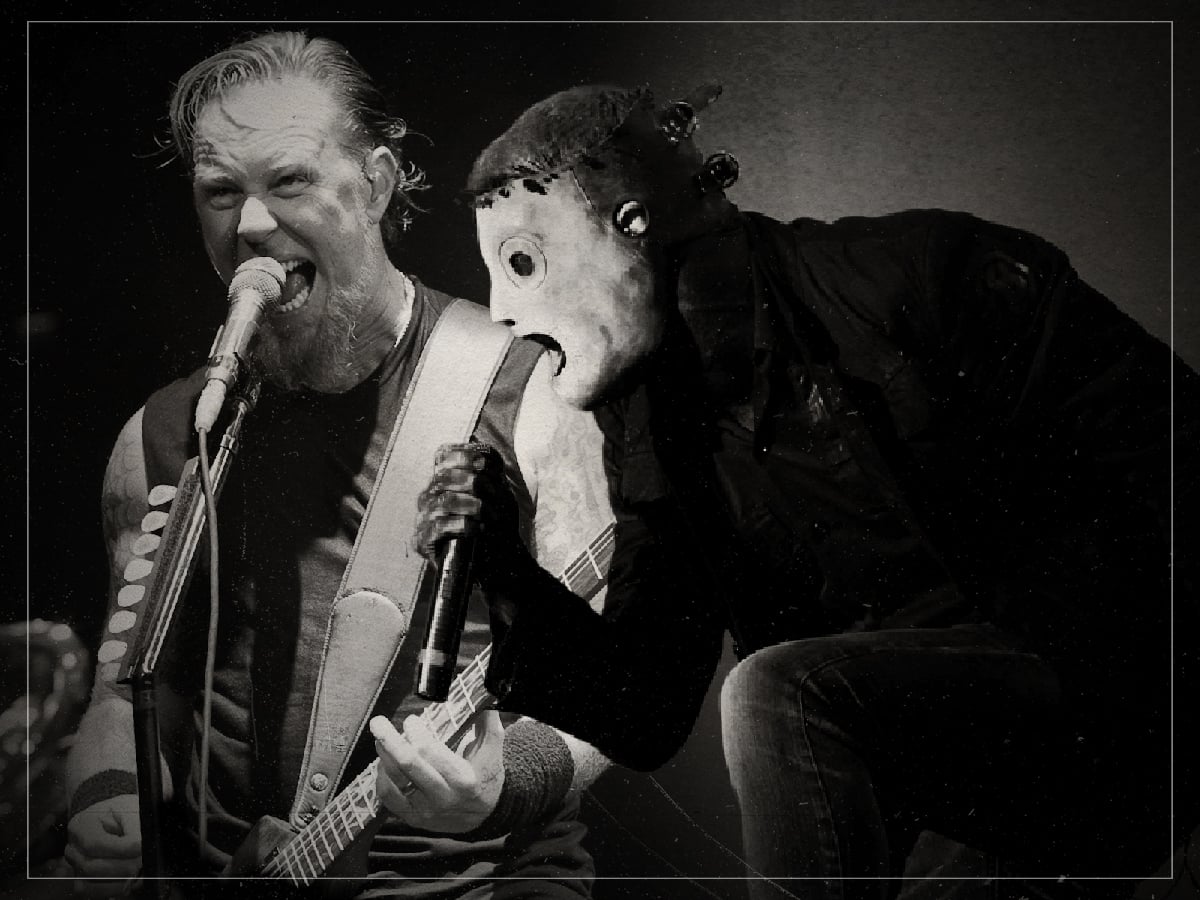
Such ferocity and arresting theatre saw Slipknot soldier on with ease while nu-metal died on its arse and aged like milk around them. Following Iowa’s mega success, the ninesome headed back to the studio to cut 2004’s Vol 3: (The Subliminal Verses), a third LP effort conjured with supposed zen producer Rick Rubin. Acclaimed for its new textures and mature sound while still bottling the old Slipknot fire, the gang could count Metallica frontman James Hetfield as a fan, keenly paying attention while considering their next creative direction for the thrash legends’ album number nine.
“There is no question that we pay attention to the outside world when the bar has been raised sonically,” Hetfield revealed to Guitar World. “One of the reasons we wanted Rick Rubin to work with us is because we liked the sound of his production on the Slipknot and System of a Down albums.”
Navigating a bout of self-doubt, it arguably took Rubin to pull Metallica from their wayward brink to summon 2008’s weighty Death Magnetic, a return to form heralded by many longtime fans and the album much of their base would claim they’d been waiting for since …And Justice for All 20 years previously.
Once again, the Metallica camp stuck out their metal antenna to pick up where the heavy rock winds were blowing, not to follow trends or jump on Slipknot’s bandwagon, but to glean inspiration as to where their creative guidance was truly calling.