
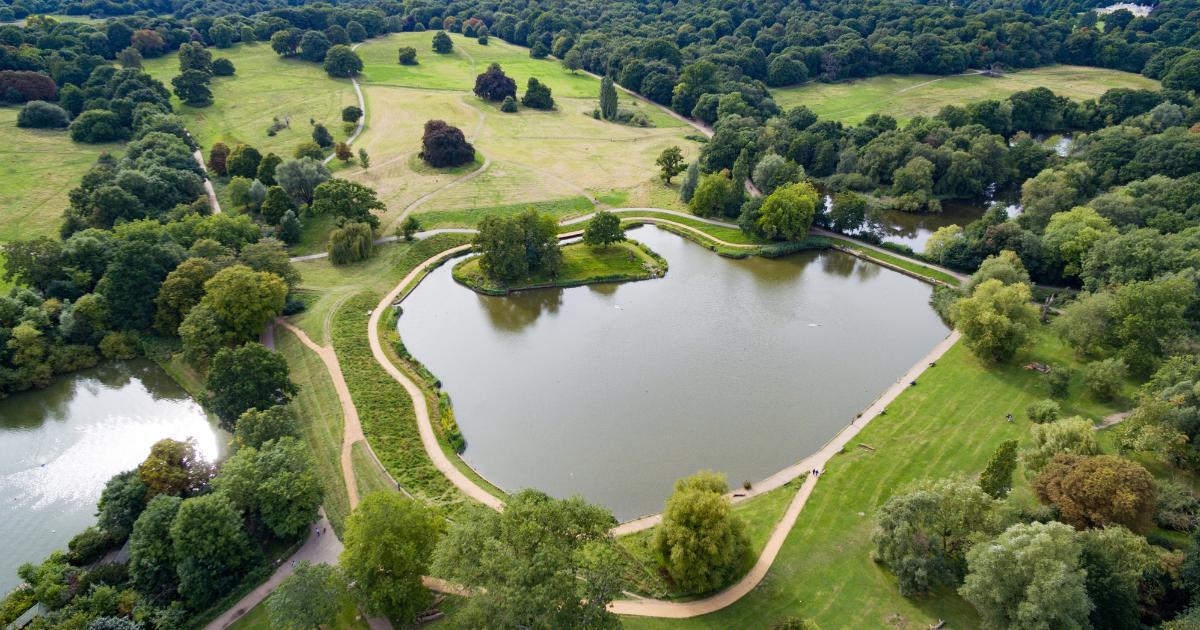
Work has begun on the project, located at the Model Boating Pond, which will transform part of the area into a safe refuge for wetland birds and other wildlife as part of a broader effort to boost biodiversity across the Heath.
The City of London Corporation, which manages Hampstead Heath, is leading the project and will remove the land causeway currently connecting an island in the pond to the shore, as reported by our sister title London Now.
The project will remove the land causeway connecting an island in the Model Boating Pond to the shore, creating a dedicated sanctuary for nesting birds. (Image: City of London Corporation)
Once removed, the island will become fully separated and inaccessible to people and pets, creating a dedicated sanctuary for nesting birds and other wildlife.
Chair of the City of London Corporation’s Hampstead Heath, Highgate Wood and Queen’s Park Committee, Alderman Gregory Jones KC, said: “This important project will create a peaceful sanctuary for wetland birds, right in the heart of Hampstead Heath.
“By removing the causeway, we’re giving species like mallard, coot, grebe and swan a safe space to feed, rest and nest – free from human disturbance.
“It’s a place they already use, and soon they’ll have it all to themselves.”
The new habitats will support wetland birds, amphibians and reptiles (Image: City of London Corporation)
The project has been made possible through more than £50,000 in public donations and charitable fundraising.
It will also include the creation of nearly 100 square metres of new reedbeds—funded through the City Corporation’s Climate Action Strategy—and wildflower planting.
Hampstead Heath is home to more than 800 species of flora and fauna (Image: City of London Corporation)
The new habitats will support wetland birds, amphibians and reptiles, and temporary fencing will be installed to protect sensitive areas while these habitats establish.
The sanctuary will contribute to carbon capture as well.
READ MORE:
The Superloop routes that could come to London by 2027
9 wintery London walks perfect for cold and clear days
Metropolitan line Tube stations to close for 4 days
Created in 2016, the island has become a nesting site for coots, moorhens, grebes and herons. (Image: City of London Corporation)
Mr Jones said: “We’re also planting new reedbed habitat, supporting nationally important ecosystems that enhance biodiversity and add to the Heath’s natural beauty.
“As they grow, the reeds will absorb carbon dioxide from the air and store it in their stems, roots and surrounding soils, locking carbon away naturally over time.
“Thank you to everyone who has supported this project.
“Your generosity is helping our Charity protect and enhance the Heath’s remarkable biodiversity.
“I also want to thank our staff, whose hard work, time and commitment go a long way in bringing these projects to life.”
The island, which was created during flood management works in 2016, has become a nesting site for coots, moorhens, grebes and herons.
Hampstead Heath is home to more than 800 species of flora and fauna, forming part of a network of 11,000 acres of open space protected by the City Corporation across London and southeast England.
The project is expected to take around four weeks to complete, subject to weather conditions.