
Some 1.2million people survive on the state pension with little or no other savings – and they are among the 13.1million who rely on it to support their income.
On April 6, the new state pension, paid to those who have reached pension age since 2016, will rise by 4.8pc from £230.25 a week up to £241.30.
But it doesn’t take much to work out that the extra £11.05 a week won’t go very far these days.
With a sky-high cost of living, including record utility bills and crippling new taxes under the Labour government, this paltry sum of £241.30 a week barely seems enough to live on.
Worryingly, the state pension is not enough to provide even a minimum standard of living in retirement.
Pensions industry guidelines from Pensions UK suggest that you need a minimum of £13,400 a year in retirement income to cover just the most basic needs. That is almost £30 a week more than the flat-rate state pension pays.
However, a third of adults in the UK believe the state pension will be their main source of income in retirement, according to research by the insurer Royal London.
To better understand this looming crisis – and hopefully find ways to escape the poverty trap – Money Mail’s chief reporter Toby Walne decided to limit his budget to the state pension for just one week. It was a humbling experience that everyone, both young and old, can learn from – no matter their financial situation.

Toby went through the food cupboards to save money on his grocery bill and found several tins of baked beans
MONDAY
TV adverts would have you believe that pensioners spend their lives relaxing on a long cruise, and I’m keen to try this relaxed lifestyle with a leisurely start to the morning. I go back to bed with a cup of tea to enjoy contemplating what I’d like to do with my day.
But then I tot up what the state pension income would afford me – and it’s certainly not enough to jet off on a Caribbean break as seen in those adverts. In fact, the state pension is little more than a quarter of the £39,093 average annual wage.
My £33 daily retirement income is less than I usually spend each day just commuting to London and back.
Incredibly, I could be worse off. Had I reached pension age before April 2016, I would have received the basic state pension, which pays just £176.45 a week. I would need earnings-linked top-ups to boost this amount, or I’d have to claim Pension Credit to raise this to £227.10 a week – a boost 800,000 people fail to collect.
I realise I have no time for sitting around – and I get to work immediately to work out my budget for the week. I spread the bills out over the kitchen table and my eye is instantly drawn to the council tax letter.
My four-bedroom detached home is rated ‘G’ – with an eye-watering cost of £3,160 a year (£60.78 a week).
Almost a quarter of this money goes on gold-plated local authority staff pensions so they can retire on more than many of us get, according to a recent Freedom of Information request. I get a quarter of this bill knocked off if living alone. and claiming Pension Credit would exempt me from paying council tax.
The biggest setback is an electricity bill of £85 a week for heating, lighting and electricals. Water, home insurance, internet and phone bills add a further £35.
Once the bills have all been accounted for, I am left with £50 a week – equivalent to just £7.14 a day.
Even if I wore bear skins and ate berries picked in the woods, this is not enough to live on. In order to survive, I would have to downsize. The prospect of leaving the family home and community in which I have invested so much time and money – and on which I have paid a crippling mortgage, at times making great sacrifices to do so – is heartbreaking. This is a humiliating and crushing blow.
Unprepared for the challenge ahead and realising quite how frugal I will need to be, I go through the kitchen cupboards in search of forgotten food.
I discover packets of pasta, tins of baked beans, tuna chunks, four opened jars of olives, three of mincemeat – and a long-lost Christmas pudding. Food stores that I wastefully had no idea existed have suddenly become essential rations that I will rely on.
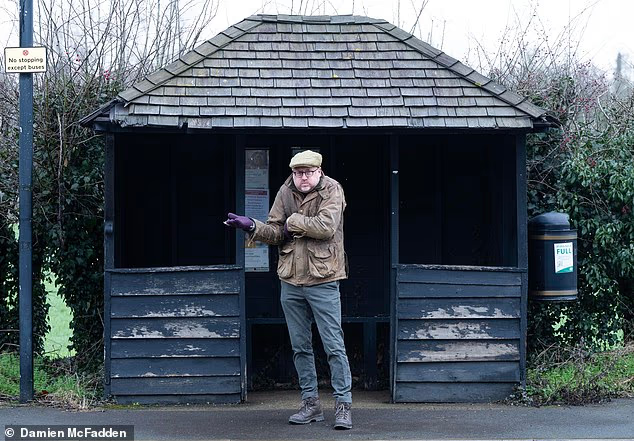
The good news: bus travel is free once you are at pension age. The bad news: The service is patchy and long delays are common
TUESDAY
I have a doctor’s appointment today and would usually jump into my two-door Lotus Elise and drive the ten-mile round trip to Bishop’s Stortford.
I might scrape together £20 a week for petrol, insurance and road tax, but what happens if there is a problem? At my last MOT, I was told all four tyres needed. at a cost of £500. Running a car is unaffordable when living on the state pension. I must rely on public transport from now on.
The good news is that anyone over state pension age (currently 66) can apply for a bus pass, meaning that my trip will be free.
To plan my route I use a website called Intalink, which shows you the various journeys you can take to reach your destination. I select the GP surgery as my destination and press ‘leave now’.
The website suggests a 51-minute walk (apparently 4,310 steps) to the neighbouring village Little Hadham to catch a number 35 or 36 bus into town. It boasts ‘taking this journey would save 1,678g of CO2 compared to driving. That’s the same as making 710 cups of tea!’
Having to suffer this patronising nonsense without complaint is part and parcel of being treated like a second-class citizen.
A number 35 typically runs every hour, while the 36 is about every two hours. Even walking at a brisk pace, it takes 48 minutes along the winding road where articulated lorries make it occasionally hazardous.
If I had been elderly or it had been raining, it would have taken longer. Finally, sitting at the bus stop, the bus is due in 15 minutes, but arrives half an hour later. This journey, which would usually take me ten minutes in my convertible, takes one hour and 32 minutes.
I haven’t factored in how late the bus would be and so I’m running late for my appointment. I make a note to leave hours in advance next time.
Returning I discover there is an occasional number 20 bus that passes just ten minutes from home at 1:20pm and 4pm – and the number 27 at 2.33pm. Yet shivering at the bus stop by the train station, the 27 does not exist on the timetable.
A young man looks up from his smartphone and calmly informs me the buses sometimes do not come at all or drive straight past – ‘best just to get on whatever comes’.
I heed his advice and catch another 35, which again is 15 minutes late. My journey home has taken one hour and 42 minutes.
This head-scratching timetable is an unreliable mess and adds almost three hours to my journey compared with taking the car. But at least as an OAP I would travel for free.
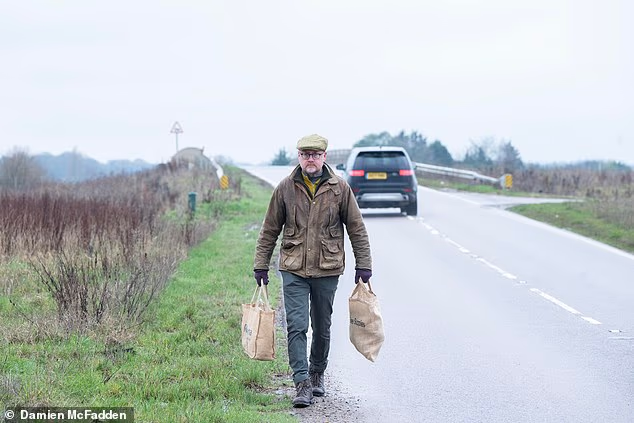
Toby returns from town with his weekly food shop from Aldi. He spent just £3.32 short of his £50 weekly budget
WEDNESDAY
I have run out of some of the basics at home. Armed with a shopping list and just £50 for my weekly budget, I make the hour-and-a-half journey back to the high street. I keep my head down to avoid being tempted by shop window displays or coffee shops – straight to the supermarket.
Leaving behind the middle-class comfort of Waitrose is surprisingly no wrench as cheaper prices at Aldi put a spring in my step.
I reflect on how people rationed in wartime Britain with spam fritters and corned beef hash – but that £2.05 tin of corned beef on the shelf looks unappetising. Instead, I pick up a whole chicken for £4.79, which will last at least three meals. In Waitrose a Duchy Organic Whole Chicken is £16.67 – but I cannot afford fancy labels.
Four pork chops set me back a further £3.29, half a dozen sausages cost £2.49 and 500g of ‘essentials’ minced beef is priced at £3.09.
‘Wonky’ fruit and vegetables taste just as good – so it is £1.49 for 2.5kg of disfigured potatoes, 80p for odd onions and 99p for half a dozen ugly apples, plus 69p carrots, 79p broccoli and 78p bananas.
The soaring price of dairy means the cheapest butter is £1.99 – but Brilliantly Buttery margarine is 99p.
Two loaves of 89p farmhouse, £2.79 for a lump of cheddar, £1.25 jar of pickles, £2.19 Mighty Yeast Extract (Marmite, £3.50 elsewhere), £2.89 for a dozen eggs, £1.65for four pints of milk, £1.85 tea bags and £2.09 coffee.
The total is £36.68. But loo rolls, toothpaste, bleach and washing powder add a further £10. I select the basic range and pay £46.68 at the till, leaving me with just £3.32 for the rest of the week.
And what about if I had a pet to feed? That 55p tin of dog food or £3.49 for 12 cat dishes would have to mean less on my own plate.
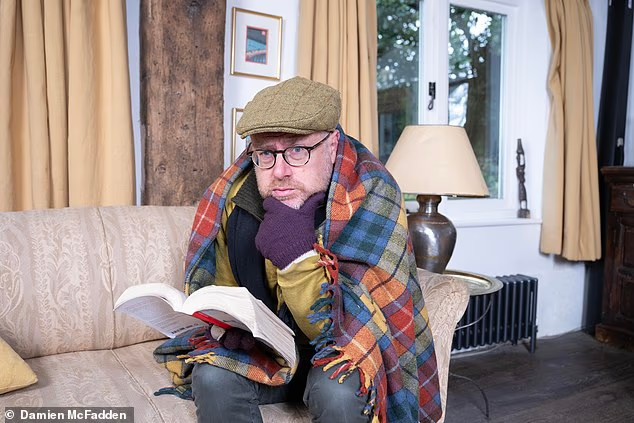
‘It helps me appreciate the value of books and vinyl records that have been accumulated over the years as they provide free entertainment,’ writes Toby. ‘But how long before I must start selling these to make ends meet?’
THURSDAY
It’s a cold and wet day in February. Fortunately, I have a wood burner that takes the chill out, but I still have to turn the heating down to cut costs. I turn off radiators in rooms not used and the the thermostat to 18c.
The house is no longer toasty and warm but still bearable, if I wear a couple of woolly jumpers as well as an extra pair of socks. To feel more comfortable I add more layers and put on a hat and gloves.
Frugality with heating knocks up to £10 off bills each week. Switching energy supplier from Octopus Energy to Ecotricity using comparison website uSwitch also cuts weekly bills by £10. With these sacrifices I can shop for charity clothes.
The state pension does not budget for clothing, so I decide to trawl through charity shops. At Isabel Hospice shop in Bishop’s Stortford, I find an M&S lamb’s wool mix jumper for £6 – reduced from £8.50 due to a small hole – and a cashmere cloth cap for £6.
There is also a thick Superdry gilet for £20. Nearby at Oxfam is a Jaeger coat reduced from £45.99 to £39.99 – but I still can’t afford it. Next door in M&S, a brand-new lamb’s wool jumper is £40.
FRIDAY
Celebrating a Friday night with just £3.32 in my pocket is depressing. No fancy restaurant or takeaways for me – I don’t even have a spare £5 for a pint at the local pub. Isolated, I feel miserable and alone.
It helps explains why many elderly rely on TV for company. It is £14.54 a month for a £174.50 BBC TV licence, free if claiming Pension Credit.
Streaming services Amazon Prime and Netflix demand £8.99 and £5.99 a month respectively and are easy for me to axe. But the thought of dropping more personal subscriptions feels strangely dehumanising, such as my £38.50 membership for the British Beekeepers’ Association and £16 for the Tony Hancock Appreciation Society.
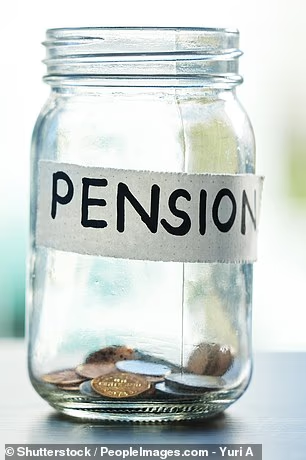
Toby put the £3.32 left over from the weekly shop into a jam jar as the start of a rainy day fund.
Many people spend leisure time on the internet. Although delighted to ditch social media, online access is vital in modern society as banks and utility firms force us on to the web.
I pay BT £39.32 a month for broadband, plus £2.46 for landline access. I cut this bill almost in half to £21.92 by switching to Vodafone, but it means ditching the landline, which can be a lifeline.
A £200 secondhand iPad from the exchange shop CeX comes with a five-year warranty. To afford this I might sell off family jewellery, with dealer Gold Traders offering £260 for a four gram 18-carat gold necklace.
With the change I can buy a £12 basic Vodafone handset and pay £3.99 for a Lebara SIM-only 250 minutes a month deal.
It helps me appreciate the value of books and vinyl records that have been accumulated over the years as they provide free entertainment. But how long before I must start selling these to make ends meet?
SATURDAY
As someone who enjoys DIY at the weekend, I spend the morning dismantling a broken freezer to take out a printed circuit board. A retired Radio Rentals neighbour replaces three capacitors with a soldering iron for free – so I don’t need an £800 Electrolux replacement as recommended.
What if I had not had a shed full of tools, a community spirited neighbour or the freezer was unrepairable? It would have been a financial disaster.
Then I turn my attention to home improvements. I want to put up hazel hurdle screening in the garden. The panels are expensive at £75 each, and I will also need to buy posts and wiring to keep them in place. Suddenly, I realise this is an unaffordable self-indulgence – not survival. From now on it is a case of maintenance rather than doing up.
Basic essential jobs such as repainting windows and fixing broken guttering are vital as long as I am able and healthy. But what if the boiler breaks down? I cannot afford for anything to go wrong – but it will.
I put that £3.32 into a jam jar as the start of a rainy day fund. By my calculation, if I ever have to replace the boiler it may take two decades of scrimping and saving for the necessary £3,500.
SUNDAY
The day of rest has arrived, but after a week of hardship I am desperate for it to end – and going for a countryside walk costs nothing. There is a biting winter chill, but I am wrapped up snuggly in a coat and a couple of cosy layers.
But there is no point to life without pleasure. Poverty fuels frugal innovation and as a homebrew enthusiast, I know £20 will buy hops and grain to make 40 pints of a Timothy Taylor’s Landlord clone. I own brewing equipment, but if retiring on the state pension today, I would buy a £10 plastic bucket and use kitchen utensils.
Brewing beer means sacrifices elsewhere, such as that secondhand charity coat or chicken meals for a month.
I go to bed an hour earlier than usual at 9:30pm to keep warm. On the miserable new state pension, it is too expensive to stay up any longer.
Of course, I am lucky because I can now escape the temporary shackles of having little money and return to life as normal. But for more than a million people, this hardship is their constant reality and I now have a better understanding of the difficulties they face living from week to week.