
In late November Bjarke Ingels Group (BIG) was informed that a ‘major’ resort it was working on had been cancelled. The scheme, which the AJ understands was in the Red Sea area, employed around half the Danish architecture firm’s UK workforce.
Whatever its exact location, the unnamed project is one of the schemes, many of them in Saudi Arabia, impacted by spending reviews, delays and recalibrations. As crude oil falls in value and the kingdom rethinks its development pipeline, some, including schemes being worked up by BIG, have been scrapped.
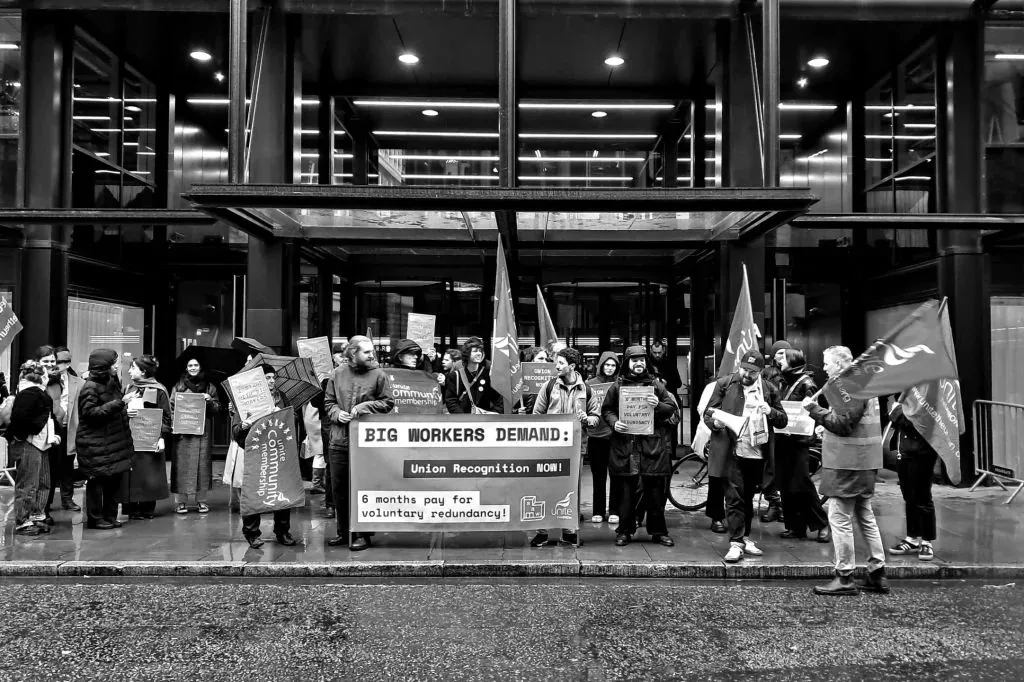
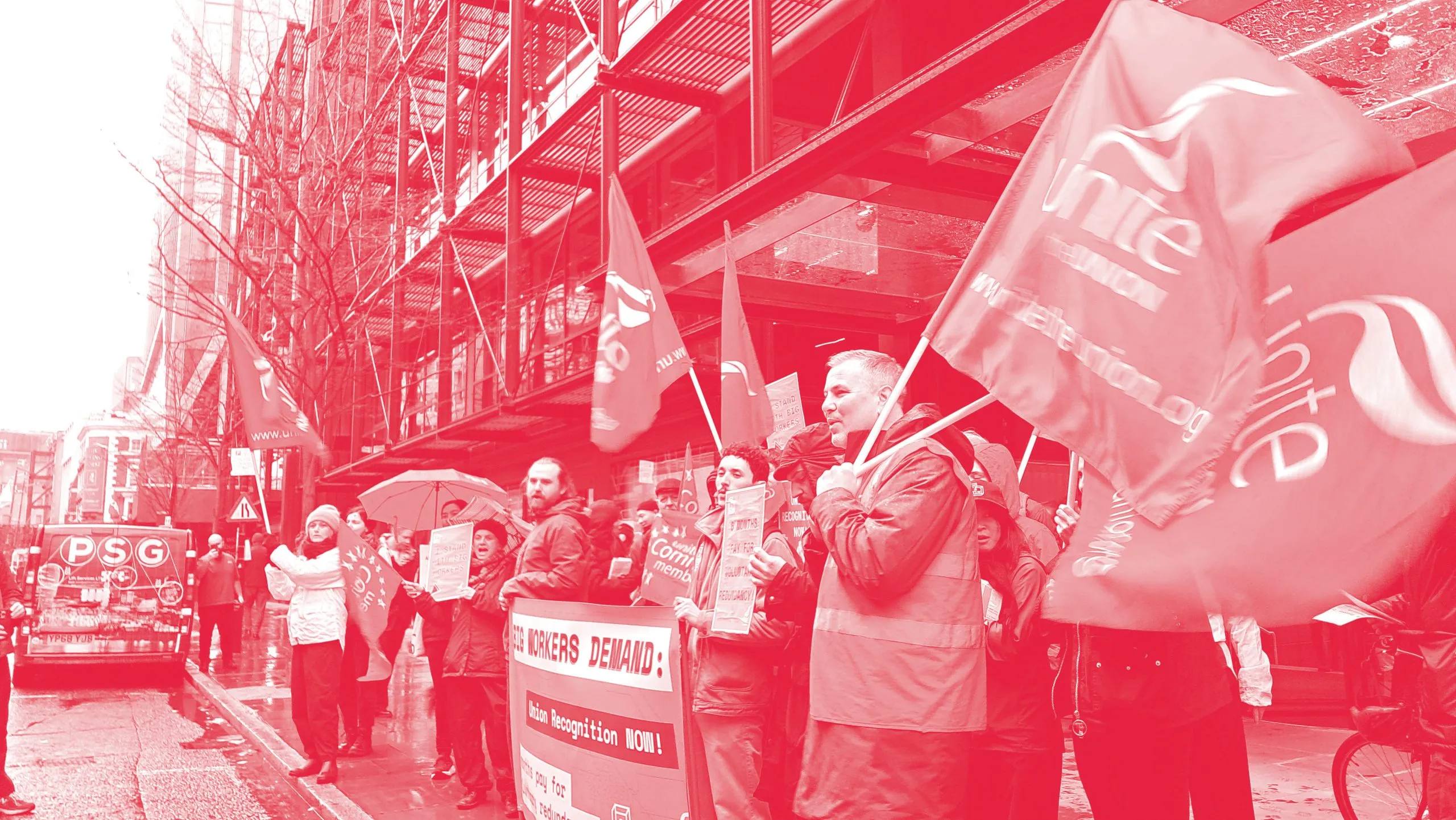
Decisions taken in Riyadh are now resulting in severe financial pain for UK-based practices – firms that have committed substantial resources to delivering major developments – and it means scores of jobs are on the line. In BIG’s case, the unexpected project cancellation has led to mass redundancy plans and ignited an unprecedented demonstration against the job cuts on the doorstep of its London office in Broadgate. BIG has become the highest-profile example of how the ripple effects of the slowdown in Saudi Arabia are reaching far beyond its borders.
But the issues are not just limited to Bjarke Ingels’ global practice. Those protesting outside its studio insisted the demonstration ‘was for everybody’ in the profession facing similar threats.
Given this rare public show of worker solidarity, the AJ asks: How did we get here? Is what has happened to BIG likely to occur elsewhere? And what’s around the corner?
On the chopping block
Saudi megaprojects always seemed fantastical – too fantastic for many sceptics. Unsurprisingly, the most jaw-dropping now seem to be the ones falling by the wayside.
In the past month alone, the AJ has reported on the (further) scaling-down of NEOM’s linear city, The Line – masterplanned by Gensler – and on shrinking ambitions for Aedas and Zaha Hadid Architects’ (ZHA) Trojena ski resort in the mountains, which has now formally lost hosting rights to the Asian Winter Games in 2029. The mountainous region of NEOM simply won’t be ready in time, the Financial Times revealed last month. Sources told the newspaper that ZHA’s contribution to the scheme was set to be downsized – possibly losing some of its standout features, including a supertall crystalline tower and an artificial lake.
NEOM’s centrepiece project The Line seems to have met a similar fate – with the once 170km-long city looking a lot different (and shorter) compared with the concept proposals the initial line-up of architects were working on, as the AJ revealed in January 2023.
The same FT report suggests that The Line will be redesigned at a more modest scale. One architectural source said: ‘The Line will be a totally different concept [based on] existing infrastructure laid down at the construction site.’
In downtown Riyadh, the colossal Mukaab mega-cube skyscraper has also been shelved pending a review. The AJ understands the 400 x 400m office, homes and leisure block, originally designed by AtkinsRéalis and more recently involving AECOM, will be replaced by a much more modest proposal without ‘the world’s biggest AI-powered indoor screen’.
The tide goes out
The sinking of BIG’s resort on the Red Sea has had a direct effect back in London. Henriette Helstrup, BIG’s London partner and managing director, confirmed to the AJ that the planned redundancies followed the ‘unexpected termination of our largest project in November’ – a huge scheme which employed half the studio.
Helstrup said BIG had ‘immediately’ shared news of the income stream loss with all staff, adding that two months later all employees remain ‘in employment and continue to be paid in full while we work through a formal and lawful consultation process’. She added that the company was focused on ‘navigating this situation responsibly and on supporting our colleagues through this transition’.
Still, this month’s protests show that many ‘BIGsters’ (as employees are nicknamed) do not feel supported. Of the 203 staff at BIG’S London office, there are plans to cut 72 from 142 roles.
The AJ understands that BIG had employed a large number of overseas architects on permanent contracts and that many of those now threatened with redundancy had visas tied to the firm and the project.
‘Unite will publicly hold BIG to account until these workers receive fair and decent treatment’
Ahead of the demonstration, Unite the Union heavily criticised the treatment of foreign workers employed at BIG’s London office and claimed the company’s consultation process had been ‘marred by critical failures’, including a lack of transparency over the scale of the planned cuts. It is understood BIG, which denies these claims, had been forced to restart an earlier consultation process last month. Unite general secretary Sharon Graham said: ‘BIG’s behaviour towards its staff is nothing short of disgusting [and is an attempt to] protect profits.
‘Unite will publicly hold BIG to account until these workers receive fair and decent treatment.’
A warning to others
Echoing those criticisms during the 3 February demonstration, a Section of Architectural Workers (SAW) representative told the crowds assembled in the rain outside BIG’s office: ‘This is a warning for others. If you think you can put 70 of your employees out of a job, shame on you. [And] think of the damage to your reputation.’
Speaking anonymously to the AJ during the demo, a BIG employee said the protest had been intended to send a message to ‘the entire industry’ as well as those facing job losses.
They said: ‘We’ve joined the union to make sure BIG recognises our rights, because there’s been a lot happening in the office that we simply disagree with about how things have been handled.’
An architect from another practice said they had joined the BIG demonstration to shine a spotlight on the ‘hiring and firing culture [in architecture where] people are not treated with appropriate respect.
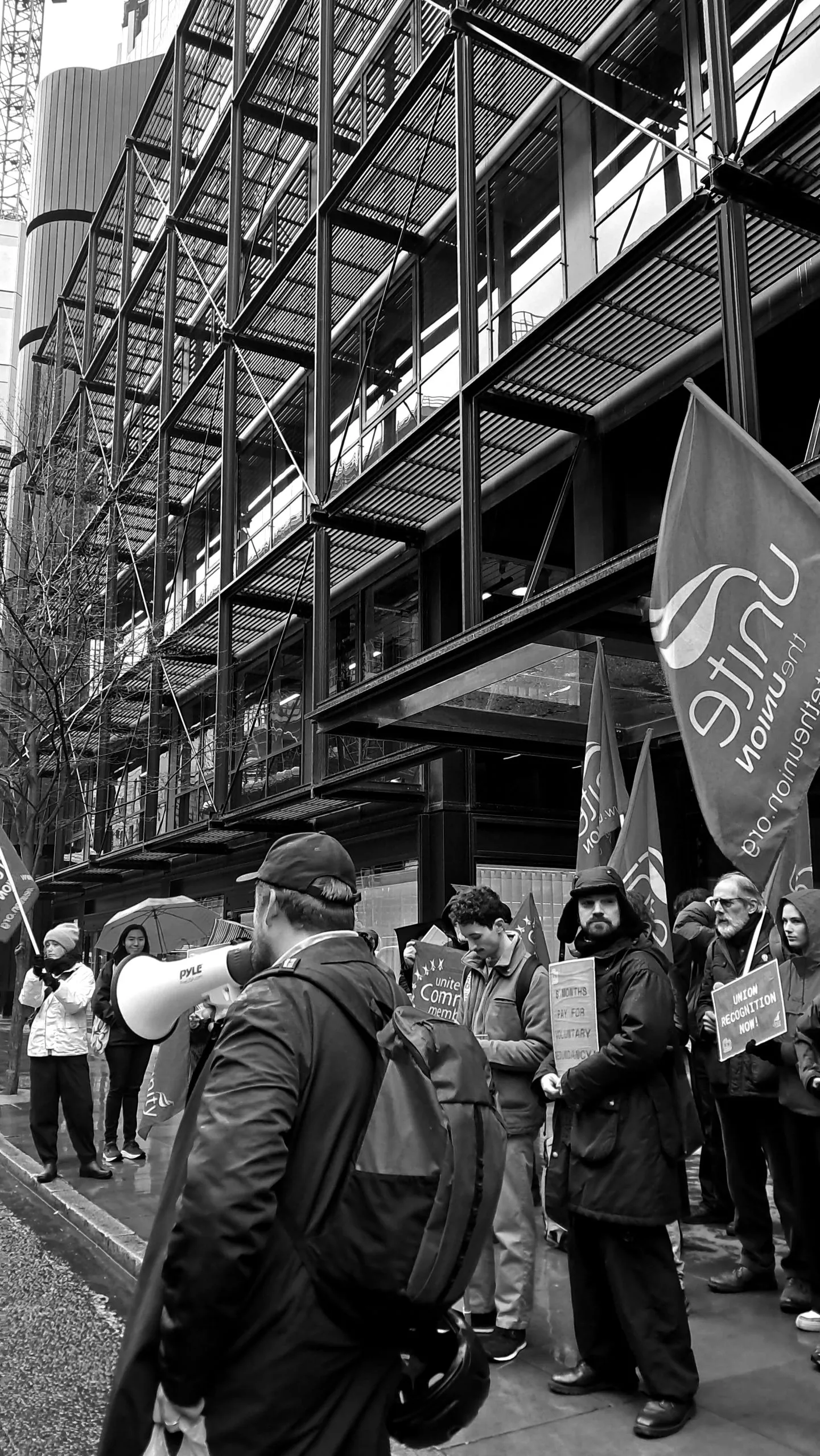
‘Considering the difficulties of the profession at the moment, we have to unionise to get some kind of power, because we were at the very bottom end of the food chain,’ they added.
Demonstrators also pointed to a perceived lack of action by the RIBA. Naming the institute, a SAW member asked those gathered: ‘Where are the people that stand up for standards in our industry? They’re not here. Because they’re never here.’
In response, RIBA president Chris Williamson said: ‘We recognise that all architects are currently working in a difficult environment. All RIBA-chartered practices must adhere to our Employment Policy Guide and must, of course, comply with UK employment legislation.’
What now?
At the time of writing, BIG was still in consultations with staff, at least 90 of whom had joined SAW/Unite in response to the threat of job cuts. Before the planned layoffs, fewer than 10 BIG employees had been union members, the AJ understands.
So, could the BIG ‘incident’ prompt wider unionisation across the profession? Paul Chappell, director of 9B Careers, says that BIG and its employees certainly aren’t alone. The recruitment agency founder said he had heard of ‘a number of other projects in the Middle East slowing down and leading to redundancies elsewhere’.
But what alternatives to job cuts are there when workloads suddenly dry up? Chappell told the AJ: ‘Losing a major project, particularly one of significant scale, inevitably creates a sudden gap in workload. In that context, acting early to rebalance the size of a practice can be the more responsible long-term decision, even if it feels harsh in the moment.
The alternative is often a slow decline [and] in some cases, practices then feel pressured to bid at unsustainably low fees, just to keep people busy, which ultimately harms the entire profession. None of this diminishes the human impact of redundancies and it is clearly devastating for those directly affected. But, if the profession wants to tackle chronic underpayment and instability, it also has to accept that practices must be run as sustainable businesses.’
‘Unfortunately, a hard line has been drawn in the sand’
The financial ramifications of the slowdown in the Middle East are becoming more evident in company reports. AECOM, which only signed a contract to work on the Mukaab in November, revealed a 42 per cent collapse in its Middle East income (around £46 million) in accounts for the year ending 3 October 2025. A drop also appears in Gensler’s latest accounts. The Line masterplanner’s revenues from work in the Middle East fell from £24.4 million to £19.1 million for the year ending 31 March 2025. However, in a statement with the accounts, co-managing principal Duncan Swinhoe said Gensler remained optimistic, having entered a ‘substantial confidential contract’ – also in the Middle East. If it comes off, that project will be worth £216 million overall.
Yet the AJ understands some staff at Gensler had already been let go because of the slowdown in work on the NEOM project. Gensler’s London office declined to comment on this.
Speaking before the demonstration, former RIBA president Angela Brady hoped a deal could be reached. She said: ‘[All] RIBA chartered practices should respect their staff, their work-life balance and mental health, particularly in relation to the “hire and fire culture” that threatens our profession. It would be advisable for BIG’s London management team to listen to the union, for a fair and reasonable outcome.’
Whatever Brady’s view, Helstrup insisted that BIG has ‘acted in good faith throughout [the project cancellation] and with the intention of minimising job losses, wherever possible’.
She added that BIG was ‘regrettably not in a position to match’ SAW and Unite’s demands for six months’ voluntary redundancy. ‘Unfortunately,’ she said, ‘a hard line has been drawn in the sand.’