
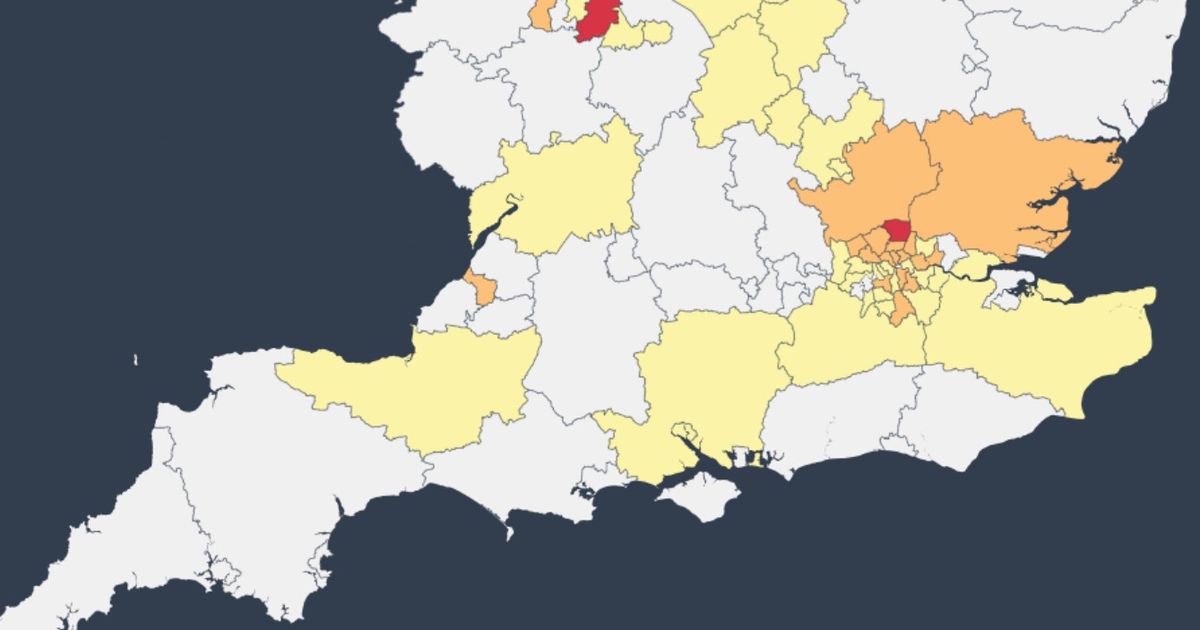
A Victorian-era disease is making a comeback, but a new map has revealed that better-than-average vaccination rates have so far protected Devon – with experts warning there is more work to be done.
The UK was stripped of its measles elimination status by the World Health Organisation earlier this year, after the disease circulated for more than a year.
It followed outbreaks that began in 2023 and intensified throughout 2024. In England alone, there were 2,911 laboratory-confirmed cases of measles in 2024, the highest number since 2012.
Last year, there were 959 cases.
WHO and the UK Health Security Agency have now confirmed that the virus has re-established endemic transmission, resulting in the UK losing its measles elimination status.
Most infections have been seen in unvaccinated children under the age of 10.
Now parents are being urged to catch up on missed vaccinations after fresh outbreaks in London and the West Midlands this year.
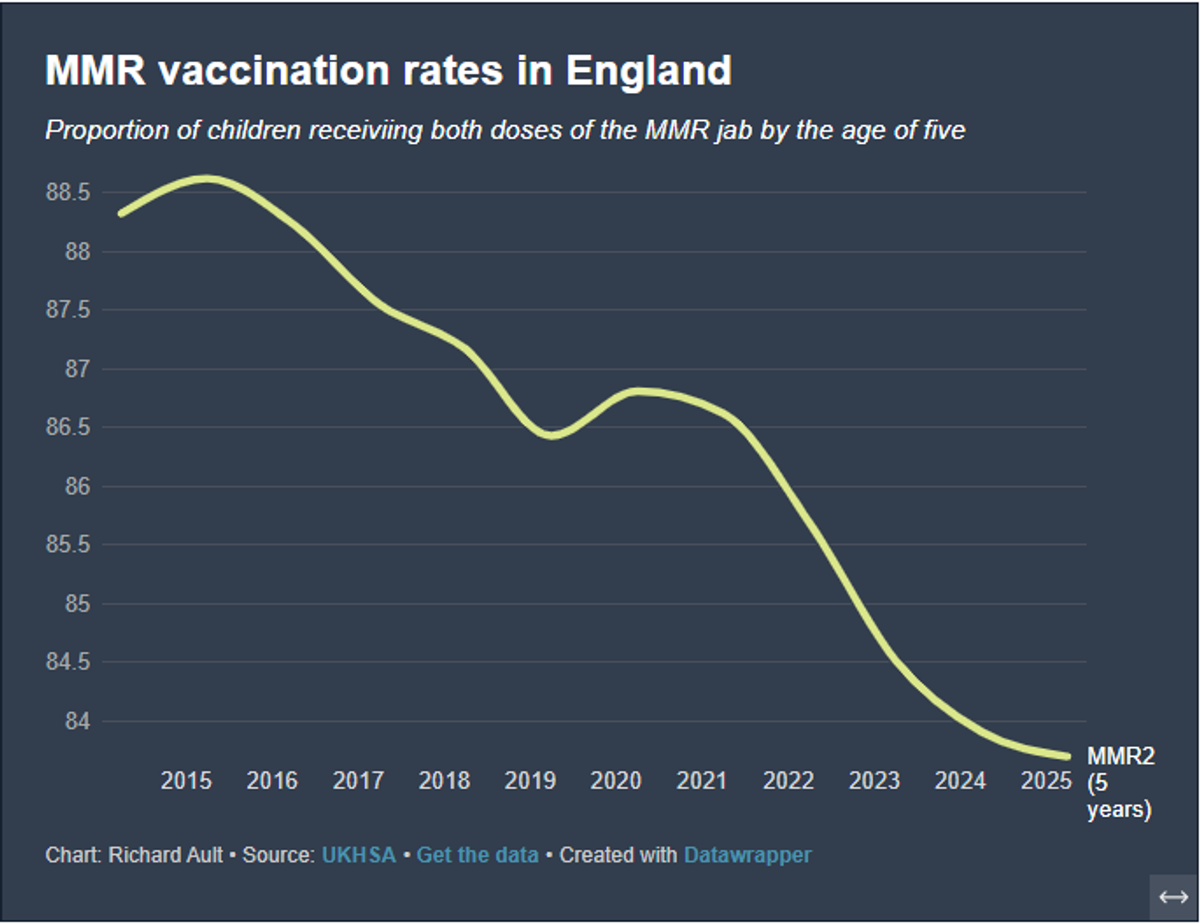
It comes as vaccination uptake has slumped to its lowest in a decade in England.
As of last summer, 91.8% of five-year-olds in England had received one dose of the MMR jab (measles, mumps and rubella), and 83.7% were protected by both doses of the vaccine.
So far, Devon appears to have escaped the outbreak. The UKHSA has not confirmed any cases of measles in Plymouth, Torbay or the rest of Devon in the last three years.
However, that does not necessarily mean there have been no cases, as the UKHSA suppresses case counts in areas with fewer than 10 cases in a given year.
But the lack of, or low number of cases in our area is probably due to comparatively high vaccination rates, with nine in 10 children receiving both doses of the MMR jab by their fifth birthday.
In Plymouth, 91.7% of five-year-olds had received both doses, in Devon, it was 91.2%, and in Torbay, 89.5%.
While that is below the 95% vaccine coverage WHO says is needed to achieve “herd immunity”, which prevents diseases from spreading easily, it is much higher than the national average (83.7%).
In contrast, the current measles outbreak in North London appears to be centred around Enfield, where 34 infections have been confirmed by lab tests.
Enfield has one of the lowest vaccination rates in the country, with just 64.3% of youngsters receiving both MMR doses of MMR by their fifth birthday.
In Birmingham, which has had 21 confirmed cases, only 75.5% of five-year-olds are protected by both doses.
You can see how measles has circulated across England over the last three years and check the vaccine rate and cases near you using our interactive map.
Get the map here
From this year, the MMR jab has been replaced by the MMRV vaccine, which offers the same protection as MMR but also covers chickenpox.
Dr Vanessa Saliba, Consultant Epidemiologist at UKHSA, said: “Our latest data shows we are now seeing a big measles outbreak in north east London, mostly affecting unvaccinated children under 10 in schools and nurseries, with some being hospitalised. Measles is a nasty illness for any child, but for some it can lead to long term complications and tragically death but is so easily preventable with two doses of the MMRV vaccine.
“If your child has missed any of their doses it’s important to catch up as soon as possible, giving them vital protection against this highly contagious disease, but also helping to protect more vulnerable children around them who are too young or unable to have the vaccine due to a health condition.
MMR Vaccination rates in England
“With easter holidays fast approaching, it is a timely reminder to families travelling overseas to ensure all family members, especially children, are vaccinated, as measles is widespread in some countries with close links to the UK and there are ongoing outbreaks in parts of Europe.”
The key symptoms of measles include a high fever, coughing, sneezing, red and sore watery eyes, and a rash that usually appears after the initial symptoms.
Measles has probably been around since the 6th century and was first identified in the UK in the 17th century. But it is most closely associated with the Victoria era when rapid urbanisation and overcrowded cities proved a fertile breeding ground for the illness.
It became a leading cause of childhood mortality in the 19th century.
In the 21st century, measles usually starts to get better after a week. However, it can lead to serious problems if it spreads to other parts of the body, such as the lungs or brain. Babies and people with weakened immune systems are more at risk from measles.
Want to see more of the stories you love from DevonLive?Making us your preferred source on Google means you’ll get more of our exclusives, top stories and must-read content straight away. To add DevonLive as a preferred source, simply click here.Or read more about selecting your preferred sources.