
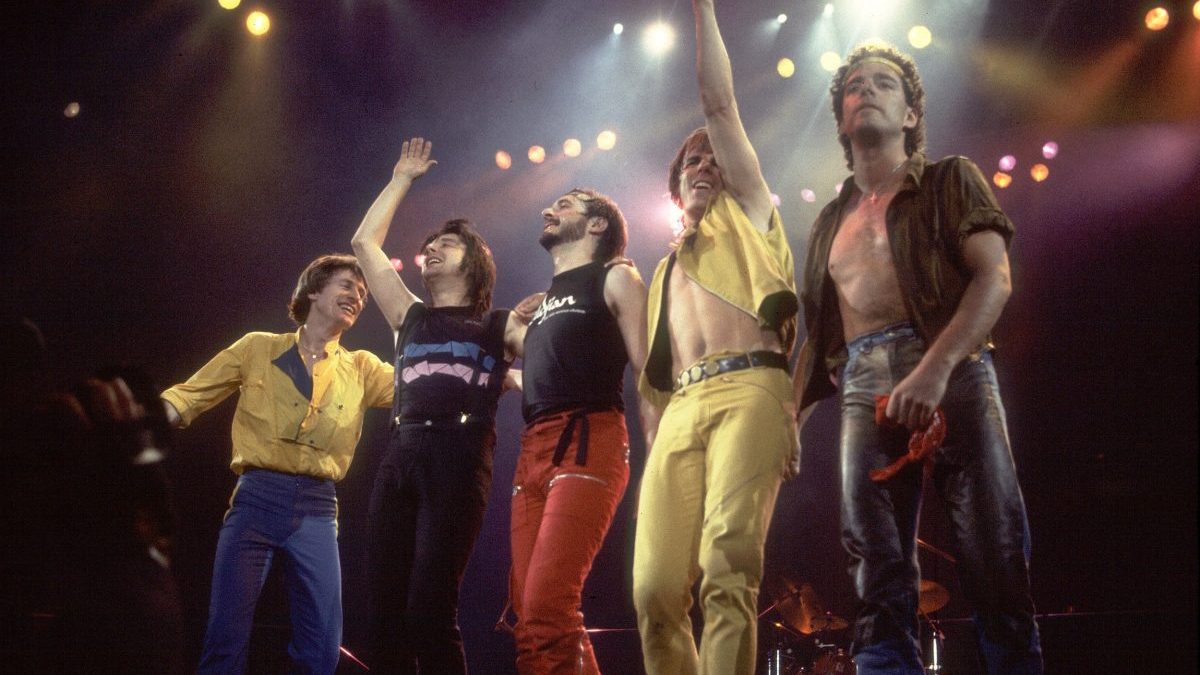
In the mid 1970s, Jonathan Cain was a struggling musician. He’d moved from Chicago to Hollywood to follow his rock’n’roll dream, but was struggling to make it a reality. Disillusioned and hardly making rent, Cain rang home for some comfort. His dad had some advice: “Don’t stop believing.”
Cain wrote the phrase down in his notepad, and inadvertently began writing what is now, according to Forbes, officially the biggest song of all time. Journey’s ultimate feel-good soft rock anthem “Don’t Stop Believin’” was a relatively modest hit on release in the US, peaking at No 9 in 1981, and a complete flop in the UK, reaching No 62 in the charts in 1982. “It wasn’t as if it got special attention,” singer Steve Perry later said.
But the track from a decidedly unhip band has become a cultural behemoth. The numbers are astonishing: it has had over 2.7 billion streams on Spotify, making it the 72nd most streamed song of all time. Aided by the fact it has soundtracked event TV – it was in the famous final scene of The Sopranos in 2007 and the 2009 pilot of musical comedy-drama Glee – by 2012 it was the bestselling digital track from the 20th century, reaching seven million downloads by 2017.
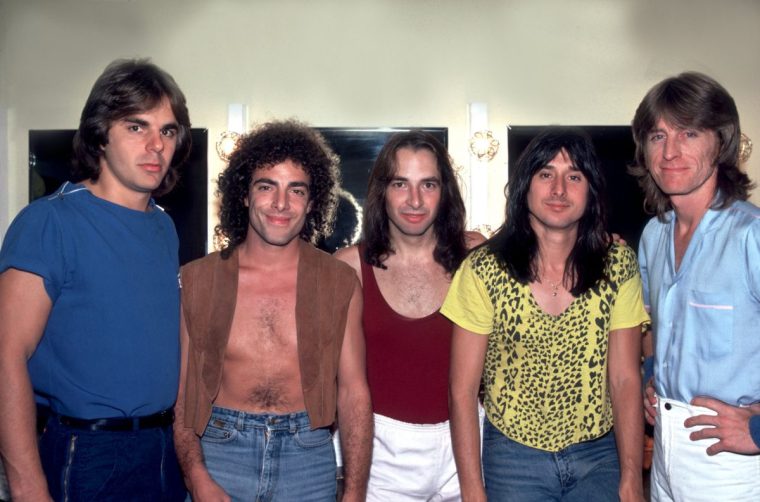 Journey in Illinois in 1981. Their music was known as AOR, or album-orientated rock (Photo: Paul Natkin/Getty)
It continues. It was the highest streamed song from the 1980s in 2025 with approximately 263 million streams. It remains a karaoke, wedding and sports montage staple.
And it has even been known to act as a life-saving guardian angel. In 2014, an amateur surfer from California, Brad Warren, endured a frightening ordeal when the boat he was travelling in capsized off the coast of Hawaii. As he, the captain and the captain’s 10-year-old son clung on for dear life for four hours, the boy heard “Don’t Stop Believin’” playing back on the shore. He said it gave them the strength to brave swimming to dry land. “I thought that was the Lord saying, ‘You will be fine’.”
Journey’s music was known as AOR, or album-orientated rock – a genre that helped shape the sound of American rock in the 1980s. It was all about big, anthemic, arena-sized rock songs that sounded good on the radio, particularly driving in the car. Its major players – Journey, Boston, Foreigner, Toto and REO Speedwagon – were massively successful in America, selling in excess of 355 million albums and popularising the power ballad. Even its second-tier acts like Bryan Adams, Heart, Styx and Survivor shifted records in huge quantities.
But the acts were never considered cool, and were often critically mauled, even dismissed in some quarters as “corporate rock,” a sanitised, homogenised take on the real thing. Journalist Paul Rees has just written a wildly entertaining oral history book, Raised on Radio, that charts the rise, fall and rise of the AOR phenomenon.
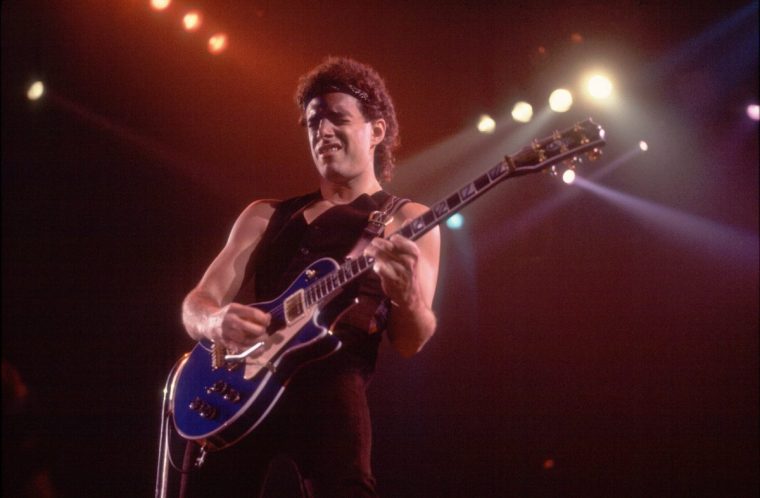 Neal Schon of Journey in Illinois in 1983 (Photo: Paul Natkin/Getty)
“It was hammered at the time, or ignored critically,” Rees says. “Journey, Boston, REO Speedwagon – they never appeared on the cover of Rolling Stone, the self-appointed cultural Bible, despite habitually selling 10 million records. They made a decision that this music wasn’t worth covering because it happened without critical permission. Because it came from the radio. It was the people’s music. It was music that heartland America loved and went out and bought in massive quantities.”
The rise of AOR can be traced back to the early 1970s. Radio consultant Lee Abrams conceived the idea, in opposition to the traditional and dominant Top 40 radio, that there was an audience for a station that would play album tracks by the big rock acts of the day like Jimi Hendrix and Cream. Research backed this up.
Abrams cleverly took the format to FM radio stations, which had been sidelined in 1964 by competition rules that stated they couldn’t just replicate the programming of AM radio – where all of those Top 40 tracks were being played. When FM became standard equipment in cars in the mid-70s, the AOR phenomenon was born.
At the same time, Journey’s manager Herbie Herbert, a very old-school, visionary industry figure, came up with a solution to the fact Top 40 radio were refusing to play bands like Journey. “He went out and did a deal with companies that piped music into stores and shopping malls,” Rees says. “So suddenly these bands were being heard where normal people went day in, day out.”
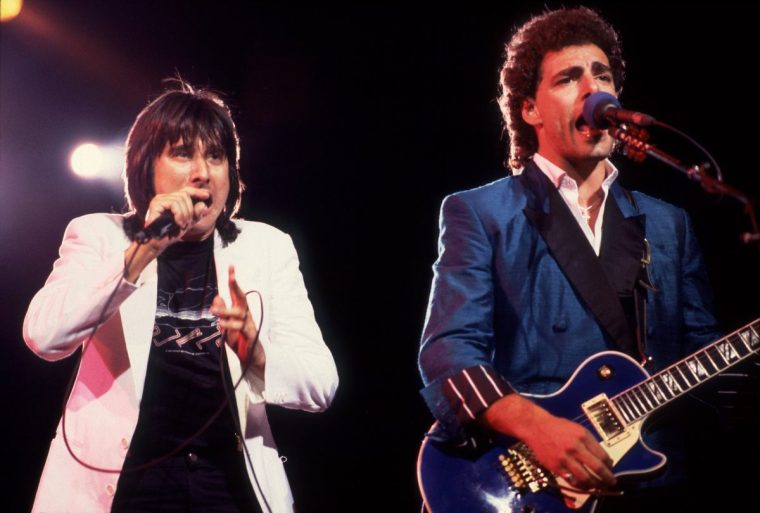 Steve Perry and Neal Schon of Journey in 1983 (Photo: Paul Natkin/Getty)
It led to the huge popularisation of a certain type of music – unshowy, polished, anthemic rock full of hooks and big choruses – to the point that not only did bands begin to write songs that would sound good on FM radio, but record labels themselves were fine tuning recordings – quite literally.
“The major studios at the time had FM transmitters set up outside the studio,” Rees says. “Artists would go and make songs, tune it into the FM transmitter for frequency, and sit in the car and play the song to hear what it would sound like. It was absolutely that laser focused on the idea of, ‘How will this sound while you’re driving the car?’”
Ironically given its original intentions, FM radio became all about new hit songs. “It became something a bit more streamlined and a bit more polished, less about Jimi Hendrix and Cream.”
Boston had led the way with their immortal hit “More Than a Feeling” in 1976, but Journey encapsulated AOR. Having formed as a jazz-tinted rock band in 1973, Journey had actually been struggling for hits until Herbert insisted the band take Perry as their lead singer in 1977 (much to the band’s annoyance). Cain joined in 1980 ahead of their Escape album. Feeling that Escape needed another hit, the song was written quickly, Cain opening his old notepad to see the song title inspired by that conversation with his dad staring back at him.
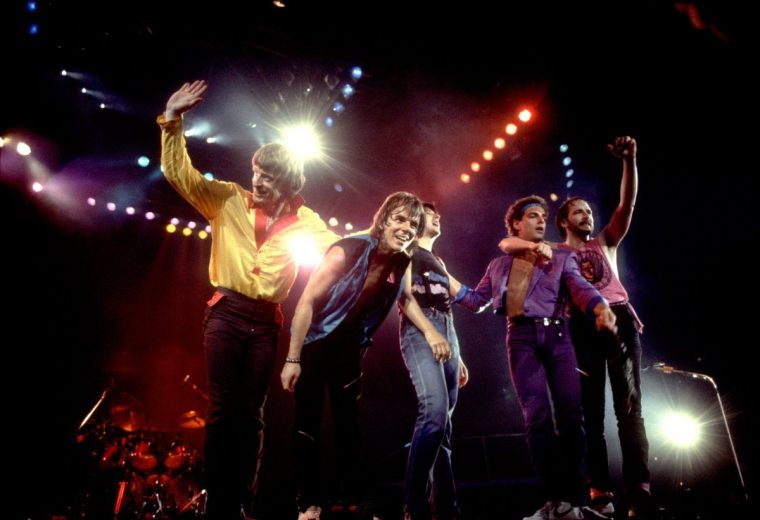 The track from a decidedly unhip band has become a cultural behemoth (Photo: Paul Natkin/Getty)
There is something of the Springsteen downtrodden anthem in the story of a “small-town girl” taking the midnight train anywhere, and a protagonist who is “workin’ hard to get my fill”. Cain once said: “We know who our audience is, and it’s a blue- collar band…. We write songs for people who go to work every day.”
But the lyrics are also cliched and ambiguous enough to mean all things to all people. “Some’ll win, some will lose” and the refrain of the title can be transposed on to any number of situations, from personal achievements and health challenges, to sporting fandom to when your boat capsizes off the coast of Hawaii. It resonates more perhaps because Cain imagined his own struggles to make it as a musician, as well as Journey’s early days making no headway. “I wrote it about the 70s…It represents all of what Journey is,” Cain said.
“It’s not conventional in the sense that there’s no actual, real chorus to the song,” Rees says. “It’s not structured in a traditional way.” The song’s slow-build route from piano power ballad (Cain later realised he’d used the same chords as in The Beatles’ “Let it Be”) to rock track to soaring finale helps with the sense of delayed triumph. The chorus, as it is, only comes in once, right at the end of the song, making the climax all the more euphoric. Cain described it as “the anticipation of something happening, a change in your life”. It also mirrors the song’s own path from lost classic to cultural dominance.
AOR’s demise by 1987 came amid the predictable trappings of success – drug habits, intra-band frictions (Perry left Journey in 1987), diminishing returns – as well as the emergence of similar but new bands like Bon Jovi and Def Leppard. “Don’t Stop Believin’” seemed destined to be a forgotten relic.
But its renaissance began in 1998, when the Adam Sandler film The Wedding Singer used the song lovingly; Scrubs and Family Guy then both used the song to great comic effect. But it was The Sopranos that cemented the song’s place in pop history. “The song is synonymous with the greatest ever closer of a TV series,” Rees says. “Pop culturally, that resounded far and wide.”
Your next read
It nearly didn’t happen: even three days before transmission, Perry hadn’t agreed to the song’s use. He didn’t want the song to be used as a gangster movie trope, where Mob violence is juxtaposed with uplifting music. “I kind of held out,” he said. “I didn’t want to see a Scorsese moment where everyone gets whacked. Scorsese would do that. He played these amazing songs and everyone gets mowed down.”
Reassured even if he wasn’t told specifics, Perry permitted its use, Tony picking the song on the jukebox as the family sit at a diner table in one of the most intense scenes in TV history: Tony surveying the suspicious characters in the diner as the possibility he is about to meet his end rachets up. The show’s creator, David Chase, said he wanted Tony to choose a song he’d have loved in his youth, and directed the scene to fit the song. Its sense of building momentum heightening the suspense, Tony’s paranoia becoming unbearable before the infamous fade to black. “I love the way it was used,” Perry said.
And once the acapella cover from Glee became an early viral hit, viewed 13 million times on YouTube in 2009, the track reached an unassailable cultural place.
Journey are not the only AOR band to have enjoyed rediscovery in the digital age. All of the major songs from the AOR era have reached one billion streams on Spotify: “More Than a Feeling”, Toto’s “Africa”, Foreigner’s “I Want to Know What Love Is,” Bryan Adams’ “Summer of 69,” Survivor’s “Eye of the Tiger”.
From commercial radio to city centre bars to drunken karaoke sessions, the AOR classics remain embedded in daily life. “They’re just simply great pop songs,” Rees says.
And “Don’t Stop Believin’” is the greatest of them all. “It’s the song that probably best encapsulates the whole AOR thing,” Rees adds. “It’s top down, going down the American freeway. It’s optimistic. It’s grandiose, it’s perfectly performed. And especially now, there’s no harm in having a song that sounds wide-eyed and hopeful.”
‘Raised on Radio: Power Ballads, Cocaine and Payola: The AOR Glory Years 1976-1986’ is published by Little, Brown on 24 February, £25