
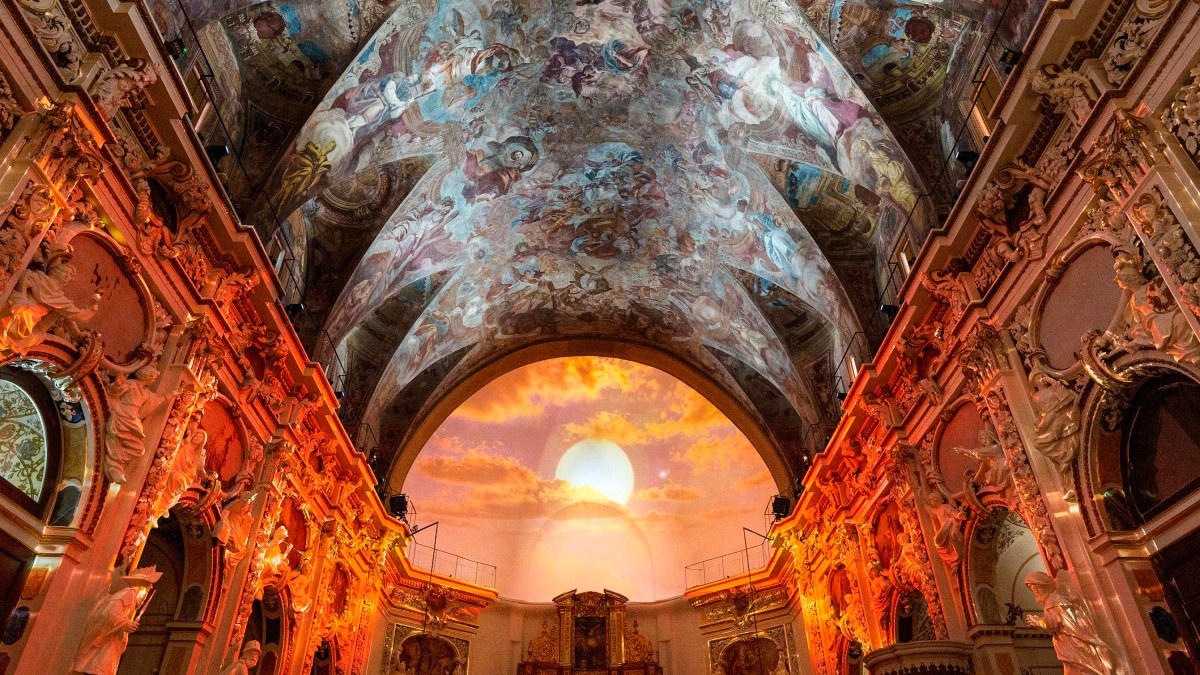
For ninety years after anarchists set fire to the Valencia church at the start of the Spanish Civil War, its baroque frescoes were blackened and charred.
The Republican militiamen did their work thoroughly on July 18, 1936. They smashed all ornaments and effigies, tossing them onto a fire in the nave of Santos Juanes Church, turning the building into a furnace that burned for eight days.
The fire destroyed Antonio Palomino’s painted barrel-vault ceiling, monumental altarpiece and sumptuous stucco sculptures — and damaged the church’s medieval structure.
After a five-year restoration, the church has reopened, with much of its former glory recovered. The project has involved new scanning techniques, cleaning with bacteria, a restorer’s family history and suspected thefts of artworks.
“It has been almost a miracle that we have been able to save so much after the terrible fire of 1936,” said Pilar Roig, who led the restoration. Pointing to the ceiling, she added: “People have wept with joy on seeing it. What was once stained black is now brilliant again.”
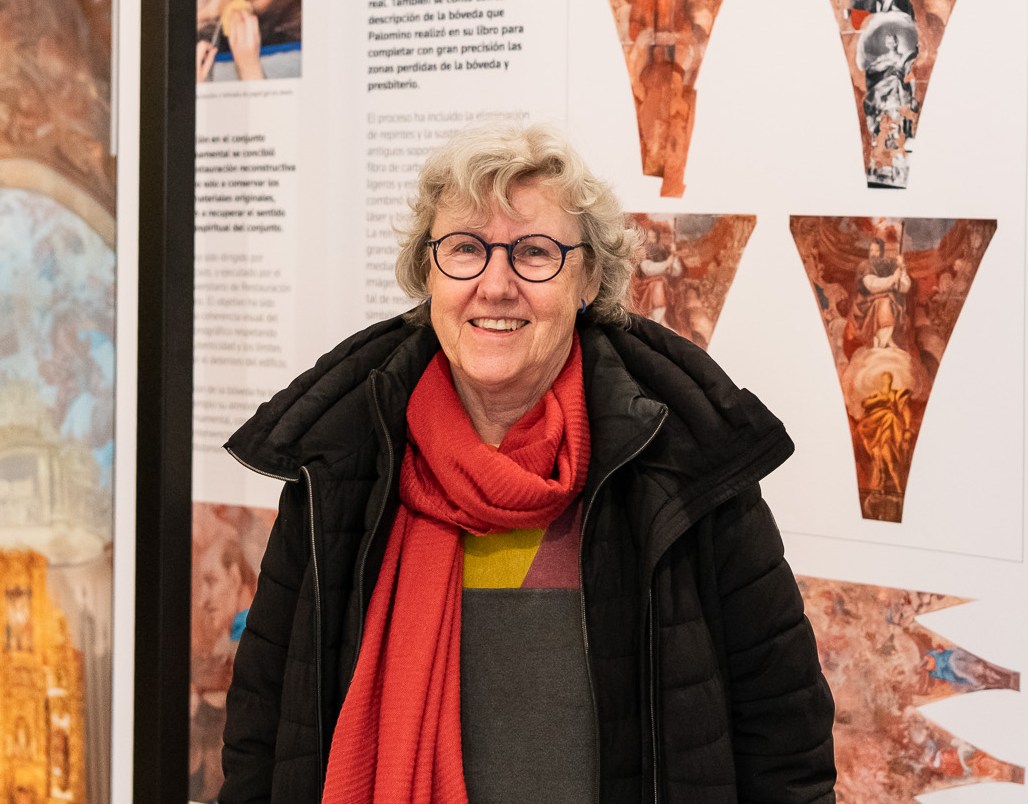
Pilar Roig
VICENTE LARA SAES/UNIVERSITAT POLITÈCNICA DE VALÈNCIA
The church has a special place in Valencia’s heart. “The historic triangle formed by La Lonja [the merchant’s exchange], the Central Market and Los Santos Juanes, which was the commercial hub in the 17th and 18th centuries, is now complete and alive once again,” said Hortensia Herrero, whose eponymous foundation funded the restoration.
Surrounded by figures and seated on a throne of clouds, God the Father has indeed returned to his heaven, at least the one depicted by Palomino on the church ceiling. Its 12 side chapels also once again gleam with stucco sculptures of biblical figures and allegories.
Palomino, one of the most prominent artists of the Spanish baroque, served the royal court as a painter, working with Luca Giordano on the ceiling vaults at El Escorial palace-monastery near Madrid. Dubbed “the Spanish Vasari” due to the 18th-century biography he wrote about the lives of his country’s artists, “at Santos Juanes he was able to demonstrate his astonishing technical prowess as well as his profound knowledge of art and theology”, said Roig.
But a major gap in that legacy — and a mystery — remains. The flames destroyed most of Palomino’s frescoes on the vault over the apse, but those that survived were taken to Barcelona as part of a “disastrous” restoration attempt in the 1960s. “They disappeared there and the theory is that they were sold,” said Roig. “Interpol is still supposed to be on the lookout for them today.”
For Roig, a professor from the Institute of Heritage Restoration at the Universitat Politècnica de València, the restoration of the church has been a work of three decades since the regional government asked her to write a conservation report when the church was abandoned in the 1990s.
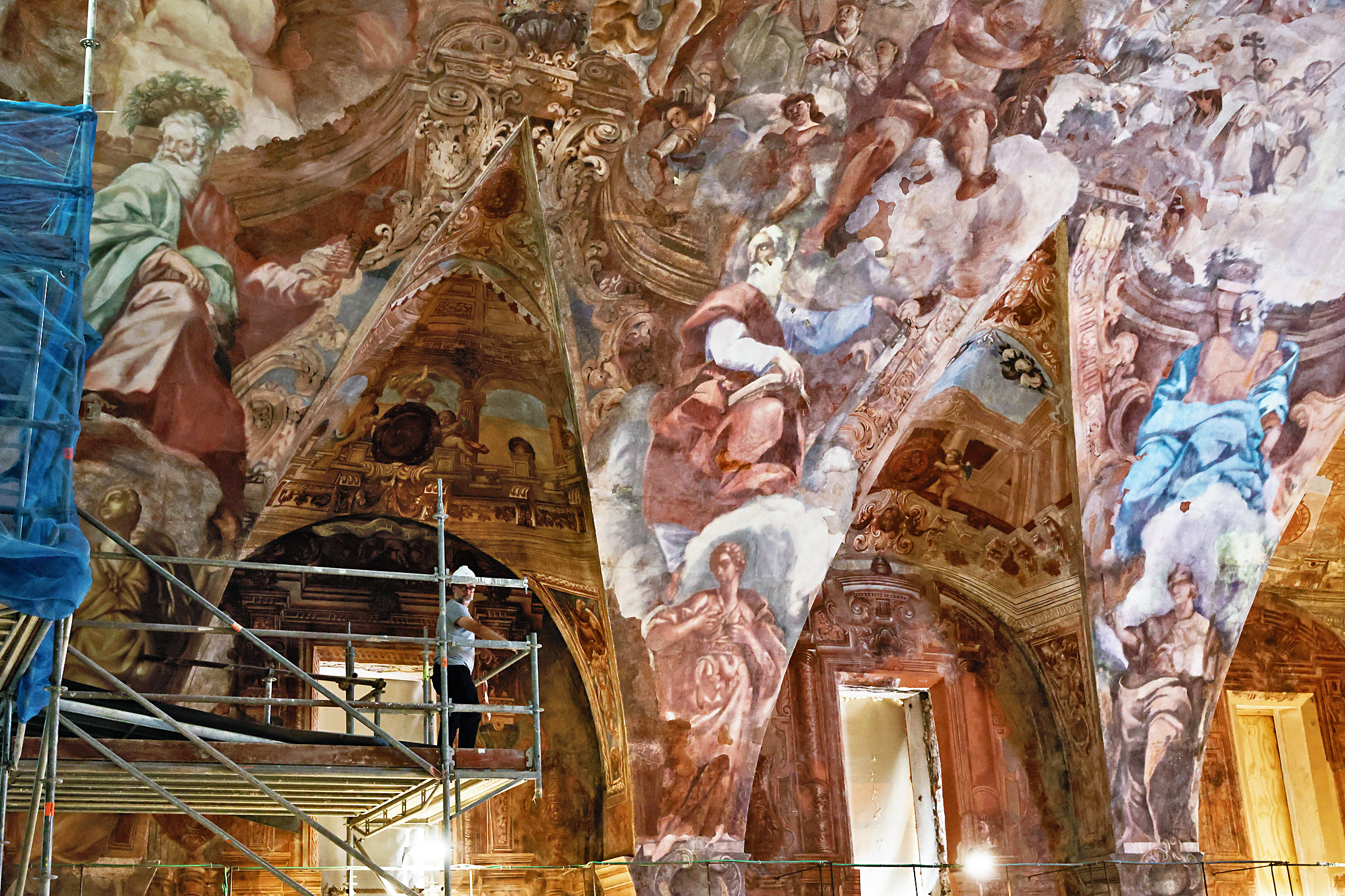
The church ceilings were painted by Antonio Palomino
EVA MANEZ/REUTERS
It has also been a family affair. Her father, Spain’s first professor of restoration, worked to recover its large communion chapel in the 1940s. Three of her children have helped in the restoration project, including her daughter, Pilar Bosch, a microbiologist who used bacteria to remove glue that had been used to pull the frescoes from the walls during restoration work in the 1960s.
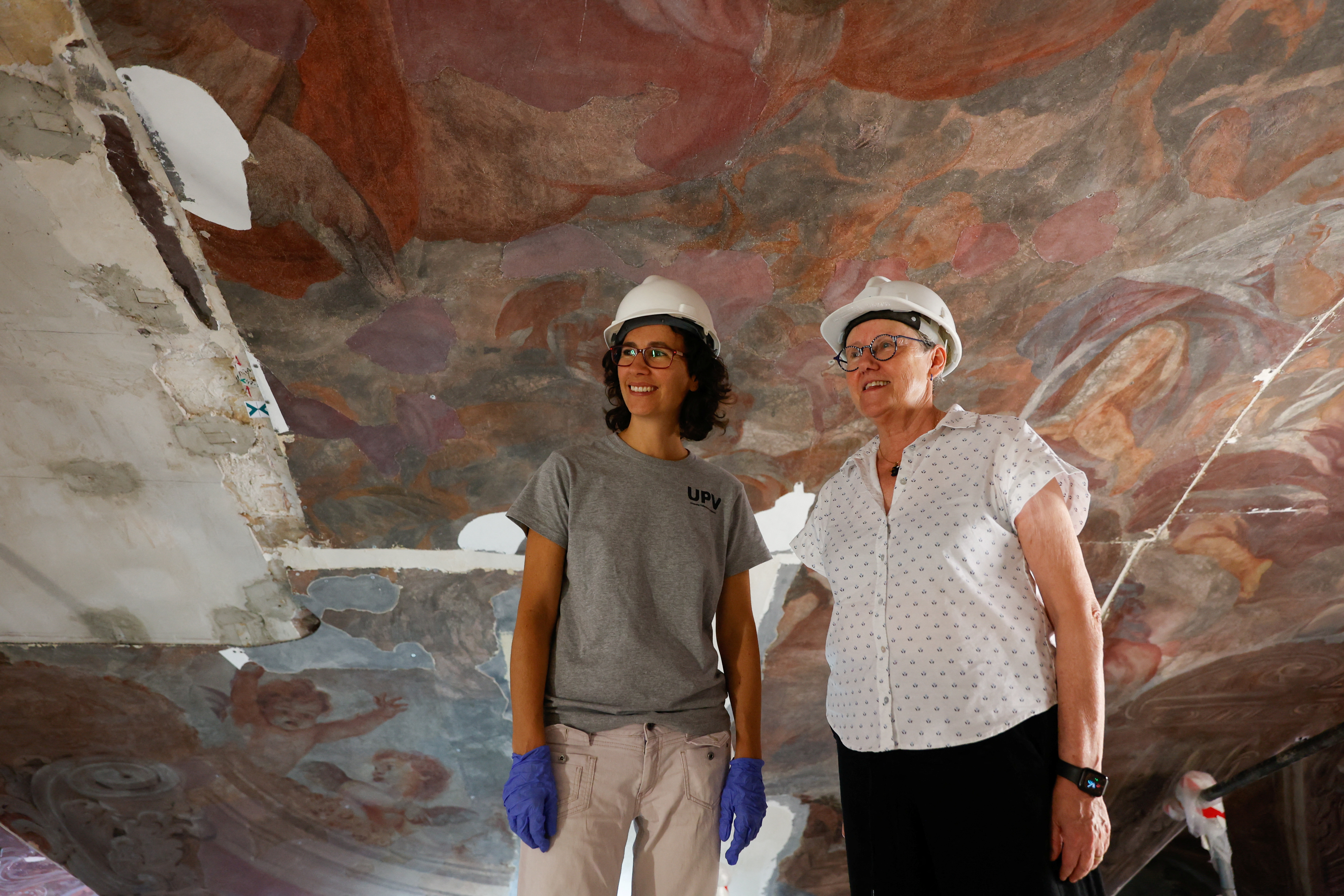
Pilar Roig, left, with her daughter, Pilar Bosch
EVA MANEZ/REUTERS
Bosch trained bacteria by feeding them samples of the glue, which was made from animal collagen. The bacteria then naturally produce enzymes to degrade the glue. She mixed the bacteria with a natural algae-based gel and spread it on the paintings. After three hours, the gel was removed, revealing glue-free paintings.
The restoration has been on a grand scale. The 21-metre high ceiling is involved a mass of scaffolding. “The largest work Palomino ever did was Los Santos Juanes between 1699 and 1702. It covers 1,200 square metres,” Roig said.
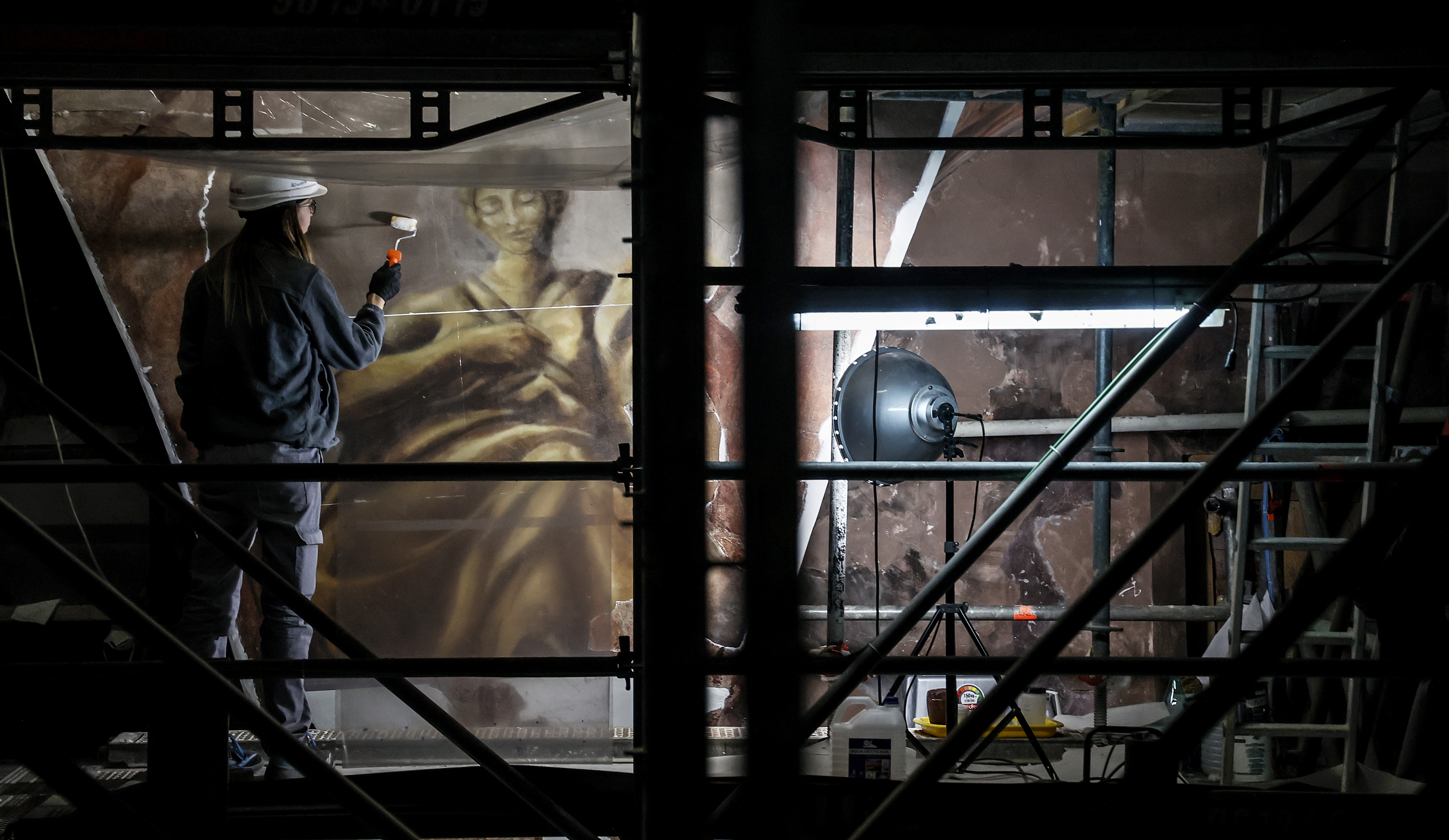
To recover the frescos, they were separated from the plywood panels on which they had been mounted in the 1960s and cleaned. They were returned to the ceiling vault mounted on new panels made of carbon fibre and resin.
For the larger damaged areas, a key aid in the restoration were old photographs, particularly a black-and-white photograph taken before the civil war that was digitised, corrected, coloured and magnified 140 times. “This gave us an enlarged digital image that was transferred to the wall,” said Roig. “The image was printed on a temporary medium which, when peeled away, left only the pattern of coloured ink on the surface.”
Roig noted that the fire altered the pigments of the surviving frescoes and that the restoration has sought to strike a balance between “recovering the original and adapting to historical memory”. She added: “Santos Juanes is spectacular but the mark of history is there and must be respected.”
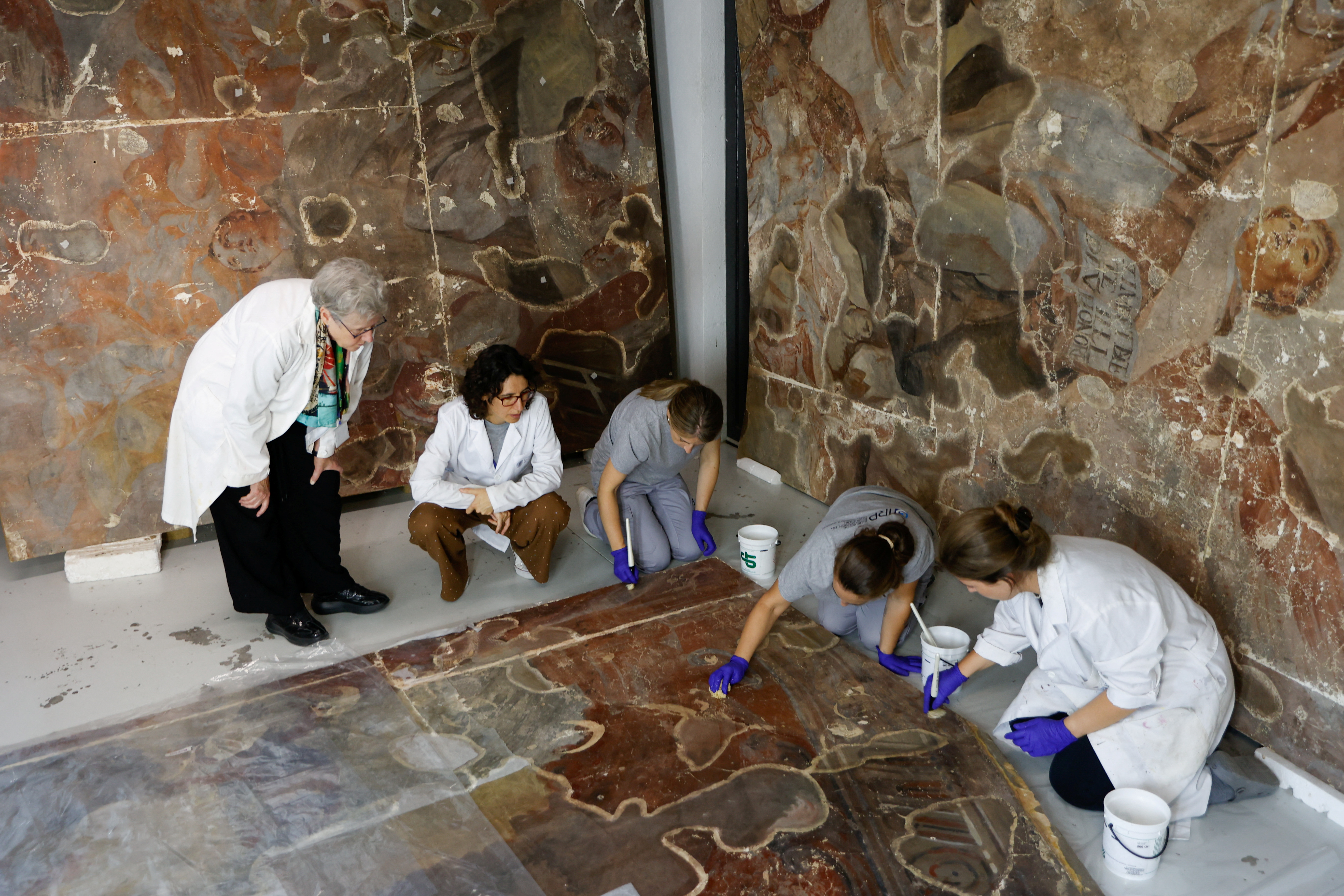
Conservation and restoration technicians clean a fresco with gelled solvent emulsion
EVA MANEZ/REUTERS
The spaces where paintings were totally lost above the apse and in most of the ovals in the nave have been left bare. Video recreations of the works are projected onto the spaces. “I still hope the originals will be found,” said Roig.
The restoration of the church’s stucco sculptures and decorations, originally made by the Italian artists Giacomo Bertesi and Antonio Aliprandi, was done by elderly craftsmen: a sculptor, a plasterer and a gilder. “We had young people doing work experience and learning from these masters who cannot be found at universities,” she said.
It has been a labour of love and faith, Roig concluded. “In the end, the spiritual aspect is there,” she said. “And when you’re up on scaffolding and you see it up close, the sheer majesty of it, too.”