
There have been some notable shifts in the Visma Lease a Bike team camp in the past few months. Most recently came the departure of performance coach Tim Heemskerk, alongside the surprise retirement of Simon Yates and the move of former Hungarian champion Attila Valter to Bahrain Victorious. In a sport that focuses on marginal gains, what do these changes mean for team culture and environment, and where might they leave Jonas Vingegaard’s performance this season?
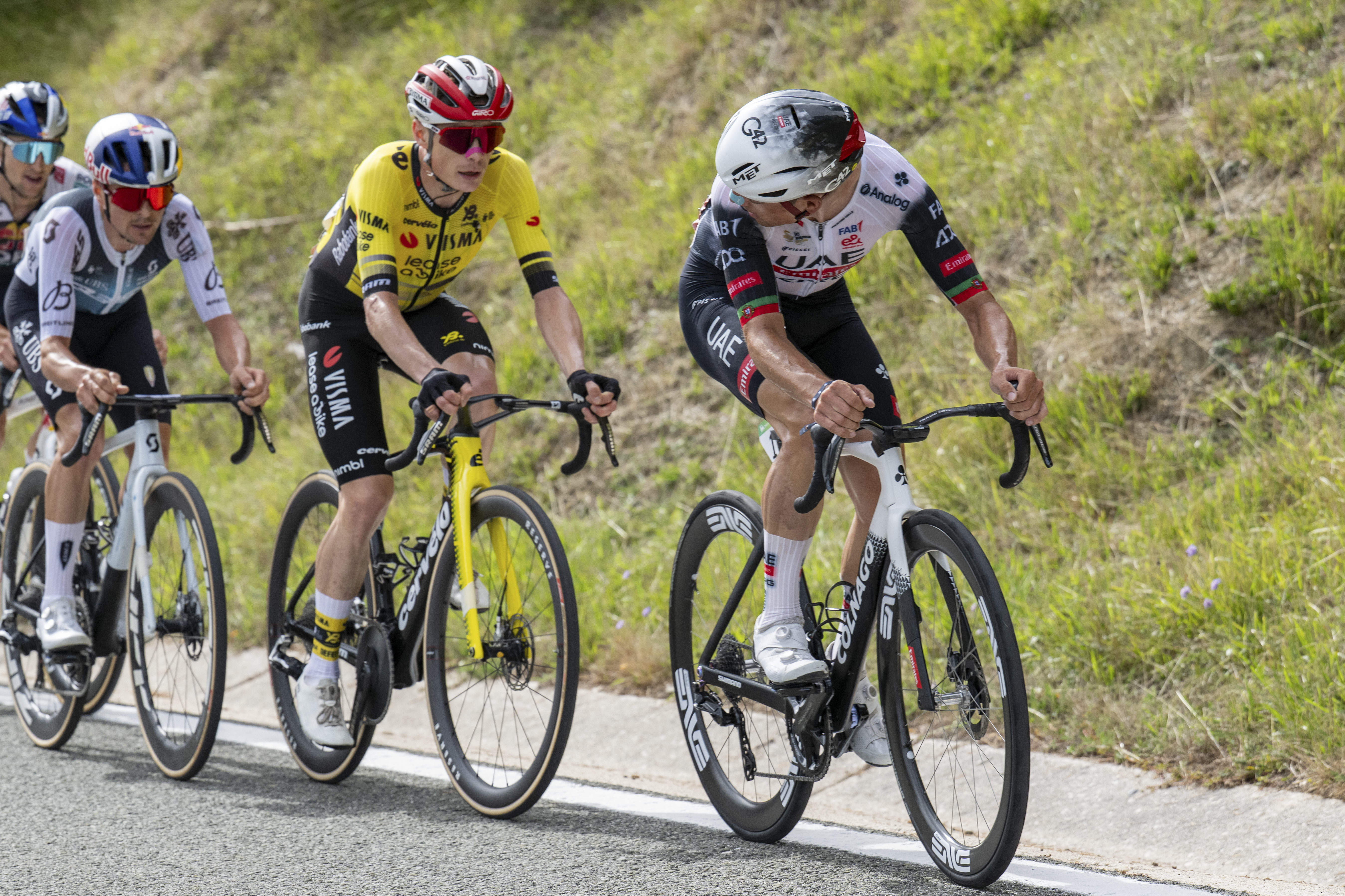 João Almeida and Jonas Vingegaard 2025 Vuelta (Image Credit: ASO/Unipublic / Cxcling / Antonio Baixauli)
It was announced at the start of this month that after eight years, performance coach Tim Heemskerk would be leaving Team Visma Lease a Bike in what feels like another late shift as the 2026 race season gets underway. Heemskerk was part of the performance staff led by Mathieu Heijboer and worked closely with Jonas Vingegaard as his long-time trainer and coach.
In the team’s statement, Heemskerk said: “Over the past period, I have noticed that I was struggling to continue applying my creativity and passion, which are important to me in my work as a coach… I look back with pride on the growth of the team, myself, and the riders, including of course Jonas.”
Simon Yates also announced his surprise retirement in January, shortly after attending a team camp, saying “I have been thinking about it for a long time, and it now feels like the right moment to step away from the sport”.
 Simon Yates wins 2025 Giro d’Italia (Image Credit: Zac WiLLIAMS SWpix.com)
It hasn’t been plain sailing for Vingegaard so far this year, as he crashed three weeks ago in training, while being followed by an amateur on a descent. Fortunately, he escaped without significant injury.
At the end of last year, Attila Valter, the former Hungarian national champion, also made the decision to leave Team Visma–Lease a Bike after three years, moving to Bahrain Victorious. In 2025, he wasn’t selected to ride in any of the Grand Tours, a situation that contributed to the decision. Reflecting on the move, he told IDL Pro Cycling: “I needed something else to flourish… I was struggling, also mentally. Even though I liked all my teammates and everyone there, I felt like I would not be able to turn things around here, with this mentality.”
Valter describes the departure as a personal choice, motivated by the desire for new challenges. From a sport psychology perspective, his experience highlights the balance between challenge and support that is essential for a facilitative environment. When either element is lacking – too little support or insufficient challenge – athletes are less likely to reach their full potential, leading to stagnation or frustration.
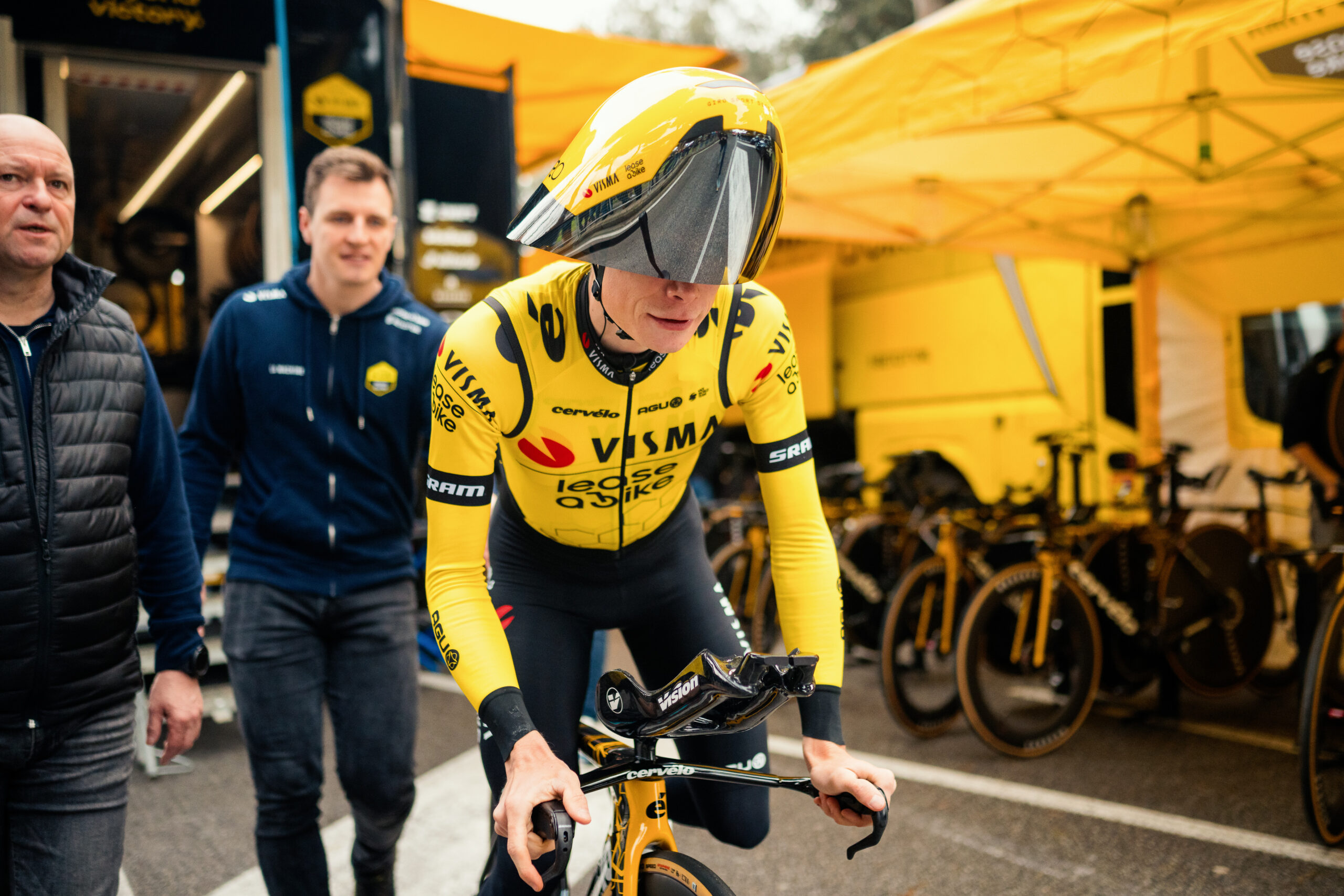 2024 Jonas Vingegaard Tirreno-Adriatico TT helmet (Image Credit: @vismaleaseabike on X)
Performance is more than just measurable outputs and while marginal gains often focus on watts, aerodynamics, and nutrition, effective performance emerges from the broader environment in which an athlete operates. This includes mental load, emotional fatigue, motivation, and the team environment.
Team Visma–Lease a Bike has clearly mastered many of the performance fundamentals, delivering impressive results across both the men’s and women’s squads. Last year, they claimed 13 Grand Tour stage wins in the Giro, Tour, and Vuelta. Vingegaard took the red jersey at the Vuelta, Simon Yates won pink at the Giro, and Vingegaard also finished second overall at the Tour de France.
With key departures, is this the end of an era for the team, and what does it mean now for Vingegaard? Coaching relationships matter, even at the very top of the sport. The coach–athlete relationship sits at the heart of performance, shaping not only results but also wellbeing and long-term development. Effective environments are co-created and success emerges from the quality of interaction between coach and rider, not simply from the training plan itself.
 Jonas Vingegaard, 2024 Tour de France (Image Credit: Zac WiLLIAMS SWpix.com)
In that context, the departure of a long-term coach is more than an administrative change. It represents a shift in one of the most important performance variables – the stability and quality of the relationship behind the watts themselves. In cycling, as in other elite sports, success is not guaranteed by data and equipment alone. The interplay of psychological and environmental factors can be just as critical as the watts going through the pedals.
For Vingegaard losing a trusted coach and teammates such as Simon Yates is significant, and he has acknowledged it as a “big blow.” Speaking about his goals for 2026 to DH Les Sports+, he said: “Last year I won the Vuelta, now I only need the Giro – it’s the last one to have won all three of them. Obviously that’s a big goal for me now.”
It’s clear the team doesn’t want this to signal the end of an era. Yesterday, they announced they are actively seeking a new lead sponsor, signalling their intent to maintain momentum and stability. Meanwhile, British rider Matthew Brennan enjoyed a breakthrough season last year and appears ready to take the baton.