
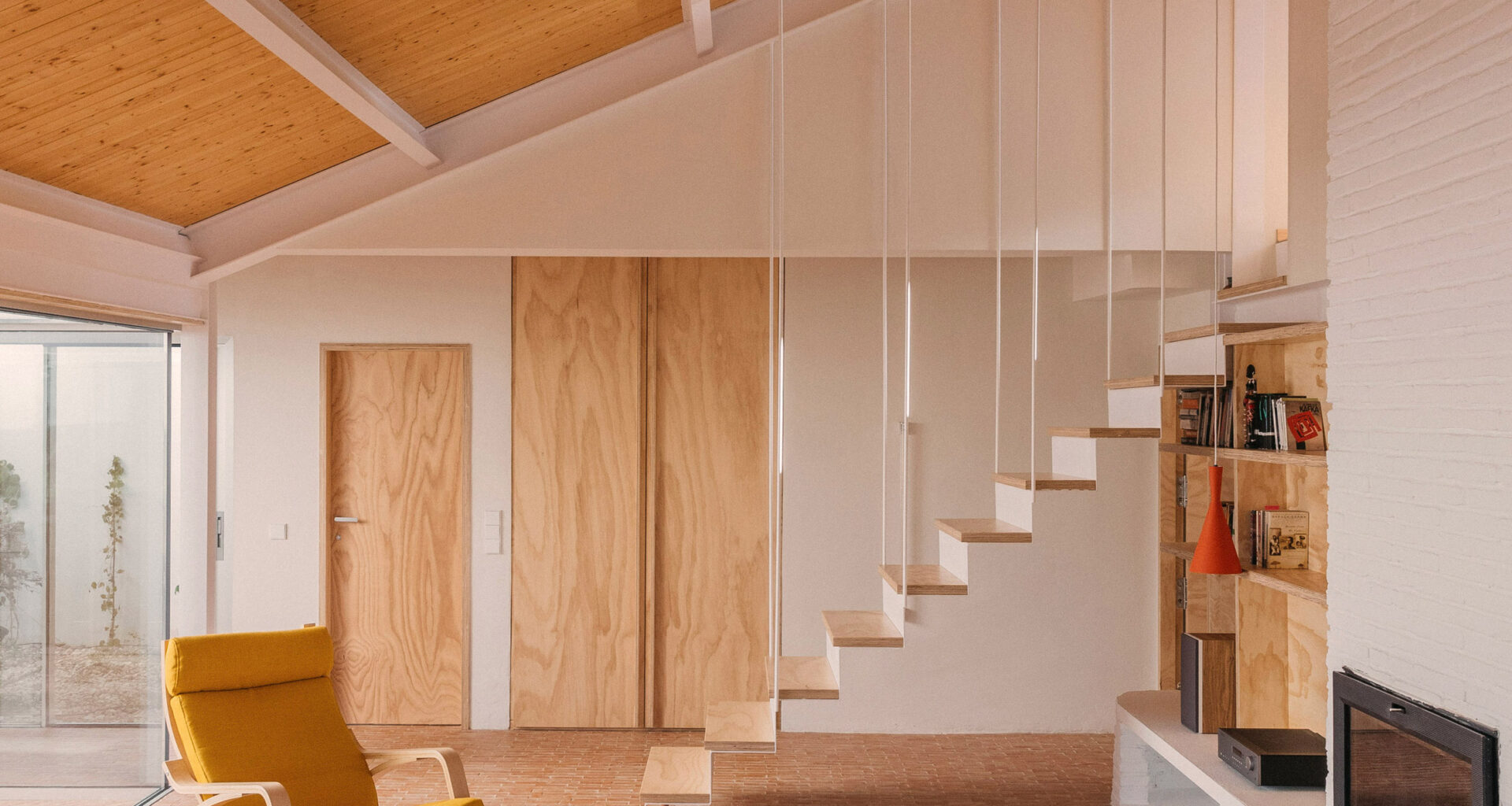
Hand-fired clay tiles, exposed timber and plaster walls bring “essential simplicity” to Rosa María House, a residence near Madrid designed by Spanish architecture studio Delavegacanolasso.
Organised around two internal courtyards, the 320-square-metre home is nestled between a wooded area and a large lawn that informed Delavegacanolasso‘s use of a pared-back, natural material palette.
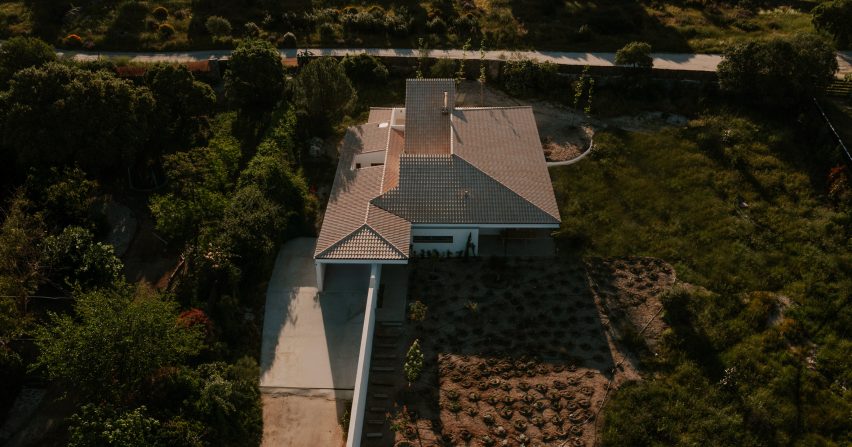 Delavegacanolasso has created Rosa María House near Madrid. Photo by Studio Cafecito
“The Rosa María House is rooted in essential simplicity – a serene, well-oriented home where light, proportion, and honest materials define the atmosphere,” the studio’s co-founder Ignacio de la Vega told Dezeen.
“The concept focuses on creating calm, balanced spaces that respond naturally to their environment and daily life.”
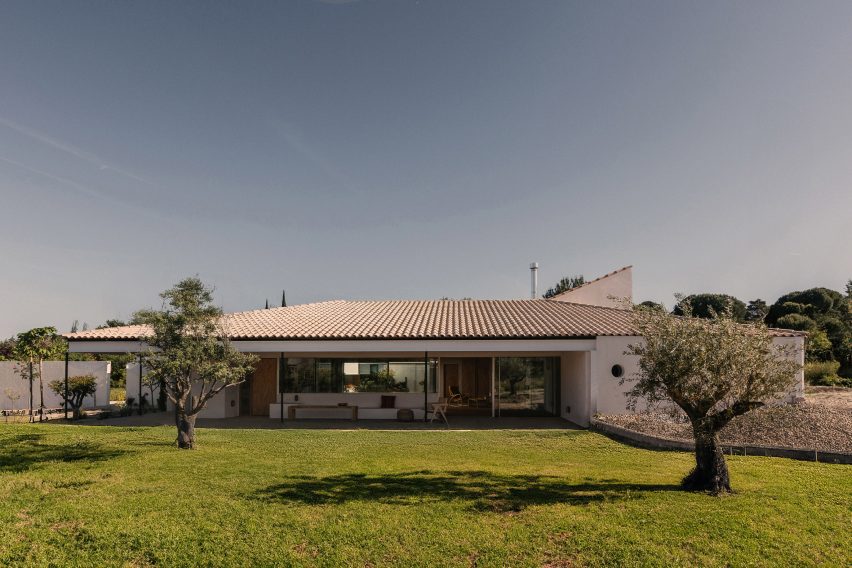 The home was designed with a tactile material palette
A path shaded by a long white wall forms what De la Vega called a “ceremonial approach” into the home, passing beneath a porch sheltered by wooden slats to reach a central corridor.
This corridor is flanked by two patio courtyards wrapped by walls of full-height glazing and sliding doors, around which the roof geometry has been designed to control the entry of light.
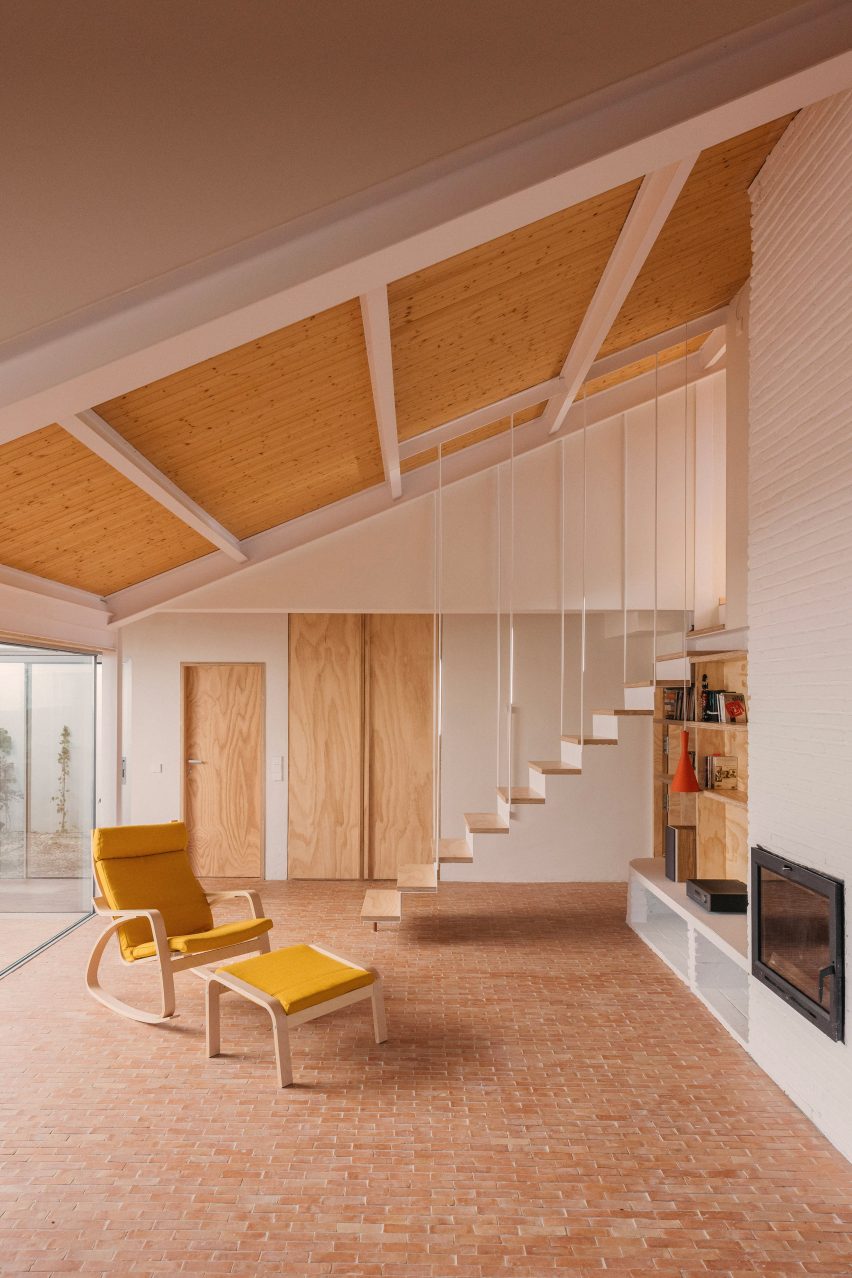 Clay tiles line the floors
“The roof is the project’s defining gesture. From a simple, well-oriented plan, its geometry folds to generate two patios and a generous porch, shaping how light enters the house – when and how it should,” said De la Vega.
The largest courtyard at the home’s centre features a paved patio acting as an extension to the dining area, while a smaller courtyard to the north is finished with pebbles and plants.
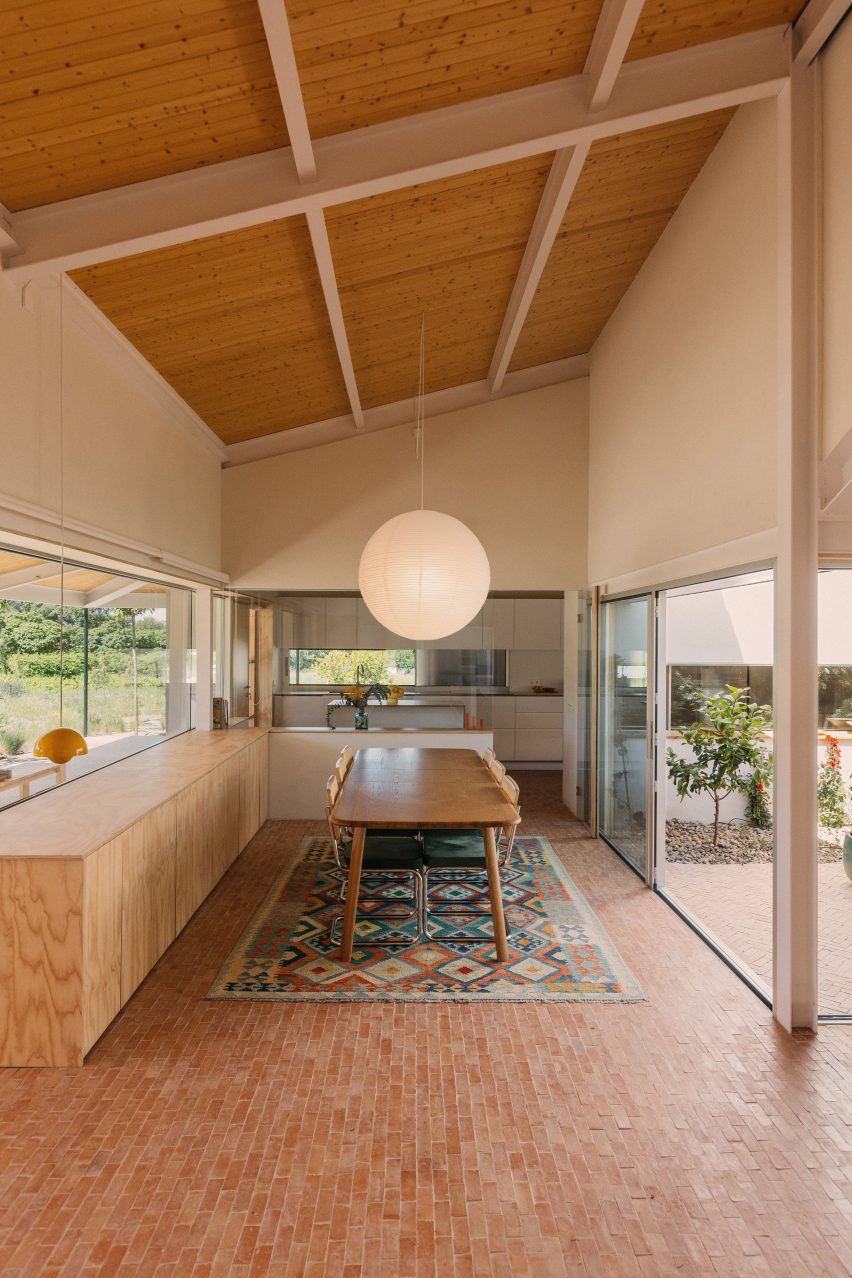 The dining area leads out to a patio
Both the central living, dining and kitchen area of Rosa María House and the patio have been given a floor finish of hand-fired Moroccan clay tiles, intended to make the transition between inside and out feel seamless.
These floor tiles are at the centre of a deliberately simple and rustic material palette, alongside exposed plywood carpentry, pine plank ceilings, a white-painted steel framework and plastered walls.
Delavegacanolasso creates prefabricated Tini home-office cabin
This is mirrored in the home’s exterior, which features pale cream rendered walls and pale terracotta roof tiles, typical of many of the more rural homes in the area.
“The elements in contact with the ground – floors and walls – are crafted and tactile: white plaster, pine wood, and handmade Moroccan terracotta tiles, each irregular and full of character,” De la Vega explained.
“In contrast, the roof structure is light, precise, and prefabricated – designed for efficiency and clarity. This dialogue between the handcrafted and the technical reinforces the house’s serene yet dynamic character,” he added.
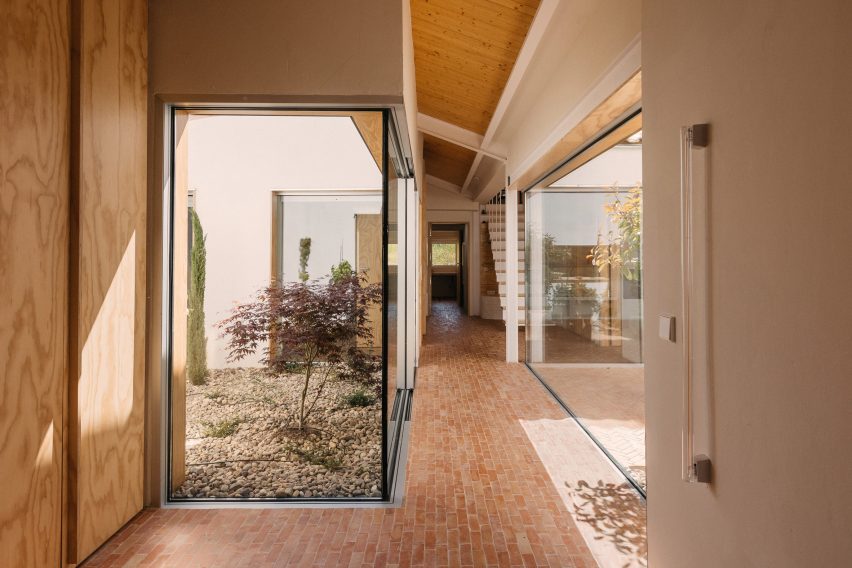 The plan is organised around two internal courtyards
Rosa María House’s bedrooms are positioned at the eastern edge of the home to take advantage of the morning sun, while facing south, the living area opens onto a sheltered terrace through sliding glass doors.
A lightweight, suspended steel staircase leads up to a study area on the home’s upper level, which faces east through a window in a projecting, mono-pitched section of roof.
Delavegacanolasso was founded in 2017 by De la Vega alongside Pilar Cano-Lasso. Previous projects by the studio include a prefabricated steel-framed cabin and a mirrored extension for a hidden house in Madrid.
The photography is by Paco Marín unless stated otherwise.