
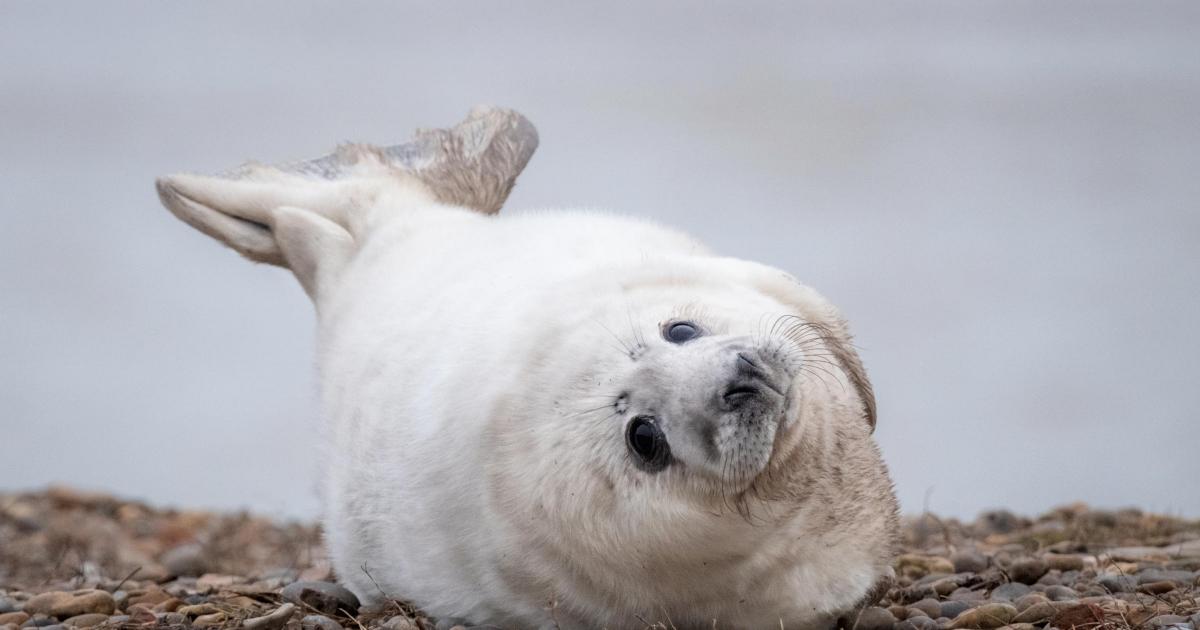
National Trust rangers at Orford Ness in Suffolk recorded 430 new arrivals during the latest pupping season, an 88 per cent increase compared to the same period last year.
It is the highest number since the colony was first established.
The seals can live between 20 and 35 years. (Image: Hanne Siebers/ National Trust)
Matt Wilson, countryside manager for the National Trust’s Suffolk and Essex Coast portfolio, said: “This year, our peak counts have included 803 adults and 430 pups, which is by far the highest numbers we’ve seen since the grey seals’ arrival in 2021.”
The seals first settled at Orford Ness in 2021, drawn to the site during the Covid-19 pandemic when visitor access was greatly reduced.
The colony has grown steadily since, with just 25 pups recorded in the 2021-22 season, rising to 66 in 2022-23, 133 in 2023-24, and 228 in 2024-25.
It is the highest number since the colony was established. (Image: Hanne Siebers/ National Trust)
Orford Ness, once a military testing site, is now believed to be home to Suffolk’s first breeding colony of grey seals.
Mr Wilson said: “We’re now in the fifth consecutive year of successful breeding at Orford Ness, which means that some of the adults having pups this year would have also been born here in 2021 and 2022.
“It’s a good sign that the habitats are healthy, with enough fish stocks to keep them sustained throughout the winter, and the shingle ridge providing shelter from storms.
“Orford Ness is also closed from the end of October until the spring, which coincides with pupping season.
“That means the likelihood of human disturbance is greatly reduced, which no doubt adds to their overall health and wellbeing and has so far helped them to thrive.”
It is home to the remains of a Cold War-era atomic bomb testing site. (Image: Hanne Siebers/ National Trust)
Disturbance, whether by foot, drone or other human activity, is considered one of the biggest threats to grey seals on UK shores.
This includes the use of drones or other aerial equipment, which can cause just as much disturbance as approaching on foot.
During the pupping season, National Trust rangers carried out weekly checks from a safe distance.
Tom Allen, a ranger at Orford Ness, said: “It’s been fantastic to see the colony grow over the past few months, although with much bigger numbers, and typically wintry weather, it can make counting difficult.
“Seals are wild animals and therefore move around, which occasionally means we’re unable to even get to some of their locations without the risk of disturbing them.
“We use a combination of telescopes and binoculars to help, which allows us to monitor the size and health of the colony from a safe distance, but as the colony gets bigger, it’s likely that our counts will become estimates rather than final numbers.
“We try to be as accurate as possible, but there is always a chance that some may have been missed.”
Global number of grey seals are around 300,000. (Image: Hanne Siebers/ National Trust)
This season, winter storms, including Storm Goretti, shifted parts of the shingle spit, temporarily displacing some adults and pups.
However, Mr Wilson said the impact was thankfully limited.
He said: “Fortunately, the most noticeable storm surge occurred when most of our pups had moulted, which is when they lose their fluffy white coat and are able to swim.
“This meant that they are able to survive in the water, and the remaining white coats were still spotted on the shingle beach during our post-storm checks.
“Although we do lose some pups each year to storm events like this or sometimes to a few cases of female pups abandoning their young, we still appear to have a very low mortality rate, even as the colony continues to grow.”
The National Trust is working with partner organisations, including the Sea Mammal Research Unit, British Divers Marine Life Rescue, WildlifeWise, and the RSPCA’s East Winch rescue centre, to support the growing colony.