
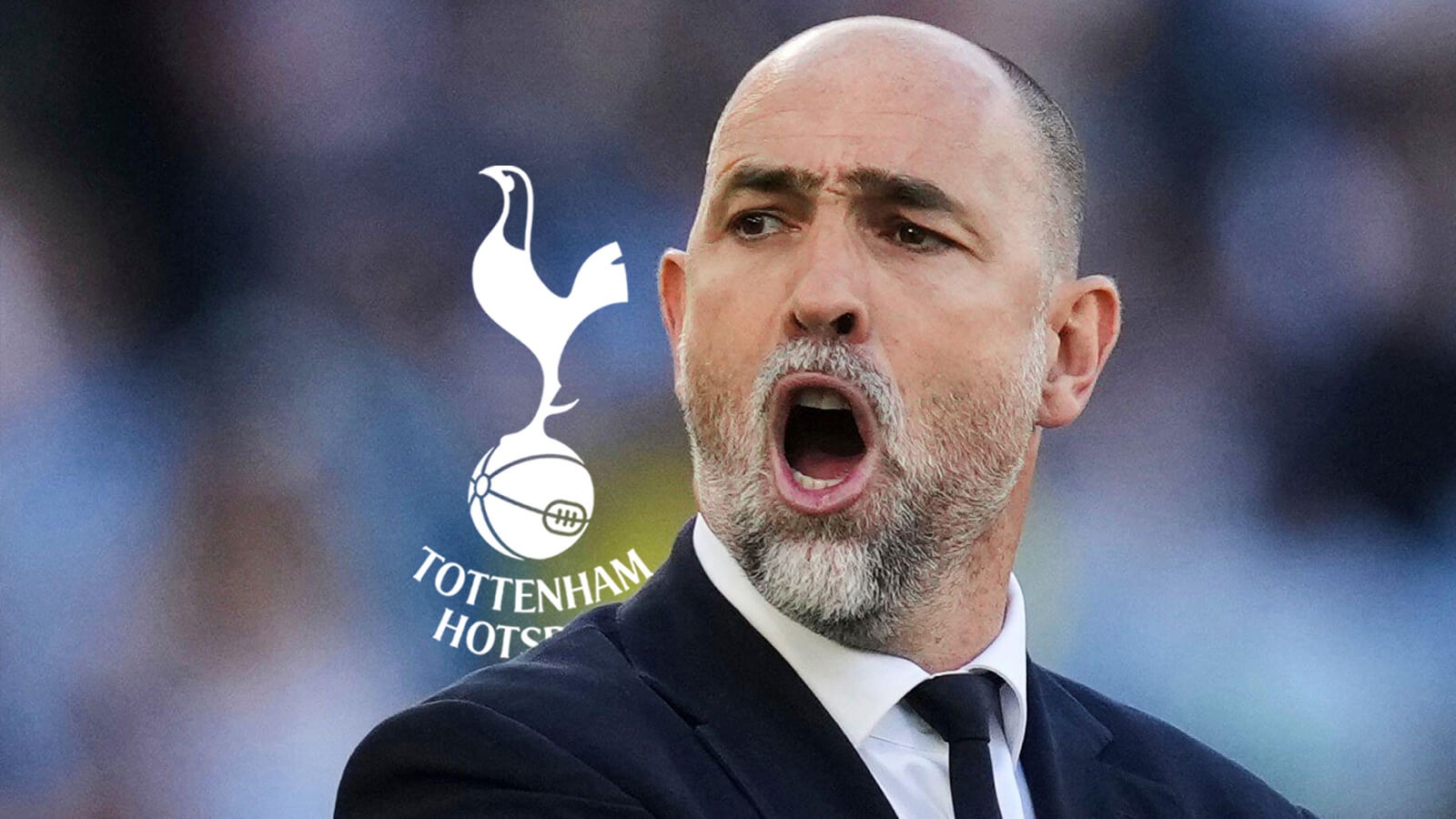
It might not mean much or indeed anything at all when the post-mortems on Spurs’ season come to be written, but his first interview as Spurs boss did at least bring one slice of comfort to the fans: he gets it.
Igor Tudor understands the assignment. It doesn’t mean he will or even can complete it, but he understands it. In a five-minute in-house interview he showed a clearer understanding of what Spurs are, what Spurs should be, and how that chasm might be bridged than Thomas Frank did in eight months.
It’s… something. And right now that’s all Spurs have; something, anything to cling to that suggests someone, anyone, in a position of responsibility at the club understands the realities of just how serious Spurs’ current position remains but is also able to project some form of optimism for a better future from a position of hard-eyed realism rather than, well, guff.
Great care is always needed to avoid falling into the Spoke Well, I Thought trap with any new manager. Spurs fans know this as well as anyone, with memories of Nuno’s “We will make you proud” still painful and fresh.
But it’s also perfectly understandable for a fanbase that has spent recent months being gaslit by their manager and his baffling media cheerleaders to now want to latch on to a manager whose record reveals deep and worrying flaws but who does at least appear to understand that wanting halfway watchable football, not to get relegated and maybe even, if it’s not too much trouble, the occasional home win doesn’t make them impatient, cruel or entitled.
We all know by now Tudor’s record, largely in Italy. The kind reading of it is that he is a manager who definitely lends himself to an interim role. He does have a track record of being able to make quick, on-the-job repairs to a listing ship. He has no record of being able to build anything more substantial.
He is not the man to turn Frank’s infamous supertanker around. But he might be the man to stop it sinking altogether. That’s clearly the plan.
Yet here comes the next note of necessary caution for Spurs fans. Because while Tudor’s record and Tottenham’s current predicament mean that it’s obvious from the outside that this is the plan, it begs a further question: whose plan?
The only possible sensible answer to that is Fabio Paratici. This is Fabio Paratici’s plan to save Tottenham. And it is his last contribution.
The confirmation of Tudor’s coaching set-up this week, and with it the departure of Johnny Heitinga after being Spurs’ assistant coach for a month, sets off alarm bells.
Easy to jape about Heitinga’s Abe Simpson entrance and exit through the Spurs revolving door to complete an interesting nine months in the professional life of a man who was celebrating his part in Liverpool’s title win last season before deciding to find out what life is like as head coach and then again as assistant coach at clubs that are mental.
But it’s starkly revealing. We all assumed that Heitinga’s appointment to an assistant role in Frank’s team was a strategic move to place a viable interim manager inside the current, struggling set-up.
We now know it was not that. Which tells us a few things that we maybe should have more strongly suspected but can only now know for sure. What it tells us is that the people now in the very senior positions at a post-Levy Spurs really did not, even a month ago, realise quite how f**ked things were.
And that should terrify Spurs fans. They weren’t putting in a contingency, they really were trying to help out a manager that everyone who wasn’t a Spurs board member or senior football columnist could already see was beyond that help. A manager who was dragging Spurs into a relegation fight neither he nor they were equipped to win.
It also paints the January transfer window failure in new light. We’d kind of thought until now that Paratici had played Spurs, you see.
When Spurs announced Paratici’s departure for Fiorentina, they also said he was staying on for the rest of the January transfer window. When Spurs did no further business in January, while Fiorentina signed several new players for their own survival fight, it was understandable to think that the Spurs board had had their wallets inspected by a man with notable talents but, let’s say, not an unblemished record of propriety. Paratici is not a man who necessarily earns the benefit of the doubt in these situations.
But right now in this specific instance he does. Because now we know with some certainty that it’s actually worse than we feared. Paratici didn’t play Spurs; Spurs played themselves.
They didn’t sit on their hands in January because Paratici had checked out, but because the likes of CEO Vinai Venkatesham and sporting director Johan Lange really didn’t think they needed to gamble. He didn’t stop trying, the others stopped listening.
When they were publicly patting themselves on the back for being sensible grown-ups and not getting dragged into the silliness of the transfer window it wasn’t an act – they meant it.
They killed Frank with kindness, having decided that he – or anyone – could muddle on with a dozen fit players once they’d failed in their bid to sign Andy Robertson, the only footballer in the world who could improve this squad.
Paratici hadn’t downed tools; his voice just wasn’t being heard. Only after he’d left and Frank plumbed sarcastic levels of dreadful in defeat to a Newcastle side going through its own misery, only after Frank had contrived to continue his policy of conceding two stupid goals in every game even against a team with no forwards to speak of, did Vinai and Lange reluctantly acknowledge the situation had spiralled out of their control.
At that point they did the only thing they could, incapable as they appear to be of any independent action. It might be too late already. They put into place Paratici’s parting gift, the contingency plan he had lined up while they were genuinely trying to help an ailing manager by putting another head coach into his backroom staff seemingly oblivious to how that obviously looked.
Paratici’s record at Spurs is, at best, spotty. But it contains a few undeniable and notable hits among the misses. That’s the good news for Spurs fans, who must hope that his final contribution in identifying Tudor as the short-term quick fix they obviously and desperately need is another one for the hitlist rather than the sh*tlist.
The bad news is that bringing in a man to continue the proud Croatian tradition at Spurs (Modric, Corluka, Kranjcar… Pletikosa) is the last fling of Paratici’s now departed dice.
Everything that happens from this point on is the work of Vinai and Lange.
Even if Tudor does save Spurs from themselves this season, the relief is likely to be temporary. You wouldn’t even rule out Vinai making the most obvious mistake of all and handing Tudor the permanent job.