
Illustration: River Cousin
Allison has spent much of the past 15 years thinking about her body. She started gaining weight after a nasty divorce in 2009 and eventually put on 60 pounds. A combination of diet, exercise, and an appetite suppressant called phentermine helped her drop most of it, but she hasn’t been able to lose enough to move her BMI into the healthy range.
Then she started seeing ads for the Wegovy pill. Allison hadn’t thought GLP-1’s were for her; injecting herself with drugs seemed drastic. But taking a pill felt different. She got a prescription through Ro, the telehealth company, and on a Sunday night in mid-January, she made herself one last indulgent meal of baked spaghetti before taking her first pill the next morning. She’s already seeing results. “I’m on the pill more for vanity than any other reason,” she says. “I just need the validation that I can lose the weight.”
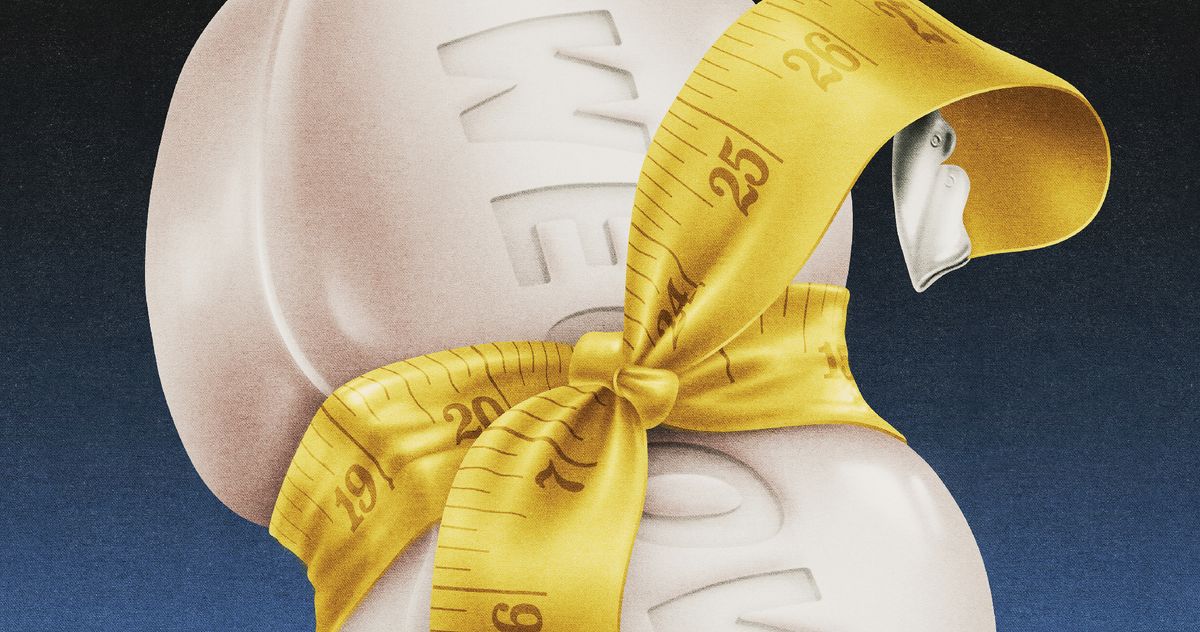
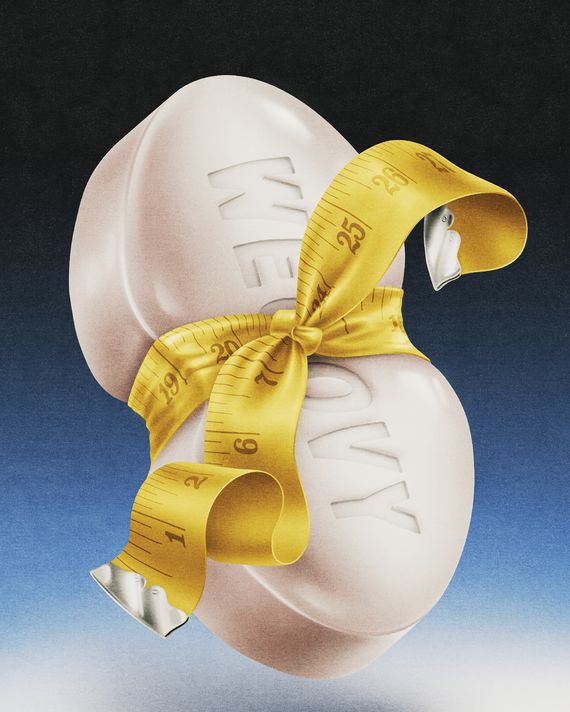
The definition of a typical GLP-1 user has steadily expanded over the past few years, from diabetics and people with obesity to celebrities looking to drop a few pounds to anyone who can afford the shots. There were still some hurdles for users to clear — limited insurance coverage, up to $1,350 out-of-pocket monthly costs, fear of needles — but in December, the FDA approved Wegovy in the form of a daily pill that has none of these issues. At a starting price of $150 a month, you can achieve the same drastic weight loss by swallowing a vitamin-size tablet prescribed online in a matter of minutes by a doctor you’ll never meet in person. It’s easier to pay for, easier to hide, and, for a lot of people who never saw themselves as Ozempic users, easier to justify. The pill seems to be attracting a new kind of patient who is more concerned with fitting into an old pair of jeans than lowering their blood pressure. Almost every woman I spoke with told me she got a prescription because she wanted to lose exactly 20 pounds.
According to Novo Nordisk, the drug’s manufacturer, the pills are in stock at 70,000 pharmacies and online platforms. You can order them from Amazon’s pharmacy or pick them up from Costco along with bulk-size pet food and paper towels. And they are already popular. One telehealth company told me half of the new GLP-1 prescriptions it wrote last month were for the pill. Some of its patients who had been using the old versions also made the switch.
People may want to ditch the injections for a few reasons: The shots need to be refrigerated and disposed of in a special container and are hard to travel with. Some users have issues with the needles, either because they’re so afraid of them they get nauseous or because they bruise afterward. I heard from one woman who used to get a five-inch rash that would itch and “stay hot for a couple days” after sticking herself; she got on the Wegovy pill as soon as she could.
But many probably won’t make the change. One doctor told me none of his existing GLP-1 patients have wanted to switch. Why would they bother? The shot is weekly, and they don’t want to have to remember to take a pill every day or wait 30 minutes afterward to eat, drink, or take other medications. The side effects are the same. And once they start taking the injections, most patients get used to the needles; they’re so small and sharp they don’t seem like a big deal.
Those most excited about the Wegovy pill are completely new to GLP-1’s. Dr. Sirisha Vadali, who runs a cardiometabolic-health clinic in Arizona, says two-thirds of the prescriptions she wrote for the pill in January have been for first-timers. “It’s a game changer,” she says. “I think there’s going to be a huge cohort of patients that are brand-new to Wegovy and are going to go straight to the pill.” Many of these new recruits have serious risk factors, such as prediabetes, high cholesterol, or clogged arteries. But because they haven’t had a heart attack or stroke, their insurance refused to cover the medication, and they couldn’t afford to pay for the shot out of pocket. Vadali also sees a new market in women who have a hard time losing weight after having a baby or entering menopause.
Samira, 39, is one such patient. The New Jersey mom hasn’t been able to lose the 20 pounds she gained after giving birth to her now-3-year-old. Even though she plans her meals every week to focus on protein and leafy greens, drinks lots of water, and lifts weights with a trainer, the scale won’t budge. “I just started getting obsessed with why I wasn’t dropping in weight,” she says. “I’d literally sometimes cry and be like, ‘I’m so hungry.’ ” Even though she was considered overweight according to her BMI, insurance wouldn’t cover the medication. Since she started taking the pill, Samira has been able to eat only about half as much as she used to at meals. And she’s relieved she doesn’t have to give herself an injection. “To me, a shot is a big deal,” she says. “It feels more normal in a pill.”
Over and over, women told me the pills gave them permission to enter the world of medical weight loss. Tara said taking them feels like “one step beyond going to Duane Reade and buying vitamins.” The 42-year-old has PCOS and read that GLP-1’s might help with symptoms like infertility, high blood sugar, and inflammation. Another woman, Jill, told me she likes that the pill is more discreet than the injections she was taking; she no longer has to hide vials and needles from her house cleaner or someone she’s dating. “I don’t want some guy opening my refrigerator and seeing my diet pens,” she says. “It’s embarrassing.”
Sirashi thinks women like Samira and Tara have traditionally been dismissed by doctors as people who “weren’t trying hard enough.” While the medication is meant to be taken lifelong, she says the needs of this new group are unclear: “Do they eventually take a smaller maintenance dose? Do we need to leave them on it? I’m curious to see how that plays out.”
Some doctors worry that these patients — drawn to the pill by Instagram advertising or the promise of a simple fix — don’t know what they’re getting themselves into. “Many people think, I can stop this and I’ll be able to control my weight,” says Dr. Daniel Bessesen, a professor at the University of Colorado and an endocrinologist at a hospital in Denver. In all likelihood, he says, they’ll have to stay on the drugs forever if they want to reap the benefits. A recent study showed that patients who quit the medication typically regained the lost pounds within 18 months. For someone who is prediabetic and 40 pounds overweight, the lifelong cost, side effects, and loss of pleasure might make sense. “But how much really is losing that ten pounds or 15 pounds worth to you?” Bessesen asks.
For Allison, it’s worth a lot. The women in her world are on a march toward agelessness, crossing the threshold of their 40s without telltale wrinkles or extra padding around their stomachs. To her, taking the Wegovy pill is no different from going to a Botox party. She oversees construction and maintenance for a furniture company, which means she spends a lot of time around men in hard hats. At her heaviest, she felt invisible when she walked onto a job site; her colleagues didn’t even say “hello” to her. Now, they raise their eyebrows when she shows up and say they’re happy to see her. Since losing weight over the past year, “suddenly the doors have opened,” she says. “People want to show me around.” What other doors might open if she hits her goal? Allison is convinced she’ll be able to maintain the results on her own. “It’s definitely not a long-term thing for me,” she says. “But if I have to get back on it, it’s just a pill.”
Thank you for subscribing and supporting our journalism.
If you prefer to read in print, you can also find this article in the February 16, 2026, issue of
New York Magazine.
Want more stories like this one? Subscribe now
to support our journalism and get unlimited access to our coverage.
If you prefer to read in print, you can also find this article in the February 16, 2026, issue of
New York Magazine.