
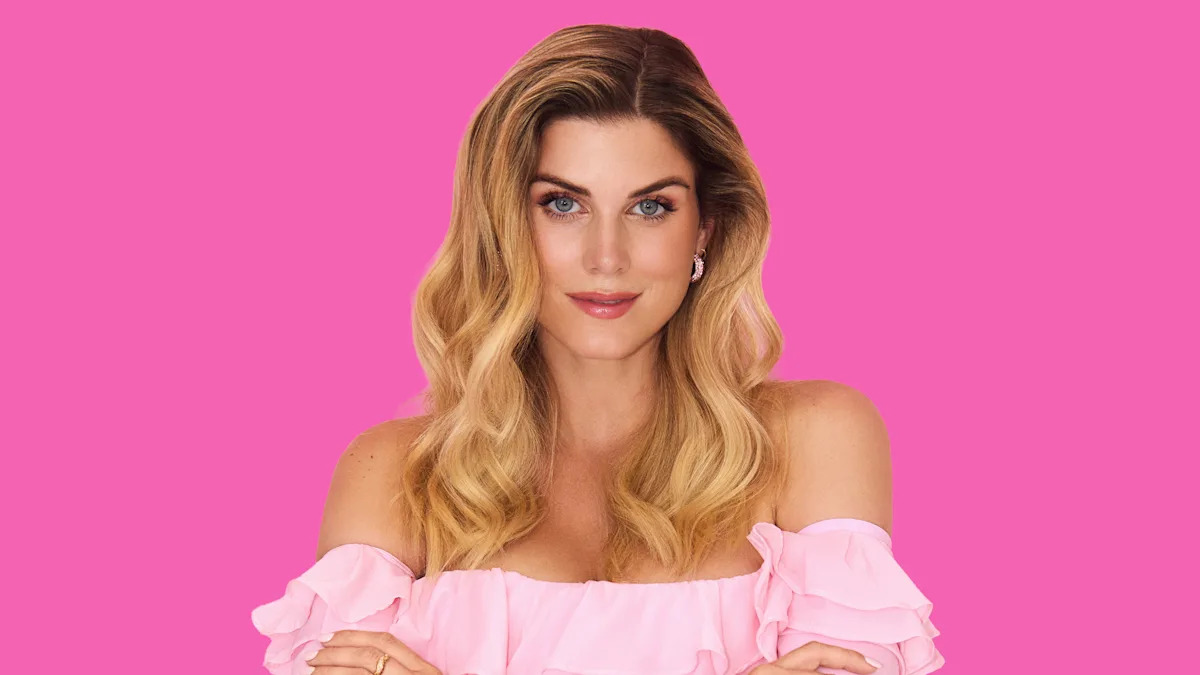
Ashley James has been called many things: reality star, bimbo, attention-seeker. She’s been dismissed in comment sections, debated on daytime TV and told, in numerous ways, to make herself smaller. She refused.
For years, she’s pushed back against labels, trolls and the systems that try to shrink women – and she has no intention of stopping.
At 38, the feminist campaigner debates with the likes of Piers Morgan and Nick Ferrari on This Morning, hosts parenting podcast Mum’s the Word and has just launched her debut book, Bimbo. However, long before the book deals and broadcast clashes, there was the unglamorous grind of reality television.
In 2012, James joined Made in Chelsea (MIC). From the outside, she looked as though she fit right in. Behind the scenes, she was living in her overdraft – as a cast member, she was paid just £50 per filming session.
“I remember confessing to [former co-star] Ollie Locke that my handbag was fake and worrying I’d be judged,” she recalls. “But no one actually made me feel small. That insecurity was mine.”
For Yahoo’s Unapologetically series, we meet at a central London hotel, where James is dressed head-to-toe in pink to promote Bimbo. Part memoir, part manifesto, it reclaims a word long used to belittle women and lays bare the experiences that shaped her. She writes about being slut-shamed by her peers and raped at university by someone she considered a friend. She learned early how quickly the world begins policing girls’ bodies.
“I was a double G from 14 and felt hypersexualised as a literal child,” she says. “I was told I had to avoid unwanted attention. That theme has followed me, even when breastfeeding. People would say I was doing it for attention. It’s unwanted attention. We just want to live in our bodies.”
At school, she was one of just 37 girls in a student body of 500 boys, an imbalance that fostered a culture of “boys will be boys” that she says still haunts her. “There was something called ‘dekegging’, where boys would target a girl, run after her and pull her pants down,” she recalls.
In Bimbo, James dismantles the labels used to diminish women, turning a slur into a statement of defiance, and insisting that women can exist loudly, visibly and unapologetically in their own bodies.
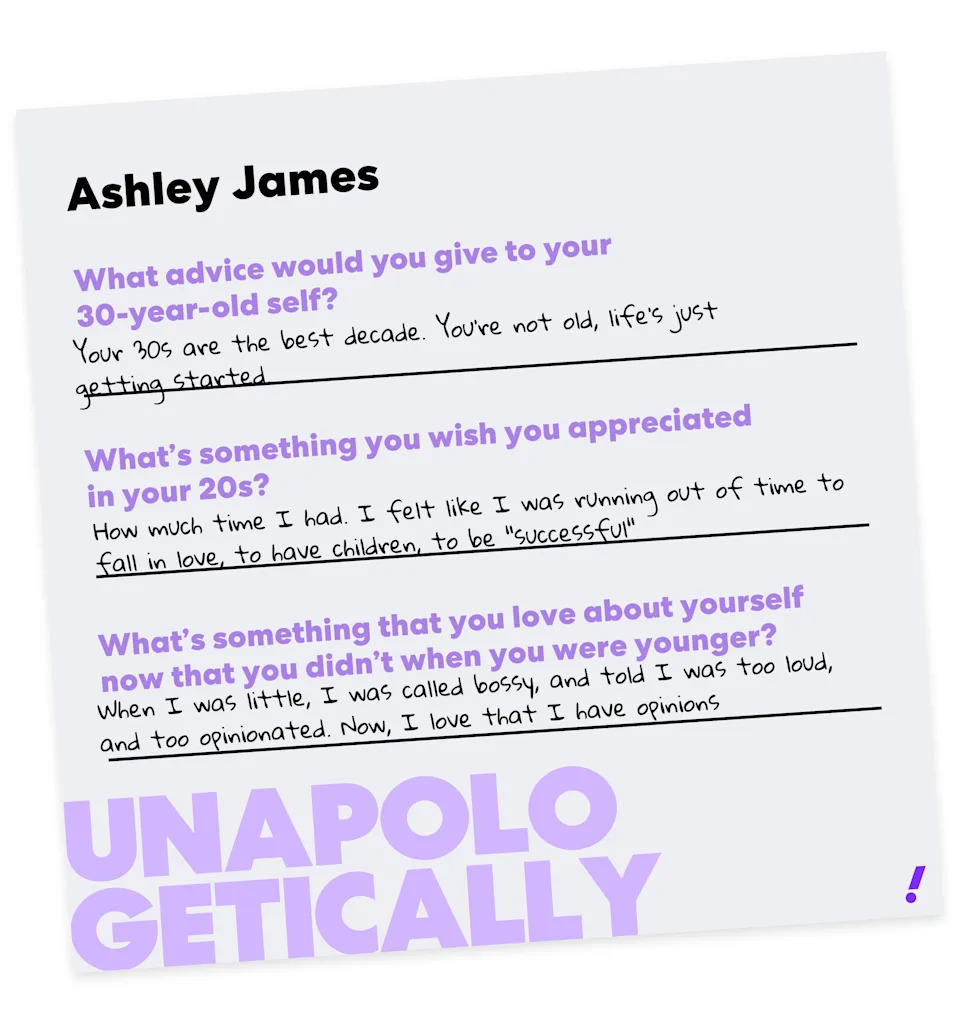 Let’s start at the beginning. What was your upbringing like?
I grew up on a farm in Northumberland; both my parents were farmers. I had what I’d say was a “normal” upbringing – normal in inverted commas, because everyone’s idea of normal is different.
Both my parents had to leave school young – my mum at 16 and my dad at 15 – to take over the farm, so they really prioritised education for us. My brother and I won scholarships to boarding school; we were the first in our family to ever go.
That’s when I started to feel confused about what “normal” was. There was a version of normal at school and a version at home, and I didn’t quite fit either. I felt I had to try really hard to please both worlds. I became very aware of class early on.
I started to feel anger – early feminist tingles – in my teenage years. When I grew boobs, I felt angry that I was being policed about what I wore, told I had to dress in a certain way so as not to distract boys or teachers. There was a lot of slut-shaming.
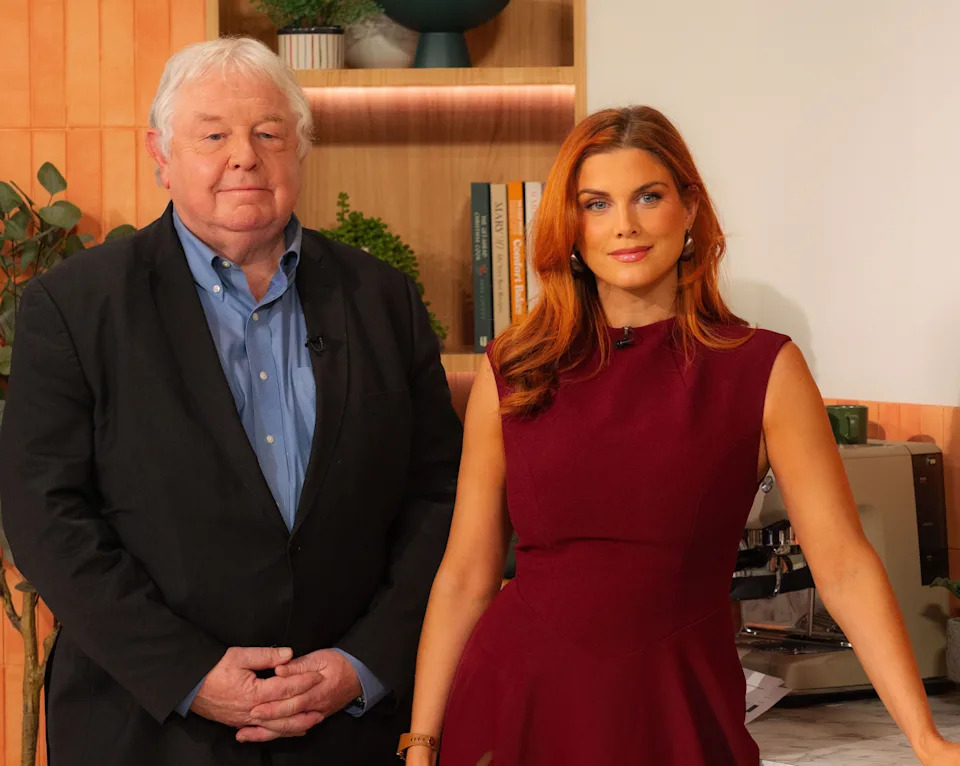
Ashley James and Nick Ferrari often debate each other during their appearances on This Morning.
(Ken McKay/ITV/Shutterstock)And how did you find life at boarding school?
My school had been an all-boys school for 500 years, and we were the first set of girls. I was 14; there were 37 girls in a school of 500 boys. It was very much a “boys will be boys” culture, and girls had to adapt. We’d get in trouble for things the boys did.
There was something called “dekegging,” where boys would target a girl, run after her and pull her pants down. I remember being about 15… and the rugby team charging at me.
I ran for my life across the pitches, went into the recovery position, trying to hold my pants up. I got told off for “seeking attention” and “making a scene” because I guess I was either nervously laughing or screaming.
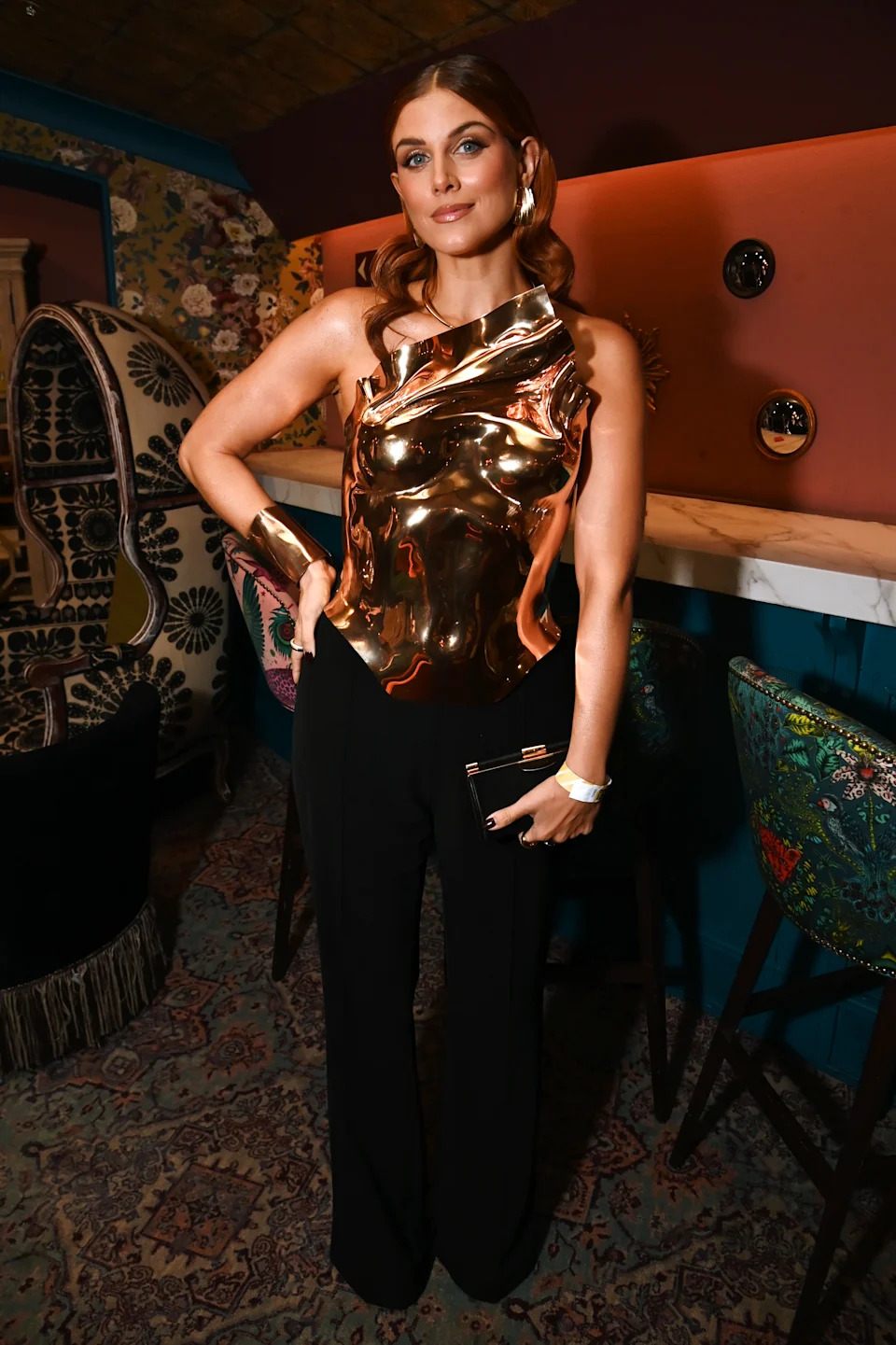
James says she was sexualised from a young age due to the size of her breasts.
(Dave Benett via Getty Images)How did you respond in those situations?
I didn’t necessarily understand I was being a feminist – I just felt vocal about what was fair. There was this idea that, if you wanted to be taken seriously, you had to choose brains over beauty. I almost became misogynistic myself. I rejected femininity. I’d say, “I’m not like other girls.” I became the perfect pick-me because I was conditioned to reject anything overtly feminine.
And then I think just going through womanhood, when I started MIC in 2012, it felt like I was suddenly given a whole different set of rules, where suddenly it was like beauty was more important than brains. It was almost as if you want to be successful, you’ve got to ramp it up, get a make-up artist, get a hairstylist.
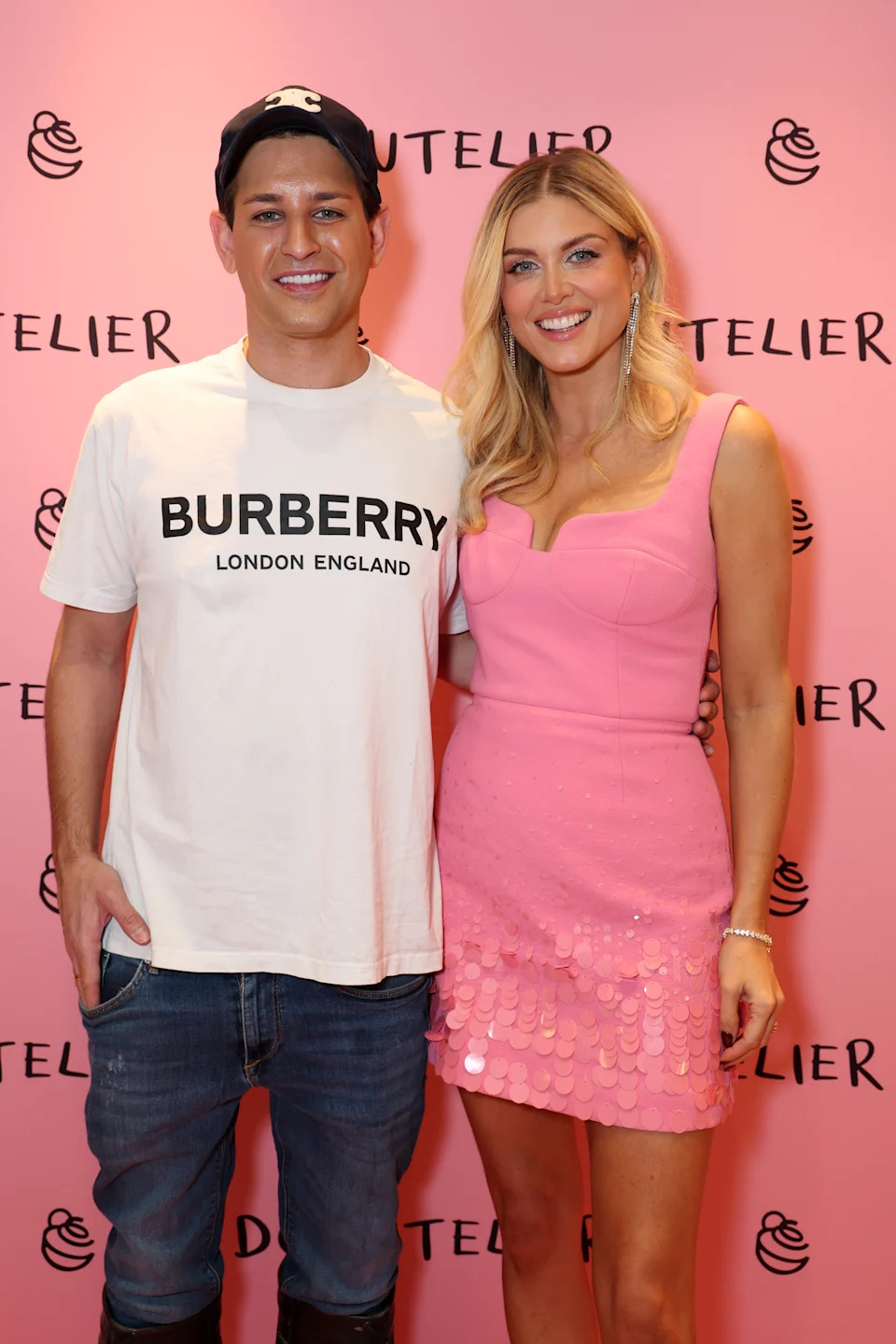
Ollie Locke and James briefly dated on Made in Chelsea and remain friends.
(Tristan Fewings via Getty Images)You mention joining MIC. How did your life change – and how quickly?
It changed overnight, but not in the way I thought. Before MIC, I had my own prejudices about reality stars. I didn’t want to be one. But I also believed what a lot of people believe: that fame equals money.
I grew up in a family where money worries were constant. I was always in my overdraft at university, working jobs to support myself, and when I moved to London, I still couldn’t get out of it. So part of me thought: if I become famous, I’ll finally feel financially secure.
The recognition came quickly. At the time, it felt like I was on this thrilling upward trajectory. But the money didn’t follow. I stayed in my overdraft for years; it felt like I was cosplaying someone rich. It was only when I started DJing that I began earning properly.
Did you feel like an outsider on MIC surrounded by those who were very wealthy?
Being at boarding school made me hyper-aware of money, but also aware that wealth isn’t always what it seems. I was surrounded by people with titles, land, even castles, which sounds absurd now. But there wasn’t flashy branding or obvious excess. If anything, people were quite frugal.
I always knew I didn’t come from that world. I’d grown up seeing both financial struggle and real privilege, so I felt grateful for what I had, but I also felt different. At uni, I cleaned for my aunt, and even small things stuck with me: choosing the cheapest sandwich while others picked smoked salmon without thinking.
I think the bigger impact was on my confidence. At school, especially, I felt like I had to perform a version of myself to fit in, to smooth out my more “humble” background. No one explicitly told me I didn’t belong, but there were subtle messages in comments about where I grew up. Over time, I absorbed the idea that I needed to be someone slightly different to be accepted.
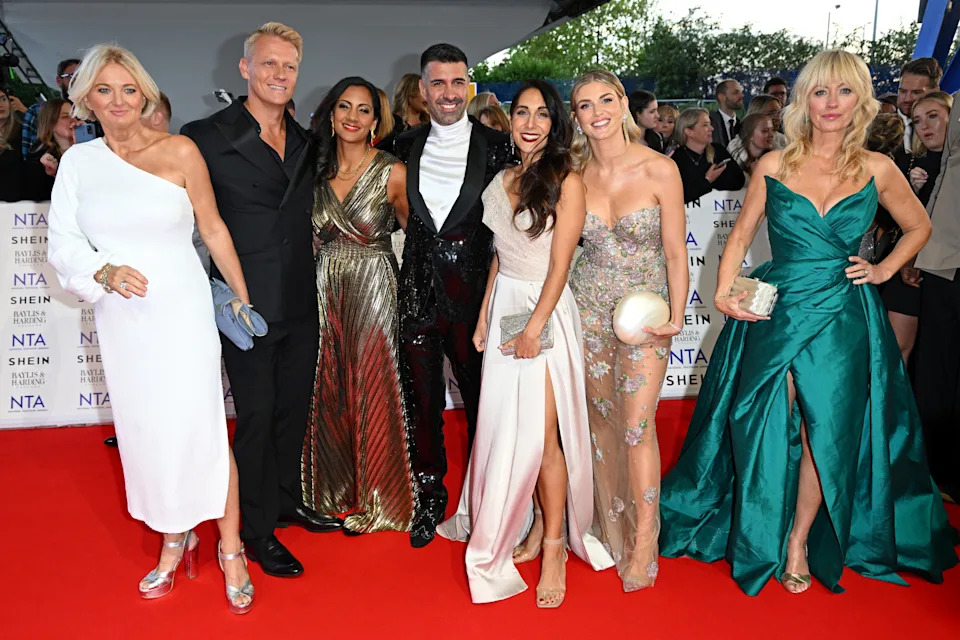
(L–R) Alice Beer, Dr Scott Miller, Sonia Sodha, Dan Hatfield, Dr Sara Kayat, Ashley James and Clodagh McKenna attend the 2024 NTAs.
(Joe Maher via Getty Images)Have you shaken off that outsider mentality?
In my MIC days – and really throughout most of my twenties – I cared desperately about being liked. I think that came from school, from never quite feeling like I belonged. I’d walk away from conversations convinced people were talking about me. I made myself smaller. I became a bit of a chameleon, moulding myself to fit whoever I was with. It was exhausting.
Eventually, I realised: people who want to see something negative in you will see it no matter what. You’re too loud, too quiet, too much, not enough – you can’t win. So I’d rather be disliked for being myself than liked for pretending to be someone else.
You’ve spoken a lot about being labelled a “bimbo” early in your career. What made you decide to reclaim this label for the title of your book?
I’d always known I wanted to write a book. When I started MIC, a lot of the cast were bringing out autobiographies, and I thought, “I can’t wait to write one, but not that kind.” I was 25, what would I say? “Here’s where I went to school”? That didn’t interest me.
When I was single, I started journalling properly. I was unpacking ideas about being a “spinster” or being asked, “Why are you still single?” Then lockdown and motherhood shifted everything again [James and partner, Tommy Andrews, 36, began living together during the first lockdown and welcomed their first child during the third.]
I realised I wanted to write the book I needed as a teenager, when shame, labels and double standards chipped away at my confidence. That’s when I started examining the labels women are given, how often there’s no male equivalent. Or, if there is, it’s only when men fail at masculinity.
“Bimbo” was the obvious choice because it’s followed me for years – at school, in retail (“What’s a pretty girl like you doing behind a till?”), online, even after appearances on This Morning. I remember coming off air and seeing comments like, “Why do you have that bimbo on?” Yet someone like Nick Ferrari can be disagreed with constantly, and no one questions his intelligence. That contrast was telling.
What’s your relationship with Nick Ferrari like?
I really value my relationship with Nick on This Morning. It’s always been respectful. We may come from different places, but he treats me as an intellectual equal. Showing that you can debate respectfully, even with differing opinions, is important.
He’s a veteran broadcaster and one of the best at what he does, and it’s an honour to watch him work and learn from him. Of course, I love it even more when he changes his mind. Slowly, I’m making him more woke.
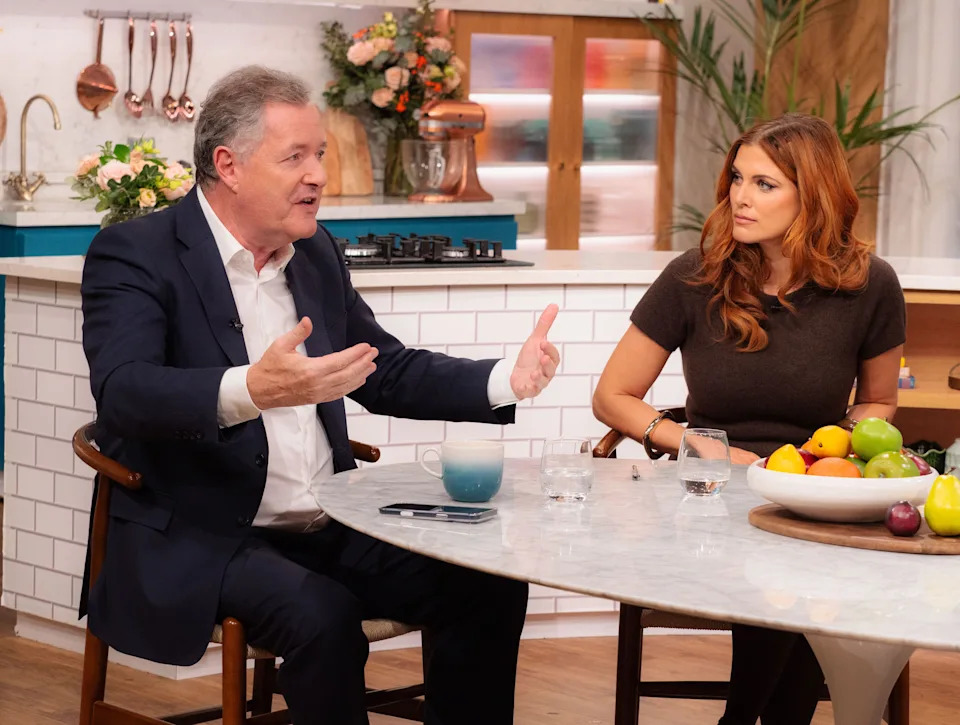
Piers Morgan and James don’t often see eye to eye on This Morning.
(Ken McKay/ITV/Shutterstock)You and Piers Morgan often clash. On This Morning, he said, “I watched your Instagram for three days, and you played the most ridiculous, violin-laden victim.” How do you respond?
I think it highlights how much work still needs to be done to make people see privilege. He’s a straight white man – can he really put himself in the shoes of someone facing systemic barriers, whether that’s as a woman, a person of colour, or someone who isn’t straight? Demanding change isn’t about self-pity; it’s about changing the system.
Of course, Piers just loves being the controversial man, and that’s a shame. Many of our experiences are universal. Sometimes, it’s nice if people could step into someone else’s shoes and see that we are not equal until we all are.
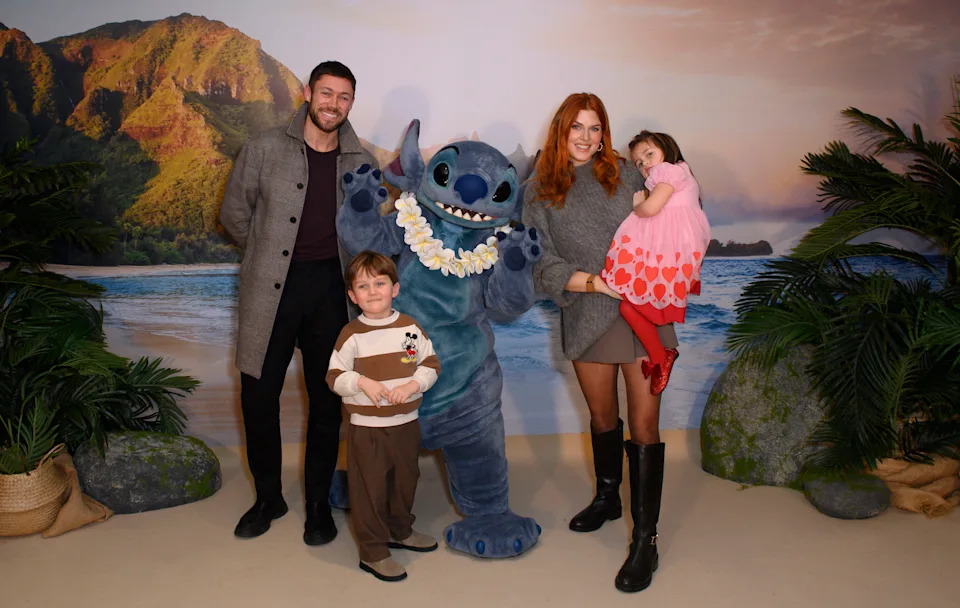
James and her partner Tommy Andrews met years ago at university and reconnected via a dating app.
(Justin Goff Photos via Getty Images)You share your life and your thoughts on social media, which has opened you up to all manner of critique. How do you cope?
I’d be lying if I said it never bothers me. People talk about having “thick skin”, but why is the burden always on the person receiving the hate?
Now, when I see hate, I mostly feel sorry for the person sending it. Life is hard enough – imagine spending your energy trolling strangers. If you’re angry, wouldn’t it make more sense to direct that at people in power who can actually affect your life? Most of the time, you could just unfollow and move on.
Two quotes really anchor me. One is that holding onto anger is like drinking poison and hoping the other person dies. The other is that what Susan says about Sally says more about Susan than about Sally. I try to live by both.
In your book, you speak about not wanting to lose your freedom, your body and identity when becoming a mum (James shares Alfie, five, and Ada, two, with partner Andrews). How did you hold onto them?
I didn’t, especially in the first year. We sell this rose-tinted version of motherhood. No one shows the bleeding, the exhaustion, colic or prolapse. In films, waters break, baby arrives, and the mum’s out for dinner.
I struggled deeply. Alfie fed hourly and wouldn’t take a bottle. I felt trapped, resentful – even though I loved him. Friends stopped inviting me out because they didn’t understand.
We expect women to have babies but not change. But you’re healing, sleep-deprived, transforming physically and emotionally. Grief for your old life is normal. Many complaints about motherhood are structural: lack of postnatal care, impossible work and school systems and unaffordable childcare. Those aren’t individual failures. They’re systemic.
Bimbo: Ditch the Labels. Find Your Voice. Reclaim Your Confidence by Ashley James is out now.
This has been edited for length and clarity.