
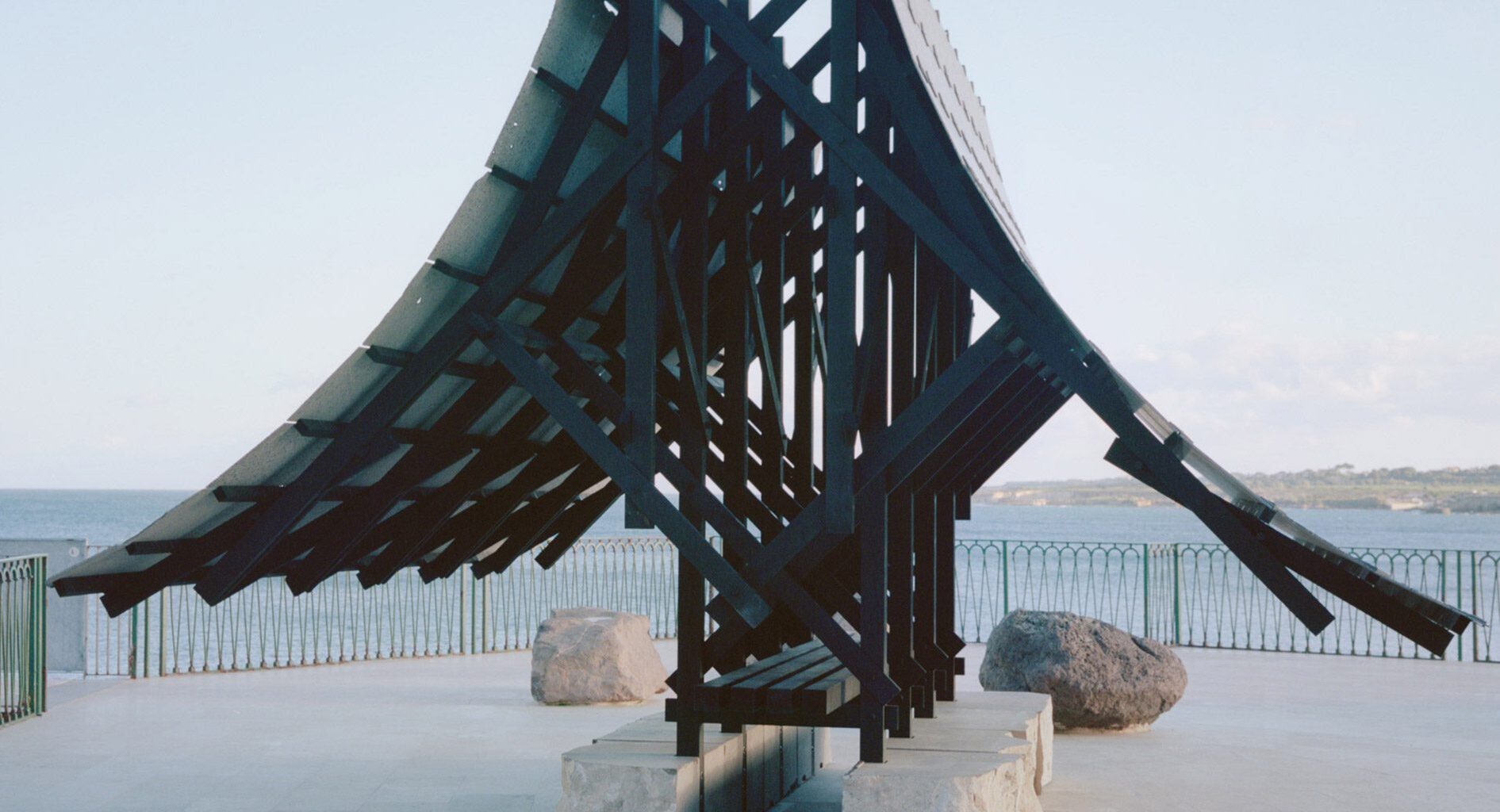
Swiss studio Leopold Banchini Architects has created Asympta, a stone-and-wood pavilion that evokes the “unknown domestic architectures” of prehistoric societies in today’s Sicily.
The temporary Asympta pavilion was designed in reference to the people who would have lived in the Syracuse-Pantalica area from the 13th to the 7th century BC, when the Necropolis of Pantalica was built.
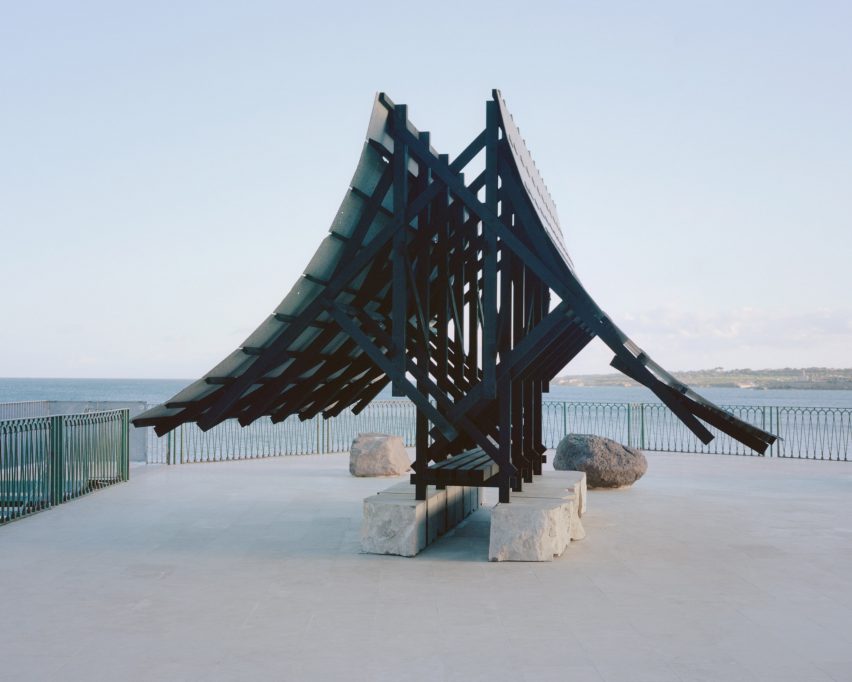 Leopold Banchini Architects placed the Asympta pavilion by the Ionian coast
A collection of cemeteries from Pantalica is listed as a UNESCO World Heritage Site, together with the city of Syracuse on Sicily’s Ionian coast.
The pavilion’s form was designed to give an idea of what domestic architecture in the region could have looked like.
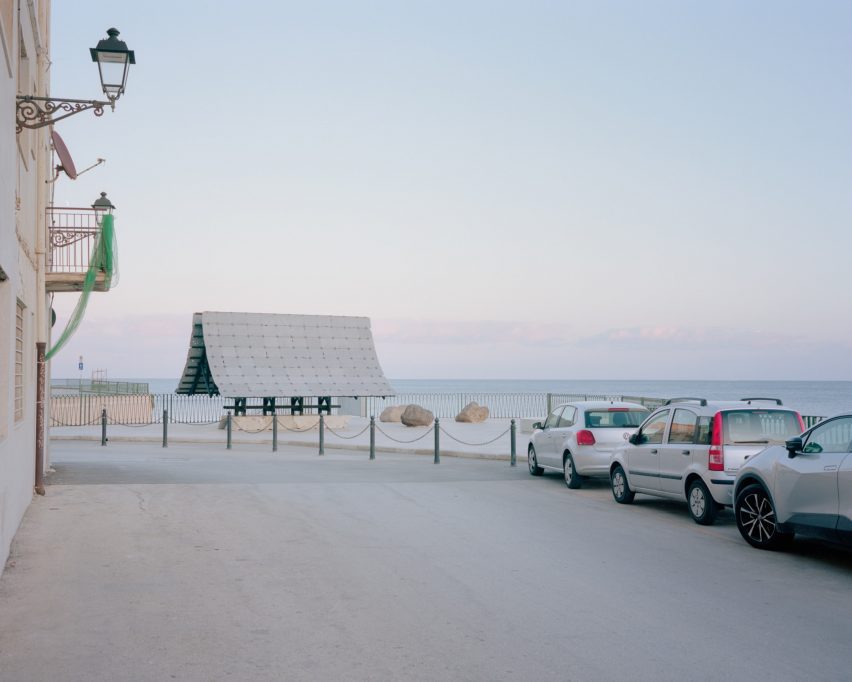 The pavilion is constructed from local materials
“Asympta is a speculative micro-architecture reflecting on the largely unknown domestic architectures of the prehistoric civilisation that inhabited the Anapo river valley,” Leopold Banchini Architects said.
“Asympta is a speculation on a possible architecture born from this unique landscape,” added studio founder Leopold Banchini.
“Using the resources of the territory as a starting point, the project develops from available materials and possible assembly details,” he told Dezeen.
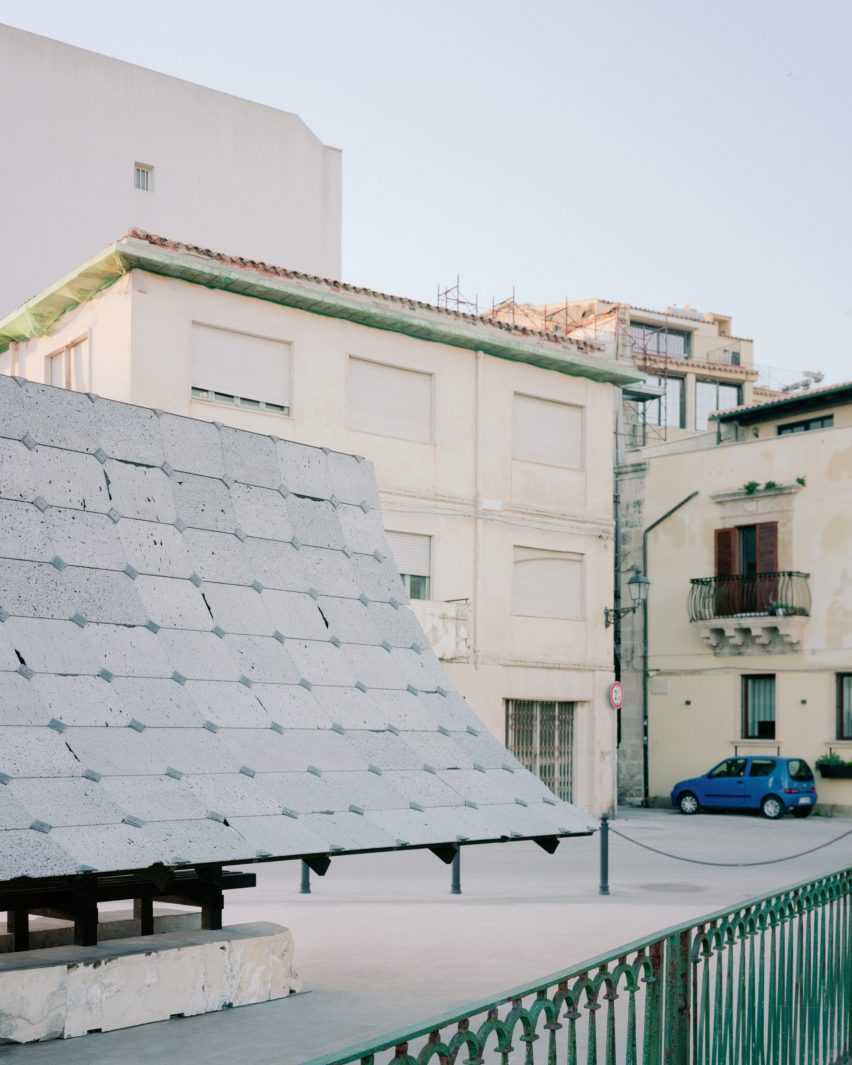 The roof tiles were made from lava from Mount Etna
The structure’s form was designed to accommodate gathering and reflection, and reference both eastern Sicily’s volcanic landscape and the nearby ancient stone quarries.
It also aimed to question the “romanticised myth of the primitive hut,” the studio explained.
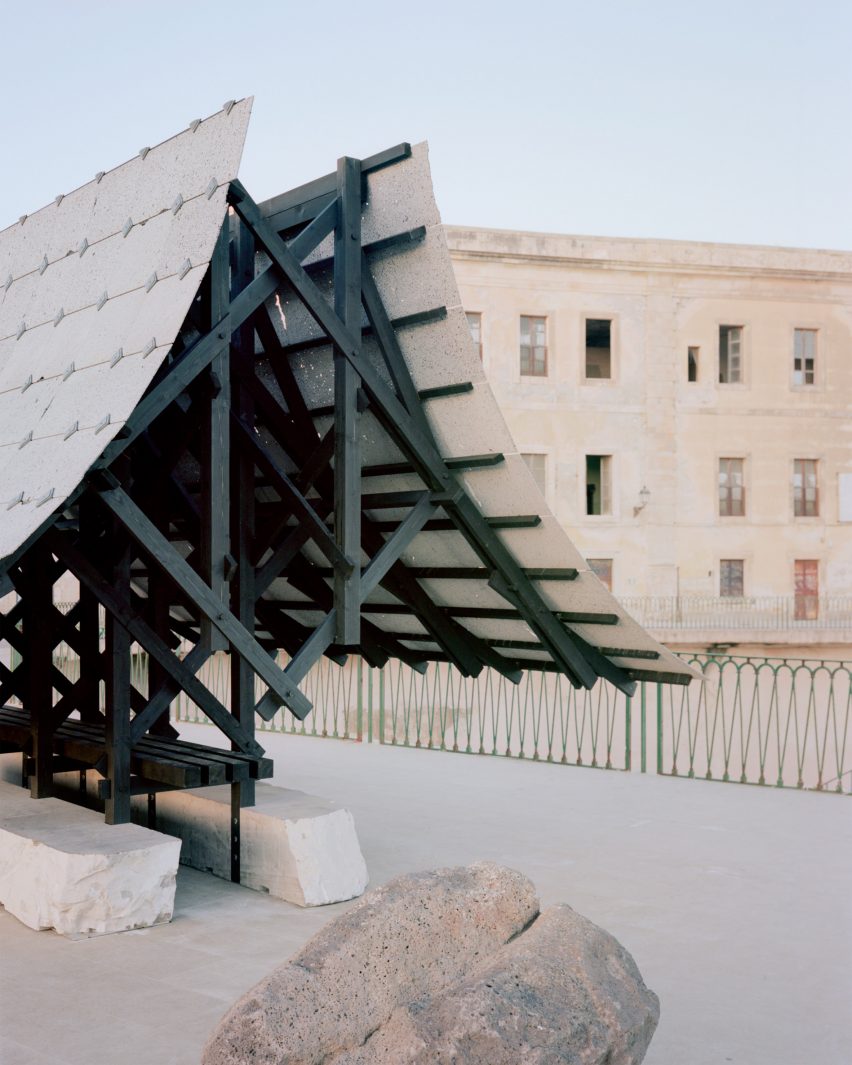 Stones from a nearby quarry were used as the foundations
Banchini used local materials for its construction, including lava stone from the nearby Mount Etna volcano.
“All the materials of the project are currently and easily available onsite,” Banchini said.
“The stones used for the foundations come from a nearby quarry, the wood is sourced locally and assembled with traditional joints, the roof tiles are cut in Mount Etna lava.”
Leopold Banchini transforms roundabout into “intimate and communal” public bathhouse
The pavilion was first installed in Ortigia, Siracusa, Sicily, last year, and will be shown in Pantalica this year as part of the Siracusa Pantalica festival.
“Ortigia is the tip of Siracusa,” Banchini explained. “As such, it is the very end of the imaginary journey linking the Anaktoron in Pantalica to the port of Siracusa.”
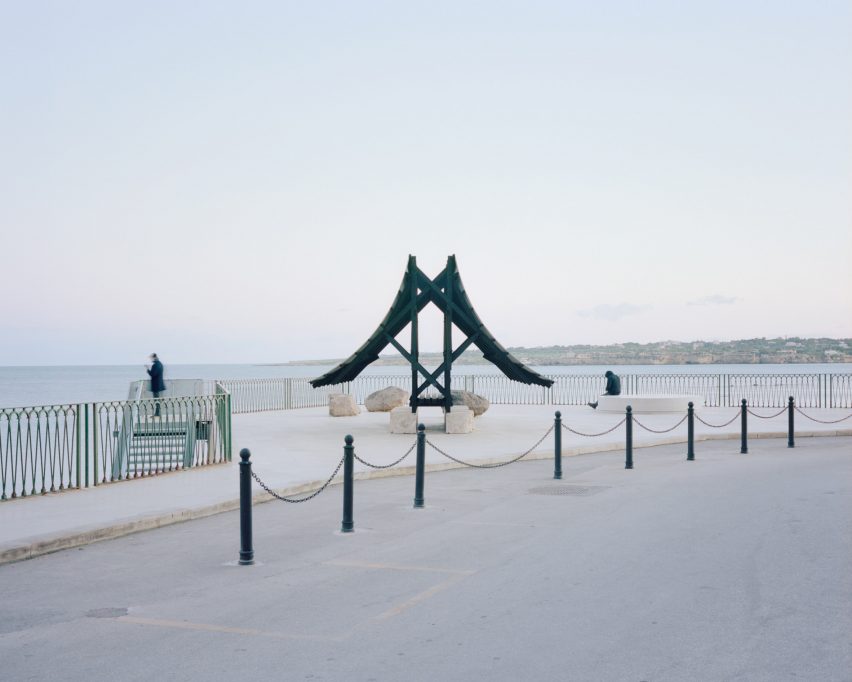 Asympta has a wooden roof
Banchini hopes that the Asympta installation will continue to be shown on a yearly basis.
“The installation was open to the public for one month before being dismantled and stored,” Banchini said.
“The table and its protective roof create a public yet intimate space to be used for family reunions, informal picnics or political discussions with strangers. It should be reinstalled yearly in different locations.”
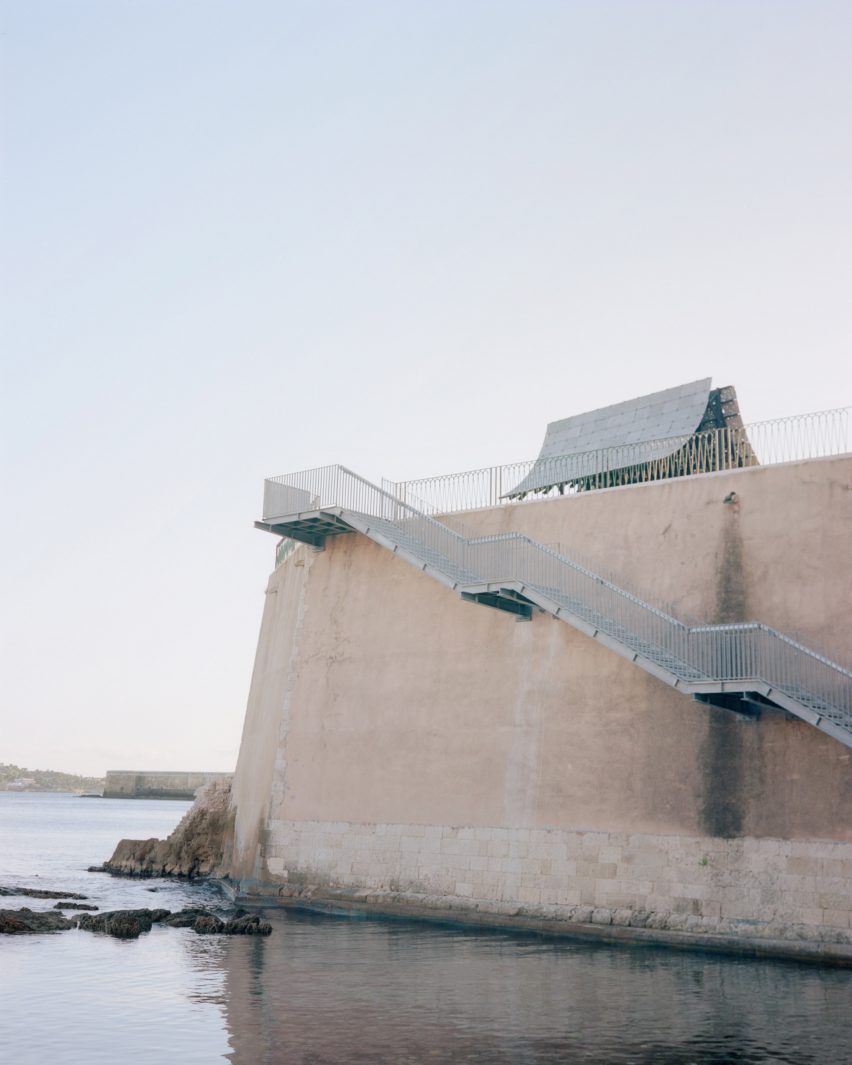 It was designed as a space for gathering
Previous projects by Leopold Banchini Architects include the transformation of a fountain in Spain into a temporary public bathhouse and a London bar where “all the elements” were made from one oak tree.
The photography is by Simone Bossi.