
Paati Veedu: A Compact Rural House in Tamil Nadu
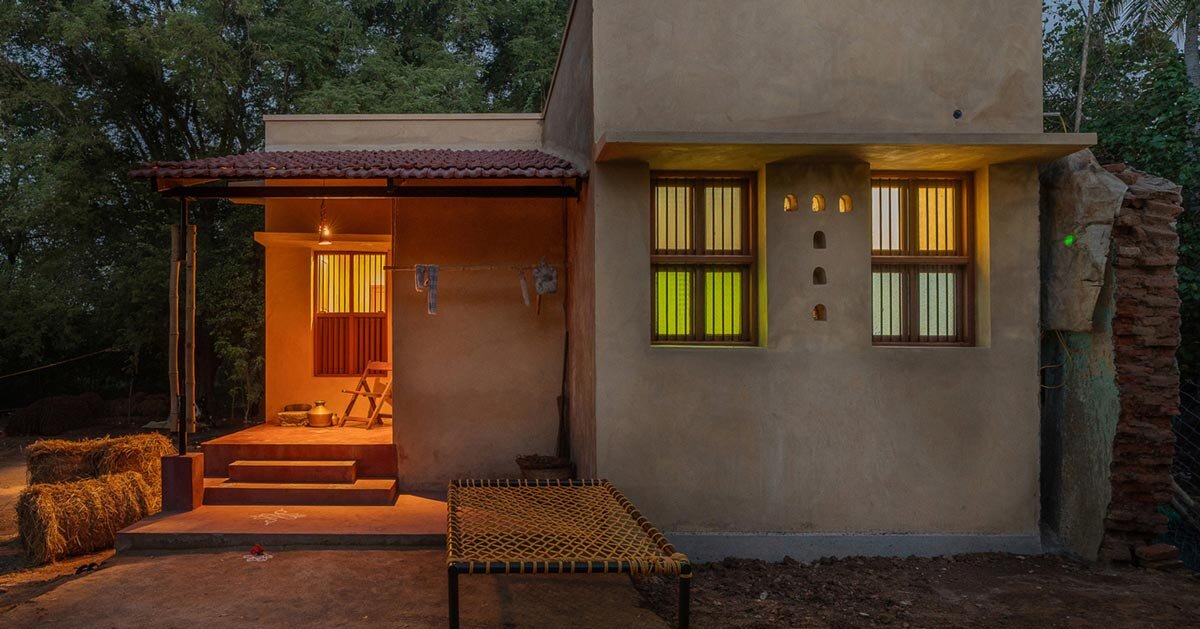
Located on the outskirts of Mayiladuthurai in Tamil Nadu, India, Paati Veedu by Koodu Architecture is a compact rural residence developed under financial constraint and material limitation. Built on a 1,200-sqft site within a neighborhood of small houses and agricultural fields, the project is defined by reuse, adaptation, and resource-conscious construction. The house was constructed using 10,000 bricks accumulated over time by the client, forming the primary material basis for the design.
The existing foundation was reinforced with a plinth beam to support new load-bearing brick walls. The plan is organized as a single-story layout comprising a veranda, living room, kitchen, bedroom, and attached toilet. Circulation follows a simple sequence: the entrance foyer, which also functions as a pooja space, leads into the living area, from which the kitchen and bedroom are accessed. This compact configuration ensures clarity of movement and efficient spatial use.
all images courtesy of Koodu Architecture
Koodu Architecture selects Context-Driven Materials
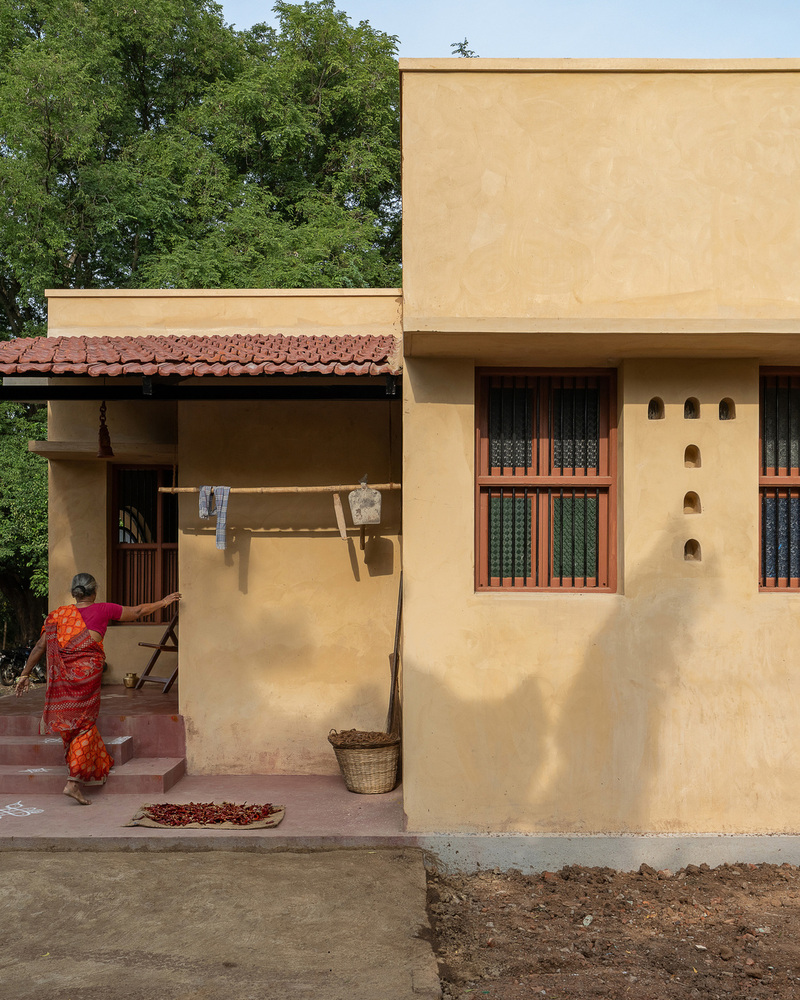
Material selection by Koodu Architecture Studio draws directly from the agrarian context of the site. Mud-plastered walls provide a textured surface that visually aligns with the surrounding soil. Green oxide flooring references the tonal qualities of nearby paddy fields, incorporating subtle variations in texture. The oxide skirting includes imprints of paddy grains, while fragments of discarded marble from a neighboring construction site were cut into geometric floral patterns and inlaid into the floor surface.
As material availability shifted during construction, the design adapted. When bricks became scarce, a large semicircular arched window was introduced in the living room. Fabricated in steel and incorporating leftover reinforcement stirrups, the opening increases daylight penetration and supports cross-ventilation. The patterned grill abstractly references natural elements such as water, sun, and trees, establishing a visual connection to the surrounding landscape.
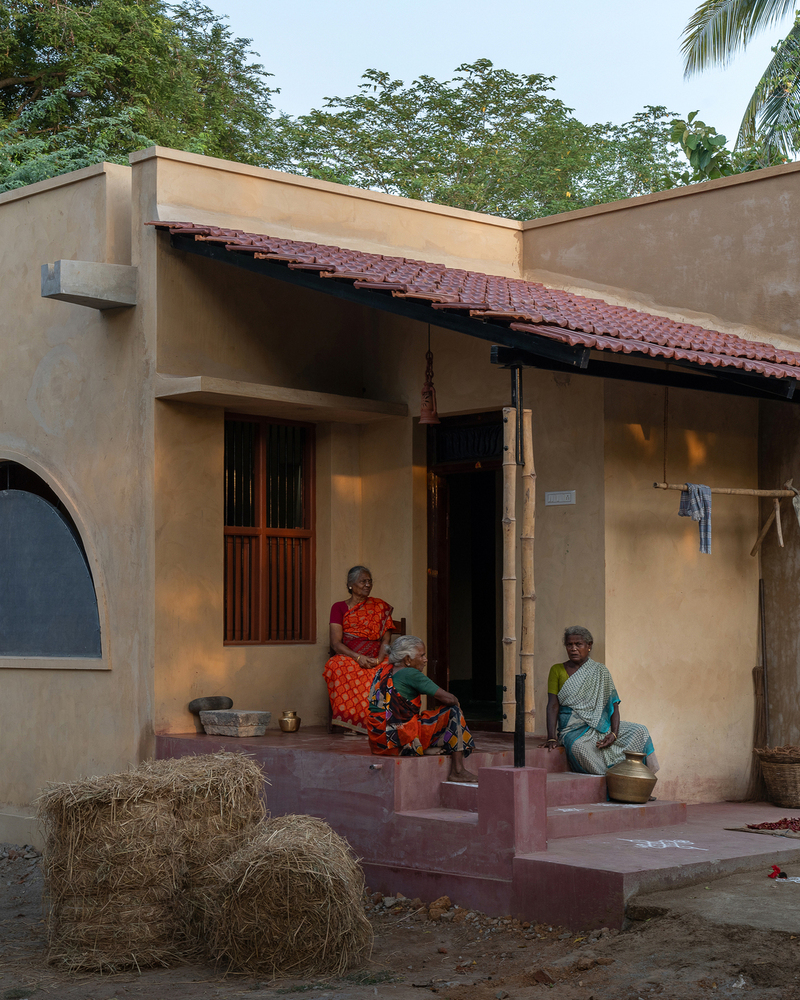
Paati Veedu is located on the outskirts of Mayiladuthurai in Tamil Nadu, India
Paati Veedu employs Reclaimed Components
Reclaimed doors and windows were restored and fitted with stained glass, integrating reused elements into the structure. Wall niches were introduced along the exterior envelope, separated by glass to create protected nesting spaces for birds. These openings enable visual connection from the interior while maintaining separation.
The veranda roof is clad in reused Mangalore tiles and supported by a bamboo structural system in which paired poles are coupled to form a single load-bearing member. Rainwater is directed through a concrete gutter system into the garden during monsoon seasons, integrating climatic response into the architectural detailing.
Paati Veedu demonstrates how limited resources, reclaimed materials, and localized construction methods can shape a dwelling that responds to context, climate, and everyday use through careful planning and adaptive design.
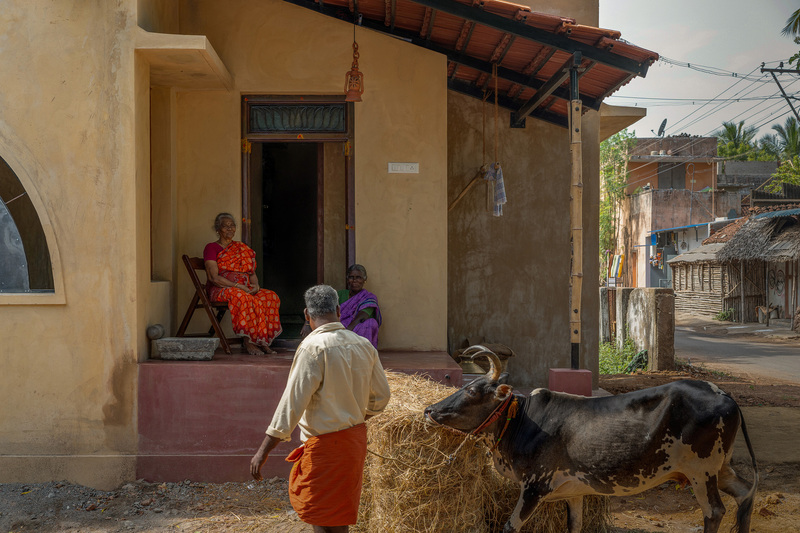
reuse and resource-conscious construction guided the design process
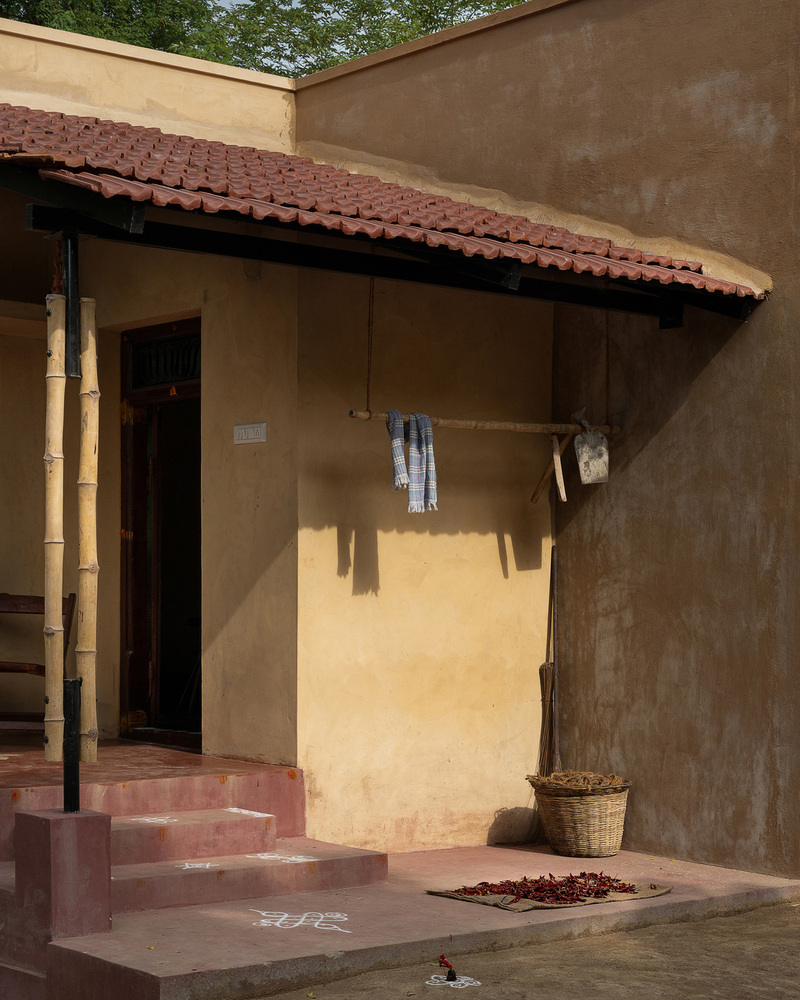
mud-plastered walls reference the texture and color of the surrounding soil
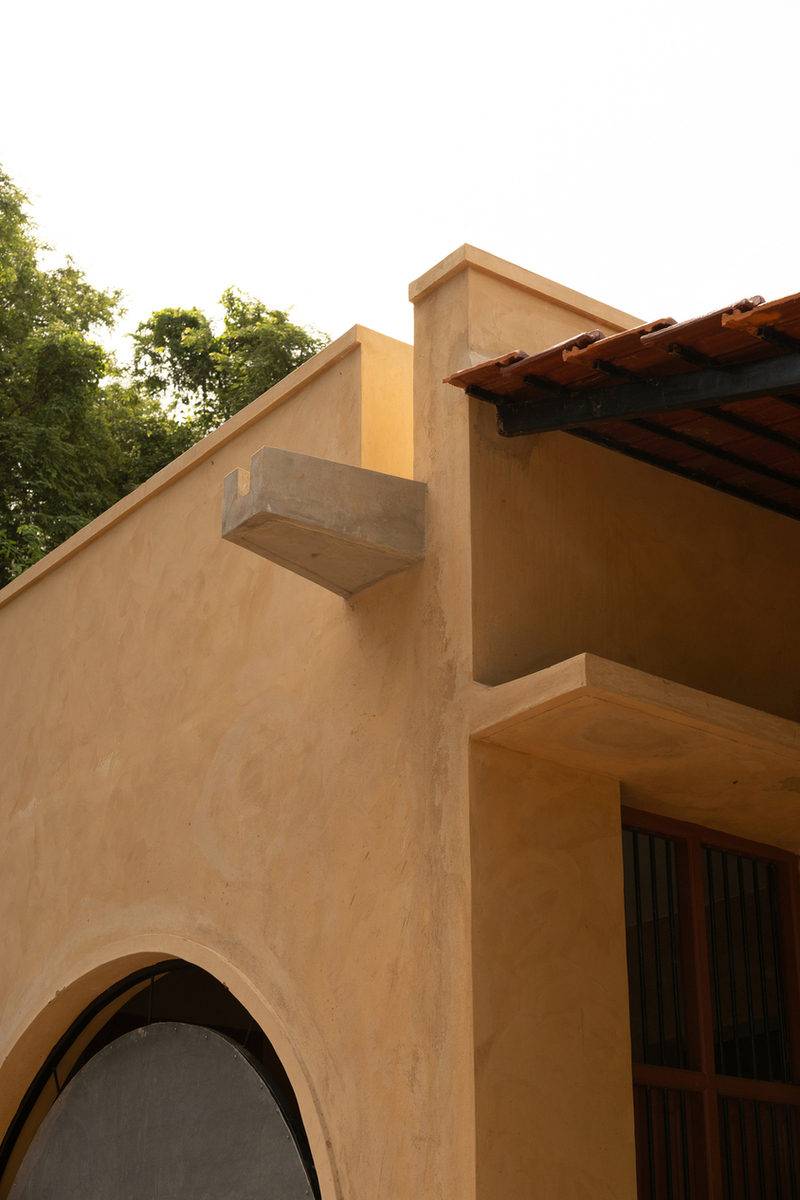
rainwater is channeled through a concrete gutter into the garden during monsoon seasons