
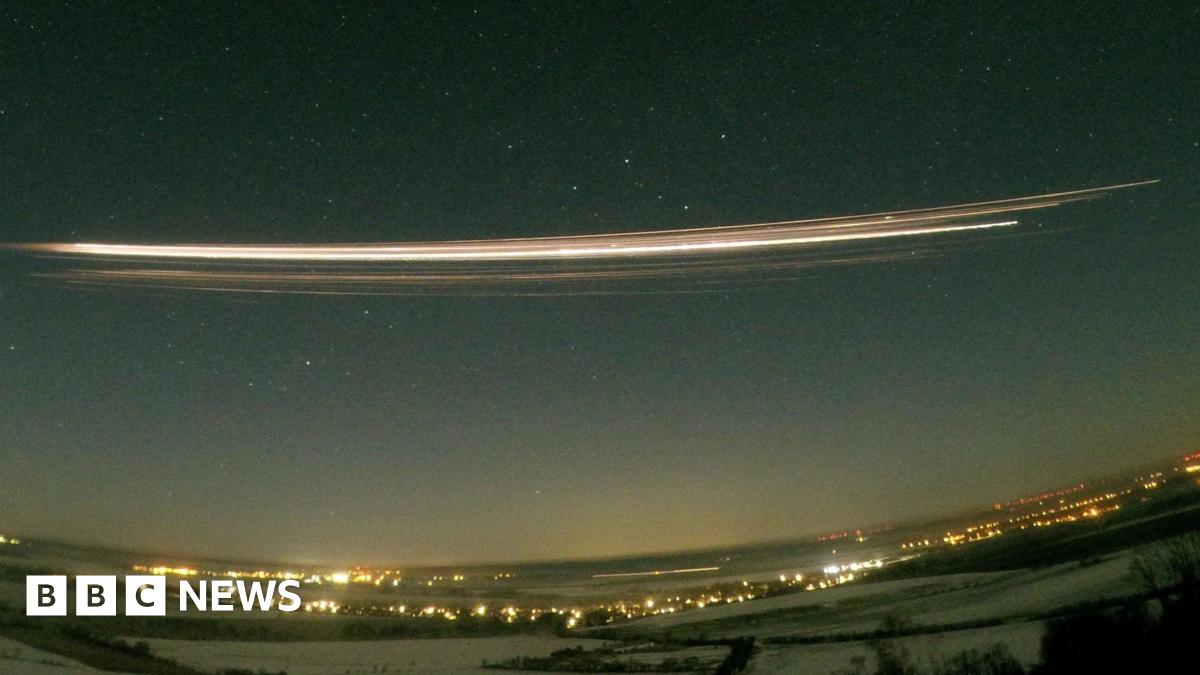
“I hope that if we start our measurements now, perhaps we can get ahead of the curve and identify any potential problems before they become serious,” Wing says.
Earlier research has suggested that 10% of aerosols in the atmosphere are already contaminated by space debris.
SpaceX has not responded to emailed requests from BBC News for comment. The researchers also sent their findings to the company but did not receive a response.
Almost 30,000 pieces of debris are calculated to be free-floating in space, created when rockets break up in space or satellites disintegrate.
Scientists warn that the debris is congesting space and threatens collision with rockets, the International Space Station, and our planet.
Musk’s SpaceX is the world’s leading company for rocket launches including for sending humans into space and maintaining a network of 10,000 Starlink internet satellites.
Musk recently announced he has applied to launch one million satellites to support artificial intelligence (AI) data centres in space.
Scientists warn that as humans move more activities off-Earth, more debris will fall to Earth, polluting as it plummets.
Last year a group of researchers from Nasa, the University of Plymouth and University of Texas called on the UN to include the protection of Earth’s orbit in its sustainable development goals.
Some scientists want stricter enforcement of existing space treatises or more regulation of space debris.
“Space regulations don’t cover the new problems emerging – interference with astronomical observations, risk of collision in orbit, risk of stuff falling on our heads, and now it is becoming clear, atmospheric pollution,” says Andy Lawrence, Professor of Astronomy at the University of Edinburgh.
“The international community is working hard trying to set standards and new regulations, but space commerce is changing faster than we can keep up,” he added.
The research is published in the journal Communications Earth & Environment., external