
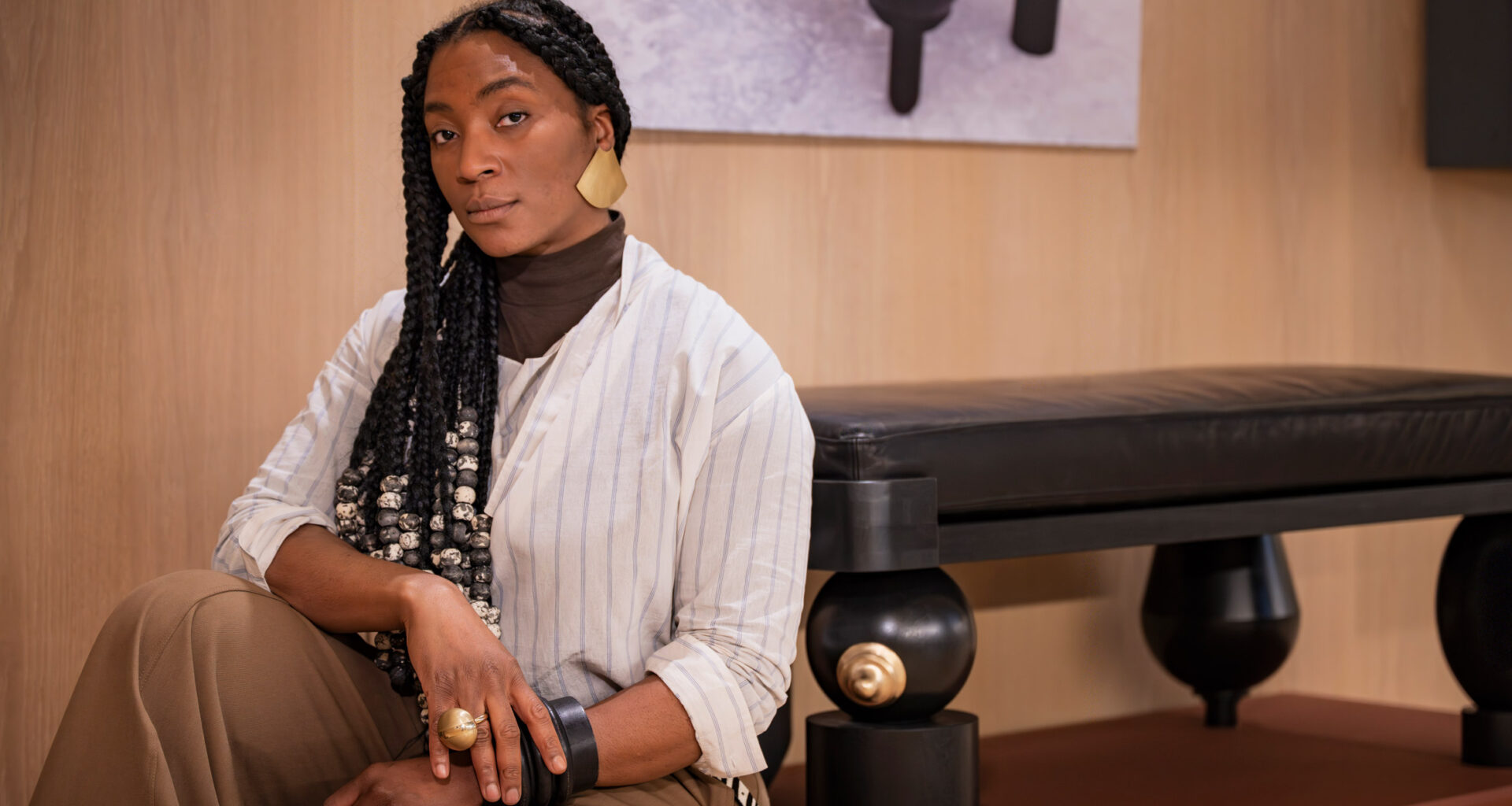
Architecture is the discipline at the core of creative Simone Brewster‘s multidisciplinary projects, she tells Dezeen in this interview following the opening of her debut exhibition at London’s Design Museum.
North Londoner Brewster has a meandering portfolio that spans architecture, furniture, jewellery, clothing and painting.
A varied selection of these works is currently on show at the Design Museum in a free display. Speaking to Dezeen, Brewster explained that the starting point for almost every project in the collection, from totemic planters to a faux fur jacket, was her architectural training.
Architecture is “the thing that makes you understand”
“Architecture has informed all the ways I approach design,” said the creative, who studied at the Bartlett School of Architecture before completing a master’s in design products at the Royal College of Art.
“It’s the thing that makes you understand how to approach it,” she told Dezeen. “It might not even be the thing that defines the outcome.”
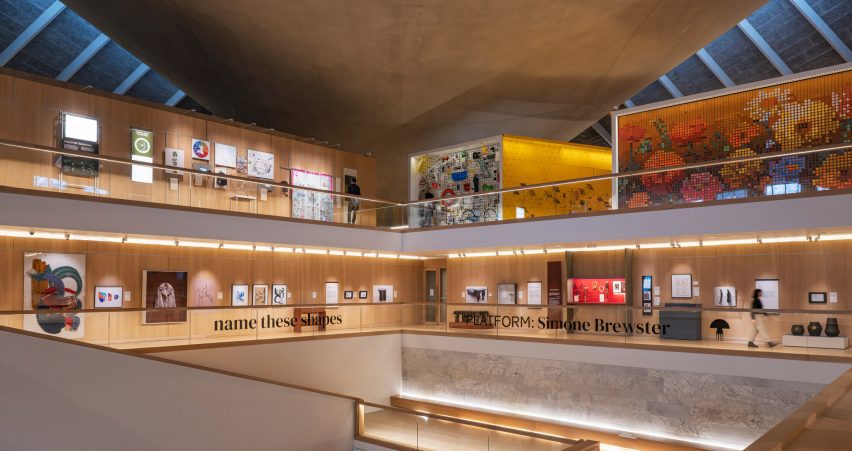 Simone Brewster’s work is currently on display at London’s Design Museum
Brewster said that the architecture discipline established her understanding of scale and proportion, which can be applied to “objects as much as jewellery and designing clothes”.
She explained how her broad creative education expanded her horizons and led to her eclectic practice, including a pavilion designed to mimic ancient architecture and wooden combs influenced by the hairstyles of members of different African tribes.
“I ended up going on a very unconventional path because after I did my Part 1 and I worked in architecture for a bit, I did my master’s in design products,” she said.
“So then I wasn’t technically a Part 2, but I had much more knowledge and experience than a Part 1, and then architecture practices didn’t know how to deal with that,” continued Brewster.
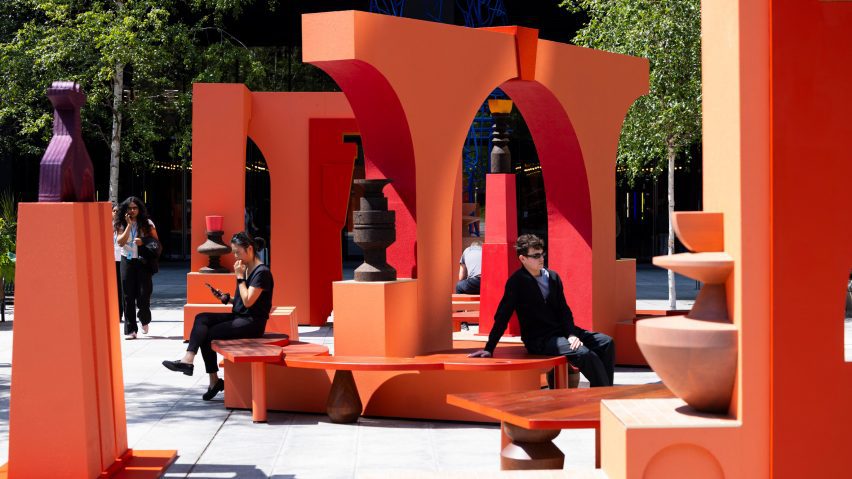 The designer previously created a pavilion designed to mimic ancient architecture
“In the end it meant that I ended up working more with designers, because designers don’t get so scared of you having an architectural background and doing design.”
Brewster’s curiosity for architecture was ignited at an early age. At six years old, she visited her father’s family in Trinidad and asked him how the temperature of the house they were staying in was so cool despite the hot weather. Her dad explained that his architect cousin had specifically designed it that way.
“I look back and I feel grateful for the moment when I was first understanding that space could make me and other people feel something,” reflected Brewster.
“That design could help people feel comfortable, present, and at ease.”
Design is “very grounding”
Brewster’s fascination with space has led her to explore the body and deconstruct how it is represented in culture – themes that are integral to her portfolio.
Among her works on display at the Design Museum are three pieces of furniture created to examine historical objectifications of the Black female body, which she named after racist and obsolete stereotypes.
“The Negrita bench is a new piece, which follows on from one of the most important bodies of work that I’ve created – the Negress Chaise and the Mammy side table,” explained Brewster.
Brewster crafted the bench from ebonised repurposed sapele wood. Like the chaise longue and the side table, the furniture is characterised by abstract shapes that represent fragmented body parts, including thighs and a breast with a gilded nipple.
“[The pieces] deal with really difficult subjects,” she continued. “And it’s very grounding, this idea of filling the void and talking about design and what it can offer, the barriers it can break down and the conversations it can open up.”
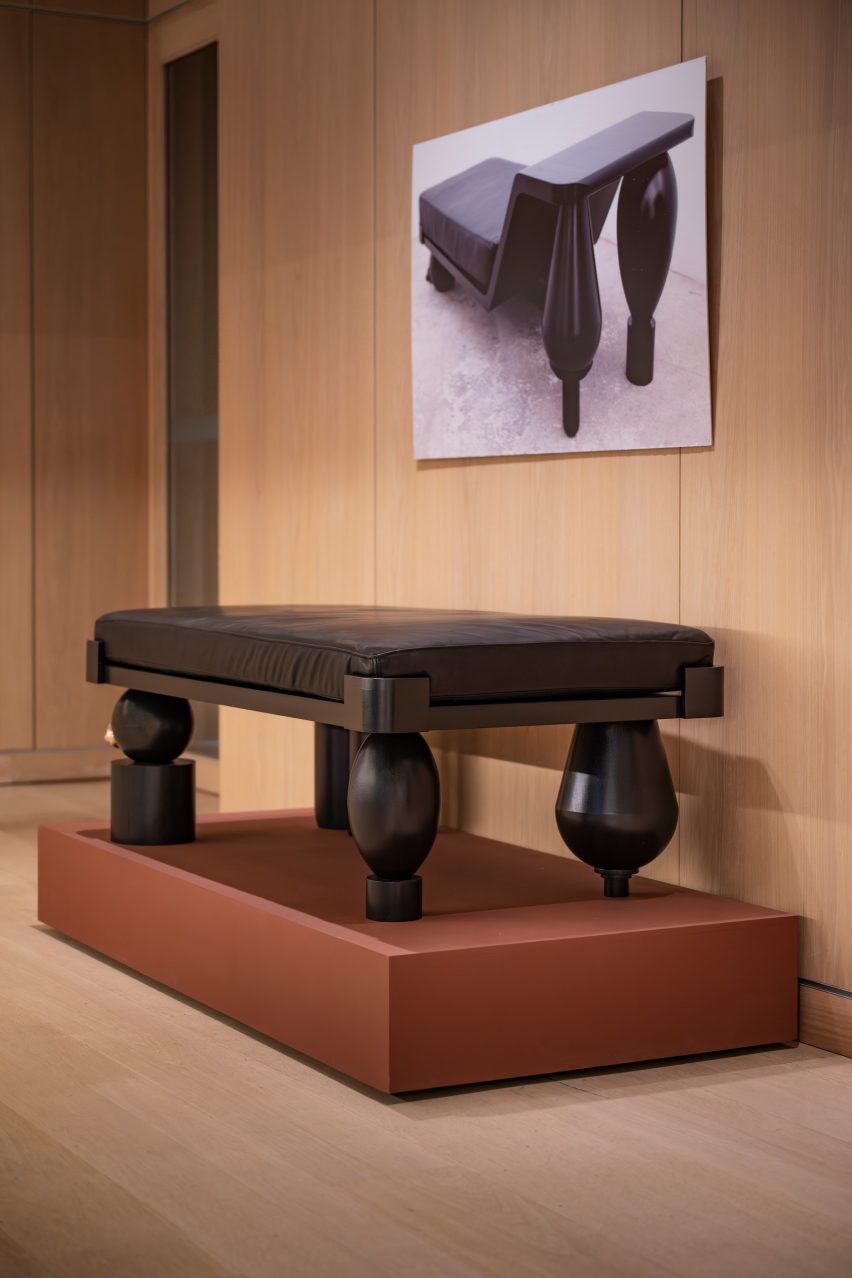 Among Brewster’s new pieces is this bench that references historical objectification of Black women
Elsewhere, a selection of Brewster’s “heritage necklaces” is on show. Finished in materials ranging from brass and aluminium to coloured paper and synthetic hair, the designer’s jewellery was influenced by breastplates historically worn by warriors across Hawaii and Fiji.
As well as tracing back through time, Brewster remains keenly interested in the state of contemporary design, which she has partly explored through various educator roles.
“When I was teaching, I had a lot of students who weren’t from the UK,” she reflected.
“I was trying to get them to understand that their perspective on what design could be was valuable. And to enter our education system, they didn’t have to lose that part of themselves.”
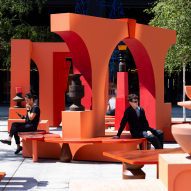
Simone Brewster mimics ancient architecture for colourful London pavilion
Brewster said that students’ preconceptions of what architecture should be often led them to limit their own ideas – something she always invited them to confront and question.
“We’d break it down first with drawings and paintings and collages,” she explained of her teaching style.
“The moment the project became creating a space, [their work] became a white cube. That’s what architecture is in their brain. It’s nothing to do with the colours of their heritage, or the shapes from where they come from.”
“It became a serious thing,” she continued. “And the amount of conversations I had to have, asking them, why have you done that? Can’t you see what you’ve done here? You’ve erased yourself.”
“There was a lot of that, getting them to bring more of themselves into the spaces and objects that they were creating.”
A creative career is “not a straight line”
One of Brewster’s aims for her first museum exhibition is to “demystify” what architecture and design are, and vouch for the wide-ranging potential of both disciplines.
“One of the things I try and instil in students and people who want a creative career is that it’s not a straight line,” she said.
“So many visitors to the Design Museum are young,” acknowledged Brewster. “So many teenagers visit who are really thinking about a career in design.”
“And often what we see when we look at design is this idea that it’s very straightforward, or that someone was always going to be an amazing designer,” she continued.
“No, let’s be real. It’s that we like this thing, and we’re going to explore it and see where it takes us.”
“If we continue to ask good questions, we might make interesting things and continue to make products, objects and spaces that people engage with and find valuable and can become part of culture and society,” she added.
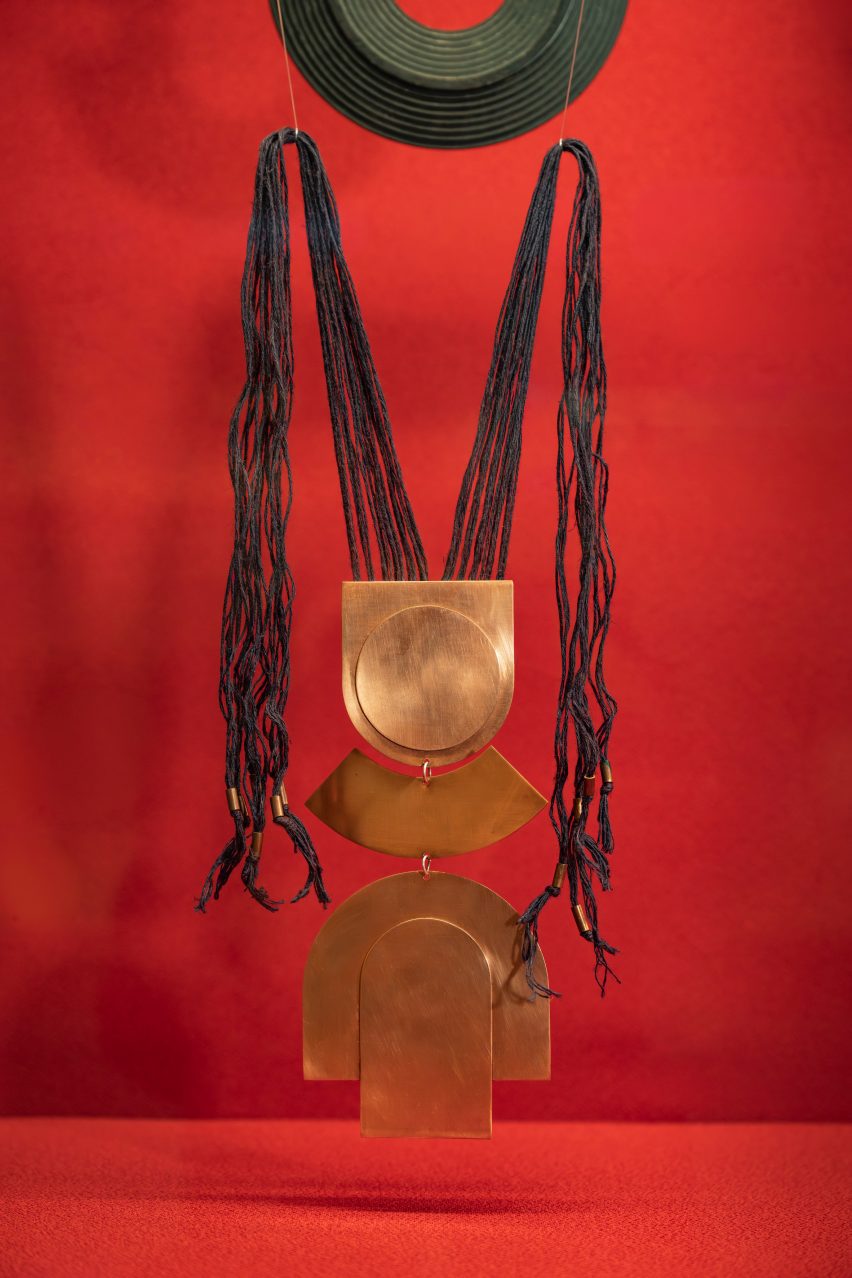 Brewster has a wide-ranging portfolio, including her “heritage necklaces”
This sentiment is echoed in a quote from the designer placed at the beginning of the show, which reads, “institutions never knew what to do with me… where to put me. I realised I would have to carve my own path to get anywhere”.
“For me, I was filling my void, which was looking at the design world and thinking, where am I? I don’t see it. I’m going to start making something,” reflected Brewster.
“But your void is totally different from mine. So there’s space for you and me.”
Brewster’s show is the second edition of Platform, an annual display series at the Design Museum dedicated to showcasing contemporary creativity. Last year’s inaugural edition presented the work of British designer Bethan Laura Wood.
The photography is by Charles Emerson.
Platform: Simone Brewster takes place from 13 February 2026 to 25 January 2027 at the Design Museum, 224-238 Kensington High Street, London W8 6AG, UK. See Dezeen Events Guide for an up-to-date list of architecture and design events taking place around the world.
Dezeen In Depth
If you enjoy reading Dezeen’s interviews, opinions and features, subscribe to Dezeen In Depth. Sent on the last Friday of each month, this newsletter provides a single place to read about the design and architecture stories behind the headlines.