
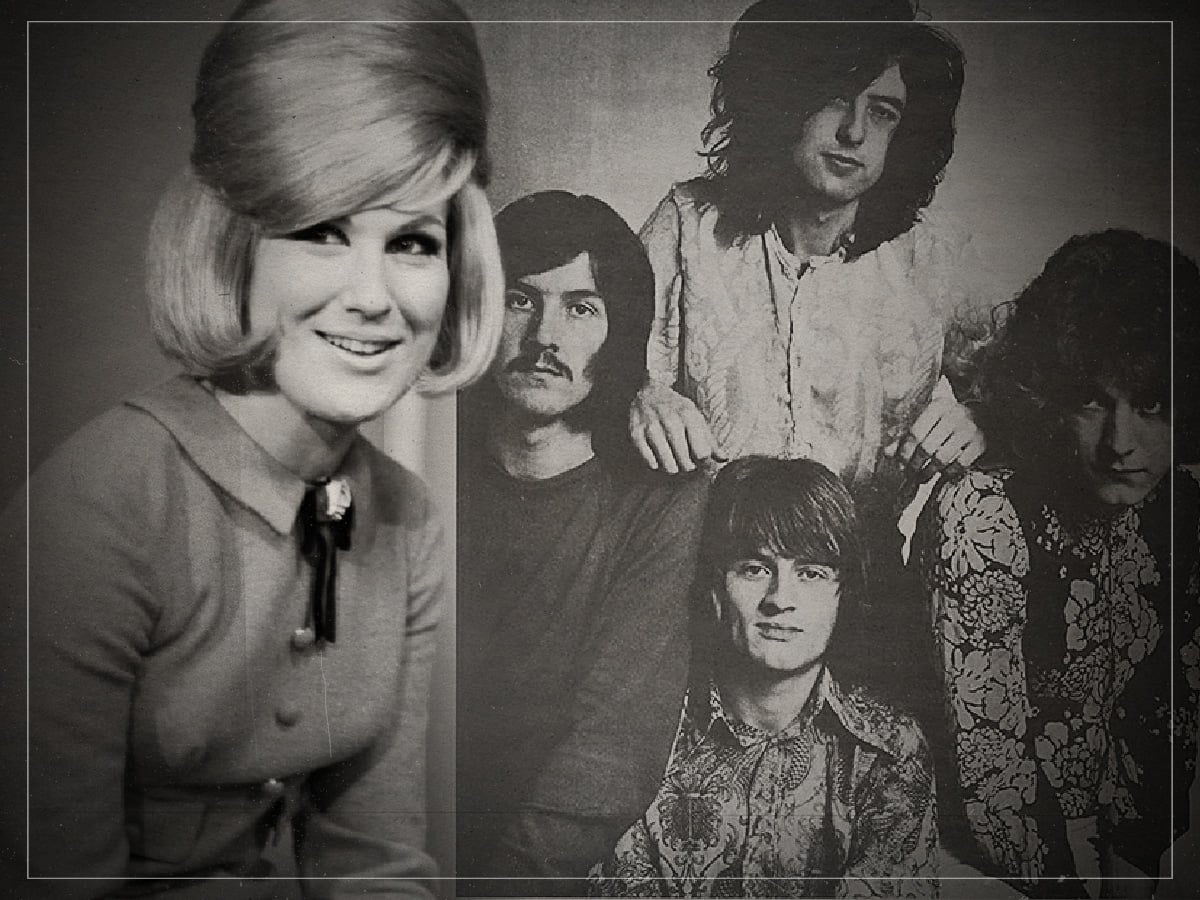
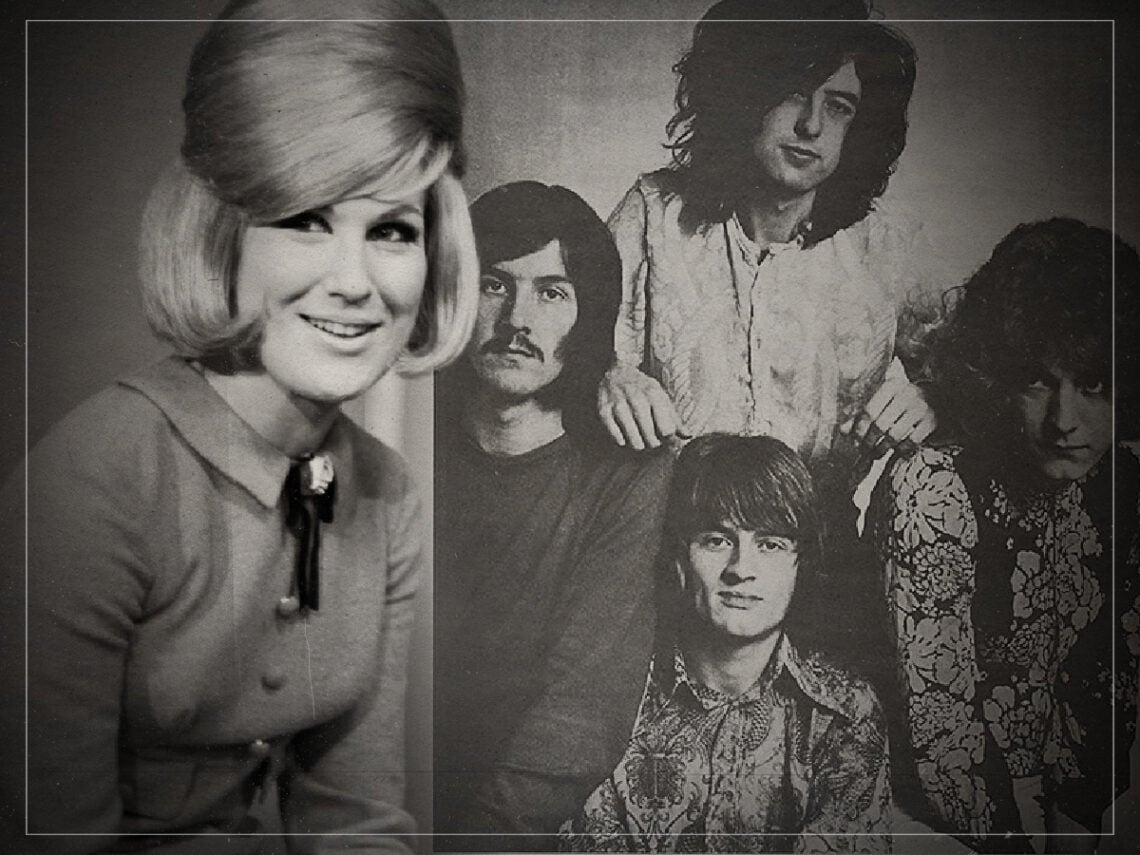
(Credits: Far Out / Dusty Springfield / Led Zeppelin)
Thu 19 February 2026 23:00, UK
There are essentially two halves to Dusty Springfield’s career, standing either side of Dusty in Memphis.
It was a gamble. Across the 1960s, Springfield had emerged as the leading female face of the British invasion by the decade’s end, but it took a while. She’d stormed the UK charts, reeling off big, string-laden pop numbers and much-loved Burt Bacharach covers, but such success failed to translate across the Atlantic.
She hit a fork in the road. As the years rolled along, an emerging critical paradigm began to split between rock’s supposed cultural primacy and pop’s disposability, the latter side of the chasm Springfield found herself wavering on by the late 1960s. Eager to pursue new artistic terrain, a love of Motown soul prompted Springfield to sign with Atlantic Records Stateside – the home of her beloved Aretha Franklin – with the condition she work in the studio with label honcho Jerry Wexler.
Pushing Springfield’s vocals to the fore behind an R&B and blue-eyed soul score, 1969’s Dusty in Memphis would make a moderate splash when it first landed on the charts that March, but would grow as her defining LP, helped by the immortal ‘Son of a Preacher Man’.
Around this time, another young artist was in need of a new career direction. While still in his teens, John Paul Jones began a fruitful session relationship with London’s Decca Records, playing on hundreds of recordings and eventually stepping up to arrangement and studio direction duties.
Across his time with Decca and beyond, the young Jones counted everybody from The Rolling Stones, Cat Stevens, Jeff Beck, and Nico among scores of other rock and pop names on his musical CV. After a near burnout of the heavy session workload, Jones was eager to pursue new ventures.
It turns out that Springfield afforded Jones his big break. He’d lent his bass and orchestral conducting chops to 1968’s Dusty… Definitely, and also formed part of her live band during the Talk of the Town performances. Alongside his steady session work, Jones had struck up a relationship with a fellow session veteran, Jimmy Page, sowing the seeds for what led to one Led Zeppelin.
Springfield was impressed with Jones’ session expertise, and upon hearing he was kickstarting a new rock band, had a word with Wexler and pushed to sign the upcoming Led Zeppelin during the Dusty in Memphis sessions, Wexler sharing production duties. Without even hearing any material, the label boss brought the hungry new quartet onto the Atlantic roster with a $200,000 deal, a gobsmacking amount at the time for such a nascent band.
Zeppelin would go on to enter rock mythology, standing as a paragon of the very rockist critical terrain Springfield found herself on the wrong side of by the decade’s end. While Jones’ arena behemoth would eventually wobble into self-parody as the whole classic rock schtick began to crumple in on itself as punk awaited around the corner, Springfield’s soul stature only grew, celebrated as one of the finest voices the UK ever produced right up until her death in 1999.
The Far Out Led Zeppelin Newsletter
All the latest stories about Led Zeppelin from the independent voice of culture.
Straight to your inbox.