
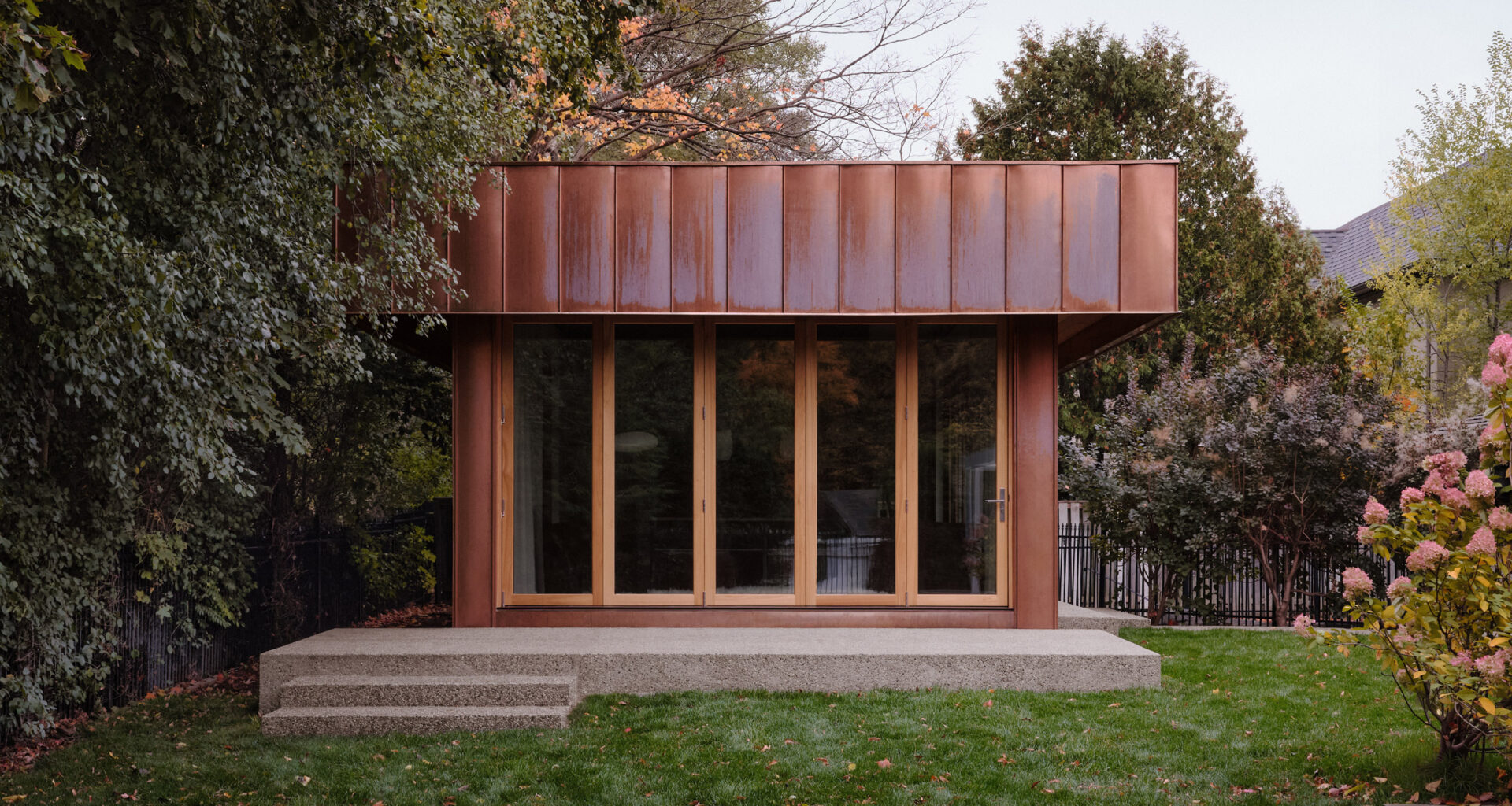
Local outfit Fabrication Studio has completed an accessory dwelling unit in a private garden in Toronto, clad in copper so that the building can “register time alongside the trees”.
The 60-square-metre (645-square-foot) ADU, known as Copper House, was completed in 2025 on the edge of the quiet Sunnybrook Park neighbourhood in Toronto.
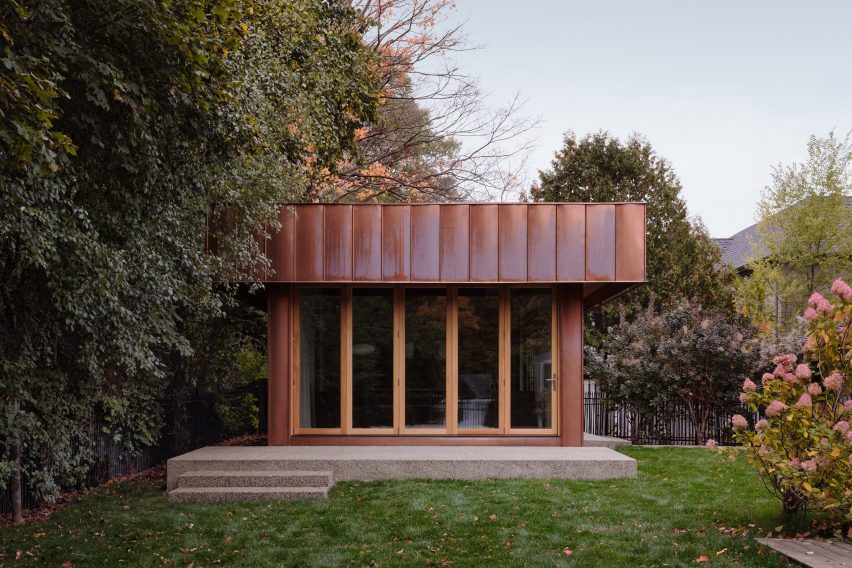 Copper cladding lines this Accessory Dwelling Unit by François Abbott
The client enlisted architect François Abbott and his practice Fabrication Studio, which specialises in ADUs and garden units, to create a place where their grown children could visit, while maintaining privacy and independence.
The self-contained guest house, designed to blend in with its landscape, is set along a line of trees that shade the private lot from the adjacent public park.
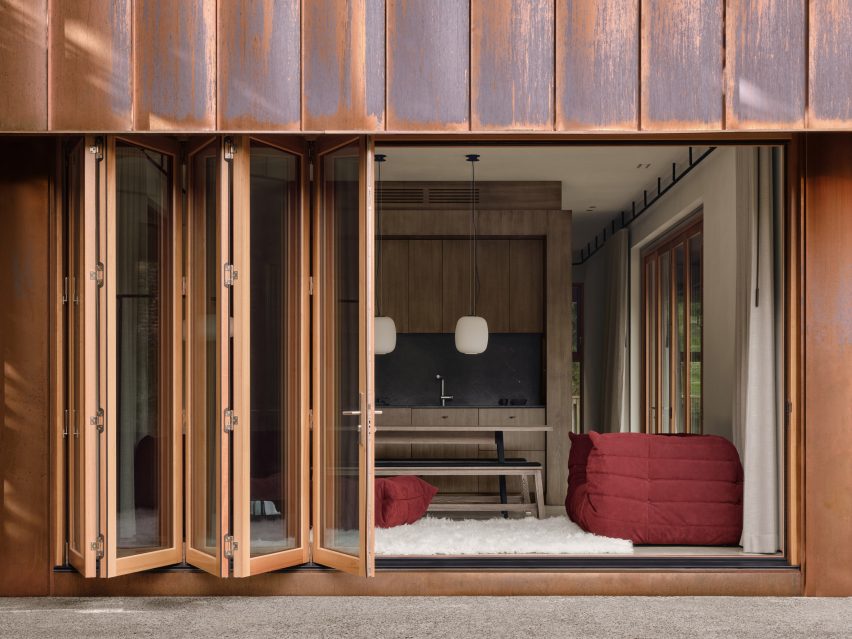 The living area features bifolding glass doors that open onto the garden
“We were interested in building something that felt clearly contemporary, yet capable of belonging to the site over time,” Abbott told Dezeen, noting that copper appears throughout the neighbourhood in the form of gutters and roof details, weathering in shades of brown and green.
“It offered a way for the building to register time alongside the trees.”
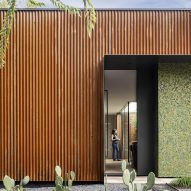
The bright and reflective material – placed in vertical panels along the walls and overhanging roofline – will soften as it is exposed to the elements and will colour, mirroring the cycle of plants throughout the year.
 The dwelling was raised from the garden floor on helical piles
Abbott selected wood finishes for a similar reason, wrapping each facade opening in a warm, natural finish.
“Rather than fixing the house in a single moment, we wanted it to participate in seasonal and long-term cycles – to begin new, but carry the potential to age quietly into its surroundings,” the studio said.
Specht Novak designs Austin ADU devoid of windows
The single-storey building rests on helical piles, lifting it slightly higher above the ground than a traditional foundation. This allows air and water to move below the house and protects the root systems of the surrounding trees.
“The raised base draws the underside into shadow, giving the volume a sense of lightness,” the studio said.
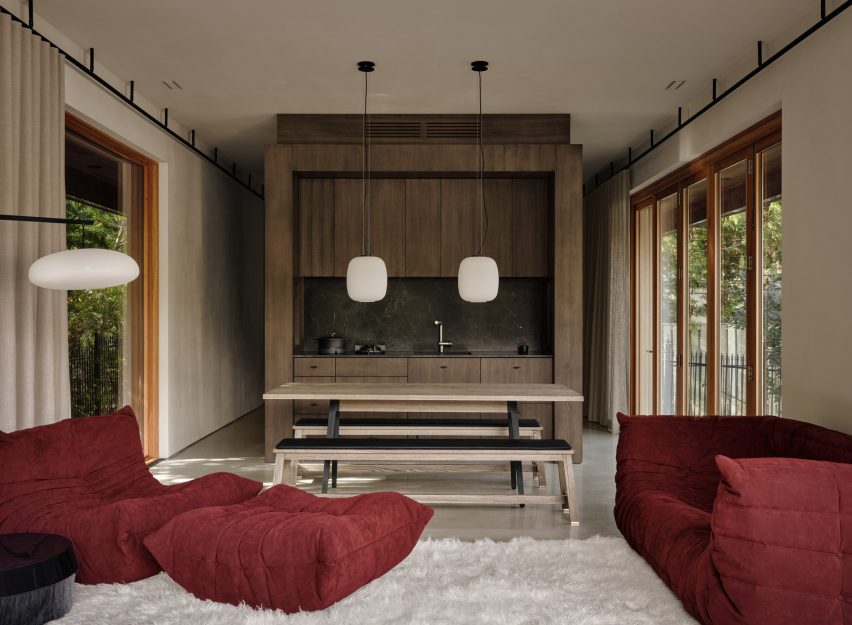
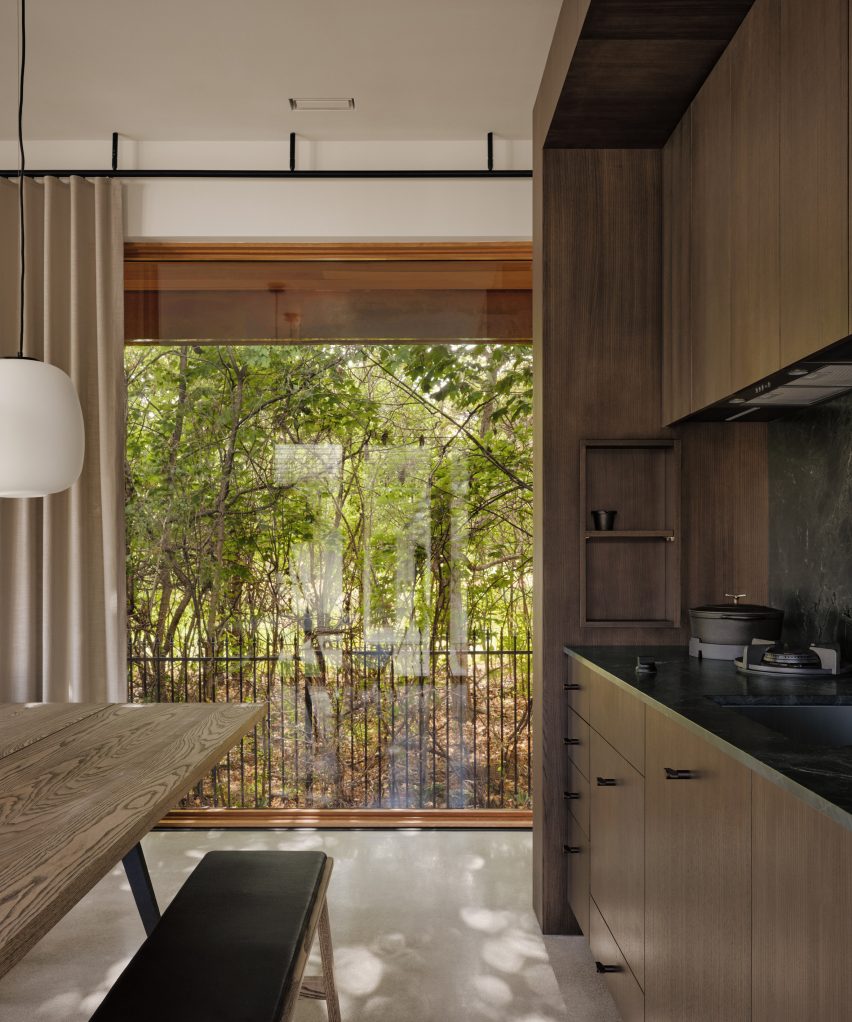 The kitchen, bathroom and storage are located in a wooden core
On the interior, a monolithic wooden core holds the kitchen, bathroom and storage space with the rest of the program encircling it. On one side, the living space opens to the garden with bifolding glass doors, while on the other side, the bedroom is more private with deep window frames that play with light and shadow.
“Copper House recedes quietly into its setting – a deliberate and modest structure that supports the landscape and the lives unfolding within it,” the studio said.
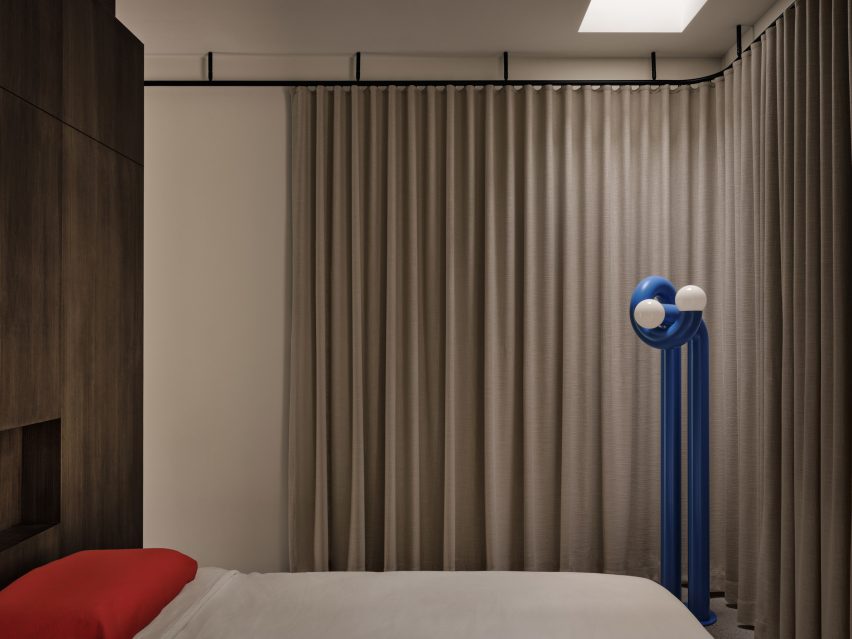 It was designed as a guest house for the client’s children
Abbott explained that a high level of trust between the client and the architect allowed decisions to be made quickly and for construction to proceed smoothly.
“Moving forward, we hope to continue fostering that kind of working relationship – one where the building can respond carefully to its setting and to the lives it supports,” he said.
ADUs are popping up all across North America as homeowners look to increase the capacity of their properties.
In Austin, Specht Novak created a corten-steel ADU with no exterior windows. Outside of Pasadena, Cover Architecture designed a white concrete ADU to “challenge” the 1961 main house and in Austin, Moontower Design Build constructed a plant-based ADU out of cork products.
The photography is by Alex Lesage.
Project credits:
Architect: François Abbott – Fabrication Studio
Construction: SevernWoods Fine Homes