
(Credits: Far Out / Ithaka Darin Pappas / Dezo Hoffmann / Capitol Records)
Thu 19 February 2026 20:45, UK
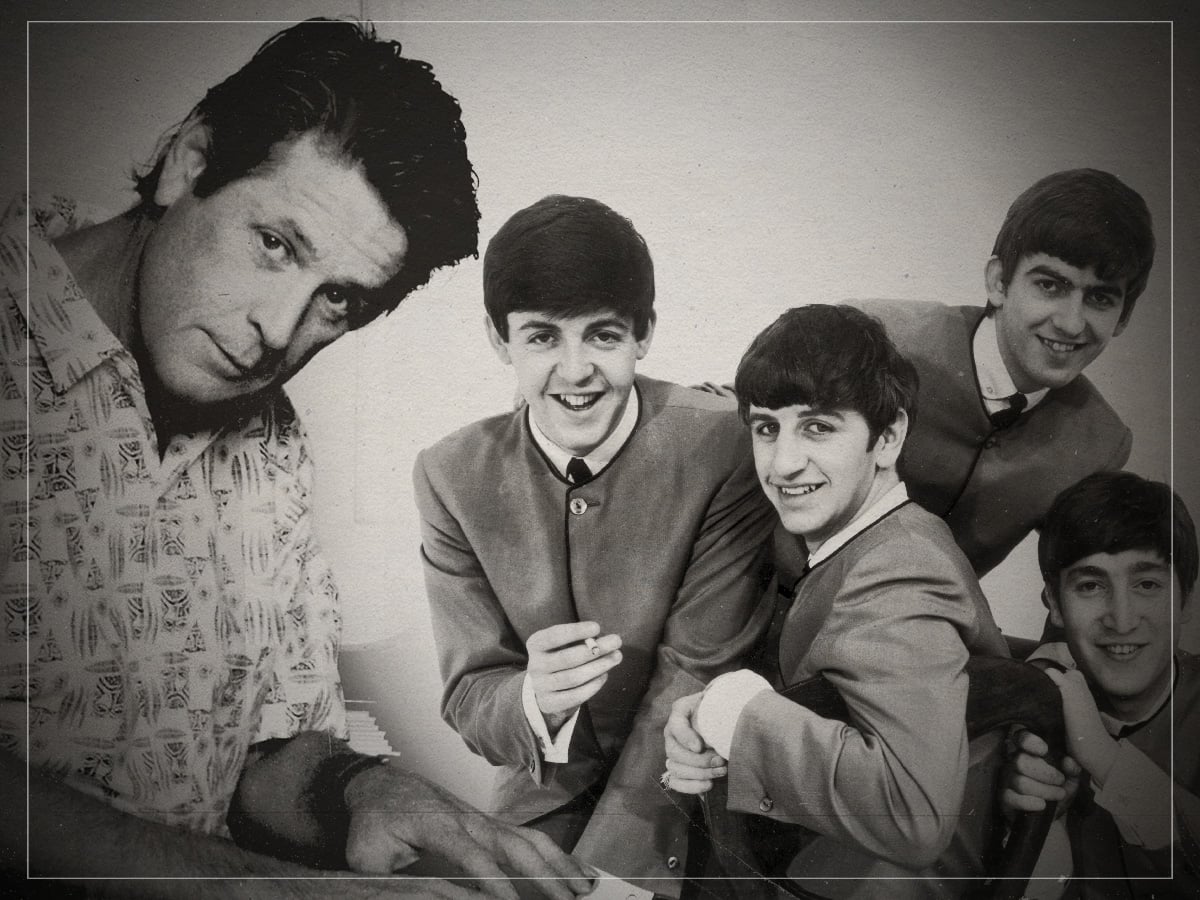
While the summer of love may have taken place in 1967, it was the year before that The Beatles and The Beach Boys struck up a love affair centred around two very specific albums.
The most obvious of which was The Beach Boys’ Pet Sounds. It became the blueprint for studio recording, and quickly became adored by The Beatles, who quietly realised that they needed to step up their game. Despite being the biggest band in the world, they felt immediately inferior to the Californian troupe, who seemingly achieved something they felt as though they simply hadn’t yet.
“I played it to John so much that it would be difficult for him to escape the influence. If records had a director within a band, I sort of directed [Sgt Pepper’s Lonely Hearts Club Band], and my influence was basically the Pet Sounds album. John was influenced by it, perhaps not as much as me,” McCartney said, “It was certainly a record we all played – it was the record of the time, you know? I’ve often played Pet Sounds and cried. It’s that kind of an album for me.”
But while The Beatles got busy, toiling away in the studio on Sgt Pepper in the hopes of replicating The Beach Boys, Brian Wilson and co were busy spinning a record that the band had already put out. To their mind, the 1966 album Revolver was already a mighty fine record, which Wilson has since remarked as The Beatles’ very best work.
“What the heck is not to love?” he boldly asked. “It’s some of Paul’s best work. His vocals are amazing.”
Wilson clearly has great taste, because Revolver is also my favourite Beatles album, for it marks the streamlined moment where the band had begun to crystallise their new sonic ideas while giving time to the chemistry that made them such a formidable outfit in the early 1960s.
Free of touring, which by 1966 had become something of a burden for the band, Revolver marked the first album that really saw them embrace the studio. Songs like ‘Here There and Everywhere’ showcased a sharpening of their traditional songwriting skills that their newfound patience had allowed, while experimental behemoth ‘Tomorrow Never Knows’ proved that the very best of their innovation was still yet to come.
But a key element of Revolver, that slipped through the cracks of Wilson’s praise, was the introduction of Harrison to the songwriting fold. Fresh from a creative adventure to India, where Harrison found enlightenment under the stewardship of Ravi Shankar, he was a newfound creative force for the band, ready to stamp his authority on the songwriting process with ‘Taxman’.
Revolver was arguably the band at their very peak of collaboration. It was just after this that the taste amongst the band started to sour, and so this record serves as one last reminder of their joyous relationship. A perfect blend of pop and psychedelia, it’s a record that shows more than just Paul at his best, arguably the whole band.
The Far Out Beatles Newsletter
All the latest stories about The Beatles from the independent voice of culture.
Straight to your inbox.