
Given the green light by Liverpool City Council last month (27 January), the project will create a new building for Princes School, bringing together pupils that are currently spread across four different sites in the city.
The council had already approved £37 million for the new facility, which will become one of the largest schools of its kind in the country, housing 250 students to help meet growing demand for SEND places.
Speaking to the AJ, Alice Parker, partner and education architecture lead at Ridge, talked process and philosophy when designing a building that meets the complex and unique needs of SEND school pupils and parents.
What was the process by which Ridge won the contract to design this building?
Ridge was appointed through a CCS Framework, which Liverpool City Council used to procure a multi-disciplinary design and project management team for RIBA stages 2 and 3. The brief was to design a modern, purpose-built SEND school, bringing together teaching spaces, outdoor areas and therapeutic environments in a single setting.
During the tender process, the school was expected to grow from 210 to 250 pupils. From the outset, we made sure the site could comfortably support that scale and shaped the design around it.
What is Ridge’s experience in designing buildings for children or adults with special needs?
Ridge has worked across a wide range of education projects, from small specialist settings to large campuses, including SEND schools, new builds and retrofit schemes.
What connects all of that work is a strong focus on how people actually use those spaces, and how to turn them into learning environments that feel adaptable, supportive and intuitive. What that means in practice is spending lots of time working directly with students, parents and staff, thinking about how things like acoustics and layout can flex to suit different sensory needs, teaching styles and ways of learning.
On Princes, my experience delivering SEND schools across the UK and working in live education environments was supported by Ridge’s wider team of architects, engineers and lighting designers with deep experience in education. Ridge also works as a technical adviser for organisations, like the Department for Education. That really helped ground the project in practical experience and a clear understanding of how schools operate day to day.
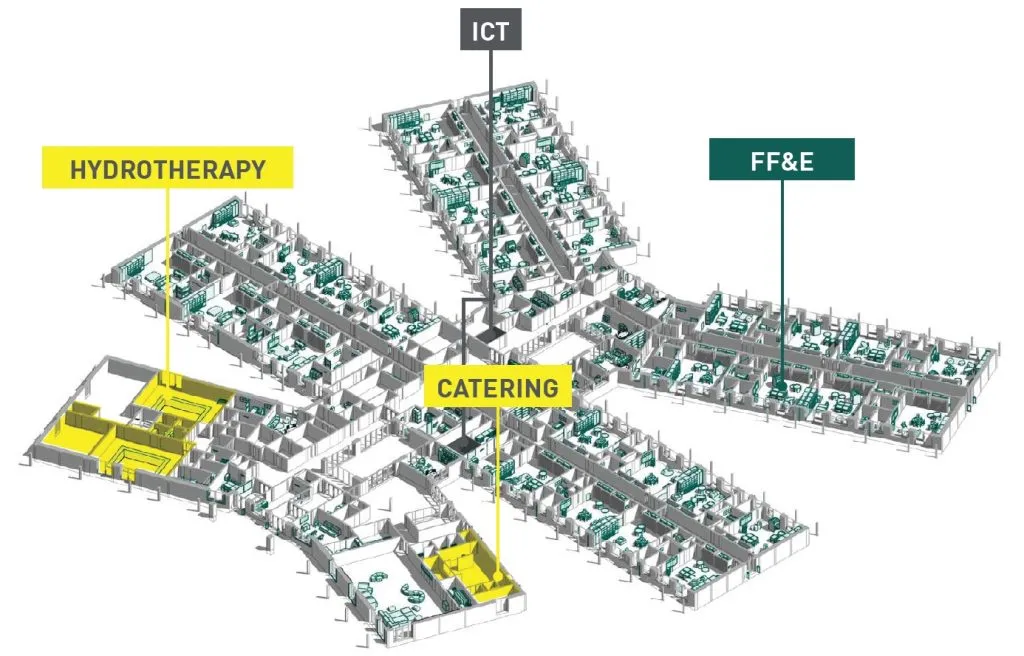
Site plan of Ridge’s new SEND school planned for Liverpool
What was your design philosophy when approaching this building?
We wanted to create a place where students and families can find everything they need in one setting. From the start, we kept coming back to the idea of creating a village that opens up its facilities to the wider public – for example therapy spaces, a café and accessible play areas – so that the school becomes part of the neighbourhood instead of sitting separate from it.
We were also interested in permeability, in every sense of the word. For us, that meant building a school that feels welcoming and easy to approach for parents, families and the local community, but also one that softens the line between inside and outside. We wanted being indoors to never feel disconnected from the world outside, so we prioritised putting daylight, greenery and views of nature right at the heart of the design.
How have you adapted the design of a school to cater to the needs of future SEND pupils? How does this differ from a typical school?
We centred the design around three main priorities.
First, we made access to outdoor space and quieter breakout areas a defining feature of the building. The existing Princes School operates across four sites and would benefit from more of these types of spaces, because they play a really important role in helping students feel settled, confident and comfortable in their surroundings. Drawing on forest school principles, we built in outdoor classrooms where children can learn and develop social skills through play-led activities such as den building and nature crafts.
Second, we shaped the school so it can actively connect with the wider community. SEND schools often serve a broad catchment, which makes those local links harder to build. By opening facilities to the public during evenings, weekends and holidays, we created new opportunities for shared use and everyday interaction.
Finally, we paid close attention to how the school works when it’s at its busiest. SEND schools depend on high staff ratios, with up to 40 minibuses arriving each day. We allocated around a third of the site to parking and drop-off and designed clear, intuitive circulation routes so arrivals and departures feel calm and organised, without adding pressure to surrounding roads.
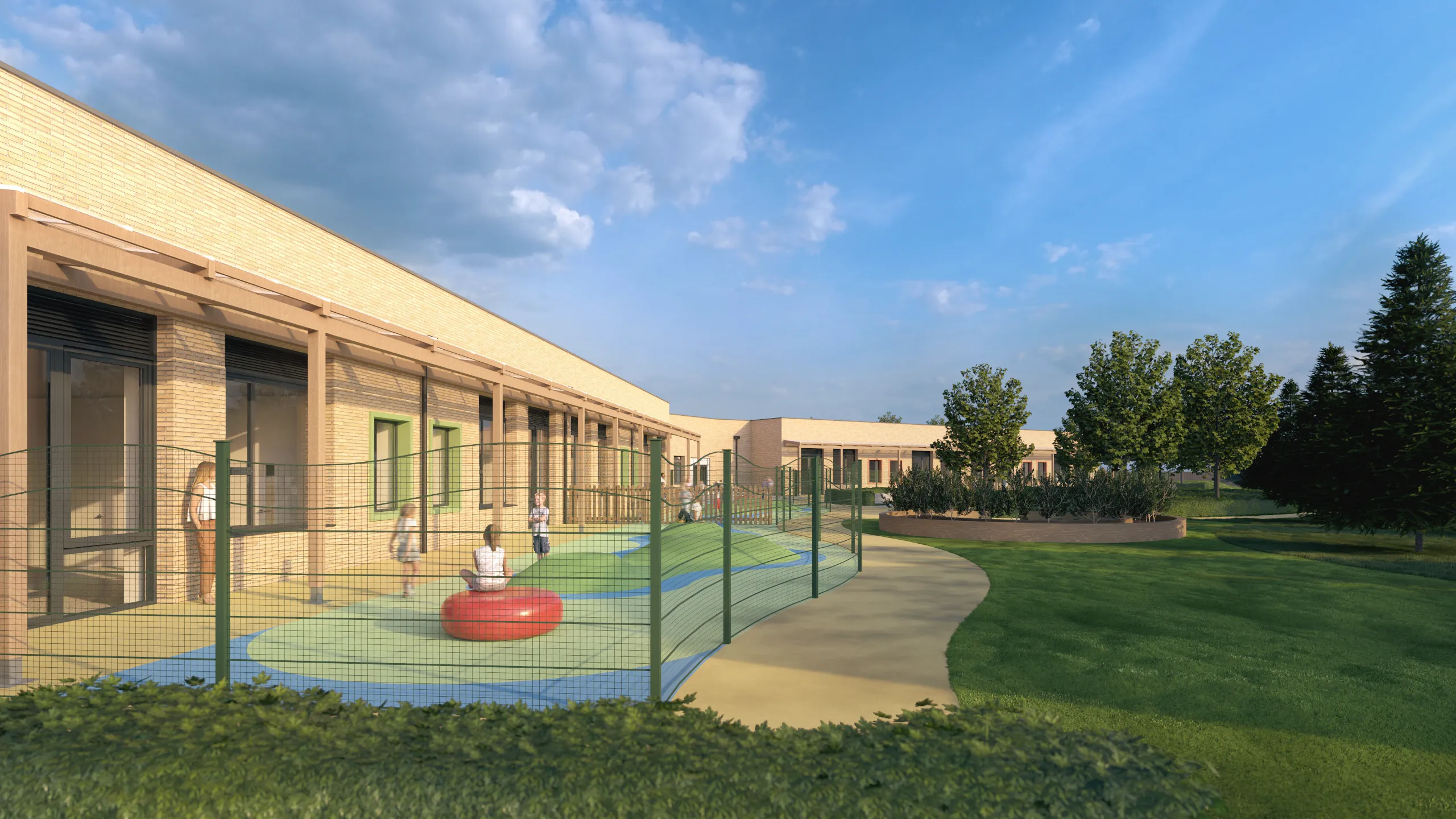
The star shaped design was adopted to ensure that children could step directly from classrooms into outdoor play areas, credit: Ridge
What prompted the star-like design, and how does it support how the building is used?
The layout ensures every child can step directly from their classroom into shared outdoor play areas, which was a key ambition from the outset. Those shared outdoor played areas, together with dedicated spaces where students can pause, reflect and reset, are invaluable in helping children to develop everyday life skills.
The star-like form allowed us to create two green courtyards at the heart of the school, linked by wide, street-like corridors filled with natural light. We wanted nature to sit at the centre of daily school life, so children stay connected to the outdoors even when they are inside. As children move through the building, they always have clear views of greenery and daylight, which helps spaces feel calm, easy to understand and reassuring.
What were some of the particular challenges during the design process?
A key focus early on was understanding how the school works day-to-day. We spent time on-site observing daily routines, particularly around arrival and departure. Getting pupils and staff safely into the building is the foundation, and one of the most important moments in the school day.
The site sits within a residential area, so all drop-off, pick-up and parking needed to happen within the school grounds. Our transport modelling team responded to this by creating a clear, well-organised arrival sequence that safely accommodates up to 40 minibuses in a short window, while keeping movement calm and predictable for pupils, staff and neighbours.
We were also careful to make sure the design delivered the highest quality facilities possible within the available budget. By focusing on what would make the biggest difference to daily experience, we were able to prioritise quality where it matters most, creating a setting that supports learning, wellbeing and staff confidence from day one.
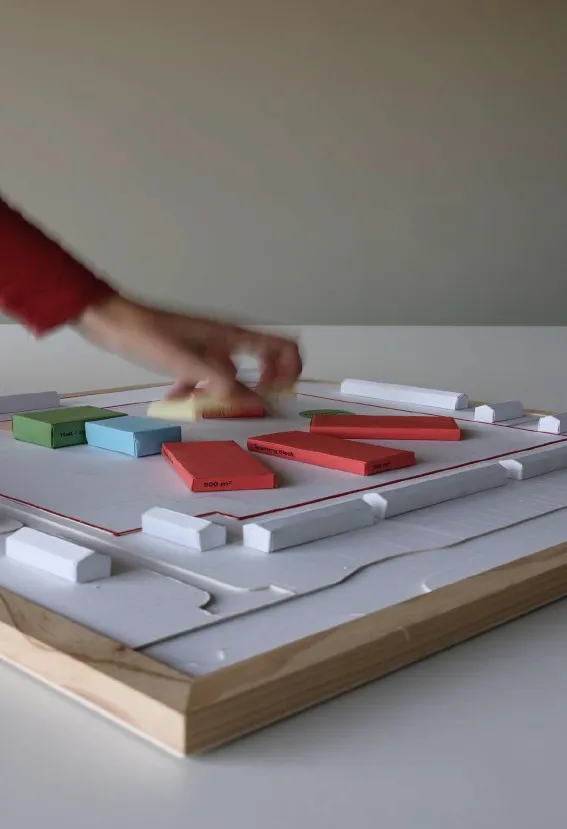
Model used in the design of Ridge’s new SEND school
Was there input from experts, parents or teachers working with SEND children, and how did that shape the design?
Princes was shaped by the needs of the students, parents and staff. Our role as designers was to listen carefully, and translate those ideas into a design that helps them to genuinely flourish.
We worked especially closely with teachers throughout the design process, particularly because the project brings together provision currently spread across four sites. Their day-to-day experience shaped everything from the specialist facilities to how the school supports a sense of belonging.
Together with students, parents and staff, we focused on creating an environment that feels warm, familiar and full of character. Alongside the school, we are developing graphics and artwork that bring the village idea to life, with elements such as a post office, a sweet shop and friendly characters that help the school feel like a place people recognise and relate to.
One of the internal courtyards will include a tree, reflecting the belief that every child grows and flourishes in their own time and in their own way. We are also creating spaces for clubs for older children, so their connection to Princes School continues as they move into secondary education.
Project data
Location Liverpool
Local authority City of Liverpool
Type of project SEND School, Primary (Severe Learning)
Client Liverpool City Council
Architect Ridge & Partners
Landscape architect Stiwdio Owens
Planning consultant Ridge & Partners
Structural engineer Ridge & Partners
M&E consultant Ridge & Partners
Quantity surveyor Ridge & Partners
Principal designer Ridge & Partners
Lighting Consultant Ridge & Partners
FF&E Consultant Space Zero
Main contractor Ridge + Partners
Funding Liverpool Government (Education)
Tender date 28 February 2024
Start on site date 2026
Completion date 2029 (scheduled)
Contract duration Four years
Gross internal floor area 5,850m²
Form of contract CCS Framework which LCC used to procure the contract (NEC Contract)
Total cost £37 million
Planning application reference 25F/1709