
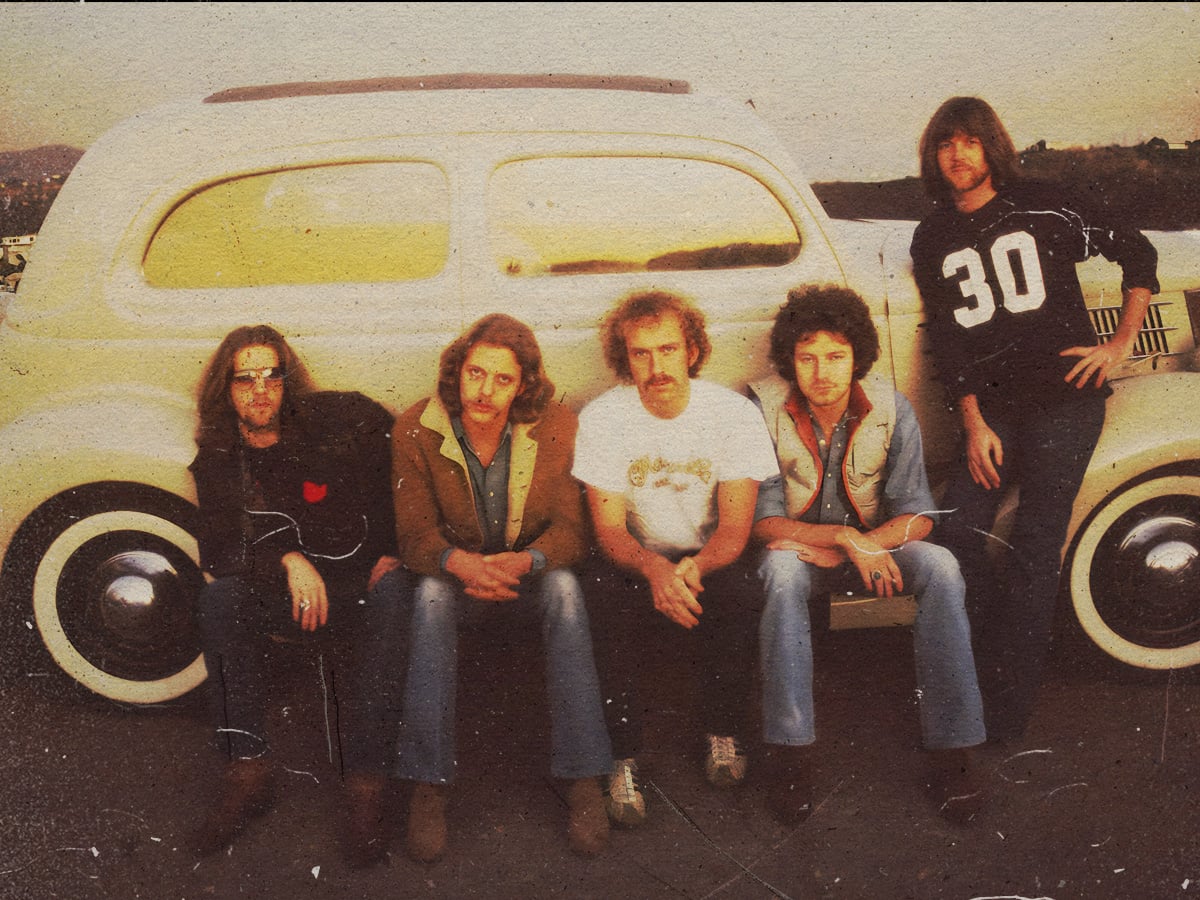
(Credits: Far Out / Showtime / The Eagles)
Thu 19 February 2026 19:13, UK
Division was part of the Eagles‘ magic.
Their sound thrived on the yin and yang of harmony and tension. They were simultaneously laidback and potent. They jostled between those two poles and the resultant energy embodied everything that was best about them. However, this also meant that everything the band ever did, from going on tour to trying to write a song (or even just choosing an evening restaurant), was a high-wire act that flirted with disaster, despondency, or songs ripe for derision.
By the time 1975 arrived, things were changing fast for the country rock pioneers. They might now be one of the most commercially successful bands in history, but their start in life didn’t make this lofty position a predictable prognosis. They didn’t seem to mind. They enjoyed the life of the quiet artist for a while, but hits began pushing them in a new direction.
“No one really knew who Don Henley and Glenn Frey were – or any of us, for that matter,” Eagles guitarist Don Felder explained in 2007’s memoir Heaven and Hell. They already had five top ten hits by the end of ‘75, but they had still largely managed to hide behind their music.
“For years, we’d been able to walk around LA, into restaurants, clubs and theatres, and melt anonymously into the crowd. It is one of the great bonuses of being an Eagle. No one knows what we looked like,” he continued. But as fame began to look like an inevitability, certain members leaned into it more than others. That caused friction.
 (Credits: Far Out / Alamy)
Around the time of One of These Nights, the band’s biggest commercial breakthrough to date, founding member Bernie Leadon began dating Patti Davis, the daughter of Ronald Reagan, no less.
That certainly isn’t the most obvious move in the battle to keep a low profile and focus on the art. And neither was the divisive song she soon wrote for the band. ‘I Wish You Peace’ was as much Davis’ own personal dig at her mother, Nancy Reagan – who had disowned her for living with Leadon out of wedlock – as it was a bid to prepare a song for the Eagles.
The band of a few years ago, the reclusive group behind Desperado, would’ve batted that away. Hell, they wouldn’t have been dating a Governor’s daughter in the first place, but things were changing, and division was rearing its ugly head. The more successful they got, the more complicated things became. As the old proverb goes: Mo’ money, mo’ problems. Chief among those problems was the tediously cheesy ‘I Wish You Peace’ – the title alone sounds paradoxically passive-aggressive.
When Leadon presented the track to the band, a sense of disdain instantly befell it. Don Henley called it “smarmy cocktail music and certainly not something the Eagles are proud of”. He’s right; it was a sham, and only the rarified musicality of the band was responsible for cloaking it as a half-passable entry in their discography.
Because of their honed skill, it is sonically passable, but an opening line like, “I wish you peace when the cold winds blow / Warmed by the fire’s glow”, highlights the cliched nature of the song. So why did they even pursue it?
“Nobody else wanted it,“ Henley would reflect in the papers. “We didn’t feel it was up to the band’s standards, but we put it on anyway as a gesture to keep the band together”. While this might seem like a peace offering hinting at harmony and brotherhood, it was actually the dark inverse.
The band, functioning at their most cohesive, would’ve simply said, ‘Look, Bernie, I know she’s your partner, but this isn’t up to scratch; let’s put it to one side’. But their weary acquiescence to accepting the “smarmy” effort hinted that the band were now pulling in different directions, and you had to pick which battles you were prepared to lose and which you needed to win.
In Leadon’s book, it had “become the Don and Glenn show” and the days when “were all credited with writing” were gone. However, Henley and Frey would point to the fact that they were now accepting shoddy material from future-President’s daughters as proof that the inverse was true and control of the group’s material was sliding.
Only a matter of months later, Leadon quit the band, famously doing so by pouring beer over Glenn Frey’s head, a shameful waste of good beer that only the most scorned of Eagles would ever venture to squander. However, as this piece stated from the outset, this was part of the makeup that made the Eagles great.
Poetically, this point is typified by the fact that Leadon’s farewell resulted in Asylum Records releasing Their Greatest Hits (1971-1975), charting the years he was in the band, and this album now resides among the ten best-selling records of all time. While also marking the next chapter – one where anonymously slipping into LA restaurants was a thing of the past.
With that in mind, could there possibly be a more defining song than the aptly named ‘I Wish You Peace’ and its strange place in the lore of the strangest, most successful band in American history?