
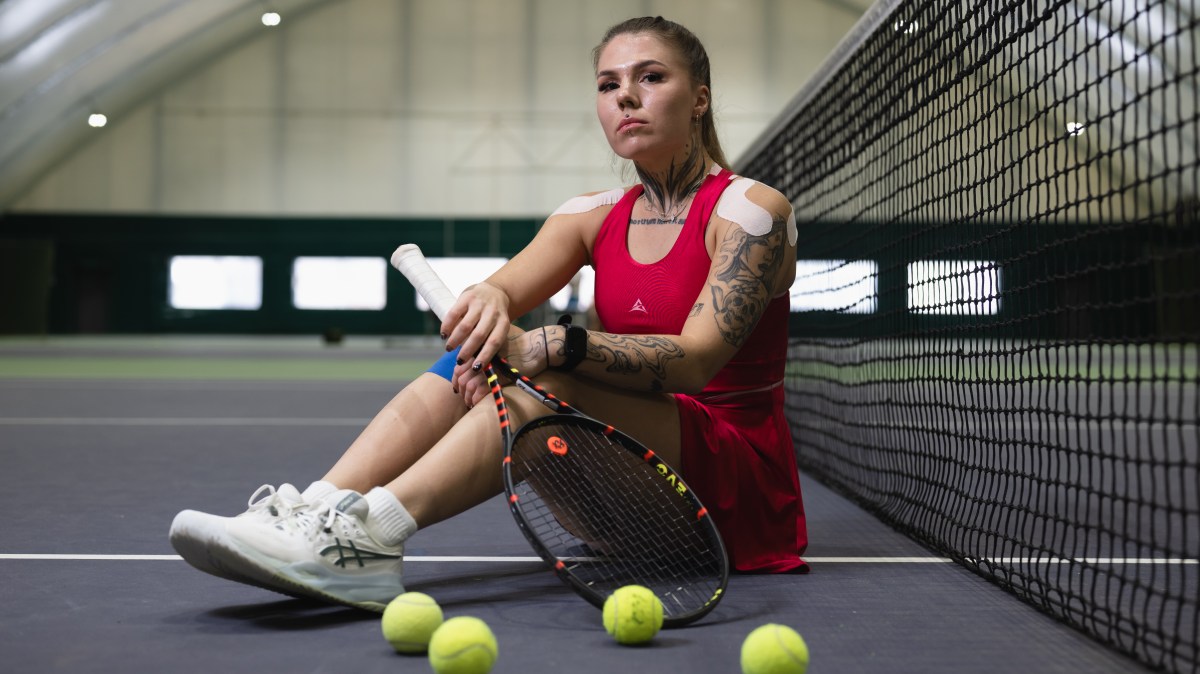
Oleksandra Oliynykova video calls from a food court in central Kyiv because an air raid alert interrupted her journey home from training.
“It’s active but we’re inside so we should be pretty much OK,” she says with a laugh, before explaining how the near-daily ritual pales in comparison to her preparations for the Australian Open last month. “The night before I [left for Melbourne], a Shahed drone hit the building just across the road. I woke up when I heard the explosions. It was so close my apartment was shaking and I couldn’t sleep.”
The Ukrainian is perhaps the most unlikely breakout star on the WTA Tour in recent months. The only top-level player still living in the capital, her father serves on the front lines with one of the army’s most effective drone units. A generator at her tennis club means there is still light and water when the city’s power goes out, but the 25-year-old has to take an overnight train to the Hungarian or Romanian border before travelling to her next tournament.
Long before the war started, and as recently as last year, Oliynykova was still living off her prize money from tournament to tournament, sleeping in vans and hostels, sustaining herself on ham sandwiches.

Oliynykova trains in Kyiv and has to travel to the Hungarian or Romanian border before heading to tournaments
VIACHESLAV RATYNSKYI FOR THE TIMES
“Once I was playing in Greece and we were staying in the parking lot of the hotel. It was OK, but we gave some bread to the [stray] dogs. They started to protect the camper and block the other cars and we got kicked out,” she says, laughing again. Even after Oliynykova won back-to-back ITF titles in Sardinia in May, she had to sleep at the airport because the prize money had not yet reached her bank account.
Yet, in spite of that backdrop — or rather because of it, as Oliynykova explains — she has rapidly risen to No71 in the world after winning three WTA 125 titles at the end of last year. Then, a fortnight ago, she reached her first WTA 250 semi-final at the Transylvania Open, where she lost to Emma Raducanu.
It was not only Oliynykova’s striking tattoos — along with temporary bats inked underneath her eyes — and piercings stemming from a love of rock music that caught the eye, but her unconventional playing style, deploying a mixture of slices and moon balls that maddened opponents.
“When I was a teenager, coaches didn’t like my technique. Even now they are saying we need to change things, but I’m not trying to play normal. I want to be the best in my game style — maybe not the best in the world — but this anti-tennis player who can break the rhythm of any person on tour,” she says.
The point where everything clicked came at Oliynykova’s lowest ebb. After fulfilling a dream of reaching the singles main draw of a grand-slam tournament for the first time at Wimbledon last year, she left disillusioned by the pursuit of money and ranking points, along with the presence of Russian players who Oliynykova claims have supported Vladimir Putin’s regime.
“When I came back, I cried for so many hours. I was really depressed,” she says. “My father told everyone in his unit that he couldn’t communicate with me, that I wouldn’t talk to him and didn’t want to play, and then they started texting me like, ‘Girl, come on. We all want to see you in the top 100. We want to see you in the national team. Do it for us. We are proud of you. Don’t stop. Remind the world about us.’ I think that’s what really helped me, because I feel so free now. I’m not thinking about the results. I’m playing for them.”
Resistance in the face of upheaval has been the constant theme of Oliynykova’s life. When she was ten years old, her father’s face was plastered across the news for protesting against the president at the time, Viktor Yanukovych. “He ran a [clothing] production company and he printed T-shirts with a football slogan on, but it was kind of offensive [to Yanukovych],” Oliynykova says. Police destroyed the company’s offices and her father rushed home and told Oliynykova and her younger brother, Nazar, who is also a tennis player, that they had to leave in the middle of the night.
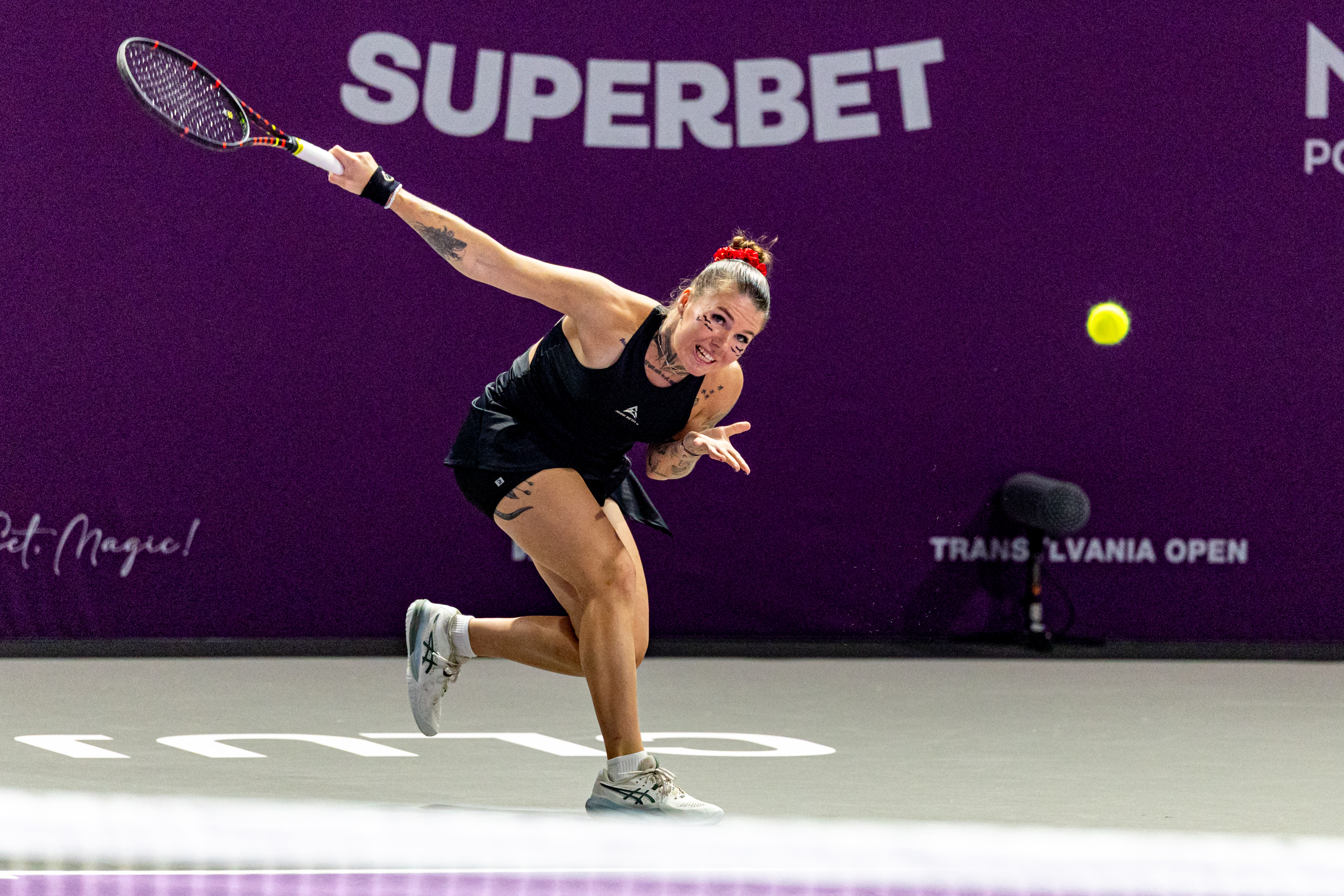
Oliynykova played with bats inked underneath her eyes at the Transylvania Open as her playing style caught the eye
HORVATH TAMAS/GETTY IMAGES
“My mum was crying and told me to pack my things. I remember watching the news and I was worried. I was too young to understand what was happening, but I knew something was wrong. I learnt about words like ‘democracy’ and ‘free speech’,” Oliynykova says.
“From one point, it was a huge trauma for me, because after that I’ve lived all my life with the feeling that in one moment I can lose everything. But also, when you have someone to look up to, who is willing to risk everything, like my father, it makes you a really principled person. You’re not scared to speak up if you believe something. A lot of things I’m doing are because I saw my father doing the same.”
The route to Croatia was an odyssey in itself. After crossing the border, their GPS led them into a prohibited area in Transnistria, the breakaway territory between Ukraine and Moldova, where their car was stopped by Russian soldiers. Then, after reaching Chisinau the following morning, they stayed in a crummy hotel overrun by cockroaches before settling as refugees in Zagreb.
Oliynykova’s father found a job as a taxi driver while her mother worked as a cleaner in a shopping centre. “The level of life was downgraded for us,” Oliynykova says. “It was always a challenge, but I think my mentality helped me because I was just happy to play tennis. My father was very supportive and told me not to compare myself to the other girls, and that my time would come.
“We did it with no sponsors. I was playing with holes in my shoes. I was eating the cheapest food. It was the same with my clothes, my tennis bags, but I didn’t complain because I was motivated. I love playing tennis anywhere, but a big stadium is nice because there you can share your message.”
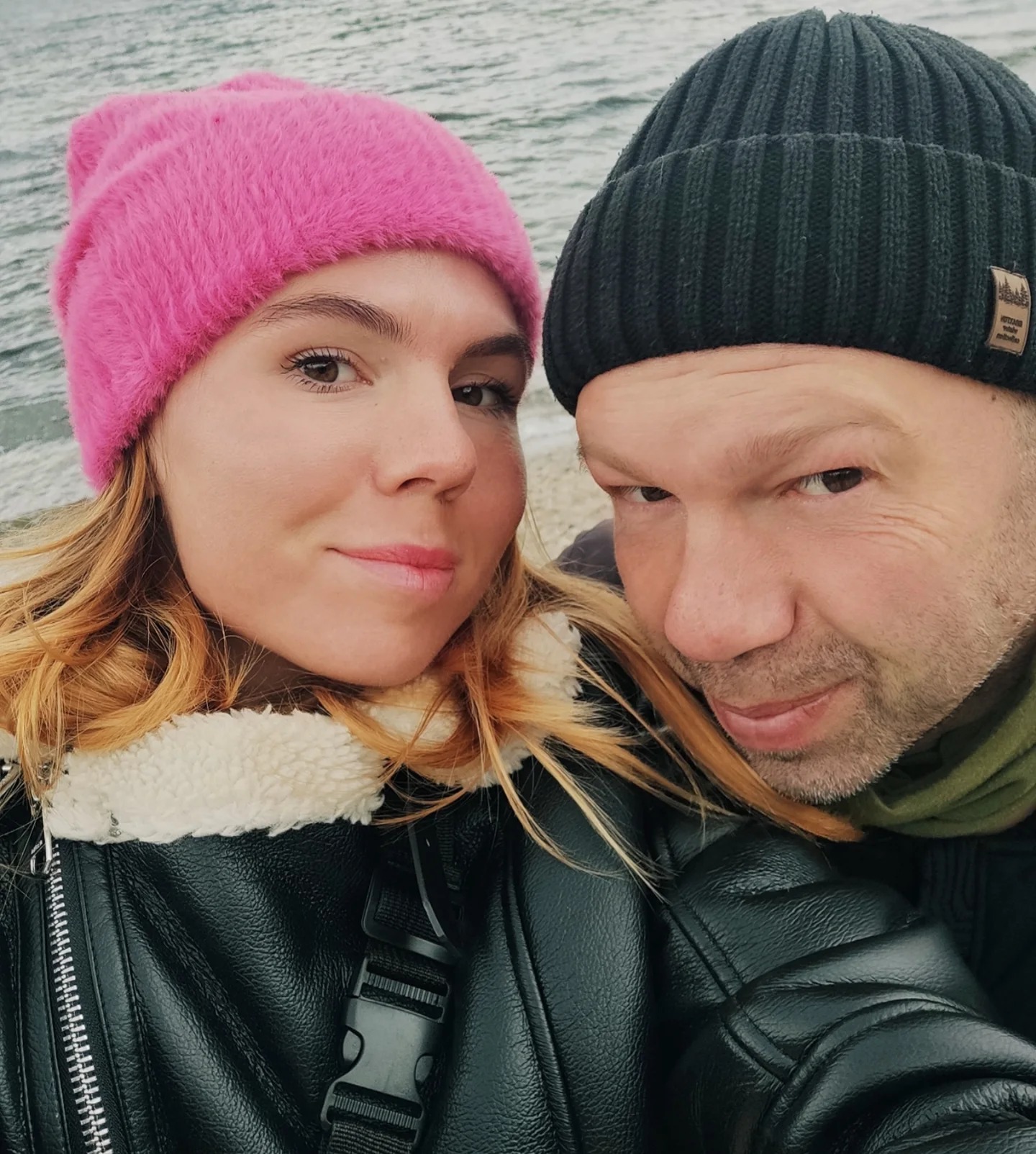
Oliynykova takes inspiration from her father, who is serving on the front lines
That is what is fuelling Oliynykova’s momentum now. Her father joined the army in the summer of 2024, drawing an end to their adventures in the campervan and posts on Ukrainian Facebook community pages trying to find free places to stay in different cities, and Oliynykova returned to Kyiv full-time herself last year.
While the WTA circuit moved from Romania to the Middle East, she headed to Kramatorsk, a key city near the front line in Donetsk that has been pummelled by missiles. “I was coming back from occupied territory and I never saw anything like this in my life. This is pure evil. Imagine driving through small villages, small cities, and everything is completely destroyed. No home is saved.
“And if they come here [to Kyiv], they will do the same. When someone from your family is doing the right thing and defending your country so you can have a future, you understand you should turn all this pain and stress into true solidarity.”

Oliynykova is adamant she will not be silenced — “Maybe sometimes I am emotional, but when you’re living with the risk of being killed, I think you have a right to be emotional”
VIACHESLAV RATYNSKYI FOR THE TIMES
Oliynykova used her new-found platform at the Australian Open to renew calls for bans on Russian and Belarusian tennis players, including the world No1, Aryna Sabalenka. After losing in the first round, she then wore a T-shirt that read “I need your help to protect Ukrainian women and children but I can’t talk about it here” to her press conference.
While most Ukrainian players refuse handshakes with their Russian counterparts, Oliynykova went further by snubbing Anna Bondar during the Transylvania Open this month because the Hungarian played in a state-sponsored exhibition event in Saint Petersburg in December 2022.
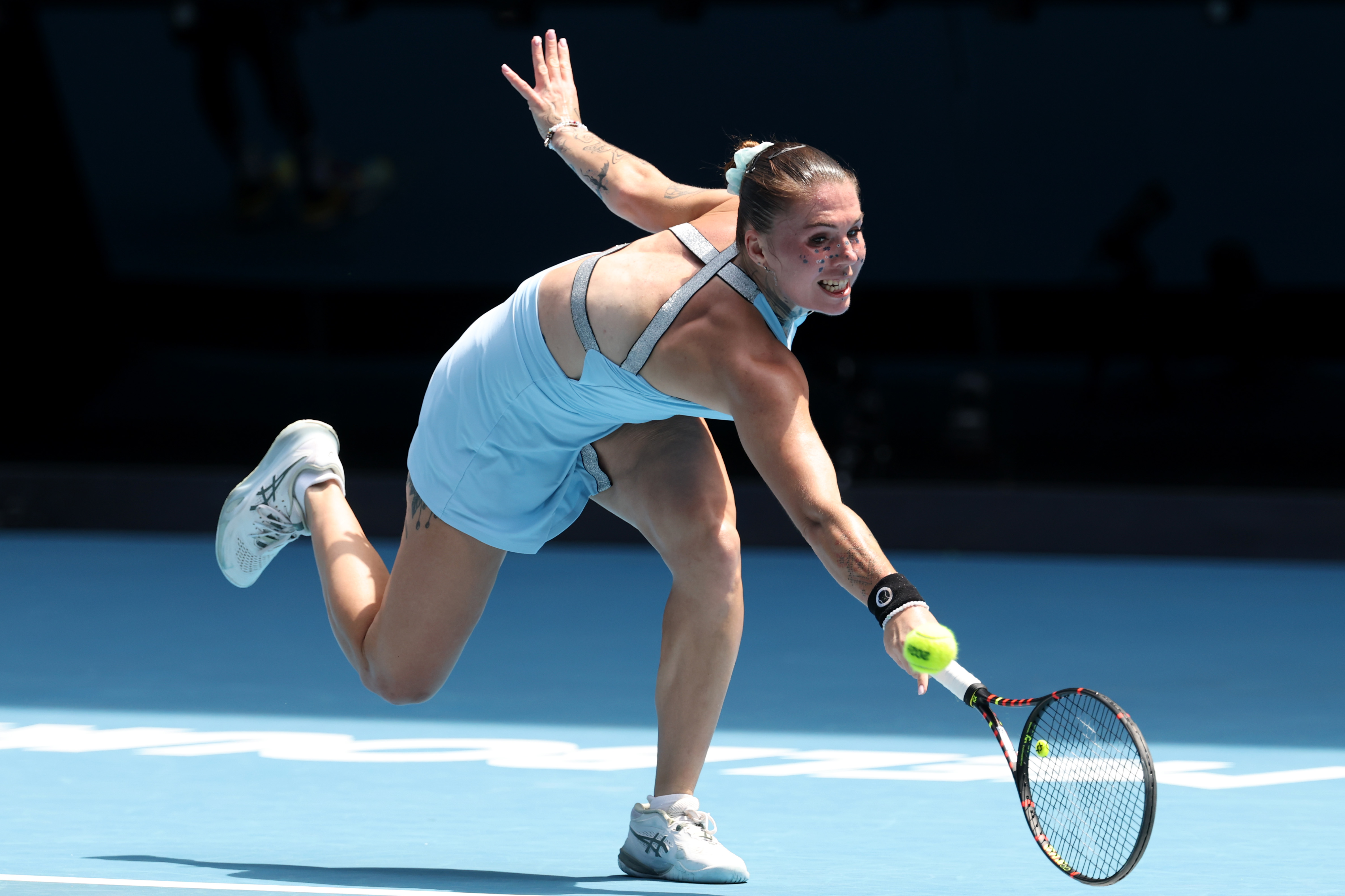
Oliynykova played in the Australian Open and has used her new platform to speak about the situation in Ukraine and to renew calls for bans on Russian and Belarusian players
PHIL WALTER/GETTY IMAGES
“I am only saying things that are facts from open sources that they are supporting war,” she says. “Maybe sometimes I am emotional, but when you’re living with the risk of being killed, I think you have a right to be emotional. Right now I’m in Ukraine and Russians are trying to kill me in my own apartment. When I’m outside Ukraine, Russian players are attacking me [by sending] complaints about me to the WTA,” she says.
Oliynykova is adamant she will not be silenced but adds that she has faith the WTA will “protect me and stand with sports values” — unlike the IOC after the Ukrainian skeleton racer Vladyslav Heraskevych was barred from competing at the Winter Olympics because of his insistence on wearing a helmet depicting fellow athletes killed in the war.
“When people say sports is out of politics, they are propagandists for [Vladimir] Putin and the war,” Oliynykova continues. “With Vladyslav, when I saw he was disqualified, I just felt like, ‘So what do they want from me?’ Because I’m also an athlete. They want me just to run and hit the ball? Am I a joke or am I a human being? Is it a show like I’m an animal in the circus? I don’t think sport or art or culture can exist with no human values.”