
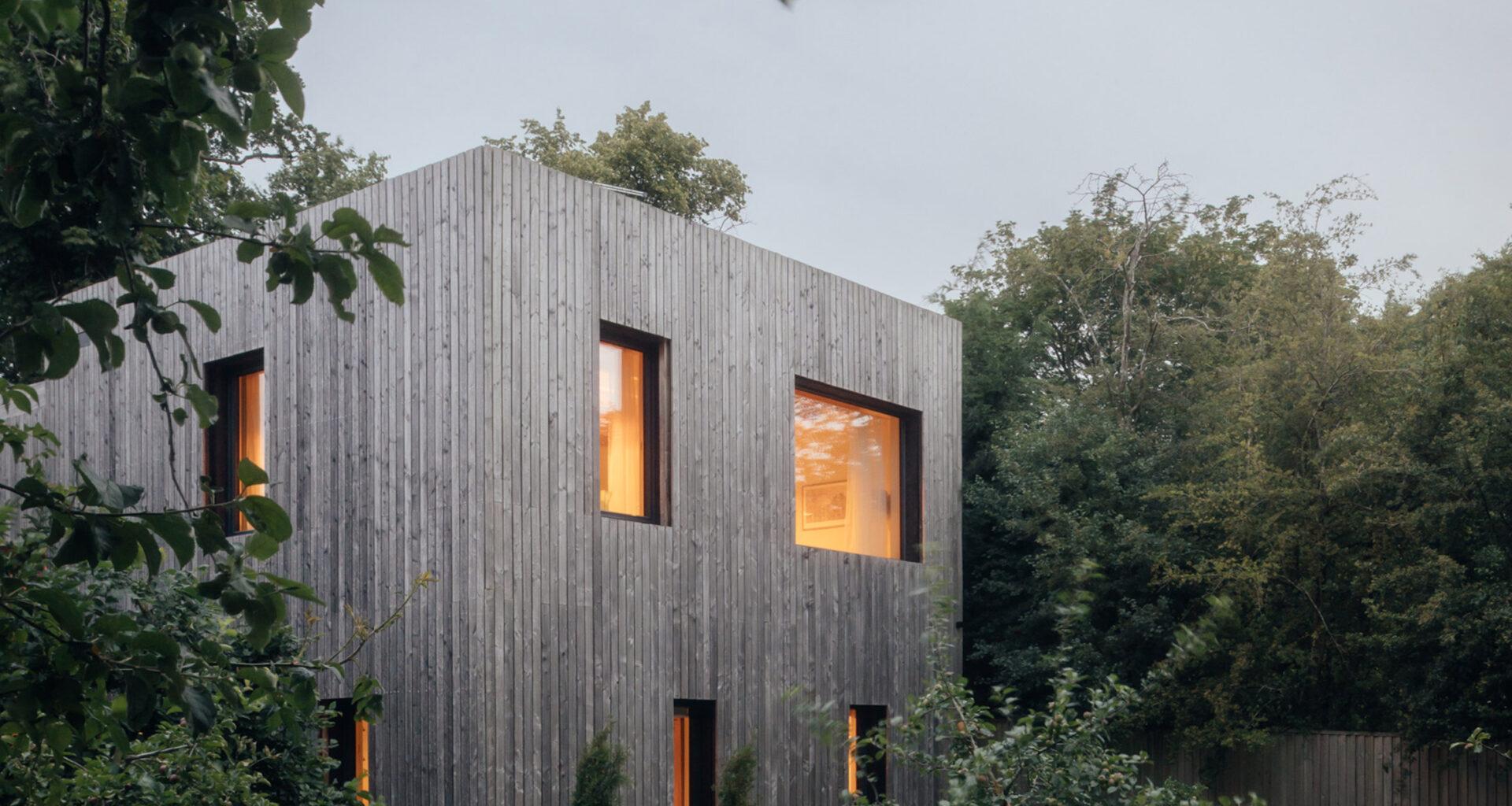
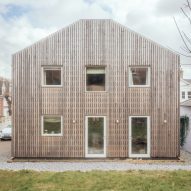
London-based Studio Bark used the so-called “country house clause” to gain permission for this wooden house, which was self-built by its owners on a former orchard in the north of England.
The larch-clad Orchard House is located on green belt land in Cheshire, on a site where the client’s grandparents first tried and failed to get planning permission back in 1955.
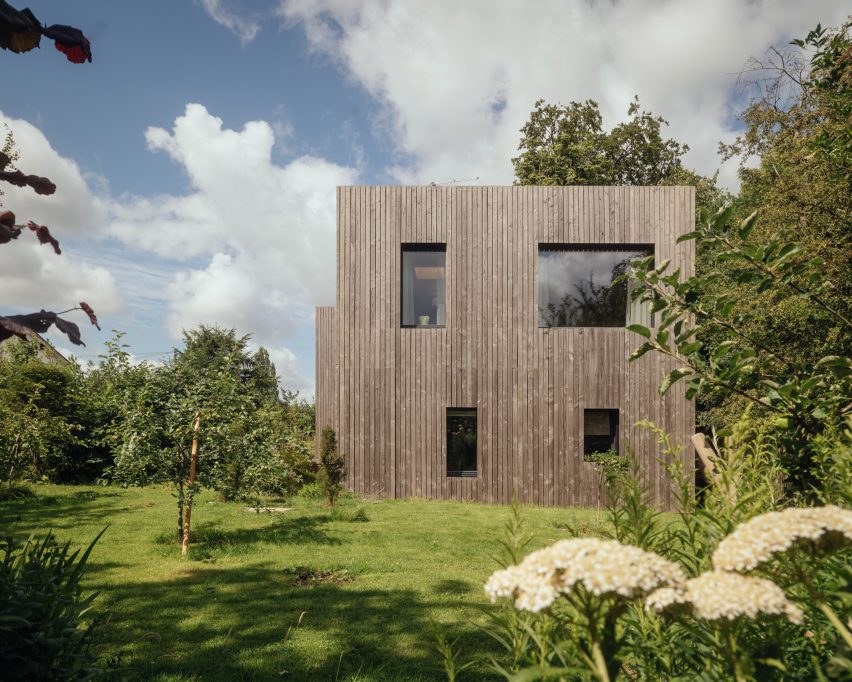 The house sits in a former orchard that has been replanted
Over 60 years later, Studio Bark overcame the challenge by using Paragraph 84, the clause in the UK’s National Planning Policy Framework that permits isolated countryside homes when they demonstrate exceptional design quality.
According to Wilf Meynell, co-founder of Studio Bark, the answer was to design a low-energy building built from locally sourced timbers, while also rewilding the surrounding landscape.
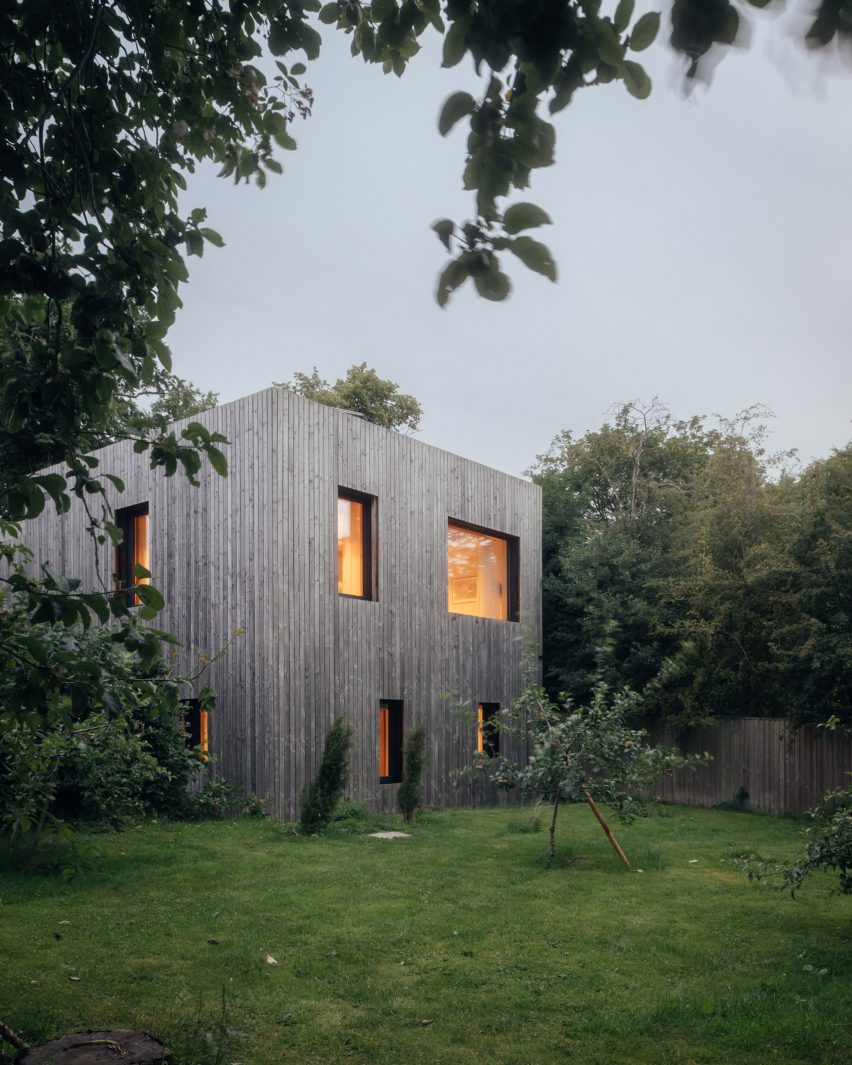 The building is organised across two larch-clad boxes
“Securing planning permission for isolated homes in the countryside under Paragraph 84 is already a demanding process, but add green belt into the mix and you’ve got a serious planning challenge,” said Meynell.
“Overcoming this demanded patience and determination,” he said. “We developed a highly robust environmental strategy for both the building and the wider site, combining biodiversity, reduced energy demand and low carbon impact.”
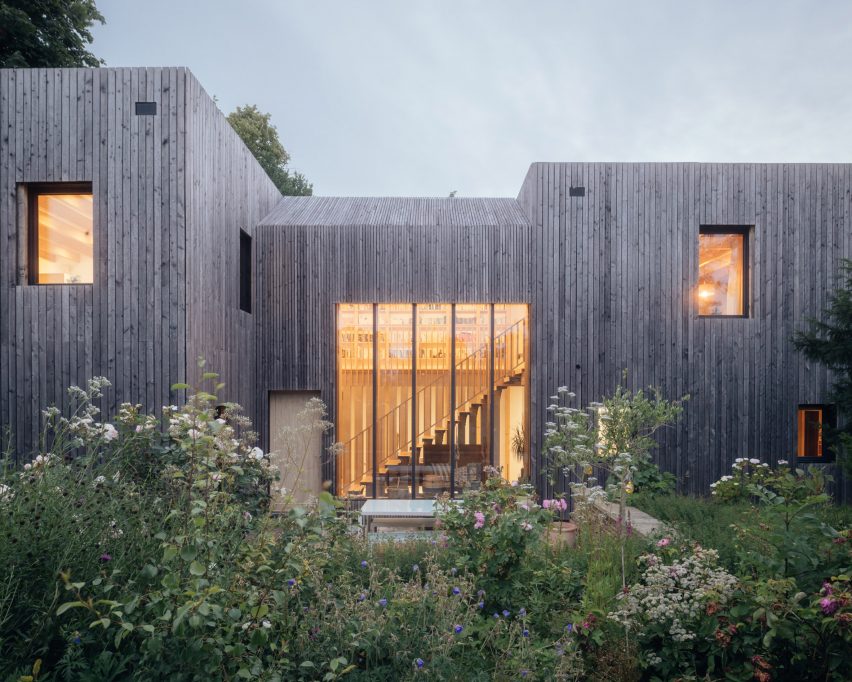 A staircase block bridges the two sides of the house
The resulting family house takes the form of two big timber boxes, with recessed windows that create the impression of thick walls.
Inside, an upside-down layout provides bedrooms on the ground floor and communal family living spaces on the first floor.
Studio Bark extends Victorian home in Kent using flatpack U-Build system
A third block bridges the two boxes, providing the building’s main thoroughfare and stairwell, while a low-rise garage slots in behind.
“Architecturally the house exemplifies simplicity, with two almost perfect cubes linked by an open two-storey bridge, making the most of the small site and capturing the best views to the eastern sunrise and the western sunset,” said Meynell.
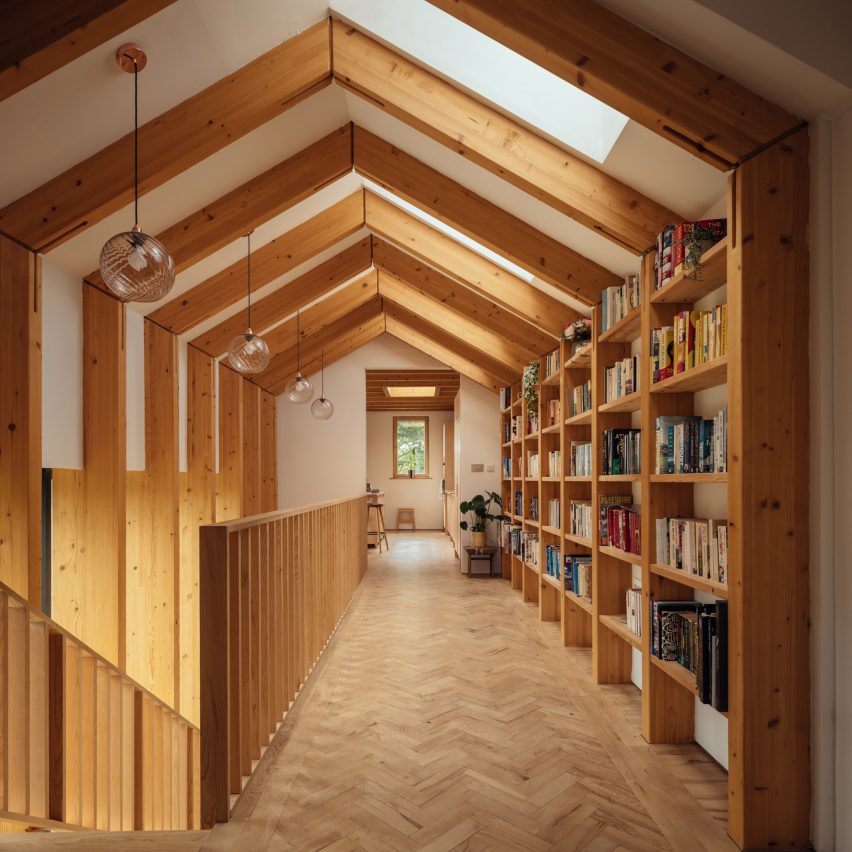 North-facing skylights fit between the beams of the exposed timber frame
The owners, Andrew and Janis, oversaw the build themselves over a period of four years.
The structure is primarily timber-framed, but with some concrete elements, including the “trombe wall” that flanks the open-tread wooden staircase.
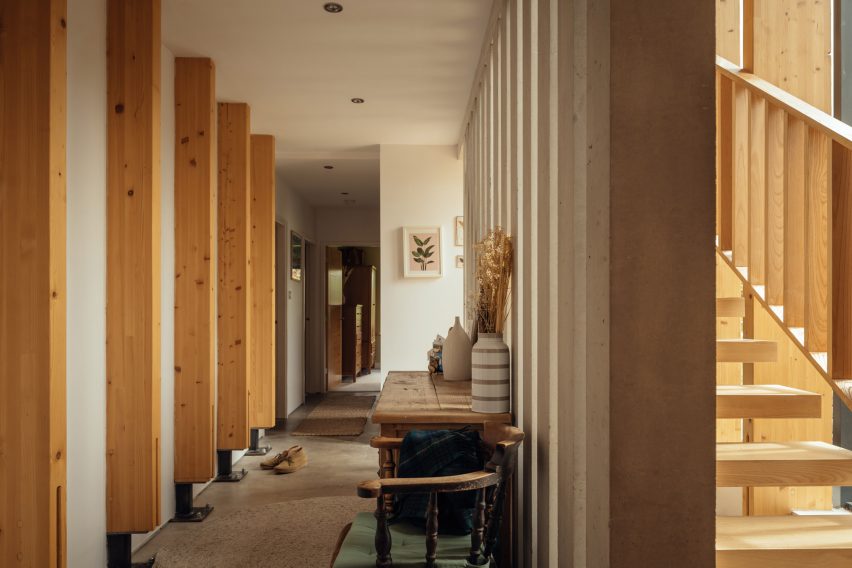 A concrete trombe wall flanks the staircase, helping to passively heat and cool the house
Set behind a south-facing double-height window, this wall forms part of the building’s passive heating and cooling strategy.
Other details designed to reduce carbon footprint include triple-glazed windows with integrated solar-shading shutters, a foundation system made from recycled glass and solar panels with battery storage.
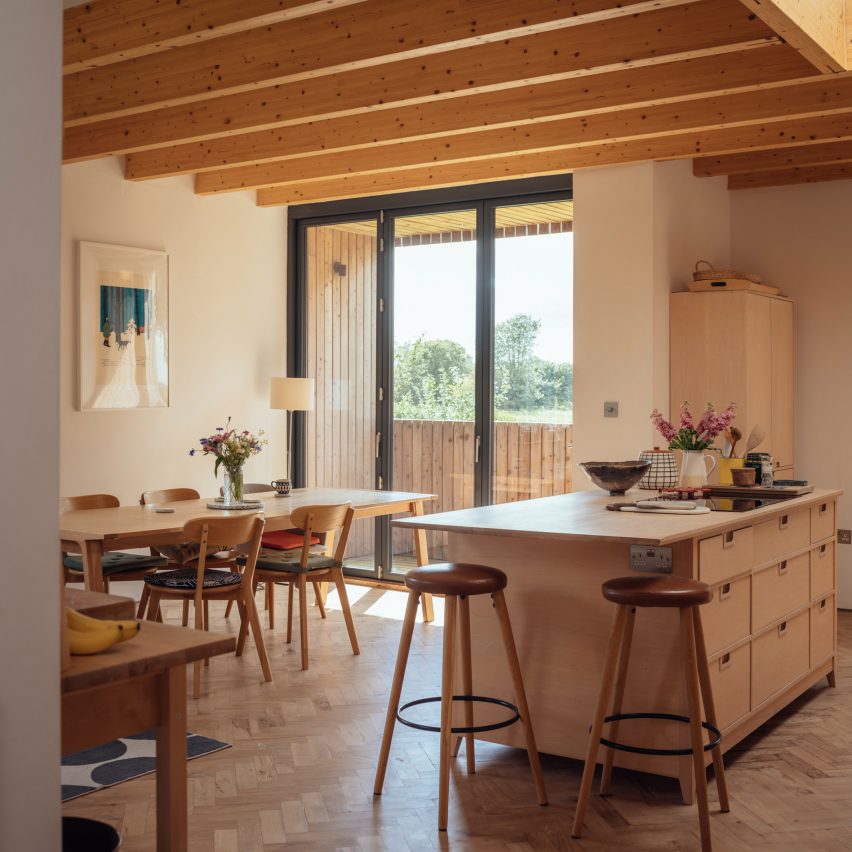 The dining room opens out to a balcony
Parquet flooring runs through most of the house, utilising the wood of a diseased ash tree felled onsite.
In the first-floor hallway, north-facing skylights and a gridded bookshelf fit neatly around the exposed timber roof beams.
Skylights also feature in the living room and kitchen, while the dining area opens out to a balcony.
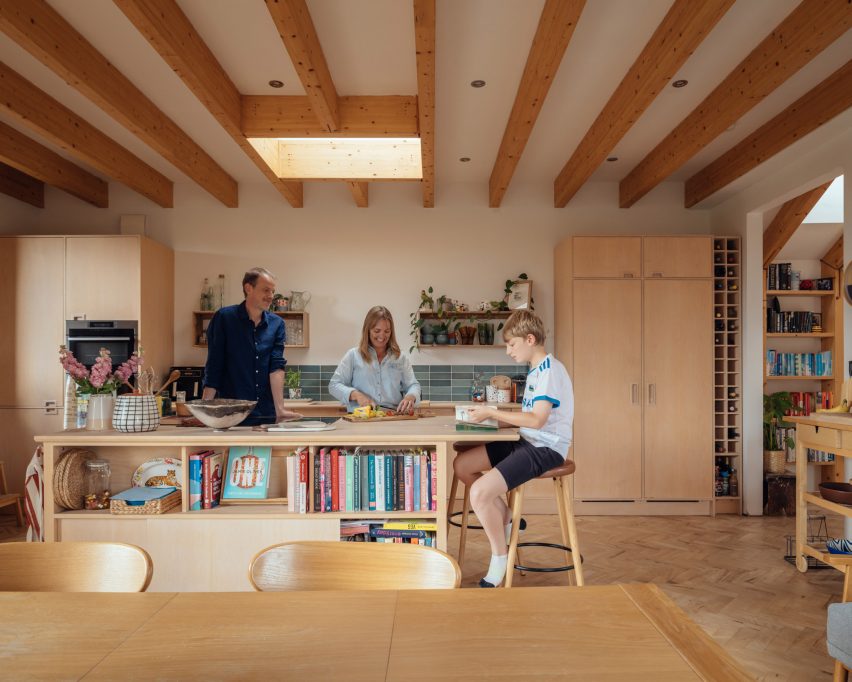 Orchard House is home to a couple and their son
“As time has passed, the house has truly shown its worth,” said Andrew. “The internal temperature is perfectly balanced thanks to the carefully designed concrete trombe wall – cool in summer and cosy in winter.”
“The rooms work brilliantly for us, and the views we wake up to each day are amazing.”
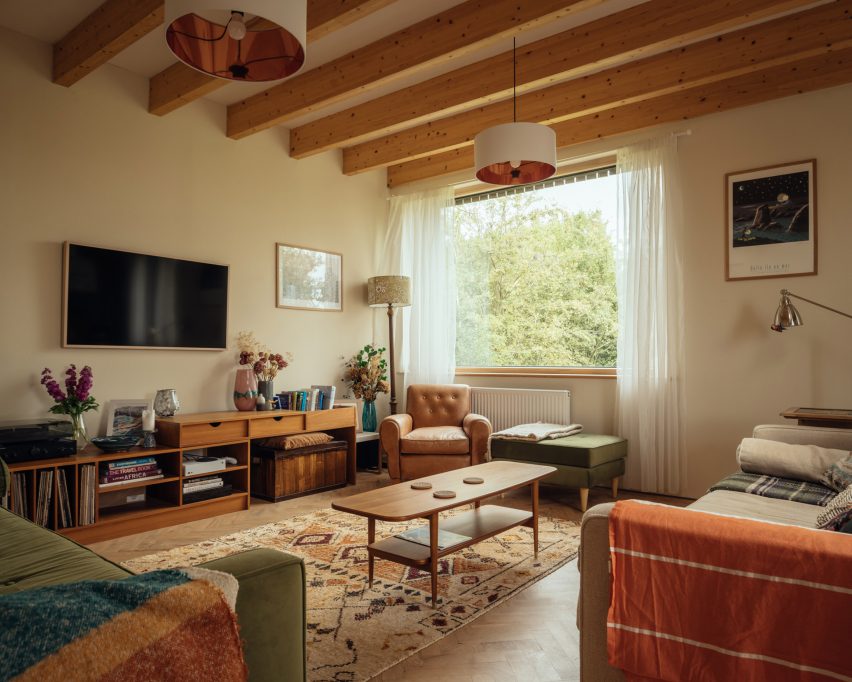 The owners oversaw the construction themselves
The couple have replanted the rest of the former orchard, adding more of the existing fruit tree species and introducing other compatible native trees.
Wildflowers and shrubs were also planted, while bat boxes and insect hotels were installed to support an ecosystem of birds, bees and other wildlife.
Orchard House is not the first Studio Bark project to win planning permission via the country house clause. The studio, which is co-led by Nick Newman, Tom Bennett and Sarah Broadstock, adopted the same approach for Black Barn and Water Farm, which are both in Suffolk.
The photography is by Jim Stephenson.
Project credits:
Architect: Studio Bark
Structural engineer: Structure Workshop
Arboricultural consultant: TEP
Ecology consultant: Solum Environmental