
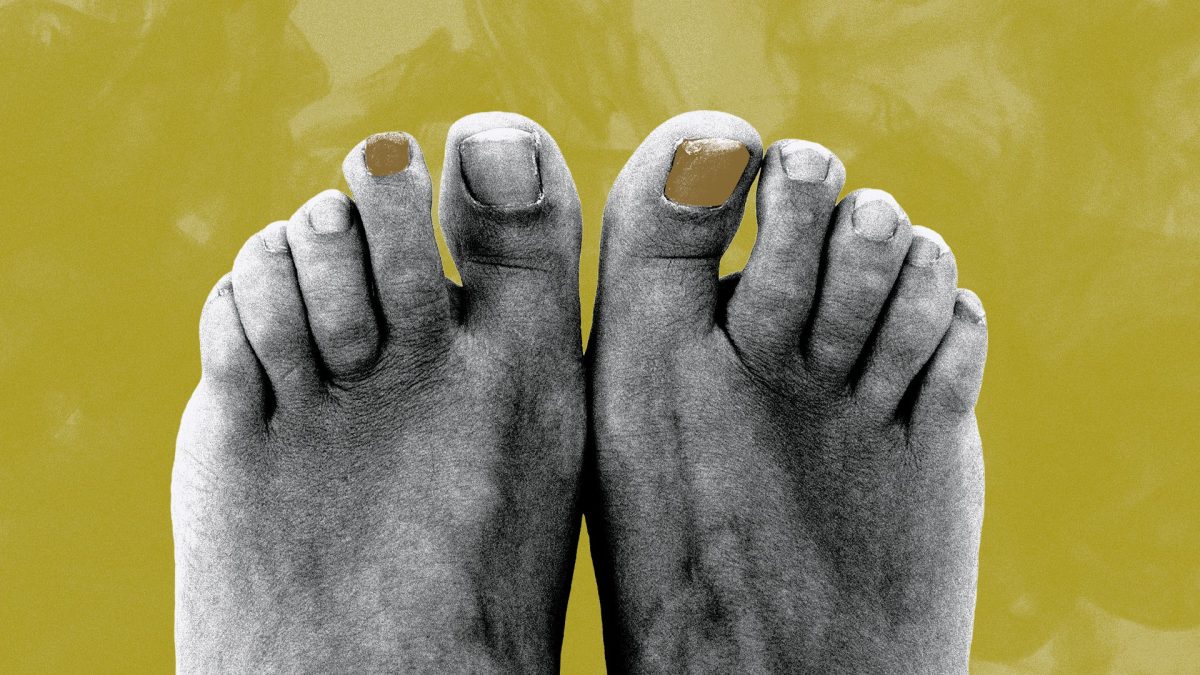
Pills and potions don’t always cut it – when it comes to this fungal infection, we need to bring out the big guns
This is Everyday Science with Clare Wilson, a subscriber-only newsletter from The i Paper. If you’d like to get this direct to your inbox every week, you can sign up here.
Hello, and welcome back to Everyday Science.
One of the best parts of my job is writing about impressive cutting-edge medical treatments, from heart transplants to techniques that let us rewrite our genetic code.
But modern medicine seems to be stumped when it comes to tackling a more humble foe: toenail fungus.
New FeatureIn ShortQuick Stories. Same trusted journalism.
A fungal infection of the toenails is incredibly common, affecting one in four people – and yet, while there are a range of nail treatments and tablets that are claimed to work, they are in fact woefully ineffective.
But if you are one of those affected, don’t give up. Here’s the latest advice on the best current treatments to use – plus what might be around the corner.
The current treatments
The first sign of fungal infection may be a small area at the top or sides of the nail becoming white or yellow. Once it has this, ahem, toehold, the infection tends to progress, with the affected area growing, and getting thicker and more brittle.
The fungus is usually the same one that causes ‘athlete’s foot’, when the skin between the toes or on the soles goes dry and flaky and can eventually develop painful cracks.
While athlete’s foot is usually easy to cure with antifungal creams or powders, once the infection has spread to the nails, it is a whole different ballgame.
Now the fungus is cosily ensconced on the skin underneath the toenails. And so, those athlete’s foot creams can’t reach it. “The nail is protecting it from the outside world,” said Dr Ivan Bristow, a spokesperson for the Royal College of Podiatry.
The first thing a pharmacist usually recommends is a nail varnish that contains an antifungal drug called amorolfine. But this is no easy fix. The varnish has to be reapplied every week for many months, for up to a year.
And even so, the cure rate is low, at 15 to 30 per cent, according to the British Association of Dermatologists. It is more likely to work in milder cases.
The chief problem is that the varnish is applied to the surface of the nail and so only low amounts reach the nail bed. People are advised to use a nail file on the surface of the nail to reduce its thickness, and also use clippers to make the nail as short as possible, to reduce the “fungal load”.
If varnish doesn’t work, the next step is usually to try oral medication, which gets the antifungal drugs into the nail via the bloodstream.
The first recommended treatment is a medicine called terbinafine, which has to be taken for three months. But this has drawbacks too. It can occasionally cause liver damage and so people need a blood test before starting treatment to check their liver is in good shape.
They are also supposed to avoid alcohol for the entire three months of treatment, to avoid raising the risk of liver damage – which puts some people off. And cure is still not guaranteed, with the success rate at 50 to 80 per cent.
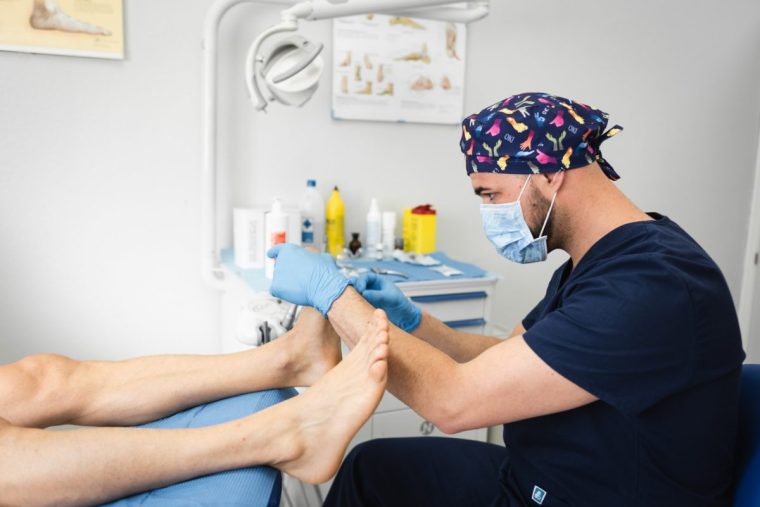 For serious cases of fungal toenails, see a podiatrist (Photo: pedro arquero/Getty Images/Moment RF)
New cures
With these limitations, it is unsurprising researchers are looking for better options. One that may arrive soon is a varnish form of terbinafine, which gives the higher cure rate of this drug with less chance of liver damage. “For the first time, we’ll have a terbinafine-based nail treatment,” said Dr Bristow.
The varnish is currently available only in some European countries but the manufacturer has recently signed a contract with a UK distributor.
Another option is laser treatment, available at some podiatrists. The focused light beams can penetrate the toenail but are absorbed by pigments in the fungal cells, generating heat – which kills them.
Laser treatment is usually given once a week or fortnight and needs several applications, depending on how severe the infection is.
It is not yet clear how well laser treatment works. In fact, the next edition of the British Association of Dermatology guidelines on toenail fungus, due out in a few months, will say there isn’t yet enough evidence to show it is better than oral terbinafine, and it is more expensive, said co-author Dr Bristow.
Marion Yau, a podiatrist at Harley Medical Foot and Nail Laser Clinic, says laser treatment can have an 80 per cent success rate if it is combined with removing as much of the nail as possible, even the whole nail in severe cases.
Another option is in the works that seems almost too good to be true – as it is claimed to eradicate the fungus in 24 hours.
This is a gel placed on the nail that releases hydrogen sulphide – a toxic gas that smells like rotten eggs – which is a small enough molecule to pass clean through the nail. Fortunately it is not created at high enough concentrations to be harmful, or even odorous, say the developers.
Your next read

This treatment is still at the research stage, although early results seem promising, said Dr Bristow.
He warns, though, that however you cure your toenail fungus, the infection has a nasty habit of returning – in fact, a third of people seem to be genetically susceptible to repeat bouts of it.
So, those people need to get into the habit of regularly checking their feet for signs of athlete’s foot, and treating that with creams before the fungus sets up home in the fortress of their toenails. “The only way the infection can get back into the toenails, it needs to reinfect the skin first,” he said. “So if you have athlete’s foot, you treat it and you stamp it out. That breaks the chain of contagion.”
I’ve also written
Barack Obama created a storm over the weekend after he said that aliens are real because the universe is so vast that “the odds are good”.
The question of whether we are alone in the universe is a respectable branch of astrophysics and can be calculated through a formula called the Drake equation. Here’s how it works.
I’ve been watching
I thoroughly enjoyed the new adaptation of Wuthering Heights, starring Margot Robbie and Jacob Elordi. While the casting of Elordi has been criticised, I thought he made a great hulking and menacing Heathcliff, and Robbie’s versatility knows no bounds.
My only gripe was with the costumes, as Robbie was roaming the moors badly under-dressed for the Yorkshire wind and rain. No wonder she was a sitting duck for septicemia.