
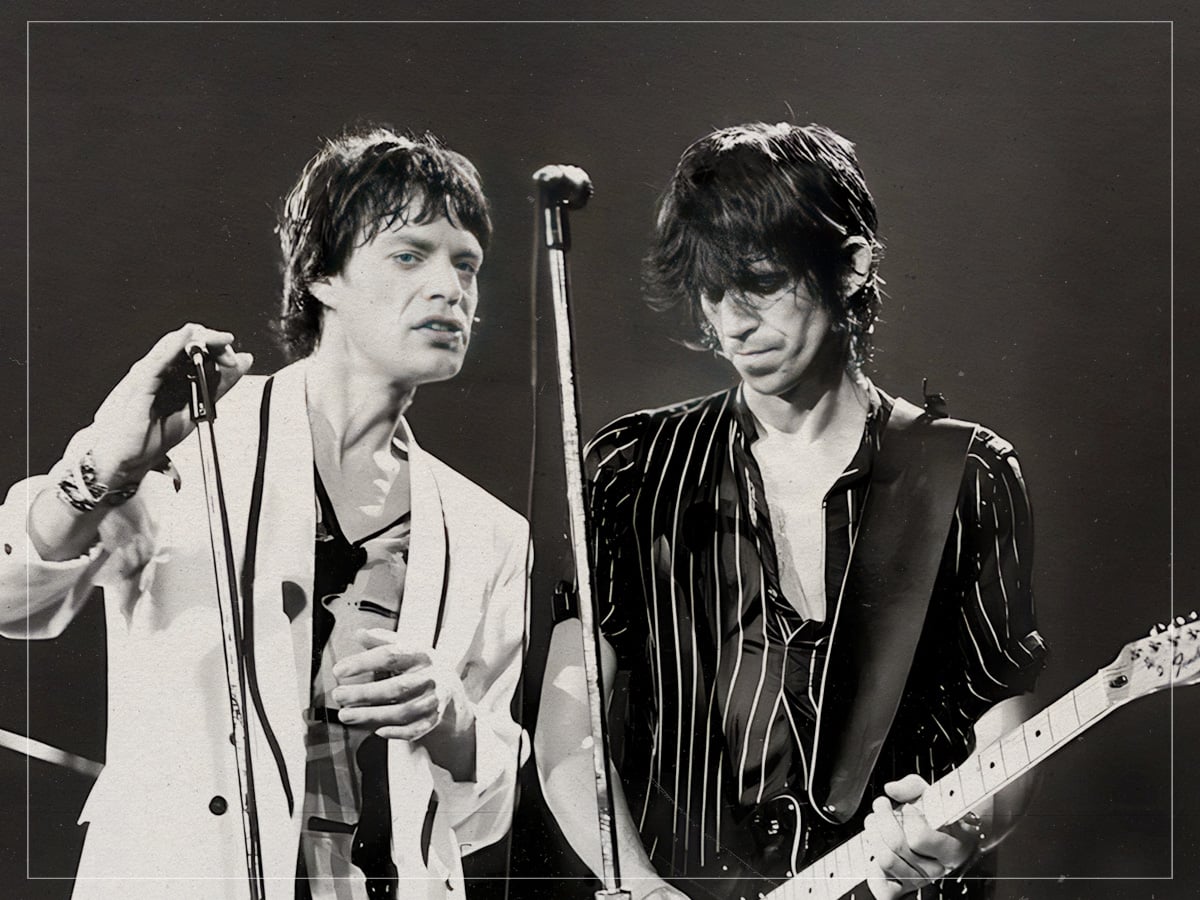
(Credits: Far Out / Alamy)
Fri 20 February 2026 23:00, UK
American locale and culture live and breathe within The Rolling Stones’ over 60-year-old songbook.
Founded on a fervent love of the old blues masters in 1962, a spiritual affinity with the States always drew The Stones to its musical gravitas, clumsily navigating the psychedelic era with diminishing results before finding their true element in the roots revivalism that marked the decade’s end.
Before long, The Stones were scoring the US tumult with as much authenticity as any of the country’s homegrown peers. ‘Street Fighting Man’ captured the civil strife and protest engulfing the nation, ‘Honky Tonk Women’ soaked up the “gin-soaked, bar-room”s of Memphis with authority, and their own Altamont tragedy amid the surrounding death of the hippy idyll afforded its doom harbinger soundtrack on the apocalyptic ‘Gimme Shelter’. For many fans across the Atlantic, The Stones are their own as much as Jimi Hendrix or The Doors.
An eye on America’s landscape never left frontman Mick Jagger’s lyrical eye. By the mid-1970s, The Stones’ golden era had ebbed somewhat, stumbling into a wobble of self-parody around the time of It’s Only Rock ‘n Roll and Black and Blue. Yet, inspired cuts were still able to be conjured, a ballad from the latter LP finding a soulful slice of evocative rumination wrought from the smattering of motels across the East Coast.
The longest number on Black and Blue at over seven minutes, ‘Memory Motel’ sees Jagger immersed in an almost apparitional embrace of one “Hannah honey” implied he’d shared a one-night stand with in the titular roadside lodge. Materialising like a faded memory, Jagger’s ode to an old flame illustrates the “if these walls could talk” idiom, the lowly motel room a witness to humanity’s most private moments.
It’s a curious cut in The Stones’ canon. Recorded at Germany’s Musicland Studios, Keith Richards shares ‘Memory Motel’s lead vocal but he doesn’t lend his usual guitar chops; the sudden departure of Mick Taylor forced the band to rope in Canned Heat’s Harvey Mandel to lay down the electric guitar part as a semi-audition before Ronnie Wood’s permanent recruitment.
It turns out, Jagger’s phantasmic romance was inspired by a real motel. Written during the Tour of the Americas ’75, the song’s title was indeed lifted from a real site on Long Island’s Montauk, near Andy Warhol’s 20-acre oceanfront Eothen residence he’d been living in for four years. Needing a spot to rehearse, The Stones would hole up with Warhol for tour prep and venture down to the local Memory Motel bar to unwind in the evenings.
The Memory Motel’s roots date back to the 1920s, reportedly built by a sea captain and named after the tragic loss of his son, who died at sea. Local legend maintains that the motel grew to stand as a brothel and bordello during the Second World War, and thus a popular spot for passing sailors stationed in the area, but owing to its only piano and pool table in the Montauk hamlet, drew The Stones years later when needing to pass the evenings.
Such rock heritage has provided Memory Motel with plenty of tourist interest, they’re more than happy to capitalise on. Now a popular late-night spot with a reputation for closing at 4am and hosting live bands and DJ nights, as recently as 2025, their official Instagram saw the bar adorned with various posters and images of The Stones during their mid-1970s pomp.