
 Credit: RFA
An amendment to the United Kingdom’s Space Industry Act will mandate that limits are set on how much launch operators are financially liable for if something goes wrong. The government has framed the change as a necessary step to strengthen the country’s position as a competitive launch location.
The concept of states being liable for any spaceflight activities they conduct comes from the 1967 Outer Space Treaty, which, in Article VII, states that any country that launches, procures the launch of, or hosts the launch of a space object is internationally liable for damage caused by that object. Under the United Kingdom’s Space Industry Act 2018, the state passes this liability onto licensed operators, requiring them to indemnify the government against claims arising from their spaceflight activities. However, the Act did not require licences to include an indemnity cap, leaving operators potentially exposed to unlimited financial exposure.
On 18 December 2025, the Space Industry (Indemnities) Act 2025 received Royal Assent, amending the law to change a discretionary “may” into a mandatory “must”, requiring operator licences to include a limit on the extent of an operator’s liability. The Act came into force on 18 February 2026.
According to Sarah Madden, a space lawyer at the London-based law firm Winckworth Sherwood, the amendment to the legislation removes the risk that operators launching from the UK might face unlimited liability.
“While the state retains the unlimited international liability, the operator has liability up to the cap that is set in their licence,” said Madden. “This means that the operator carries meaningful risk, but crucially, insurable risk. And investors have certainty.”
Although the legislation provided certainty, all three launch operator licences issued to date by the UK Civil Aviation Authority include a cap on indemnity to the government. Virgin Orbit’s 2022 horizontal launch licence capped this at $250 million, while the vertical launch licences granted to Skyrora and Rocket Factory Augsburg in 2025 set the cap at £10.5 million. However, these limits were imposed as a matter of policy rather than law.
Preparing for launch
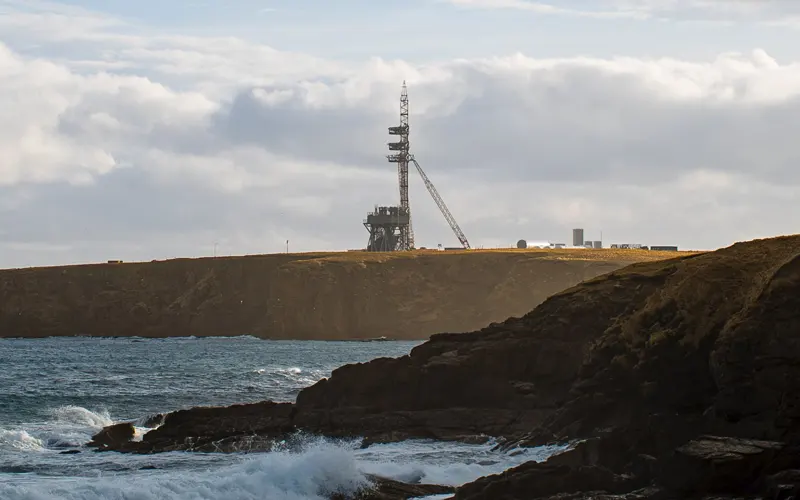
Rocket Factory Augsburg (RFA) is likely to be the next operator to attempt a launch from UK soil since the failed Virgin Orbit flight in January 2023. In a recent update to European Spaceflight, RFA explained that it had transported the first stage of its RFA ONE rocket to SaxaVord Spaceport on the island of Unst, off the northern coast of Scotland. The company is now working on commissioning the launch pad and preparing the upper stage for transport. While the launch is expected in 2026, the company has not yet provided a more specific anticipated launch date.
While SaxaVord prepares for this milestone, the country’s other significant spaceport project has been less fortunate. The Melness Crofters Estate announced on 20 February that it is seeking a partner to deliver Spaceport Sutherland. The spaceport’s development had been led by Orbex until the company paused construction in late 2024 to focus its increasingly limited resources on the development of a new medium-lift launch vehicle called Proxima. With the recent announcement that Orbex has officially closed its doors after failing to secure new funding, construction of the spaceport has been abandoned. The other significant UK-based launch startup, Skyrora, has expressed interest in taking over from Orbex in developing Spaceport Sutherland, but no official discussions have yet begun.
“We are deeply disappointed to see Orbex close, but remain confident in the long-term opportunity this project represents for our community, supporting local employment, helping retain population, and contributing to long-term economic resilience in this area and beyond,” said Dorothy Pritchard, Chairwoman of Melness Crofters Estate. “That’s why Melness Crofters Estate remains fully committed to a Sutherland Spaceport, which will also strengthen Scotland’s position in the growing UK space sector and demonstrate how space development can sit responsibly alongside crofting and environmental stewardship.
While the amendment indicates the government is pushing to make the country more attractive to launch operators, the failure of Orbex and the abandonment of Sutherland highlight the need for substantial investment to support the UK’s ambitions.
Keep European Spaceflight Independent
Your donation will help European Spaceflight to continue digging into the stories others miss. Every euro keeps our reporting alive.