
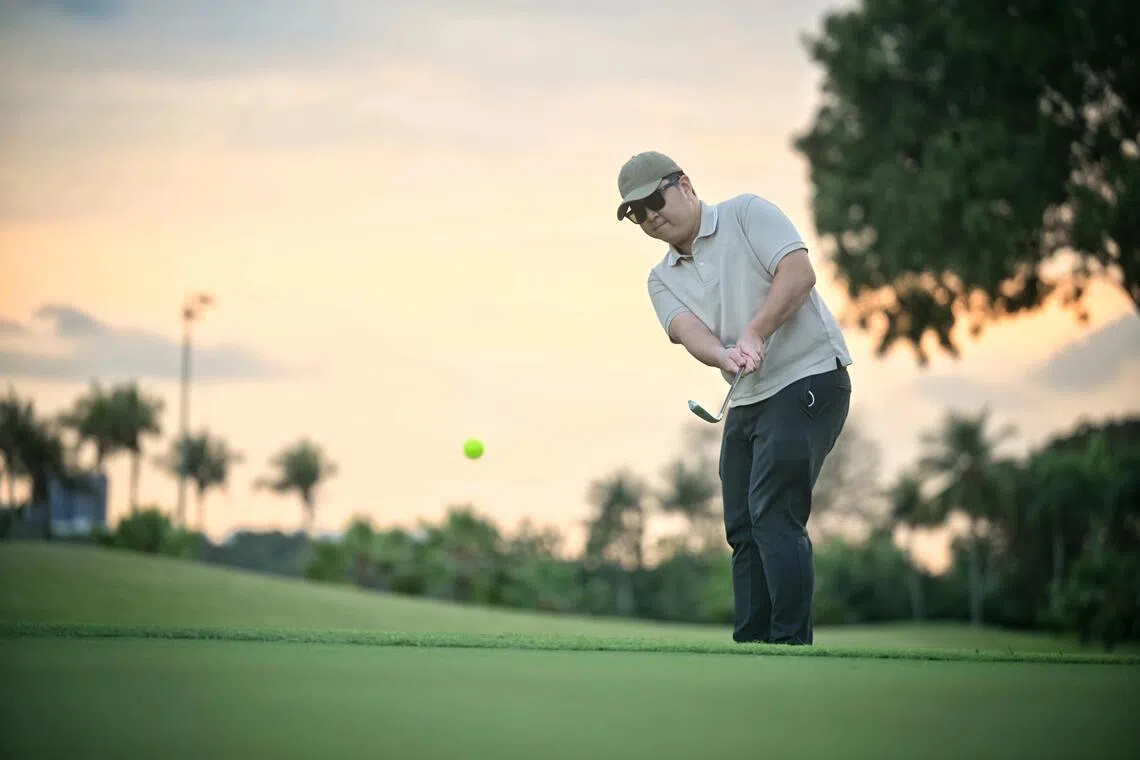
SINGAPORE – The year 2019 had just begun when Mr Wee He Sheng’s heart stopped in January. He was 28 at the time.
Mr Wee, who had been volunteering at the 2019 SMBC Singapore Open at the Sentosa Golf Club, had finished his duties and was trying out a golf simulator at the event in the afternoon when it happened.
The Singaporean was preparing to take his sixth shot when he suddenly felt unwell and collapsed. When he woke up, he found himself in the Singapore General Hospital (SGH).
“I thought: ‘Why am I in hospital?’ Later on, I learnt that I had received three shots of the AED, and CPR (cardiopulmonary resuscitation) was performed on me for 15 minutes,” says Mr Wee, now 36.
An AED or automated external defibrillator is a portable medical device that delivers an electrical shock to the heart to allow it to resume its normal rhythm, according to the Singapore Heart Foundation’s website.
During a cardiac arrest episode, the heart suddenly stops beating effectively because of an electrical malfunction, says Associate Professor Ching Chi Keong, a senior consultant from the Department of Cardiology at the National Heart Centre Singapore (NHCS), which is located in the SGH campus. He is also director of cardiac electrophysiology and pacing there.
“This causes blood circulation to cease and the person loses consciousness within seconds. Without immediate intervention such as CPR and defibrillation, cardiac arrest becomes fatal within minutes,” he adds.
In contrast, a heart attack or myocardial infarction occurs when blood flow to part of the heart muscle is blocked, usually by a blood clot in a coronary artery, says Prof Ching.
“The heart muscle begins to die from lack of oxygen, although the heart typically continues beating. People experiencing a heart attack are usually conscious and often describe symptoms like chest pain, shortness of breath, nausea or pain radiating to the arm or jaw.”
He adds: “A heart attack can sometimes trigger cardiac arrest, but cardiac arrest can also occur without a preceding heart attack due to other causes like arrhythmias, drug overdoses or severe trauma.”
Mr Wee says he worried that his time in golf events was over. “One of my first thoughts was: ‘I’ve played golf all my life. Don’t tell me I cannot play a game because my health is not very good now.’”
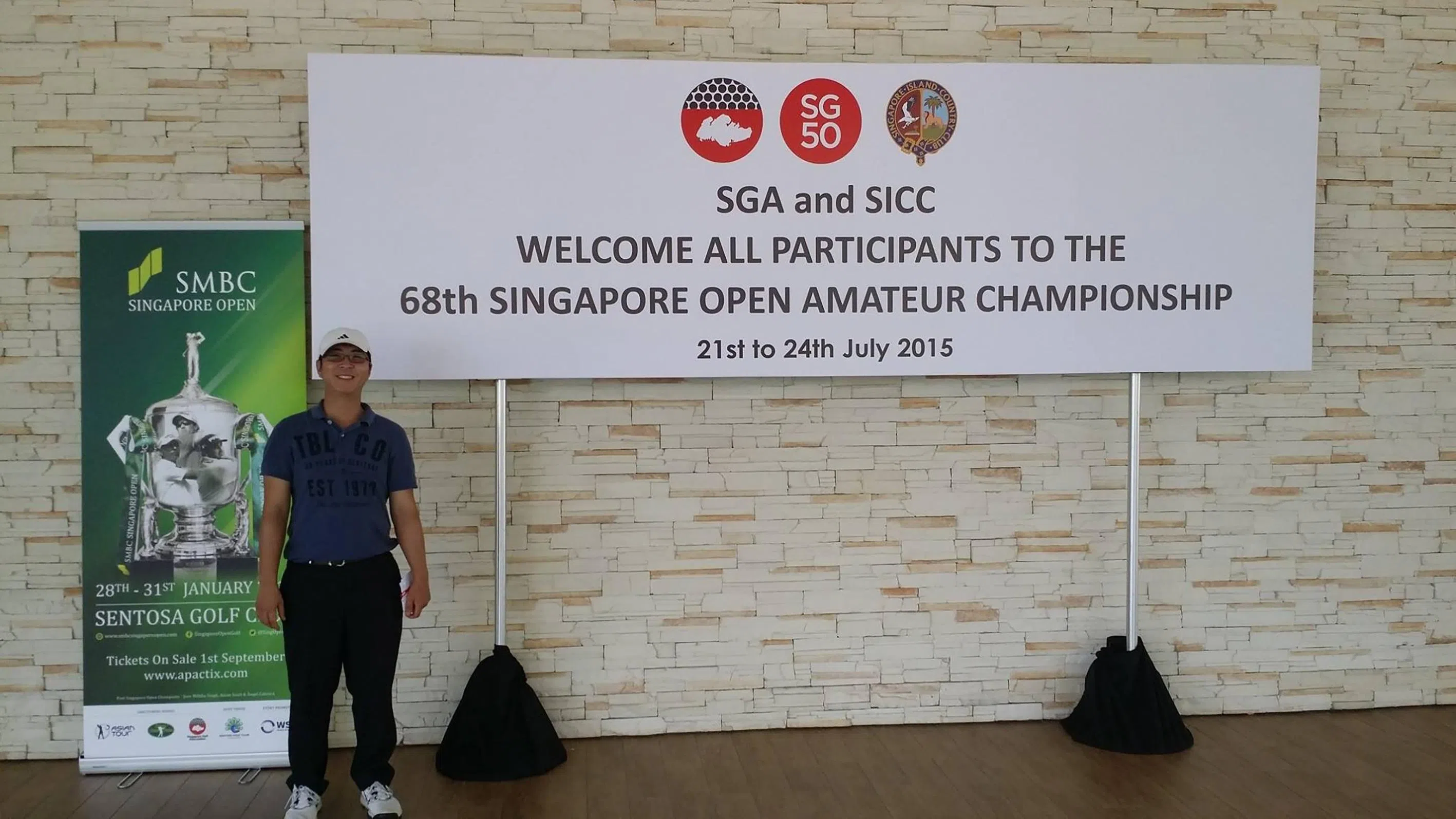
Mr Wee He Sheng at the Singapore Open Amateur 2015 when he was 25.
PHOTO: COURTESY OF WEE HE SHENG
The keen golfer won the 2005 National Inter-School Golf Championships and his team from Anglo-Chinese School (Independent) clinched a silver medal in the 2004 National Inter-School Team Golf Championships. He played in the Singapore National Amateur Championships twice and in the Singapore Open Amateur thrice.
Mr Wee says he has no family history of cardiac arrest or risk factors, and was diagnosed with unexplained or idiopathic ventricular fibrillation (VF). VF is a type of irregular heart rhythm.
He had a subcutaneous implantable cardioverter-defibrillator (ICD) put at the side of his chest. This device monitors and delivers therapies to restore heart rhythm during cardiac arrest and is recommended for patients with a high risk of cardiac arrest, says Prof Ching, who is not Mr Wee’s doctor.
After his discharge, Mr Wee found it hard to breathe and walk normally, but gradually resumed his work then as a lecturer in an international school.
Just two months later, in March, he was bowling with friends when he had another cardiac arrest episode.
“I felt light-headed after the second frame and when I tried to sit down, I felt a very big punch. I asked my friends behind me if they saw anyone punch me but they said ‘no’. Then I realised it was the ICD,” says Mr Wee, who is single.
He spent another week in hospital.
The three- or four-handicapper says he typically shoots about 80 for a game of 18 holes, but a few months after recovering from his second episode, he was not sure if he could play well enough to shoot 120 at that point in time as his health was so poor.
Nevertheless, he says he “felt thankful” to just be alive.
Three years later, in 2022, he was enjoying a barbecue dinner at a friend’s condominium when two cardiac arrests occurred.
He remembers standing near the fire and feeling unwell when his ICD detected a cardiac arrest event and sent an electrical impulse to his heart. He fell and had to be helped up by his friends.
He sat down, drank some iced water and continued talking to his friends for a couple of hours. On his way out of the condo, the ICD detected a full-blown cardiac arrest and delivered a bigger shock.
He fell at the staircase near the lobby and screamed in pain.
“After that episode, I could walk about only 500m before needing a rest,” says Mr Wee, who was warded for about a week. He is on medication and sees his cardiologist at the NHCS annually.
He tries to cut down on favourites such as candy and fried food, swims and does brisk walking regularly. He says his job as a teacher of business and economics at an international school is not very stressful. He has a master’s degree in business administration and general management from Singapore Management University.
Prof Ching says: “Younger individuals have fewer chronic diseases, hence they bounce back better and have better survival rates.”
He encourages younger people to learn CPR and AED skills, so they can help others if a cardiac emergency occurs.
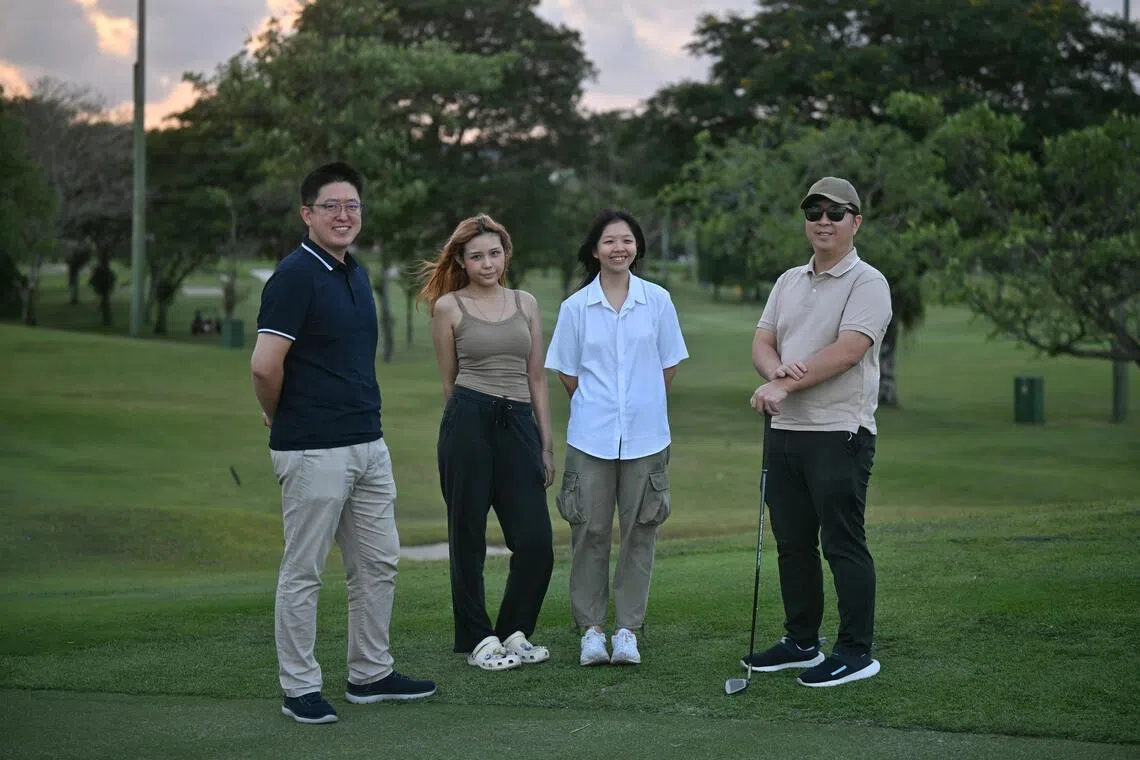
Mr Wee (right) at Orchid Country Club with his golfing friends, Dr Ryan Zhao, 36, Ms Israfina Deyana Decry Hardiyanto, 23, and Ms Liew Li Qi, 27.
ST PHOTO: ARIFFIN JAMAR
In 2024, Mr Wee managed a feat he did not think was possible after four cardiac arrests – he played 36 holes in one day at the EFG China Ladies Professional Golfers Q Series in Laguna National Golf Resort Club. The competition format was to have two rounds on the first day.
“I was very happy regardless of the result,” he says. After that gruelling day, he decided not to continue playing the third round the next day.
Mr Wee is also in the Singapore Golf Meetup.com Group on social media, which has about 100 active members. He helps to organise monthly games in Johor Bahru and weekly sessions at driving ranges. He counts his fellow golfers among his closest friends.
“I really want to help grow the game and help people realise how remarkable the sport of golf is. Many golfers also have inspiring stories about their lives to share,” he says.
“What I want to share is you don’t have to be great at something to make a positive impact on society or to inspire others.”
He adds: “Life is very fragile. It’s a miracle I’m alive. I hope it highlights how good Singapore’s medical system is.”