
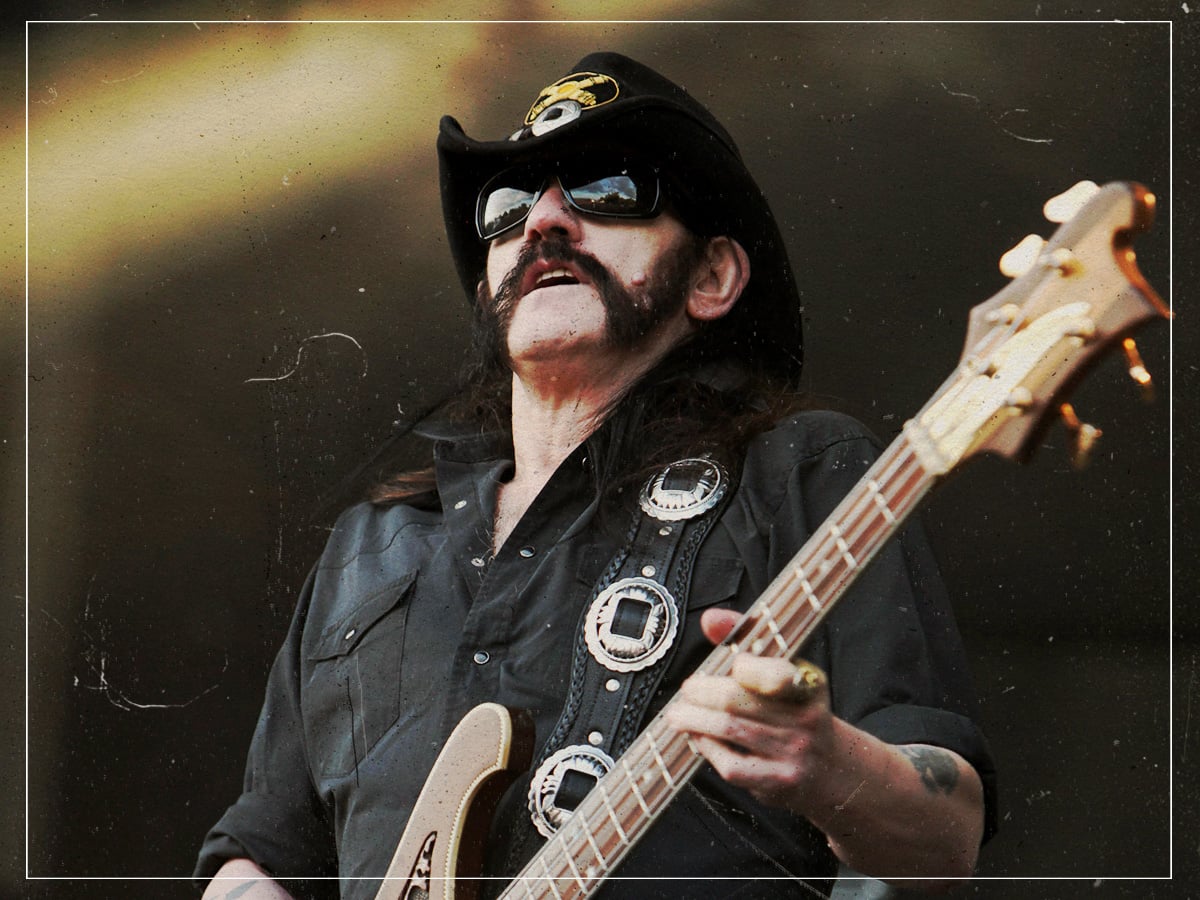
(Credits: Far Out / Rama)
Sat 21 February 2026 22:00, UK
It’s often said that Motörhead forged a crucial bridge between punk and heavy metal when first landing on the charts in the late 1970s.
Not that frontman Lemmy was ever concerned with such tags. Often, the bassist and principal songwriter would take the stage, lift his head to speak to his signature high mic, and simply inform the crowd, “We are Motörhead, and we play rock and roll.” Still, the early Overkill and Bomber records absolutely married the two disparate subcultures, sonically right at home with the emerging new wave of British heavy metal as well as fired up with punk’s speed and urgency.
Then came thrash. Emerging from Los Angeles and New York as metal began to curdle into the spandex buffoonery of MTV’s fledgling rise, the thrash underground looked to Lemmy as a bastion against hard rock’s pull to sillier terrain and glossy pop dross, maintaining their speed attack well into the 1980s and beyond and pointing the way for the likes of Slayer and Metallica. Indeed, the latter’s Kill ‘Em All debut even coincidentally features the ‘Motorbreath’ cut, a weird mark of happenstance perhaps revealing the speed metal outfit’s subconscious presence.
Whether the late frontman liked it or not, Motörhead’s story has one mammoth single smack bang at its centre. Dropped October 1980 off its namesake fourth album, ‘Ace of Spades’ rips out of the speakers with a mystery X-factor of turbo drama and raw power that elevates the all-or-nothing gambling anthem to defining anthem status.
Even over 45 years later, Lemmy’s opening bass rumble, Phil ‘Philthy Animal’ Taylor’s pummelling drum beat, and ‘Fast’ Eddie Clarke’s screaming guitar attack capture a lightning alchemy that hasn’t dimmed one iota.
However, as can curse any band, Lemmy grew tired of ‘Ace of Spades’ jukebox stranglehold, as well as its cards and dice lyrics forever bellowed by drunken fans for the rest of his life. “I’m sick to death of it,” he frankly revealed in 2002’s White Line Fever autobiography, fatigued by the band’s being “fossilised” by their surprise hit.
Lemmy nonetheless recognised his obligation to fans regarding the defining single, reminding himself of his own rock and roll fandom he harboured all his life, “If I go to see Little Richard, I want to hear ‘Long Tall Sally’, and if I don’t I’m going to be thoroughly pissed off.”
The fact is, Motörhead had been trucking for decades after, only coming to a close upon Lemmy’s death in 2015, that year’s 22nd LP, Bad Magic only just released four months earlier. There was plenty of material the metal pioneers had burned through, as well as new line-up personnel that helped shape new creative directions for the band, yielding cuts superior to ‘Ace of Spades’ in the frontman’s estimation.
“I don’t see the song that way at all,” Lemmy revealed in 2000, remarking on ‘Ace of Spades’ enduring stature as a hard rock heavy metal anthem. “I believe we’ve done our best work since Eddie left the band in 1982.”