
If you paid $200 upfront for a year of Perplexity Pro, the product you’re getting today looks nothing like the one you signed up for. Perplexity was giving you wrong answers already; now, it won’t be giving that many answers in the first place.
Between November 2025 and February 2026, Perplexity quietly gutted the usage limits on its Pro plan, swapped the models running under the hood, and redesigned the interface—all without sending so much as an email to the people who already paid.
What Pro subscribers were originally promised
Unlimited curiosity, within reason
When Perplexity Pro was marketed to annual subscribers, the pitch was clear and generous. The Pro plan page advertised extended access to Perplexity Research and promoted features like unlimited file uploads, access to all the latest AI models, and 10 times more citations in answers. For all intents and purposes, Perplexity was the chatbot that made me wonder why I ever used ChatGPT.
In practice, Pro users, including myself, enjoyed upwards of 500 to 600 Deep Research queries per day, 50 Labs queries per month, and unlimited file uploads. That is the product people evaluated and committed to $200 for a full year.
The annual billing option made sense precisely because the terms were attractive. Pay upfront, save a bit on the monthly rate, and get uninterrupted access to one of the best AI research tools on the market. My own commitment to Perplexity’s Pro plan was specifically because the research capabilities, for all practical purposes, were unlimited. For a time, a Perplexity Pro subscription was absolutely worth the money.
How the new usage limits quietly changed the deal
The sudden cap on what used to feel unlimited
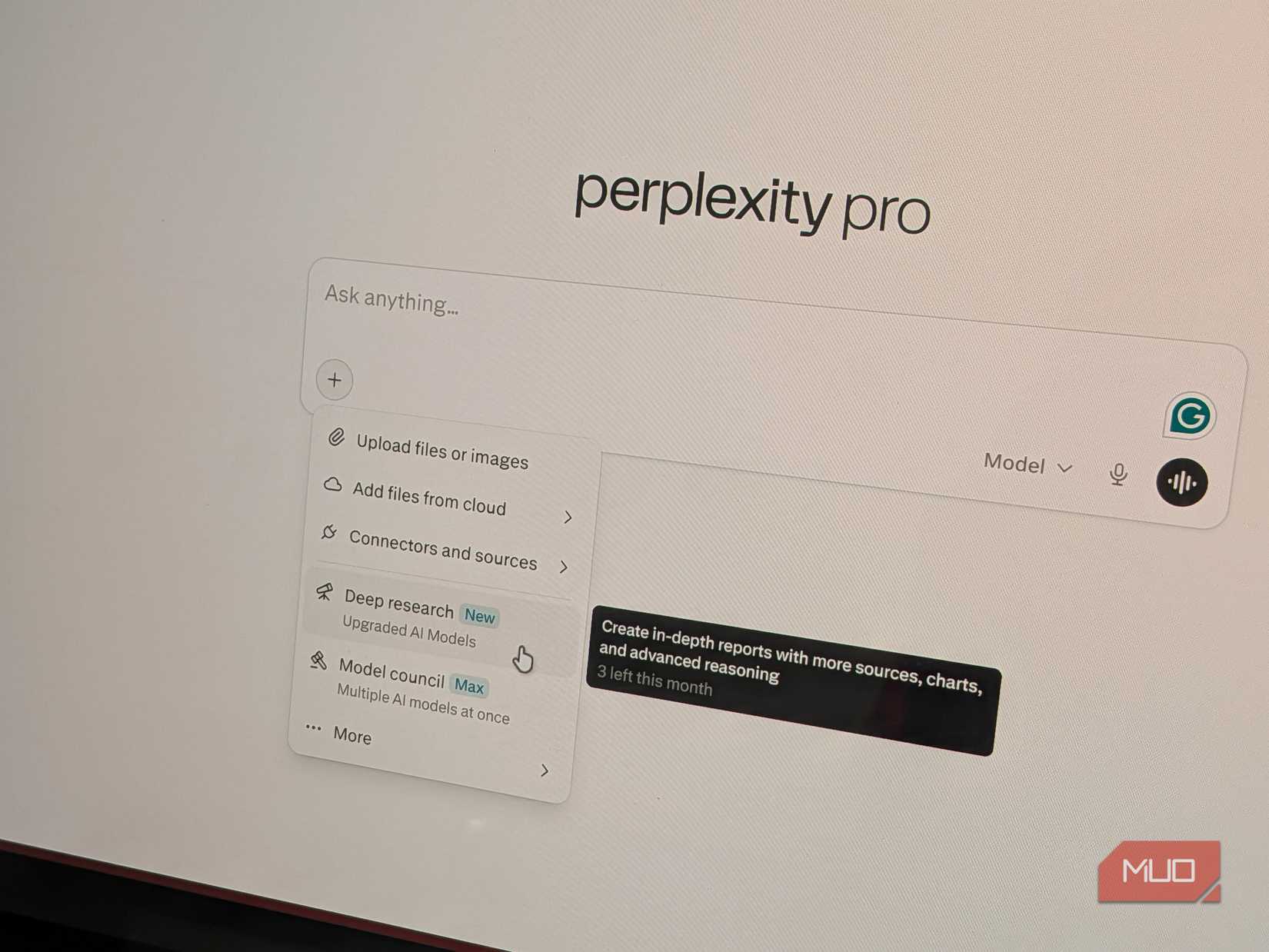
In early February 2026, Perplexity rolled out an upgraded Deep Research feature powered by Anthropic’s Opus 4.5 Thinking model for Max users and Claude 4.5 Thinking for Pro users. The company framed it as a quality improvement, promising “deeper insights and higher-quality results,” according to the official changelog. What the changelog conveniently buried was that “usage limits have been adjusted to allocate more computing power per session,” which is corporate speak for slashing your quota by over 99 percent.
Here is what Pro subscribers woke up to find. Deep Research went from roughly 500 to 600 queries per day down to just 20 per month, or in some cases (including for myself), only four per month, as claimed by Perplexity’s mobile app and web version. Lab queries were cut from 50 to 25 per month.
File uploads, previously unlimited, are now capped at 50 per week. Pro Search limits shifted from clear daily allowances to vague weekly limits that Perplexity’s own support staff admitted they can’t disclose exact numbers for. If you want anything close to your old usage, you need to upgrade to Perplexity Max at $200 per month—10 times the Pro monthly rate.
Sure, you might regret ignoring a Perplexity feature, but when you subscribe to the service for one specific feature alone, having it cut down significantly removes the entire point of a subscription.
Are faster answers, fewer queries fair?
Performance gains versus practical limits
Screenshot taken by Yadullah Abidi | No attribution required.
On paper, the upgrade is real. Deep Research now runs on stronger reasoning models, backed by improved memory that better recalls user context and aims to produce more accurate, better-sourced answers in fewer runs. Pro is pitched as delivering extensively researched answers with access to top-tier models and more sources per response, so my best guess of an official story is that each query is more powerful and people should need fewer of them.
In practice, that’s not how most people, including myself, actually work. Research is often exploratory and iterative, where you ask, refine, branch, backtrack, and fact-check. Under old, loose limits, that workflow felt natural; under strict monthly caps, each Deep Research run becomes something you budget like a scarce credit, despite paying for a year’s worth of service.
The price hasn’t dropped to match the reduced volume, and the high-usage experience has effectively been moved to a much more expensive Max tier. For a narrow group that only needs a handful of very high-quality deep dives per month, the trade-off might be acceptable. For heavy users who bought an annual Pro subscription expecting abundant, everyday research, it feels far more like a downgrade.
The redesign nobody was asking for
A cleaner UI, but at what cost?
Screenshot uploaded by Yadullah Abidi | No attribution required.
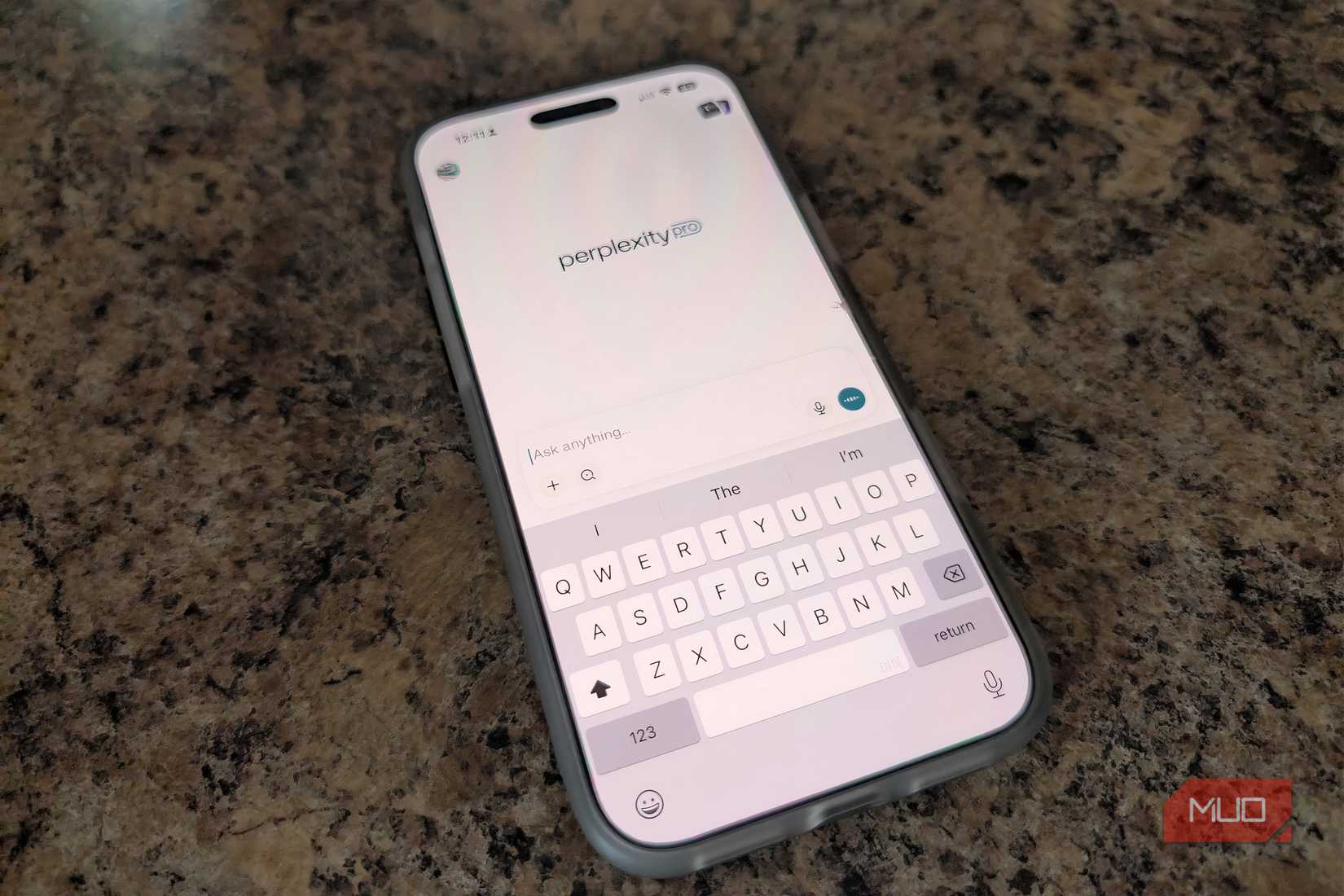
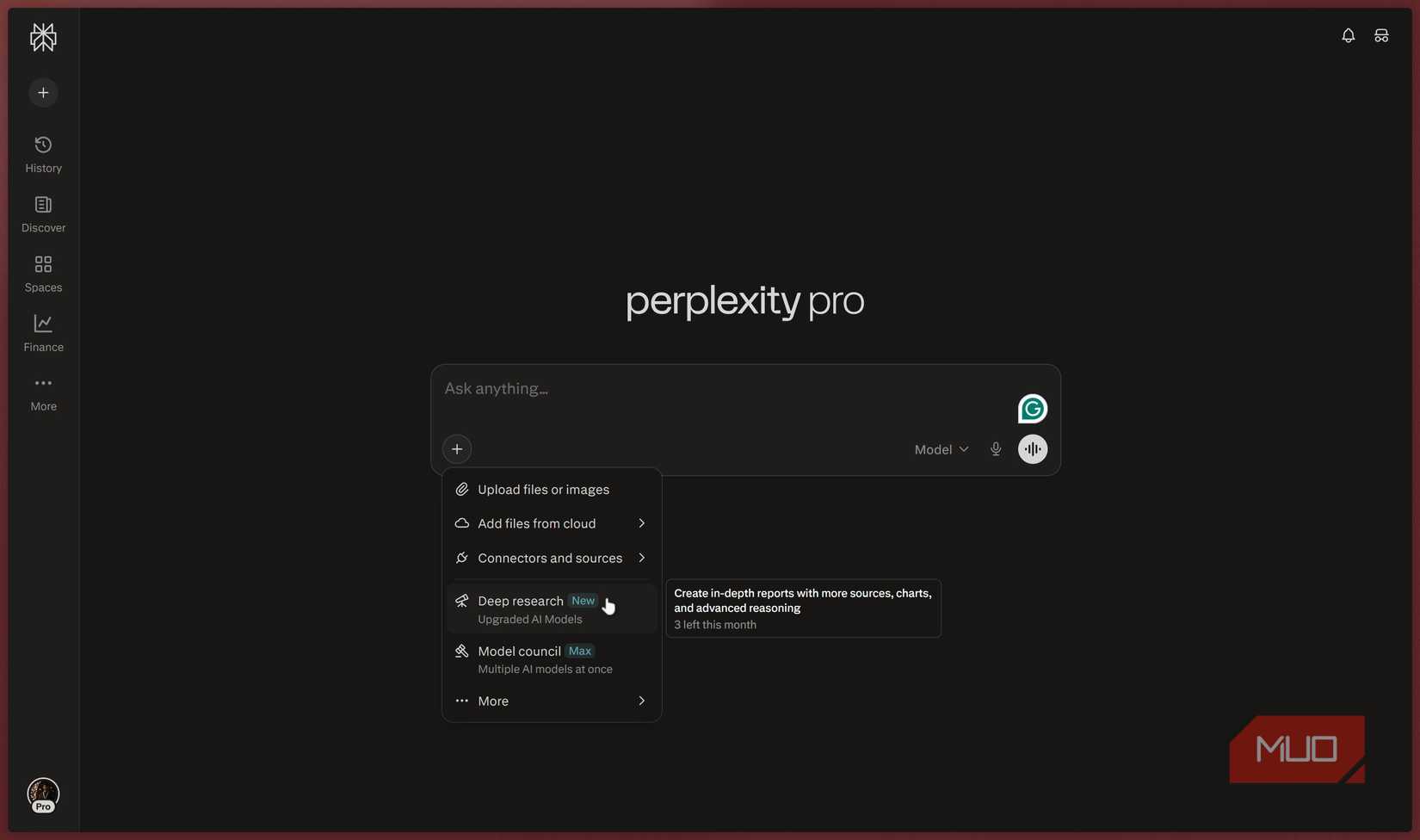
As if the quota slashing weren’t enough, Perplexity also chose this moment to overhaul the web interface. The February 2026 redesign introduced a new font, a simplified input bar, and reorganized how users access Deep Research, Labs, and other features behind a + menu.
On paper, that sounds fine. In practice, the new font is nearly unreadable, particularly for Cyrillic characters, and the removal of familiar navigation elements can be disorienting. There was no opt-in period, no legacy mode toggle, and no warning.
The constant UI churn has become a pattern since. Perplexity has been reshuffling its interface almost weekly in recent months, frustrating anyone who simply wants a stable tool they can build workflows around.
Why this sets a worrying precedent for AI subscriptions
The risk of annual commitments in fast-moving AI
Perplexity’s situation is not unique. Every AI company is grappling with the reality that running frontier models at scale is extraordinarily expensive. But the way Perplexity handled this transition stands out for its lack of transparency. Anthropic set clear daily limits. OpenAI raised prices with advance notice and defined message caps. Google specifies rate limits and explains when you hit them. Perplexity chose silent enforcement, vague language, and dynamic limits that even their own support team cannot explain.
Related
I don’t need Perplexity anymore because my local LLM does it better
Perplexity was great—until my local LLM made it feel unnecessary
The real issue is not that limits changed—it is that they changed mid-contract for annual subscribers with no communication, no grandfathering, and no recourse. When you charge someone $200 for a year of service, you are making a promise. Breaking that promise quietly, while pushing people to a $200 per month tier that restores what was taken away, does not look like a company managing costs. It looks like a company manufacturing an upsell.