
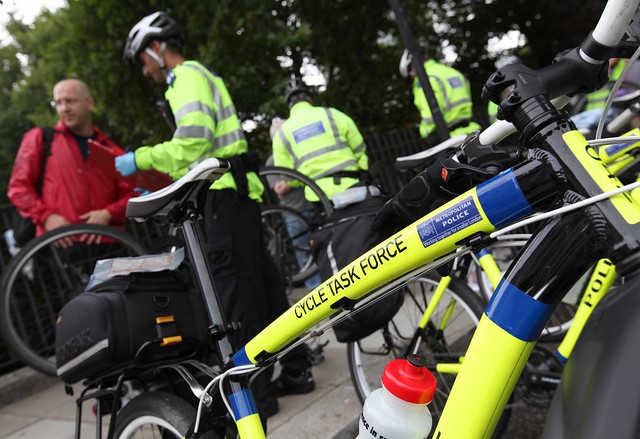
Specialist Met Police units that investigate fatal collisions involving HGV’s and London buses, with a specific focus on cyclist and motorbike safety, are being disbanded as part of a major overhaul of road policing in the capital.
The changes are being introduced this month as part of the second phase of the force’s “New Met for London” plan, which prioritises neighbourhood policing.
Road safety campaigners and politicians have warned that scrapping the dedicated teams could increase the risk posed by large vehicles, which are the greatest threat to vulnerable road users.
The cycle safety team, motorcycle safety team and commercial vehicle unit will no longer exist in their current form.
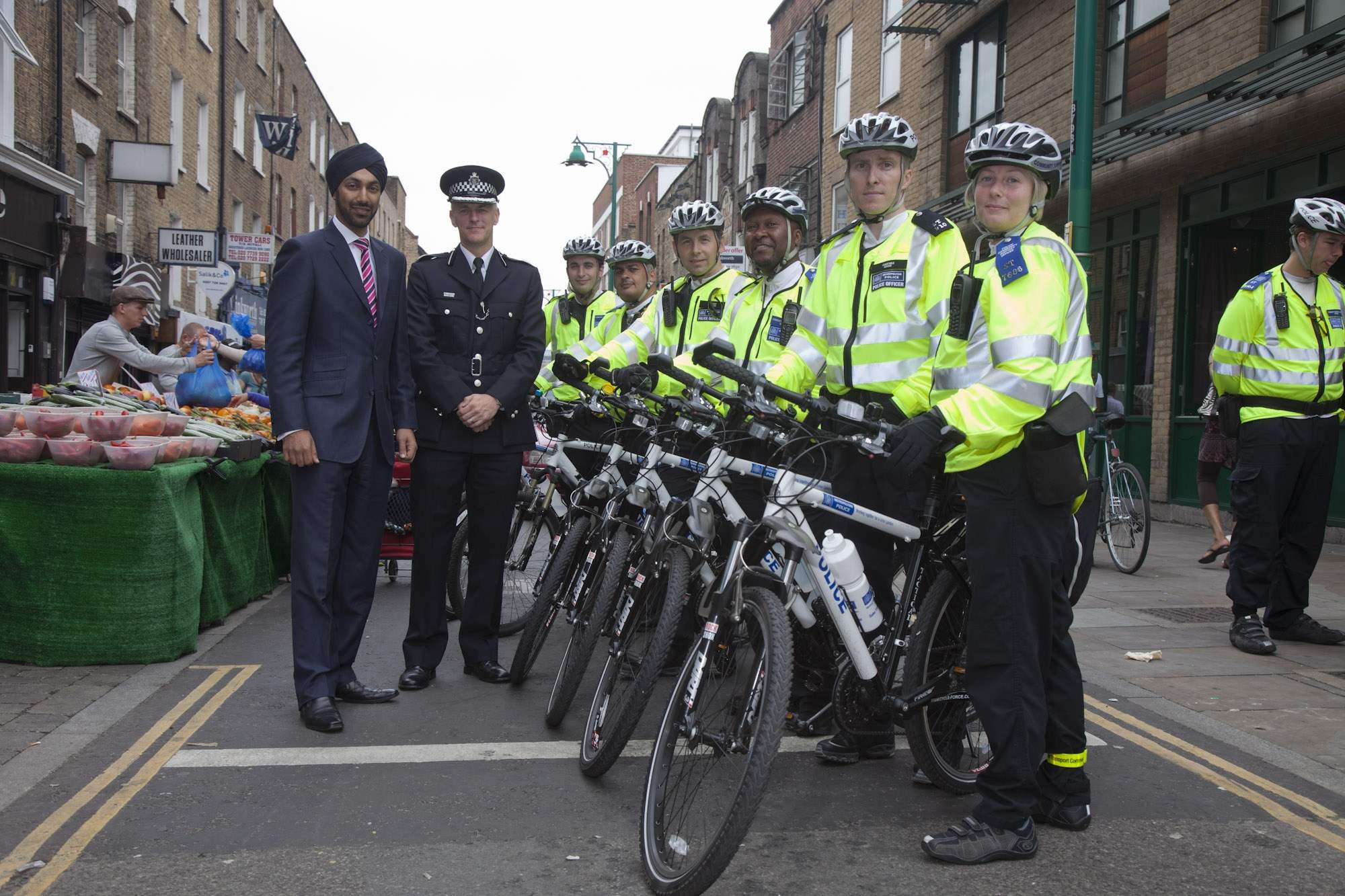 Metropolitan Police Task force with Kulveer Ranger and Mark Gore (picture credit TfL).jpg (Image Credit: TfL)
Instead, the Met told road.cc it will create a new “Road Danger Reduction Team to proactively enforce the most serious road traffic offences, such as speeding, drink and drug driving, and driving while on a mobile phone.
“This large team will take on some of the functions of dedicated teams such as the Cycle Safety Team, Motorcycle Safety Team, Commercial Vehicle Unit, while other activities will form part of the Met’s core policing activity and delivered by MPS-funded Roads Policing Teams or other MPS teams.”
The Met’s commercial vehicle unit, which is the largest of its kind in Europe, currently provides the only 24/7 specialist response to serious and fatal incidents involving HGVs and buses in London.
Officers conduct collision investigations, tachograph inspections, load security checks, and targeted enforcement against non-compliant operators.
In a Freedom of Information response to The Standard in December, the Met confirmed that staff in the commercial vehicle unit had been told that their standalone department would be disbanded, with some of its responsibilities expected to transfer to the new Road Danger Reduction Team.
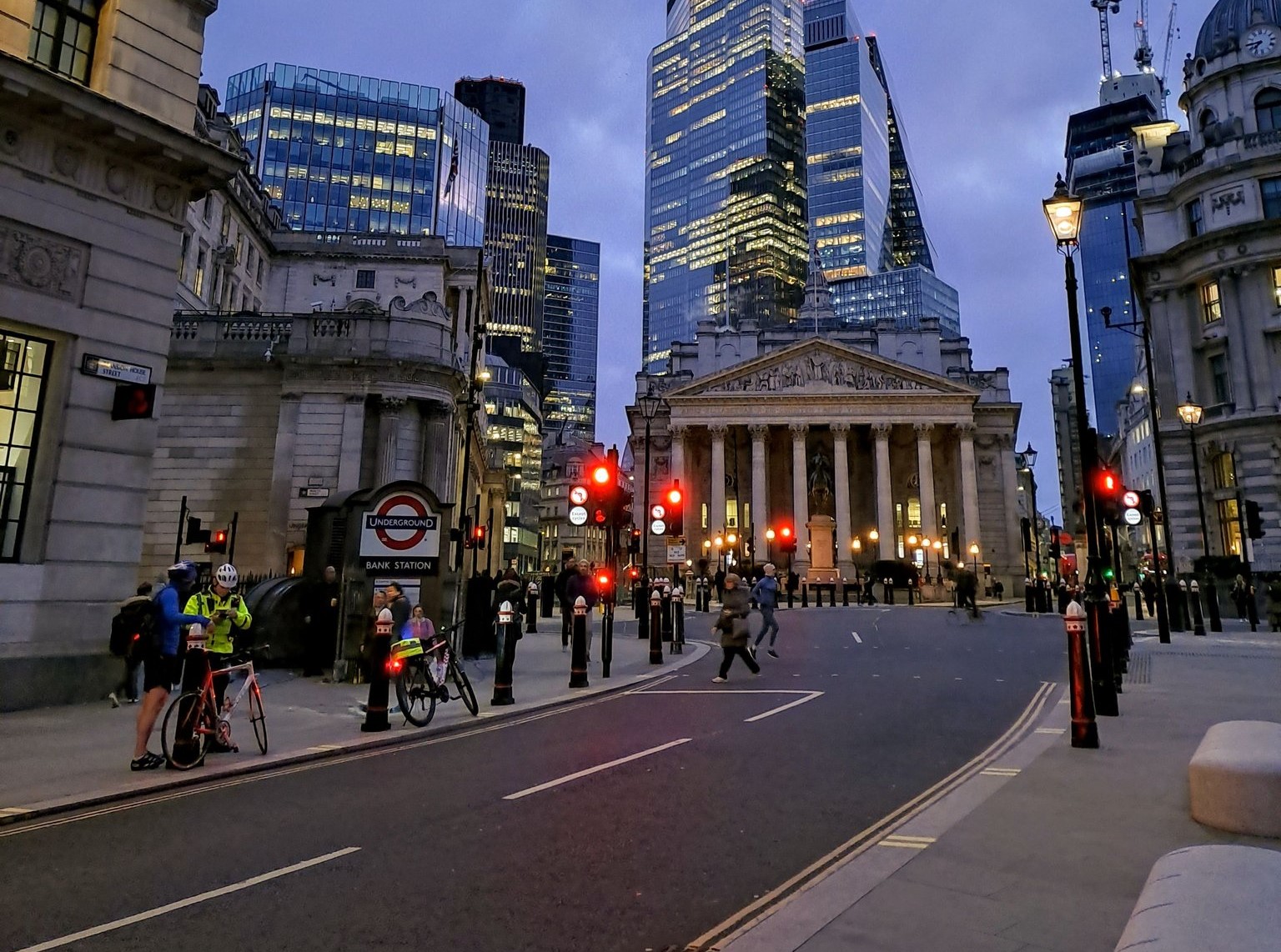 Joint enforcement operation targeting anti-social cycling in London (Image Credit: City of London Police)
The unit is funded by Transport for London, which contributed £9.8 million in 2024/25 to the Met’s Roads and Transport Policing Command. That funding supports around 1,500 officers and 500 PCSOs across the capital’s 32 boroughs.
TfL told stakeholders before Christmas that dedicated road safety policing teams covering areas such as commercial vehicles, cycles, and motorcycles will no longer exist in their current form. It said that engagement, education and byelaw enforcement would instead be carried out by its own enforcement teams, freeing up police officers to focus on crime.
A TfL spokesperson said the authority will continue to fund additional policing on the transport network and maintained that specialist expertise to protect vulnerable road users would be retained under the new structure.
The unit is funded by Transport for London (TfL). TfL contributed £93.8 million in 2024/25 towards the Met’s Roads and Transport Policing Command. That funding supports around 1,500 officers and 500 PCSOs across the 32 boroughs policed by the force.
This news has sparked concern among political and industry leaders.
Caroline Russell, Green Party member of the London Assembly, pointed out that a proposed 14 per cent reduction in the Roads and Transport Policing Command would, in the Met’s own words, result in a reduced capacity for fast road responses, pursuit resolutions and road danger reduction.
The Motorcycle Action Group has condemned the decision to disband the six-officer motorcycle safety team. The team delivered hundreds of safety courses each year to bikers and courier riders.
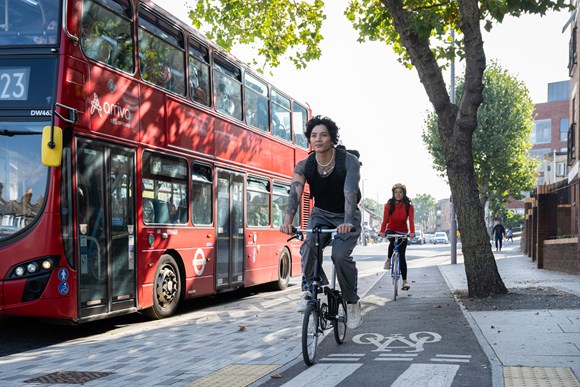 Cyclist on cycle lane, London (Image Credit: Transport for London)
Meanwhile, former traffic commissioner Beverley Bell has written to the Met Commissioner, Mark Rowley, urging him to reverse the decision, according to MotorTransport.
In her letter, Bell described closing the commercial vehicle unit as “madness”. She argued that the decision could not be justified by cost, ineffectiveness or poor stakeholder engagement.
“The decision cannot be driven by a lack of finance, as the Met Police force doesn’t pay for the unit. It is paid for by TfL,” she wrote.
She warned that if no specialist team remains, non-compliant operators will feel emboldened, with potentially serious consequences.
“A 44-tonne vehicle, a 53-seater coach or bus may plough into a group of innocent people crossing the road. The driver will not be able to stop the vehicle in time, because the brakes aren’t effective.”