
A former Cycling Ireland officer has been handed a suspended 18-month prison sentence for attempting to deceive the Irish government by producing false quotations to secure grants for bikes and timing equipment, a controversy that led to internal turmoil within the governing body, an unsparing audit, the loss of a sponsor, and a police investigation.
Between March and June 2020, Garry Nugent, a former Cycling Ireland events officer from Co. Tyrone, submitted two false quotations related to a funding application for tandem bikes to be used at the Tokyo Paralympics, and another fake quote for timing equipment.
The 51-year-old pleaded guilty to two charges of attempting to deceive the Department of Sport at Dublin City Circuit Court this week.
In court, Nevan Hartley, the detective Garda who investigated the case, told prosecution barrister Simon Donagh that Cycling Ireland had been advised that grants of €100,000 and €75,000 were available to it, and that they would be lost if they were not claimed before the funding window shut.
Cycling Ireland intended to combine the grants to purchase two tandems for their Paralympic team, and were given permission to do so. The governing body was also required, to fulfil procurement conditions, to provide three quotations to support their application.
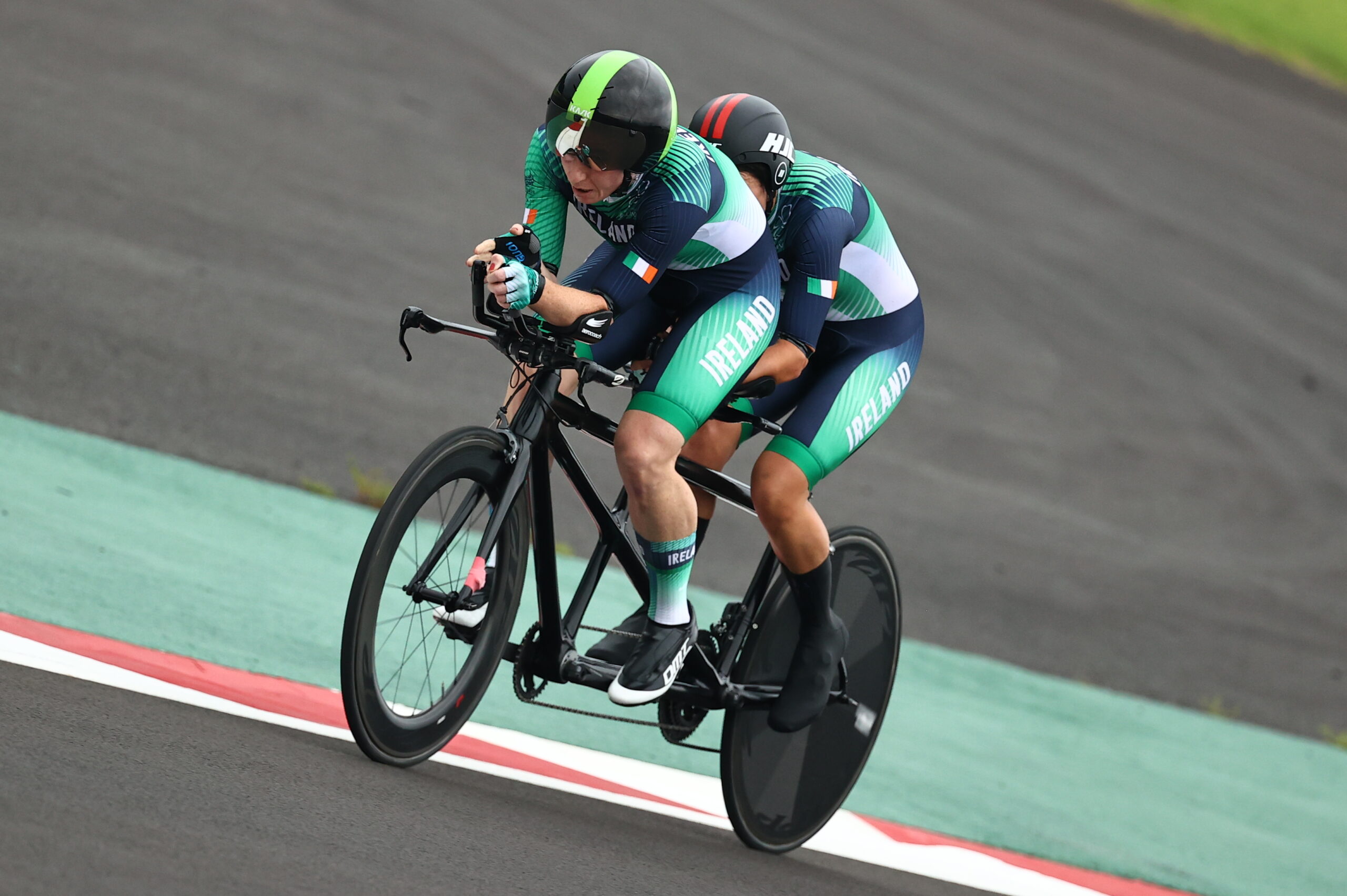 Katie Dunlevy and Eve McCrystal, Tokyo Paralympics (Image credit: Alex Whitehead/SWpix.com)
However, Cycling Ireland was under significant time pressure due to not only the constraints of the funding window, but also the logistics surrounding the specialist tandem bikes, which would take some time to produce. The applications were also to be submitted during the early stages of the Covid-19 pandemic.
Nugent was responsible for supplying two false quotations for the tandem bikes, submitted alongside one genuine quotation, as well as another fake quote for a grant of €52,100 for the timing equipment. The documents were uploaded by another person, but the applications were ultimately rejected.
The Department of Sport said it refused to provide the funding due to concerns about the similarity of invoices setting out quotes for equipment in the application.
In 2021, an internal audit by Kosi Corporation for Sport Ireland found that “false comparative quotations” were submitted by Nugent, the audit concluding that there was an “absence of full openness” on the matter by Cycling Ireland’s executive.
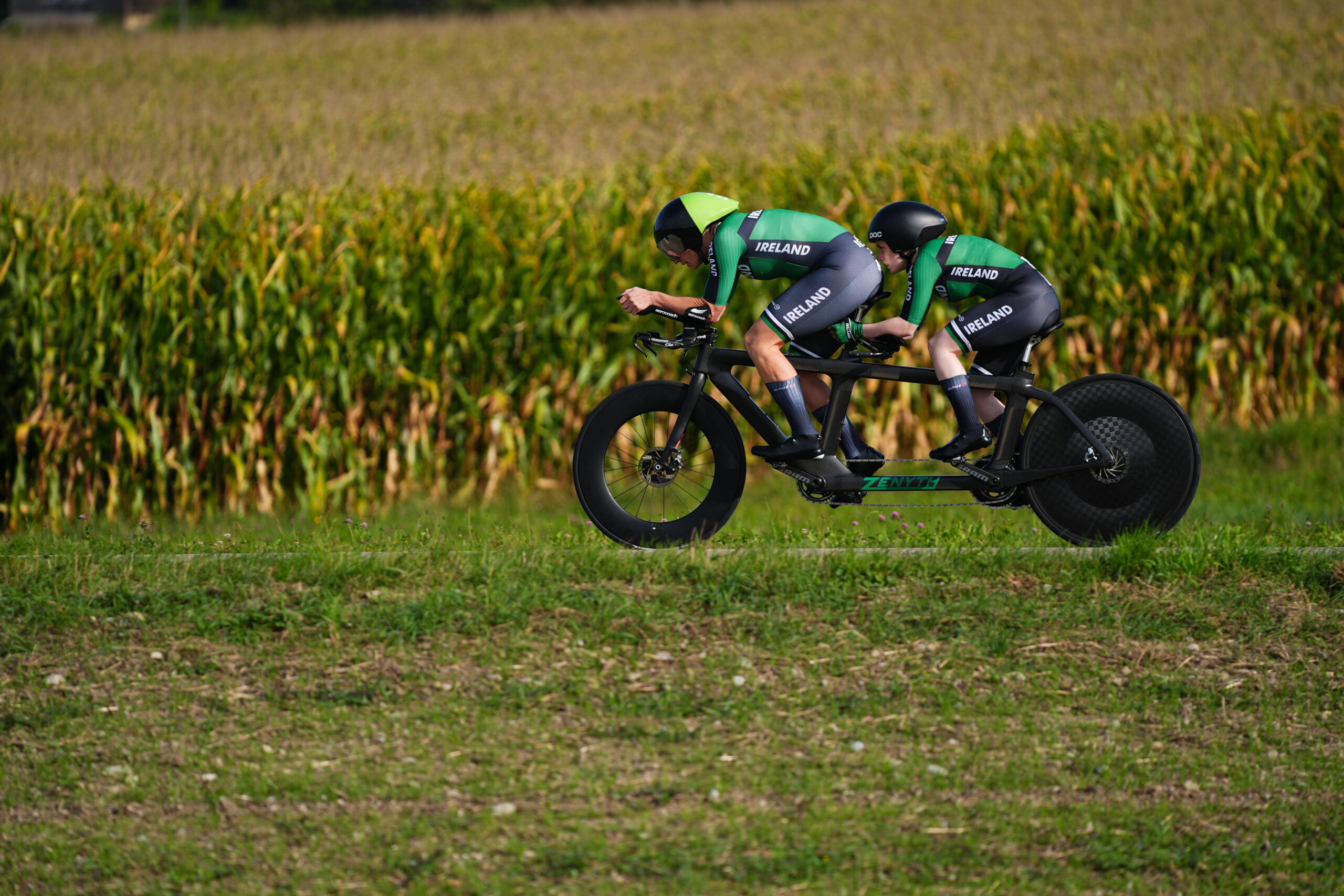 Ireland’s Josephine Healion and pilot Eve McCrystal, 2024 UCI Para-Cycling world championships (image credit: Zac Williams/SWpix.com)
The audit’s findings sparked disarray within the Irish governing body, with solicitor Yvonne Nolan quitting as a director the following September, complaining in her resignation letter that her views on the “seriousness and urgency” of the grant issue were not aligned with other board members.
In November 2021, Ciarán McKenna was replaced as Cycling Ireland president by Liam Collins, while the governing body also lost sponsorship deals amid the ongoing police investigation.
Speaking in court this week, Detective Hartley said that Cycling Ireland and Nugent were under time pressure to submit the applications due to the “narrow window” involved, and that “all of this was happening” during the pandemic.
“The wrong decision was made to submit each fake quotation,” Hartley continued, adding that while there was no loss to the state, Cycling Ireland suffered reputational damage in the process.
Hartley agreed with defence barrister Cathal McGreal that Nugent was “an ordinary decent man who was put under specific pressure” and submitted the false quotations “to satisfy a tender requirement”.
It was also accepted that the 51-year-old did not gain personally or financially from his actions, with the detective adding that he’d be “shocked” if Nugent appeared again before the courts.
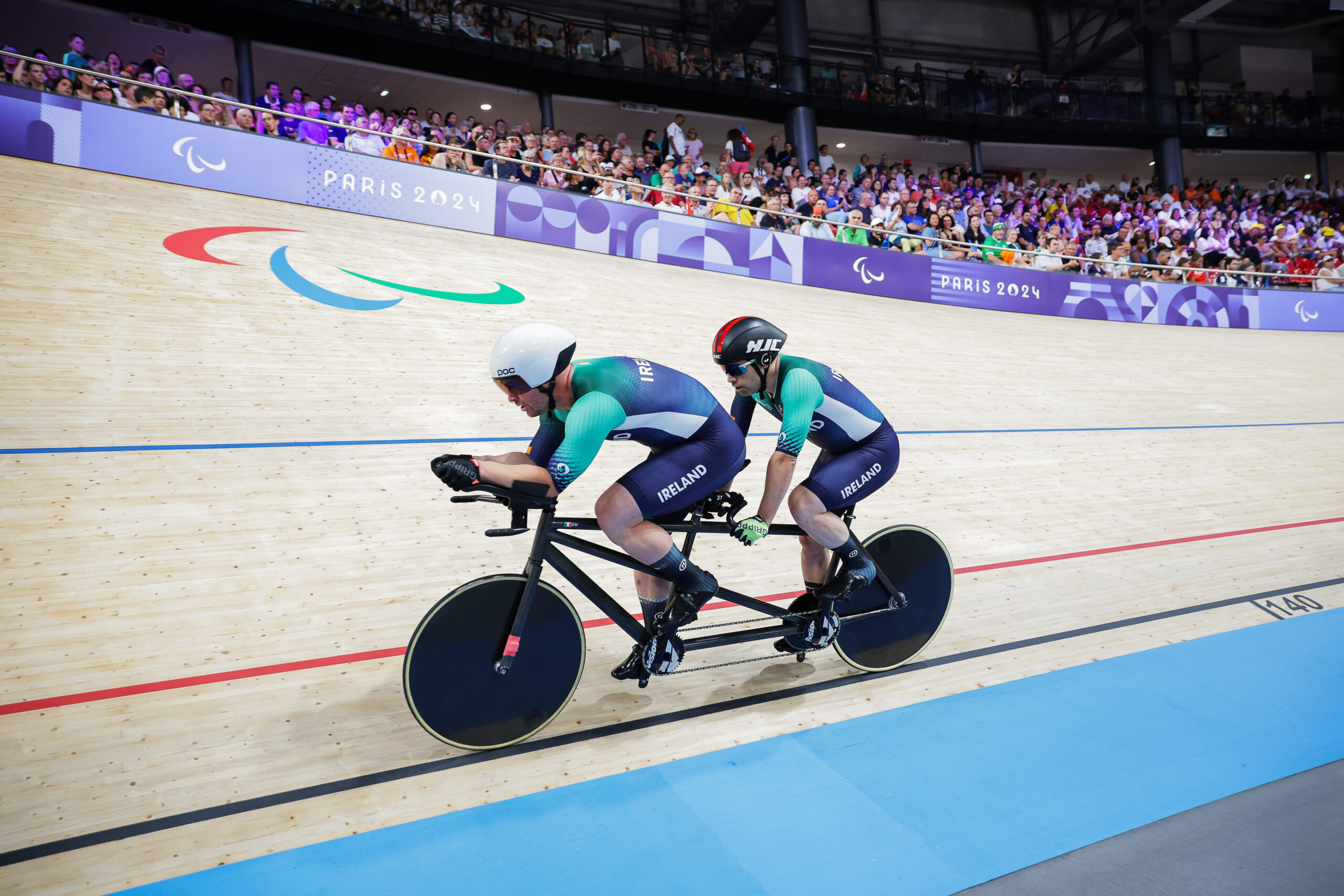 Martin Gordon (Ireland) piloted by Eoin Mullen, 2024 Paris Paralympics (Image credit: Ed Sykes/SWpix.com)
McGreal told the court his client, a married man with two teenage children, had lost his job with Cycling Ireland but is now working again.
Judge Orla Crowe said she accepted the evidence that the grants “were going to disappear if they were not applied for”.
She argued that the offence occurred in “exceptional circumstances” and there was “a certain urgency perceived”, while accepting that Nugent had admitted his involvement from the beginning, did not benefit in any way, and had apologised.
Nevertheless, the judge argued that he had still “played an active role” and was “not entitled to try and deceive” the government.
After setting a headline sentence of three years, the judge instead handed Nugent a sentence of 18 months, suspended for three years.