
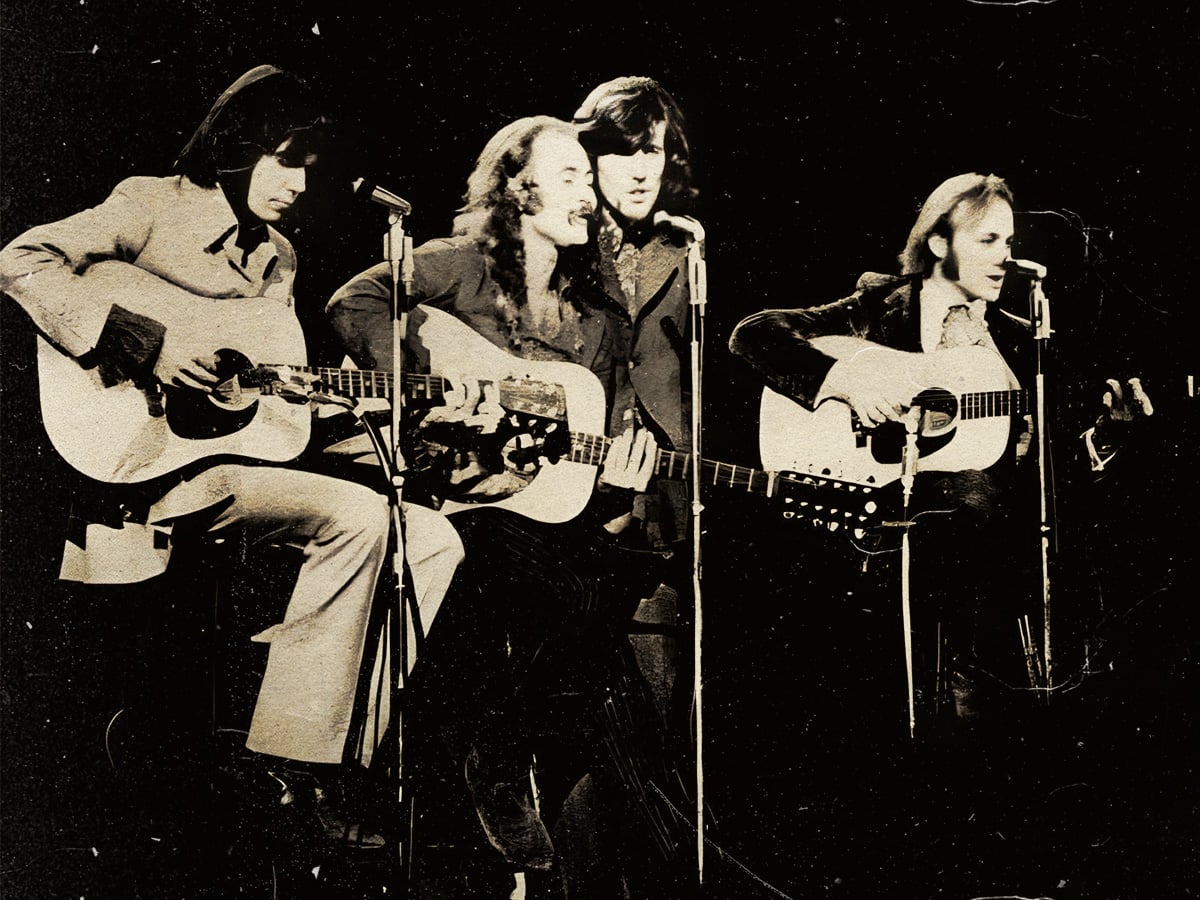
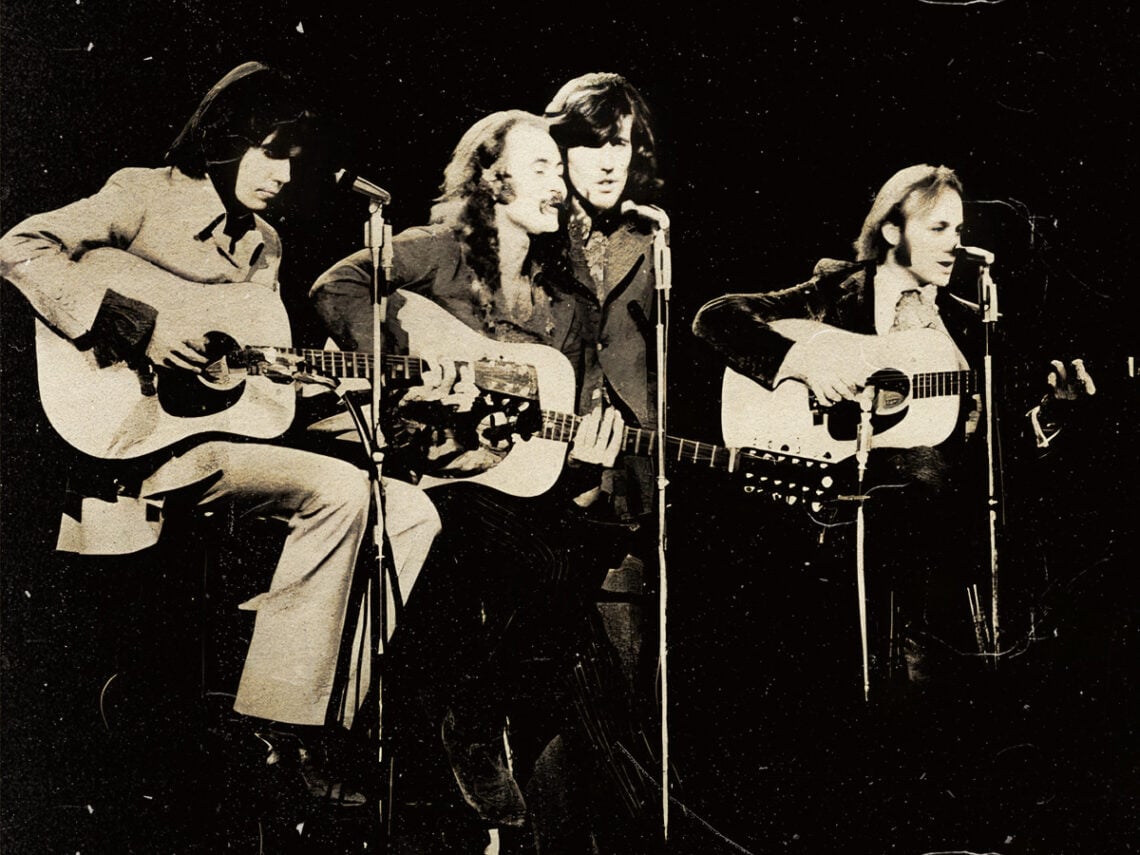
(Credits: Far Out / CMA-Creative Management Associates / Atlantic Records)
Sun 22 February 2026 23:15, UK
You can thank Joni Mitchell for the supergroup Crosby, Stills and Nash.
When Graham Nash came to America to see Mitchell, he went round to her house for dinner. He arrived to find David Crosby and Stephen Stills, both of whom were working on a song together. Nash eventually went over to go and help them write, and in doing so, the three of them stumbled upon that iconic three-part harmony that they would make famous.
Despite the fact that all three artists were already in quite successful bands, there was no denying the power of that harmony. Upon stumbling on such a lovely sound, it was a no-brainer that they had to start working on writing songs together. It worked out incredibly well, especially because they were already established musicians, and so they were more open to experimenting with various sounds.
“We already had some success. You know, The Hollies had had more hits that we’ve ever had, already, for [Graham] Nash,” said David Crosby when discussing the band member’s prior projects, “Buffalo Springfield, The Byrds have had a good running […] So it wasn’t the launch point for us, you know, really. It was the launch point for CSN.”
This new songwriting trio had free rein to make some of the best songs of their careers, and you hear it in every single note that they ever put together. Add Neil Young to the fray, and you really have a force to be reckoned with. Here you had four of the greatest songwriters of all time, and they were all working together.
The other benefit that the band had was that no member was shackled by it. They were free to go off on their own, work with others, put songs together as a solo artist and continue to develop, but then they could come back to the band and apply what they had learnt. This meant none of their records sounded the same, and each LP they have ever worked on has a piece of each individual member on there.
Perhaps their most well-received album was one they made with Young in the fold, Déjà Vu, which propelled them into the mainstream and made them one of the most popular bands of the time. Neil Young left the band after this album, making a decision with his own interests at the centre, something which Graham Nash believes he does a bit too sparingly.
“I think Neil is very smart. I do respect his connection with what he calls ‘the muse’ of his music. He follows that intently, and I understand that, and I respect that,” said Nash, “One of the things I don’t quite like is all the people who surround him, all the stage technicians, all the sound technicians, all the lighting technicians, to have a tour for six weeks in the summer all of a sudden cancelled because of whatever reason Neil wants to cancel it, all of those people can’t find a job, because the rest of the touring family are already out and running.”
When Young left the band, a lot of people felt it might be difficult for the group to go back to the original three; however, they actually delivered an exceptional piece of music with their next release. The record was aptly called CSN, and because it follows such a big record, a lot of fans tend to look past it, but this seems somewhat unfair. There is no escaping the fact that this album is one of the better offerings Crosby, Stills and Nash put out, and it doesn’t deserve to be forgotten.
Once again, each individual member brings complete originality to the tracklist. You can hear all three of them in different songs, and it results in the likes of ‘Shadow Captain’, ‘Run from Tears’ and ‘Fair Game’. While this might not be the band’s most successful record, it doesn’t deserve to be cast aside, as you well and truly hear the three-piece supergroup at their best.