
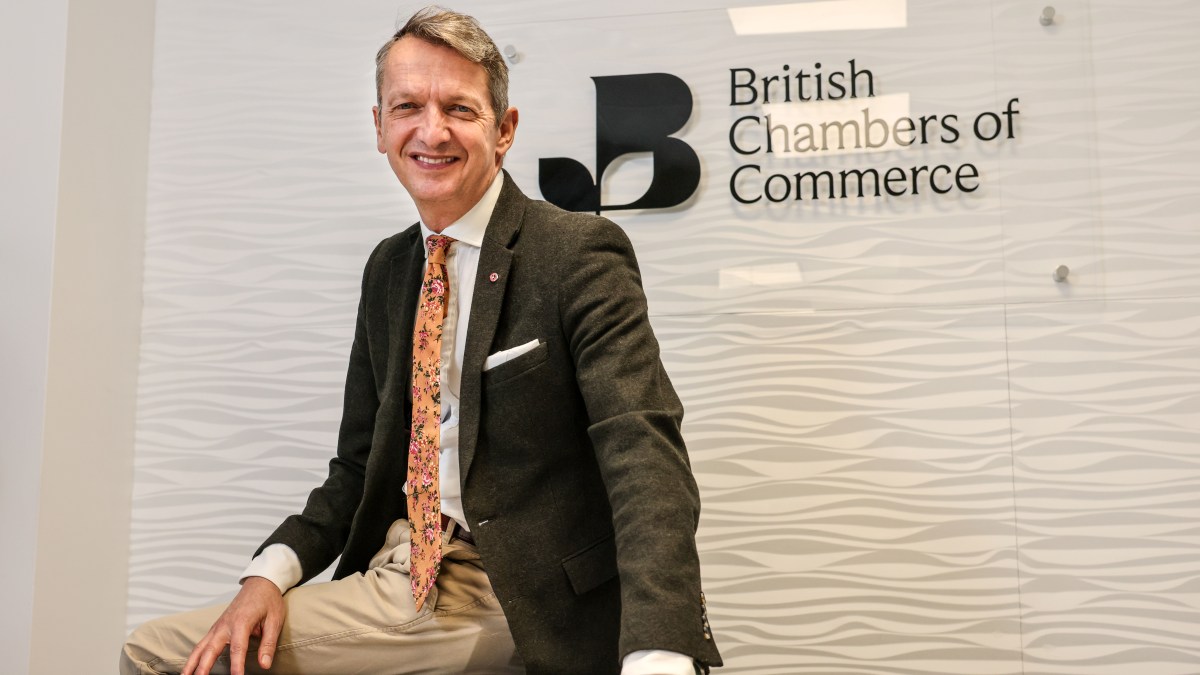
As “man and boy” at the Bank of England during his 32 years at Threadneedle Street, Andy Haldane found it invaluable going around the country to make sense of the economy.
Haldane, 58, who was the chief economist, liked meeting the central bank’s network of agents connected with local businesses to give him a “real sense of the colour and texture”.
Five years after leaving the Bank and “starved of some of that intel”, the newly appointed president of the British Chambers of Commerce is eager to be back “on the bike and chat first-hand” to business through the group’s 51 local chambers.
“I’m telling you from past experience it can be all the difference in the world, particularly at turning points,” he says in an interview at the chambers’ head office on Petty France in St James’s in central London.
Despite the “political noise” in nearby Westminster, Haldane, one of the country’s most high-profile economists and chancellor of the University of Sheffield, believes the UK could be at a positive turning point. “There’s a fighting chance that this year we will see growth exceeding expectations. I don’t think we’re going to see chocks-away growth. I don’t think we’re talking big-figure two … But after, let’s be honest, several years of serial disappointment on growth there’s a chance this year that might turn around.”
Haldane’s optimism stems from the “balance-sheet fundamentals” of businesses and households being in “relatively rude health”; the “dark cloud” of last year’s budget — a “big dampener” on sentiment and activity — having lifted; and a likely further fall in interest rates this year cutting borrowing costs.
Supporting his outlook, a survey by the BCC has found 46 per cent of businesses expect to grow this year, up from 35 per cent in the same survey last year.
Last week Haldane, who succeeded Baroness Lane-Fox of Soho, attended the chambers’ business council for the first time and came away with “cautious optimism”.

Baroness Lane-Fox of Soho
TIMES PHOTOGRAPHER JACK HILL
“Around the table, people were at pains to point out that they had a pipeline of very investable projects, some under way, some about to be under way, which would make a massive difference to their own growth, to job creation and to the growth in their local region.”
Business council members include bosses at Heathrow Airport, BT, DP World and Spire Healthcare.
Steve Reed, the secretary of state for housing, communities and local government, also attended the meeting to discuss planning.
However, business leaders have concerns, from questions on how planning reforms will be implemented to the skills gap for infrastructure projects and whether they will again “be dealing with a different cohort of ministers in six months’ time”, he says.
The “revolving door” of ministers and prime ministers over the past decade put them “through the wringer”.
“That does not make for stable and sustainable long-term planning around policy and that in turn upends the best-laid business plans … Just think of the toing and froing over a Heathrow third runway over the years or what we do with our nuclear estate.
“So, particularly in a noisy world, what you want is a relatively becalmed domestic political environment and the government’s majority in principle served that up and the hope would be that that five-year term can be made good on and that will be an anchor for policy.
“But of course no one can avoid the political noise of the last few weeks and months and that plainly provides another reason for companies to not put their balance sheet to work, to press the pause button, which too often has been the story really of the last 15 to 20 years.
“We should squander that asset [a large majority] at our peril, I would say, given our record on business investment.”
With Sir Keir Starmer having, for now, survived a potential leadership challenge, there is speculation government policy could tack further left. “You would hope that even if there were to be changes in personnel that wouldn’t lead to a handbrake turn on policy,” says Haldane. “It is, after all, the same government that ran on the same manifesto.”
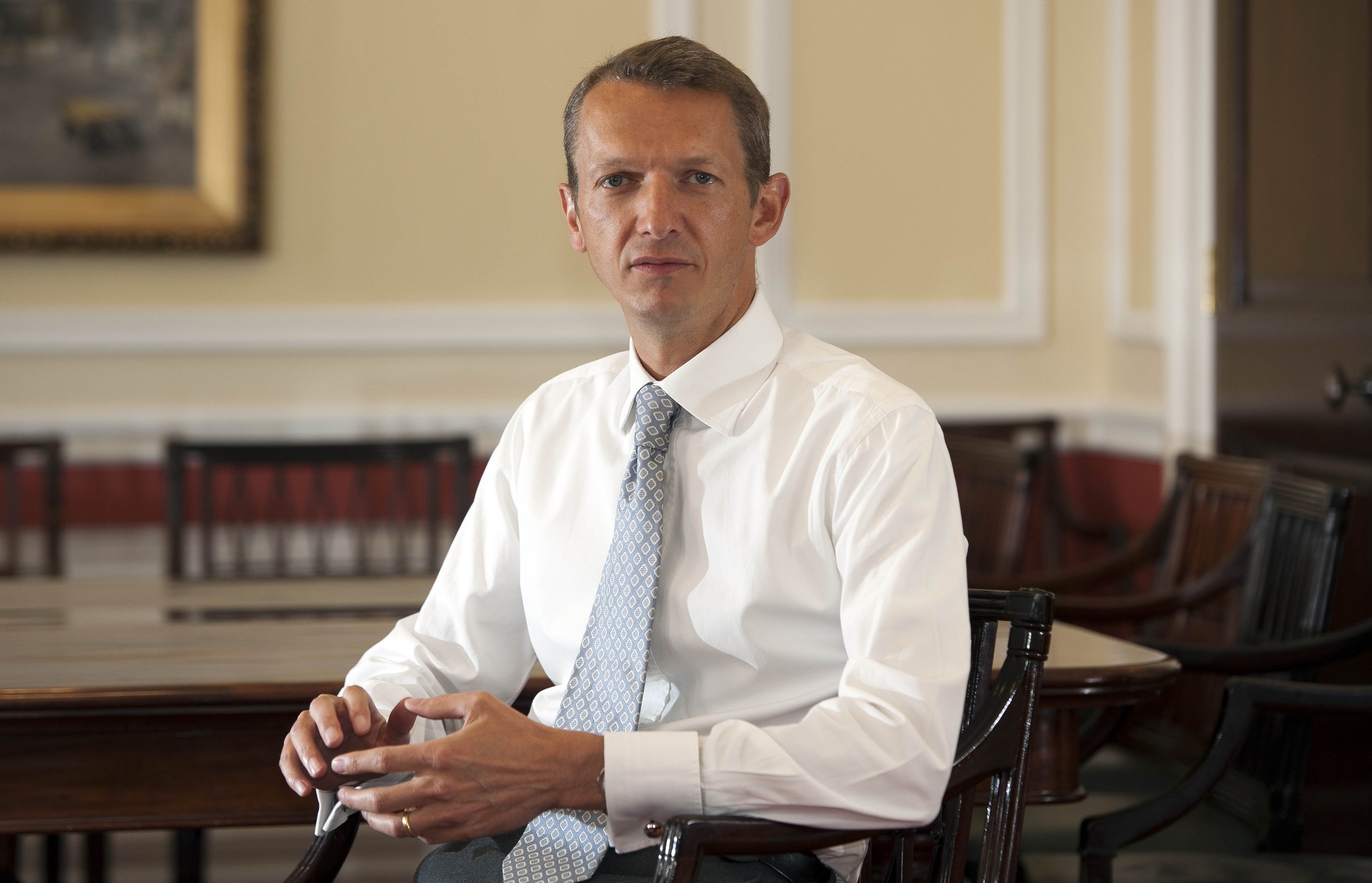
Haldane during his time at the Bank of England, where he spent 32 years
ROLAND HOSKINS/ASSOCIATED NEWSPAPERS/REX
Starmer’s decision last week to scrap plans to delay local elections was the government’s 14th U-turn.
Although Haldane believes that “often the biggest policy mistakes are not the policy action but the failure to change policy in response to circumstance”, he says “fewer surprises are better than lots, particularly when this has had a dampening effect on business confidence.”
As an example, the decision to increase employer national insurance contributions during Labour’s first budget in 2024 was a “nasty surprise to the system” and has been complicated by more recent announcements on business rates, employment rights reforms and an increase in the minimum wage.
Does he therefore think Labour really is the “party of business”?
“Time ultimately will tell. This government and its predecessors absolutely understand as they should that the dynamo of growth is business.”
But, he adds: “How that translates into policy, that for me is work in progress. The message given to business and others has not been as clear and consistent on the primacy of growth as would be desirable.”
Planning, the industrial strategy and infrastructure investment “sits on the credit side of the ledger consistent with the growth narrative”. The flipside, however, was showing up in the jobs market.
We met on the day that the latest official labour figures showed unemployment had hit a five-year high in the final quarter of the year.
“So there’s been a sense in which the government on growth, through its actions rather than its words, has given with one hand and taken away with the other.”
Of “particular worry” in the unemployment numbers was the increased joblessness and inactivity among young people.
“Because if either you’ve never entered the jobs market or you’ve exited early in your life it becomes that much harder to rejoin at a later stage; it leaves generational scars.”
The risk that the “AI wave” acted as a “jobs killer” tomorrow on top of youth unemployment today threatened “an unfortunate conflation of events”.
It remained, though, “very, very early days” on the impact of artificial intelligence on productivity and jobs and for now the “rhetoric is running ahead of reality”, said Haldane. He was “not complacent” and urged greater investment in skilling up the old and young to fix broken work pathways.
There has been “far too little seeding of the ground” on a skills strategy for UK plc and the welcome industrial strategy needed narrowing from eight sectors, including a particular focus on defence.
For all that, he says: “You know economists like me, the most dismal of sciences, can come across as gloomy-doomy. But I remain resolutely optimistic about UK plc — and that’s not blind optimism, that’s optimism bought of spending 30 years on the road chatting to brilliant people and brilliant businesses.”
‘We want to engage with Reform UK’
The new president of the British Chambers of Commerce has welcomed plans by Reform UK to increase business experience in government as it prepares to engage more with the party (Alex Ralph writes).
Andy Haldane said there was a lack of business expertise among ministers and in the civil service.
Nigel Farage, the leader of Reform UK, who last week named his “shadow cabinet”, has vowed it would be “the most pro-business, pro-entrepreneurship government this country has seen in modern times” and would “bring into government people with real expertise in their areas”.
Haldane, in an interview with The Times, said: “We want to engage with them [Reform] on what their plans are for business and beyond. As it turns out, in the case of Reform they’ve already made clear that they want business to be a big part of their method of governing.”
• Haldane: UK economy has fighting chance of turnaround this year
The BCC is preparing for its trade conference in March and its annual conference this summer where Reform is likely to be present.
“We’re in a world of five, six, seven-party politics and who knows how things will shake down in the next election,” Haldane said. “But absolutely among all the main parties they should have representation at our conference and at our table.”
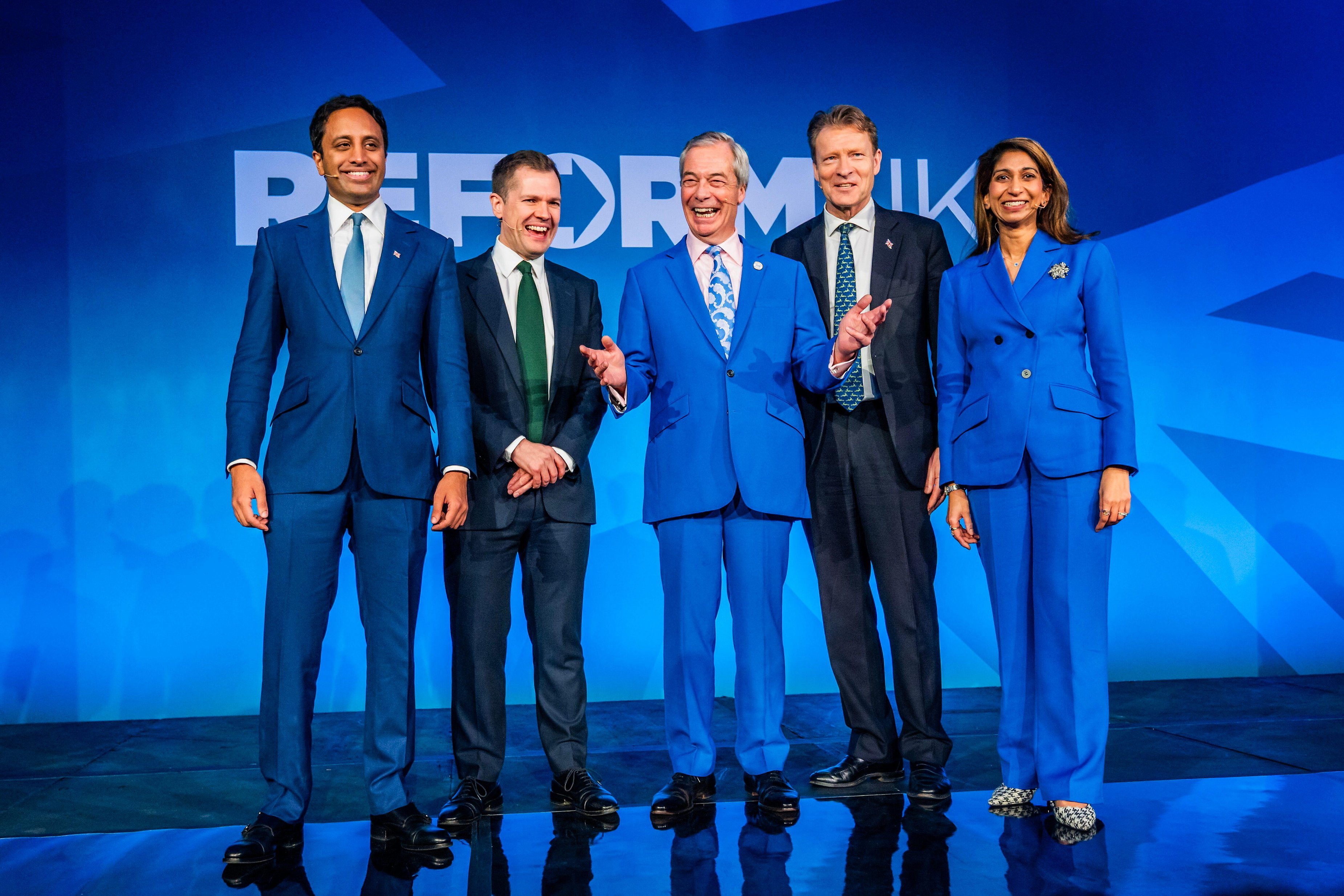
Farage unveiled his “shadow cabinet’ of Zia Yusuf, Robert Jenrick, Richard Tice and Suella Braverman
GUY BELL/ALAMY LIVE NEWS
Reform has maintained a large poll lead over Labour and the Conservatives and is seeking to build relations with business.
Sir Tim Martin, the chairman and founder of JD Wetherspoon, called on the hospitality sector this month to back Reform’s pledge of supportive policies for the pub sector and expressed surprise at the apparent indifference to the move shown by the industry’s “great and good”.
Zia Yusuf, Reform’s lead on home affairs, took part in a question-and-answer session at the CBI (Confederation of British Industry) annual conference in London in November.
Liam Byrne, the Labour chairman of the business and trade select committee and a former Treasury minister, said in December that if Reform were set to become the “predominant party of the right [in Britain] then businesses absolutely are going to need to understand where they’re coming from”.
He said business was “right to be worried” by the prospect of Reform gaining power and should insist on a “hell of a lot more scrutiny”.