
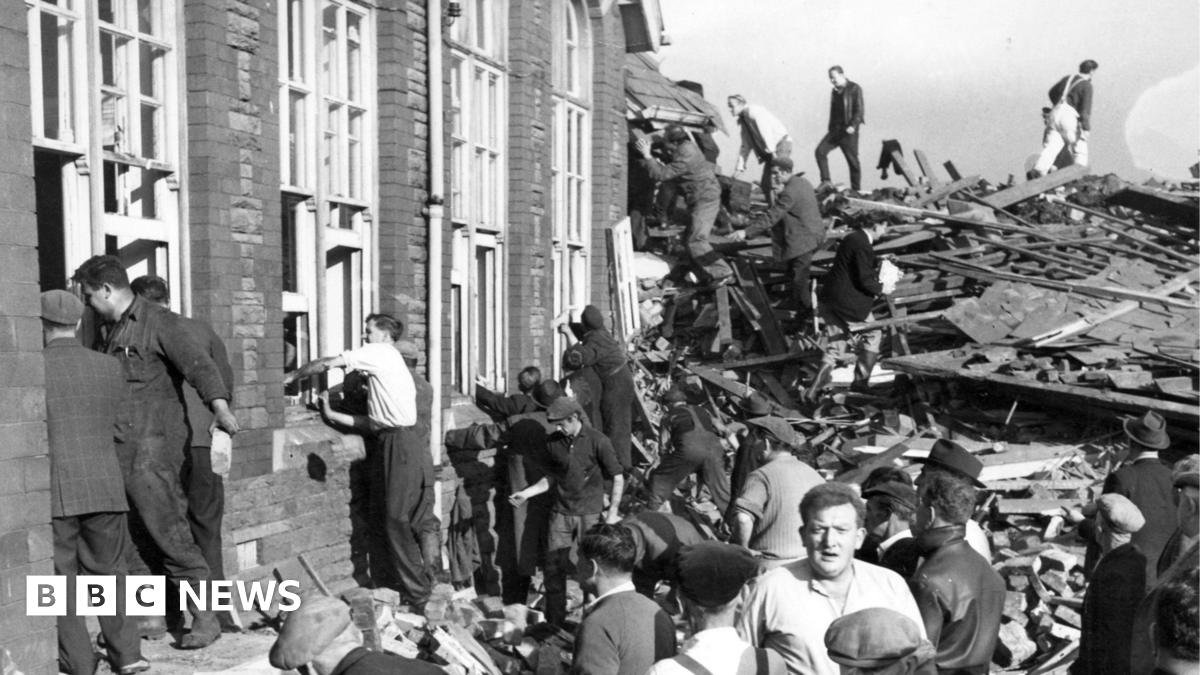
The morning of the disaster, unbeknown to those at the foot of the mountain, the large tip had been made unsteady by a build-up of water.
Then, at 09:15, the 150,000-tonne pile of slurry came roaring down the slope, crashing into the primary school and engulfing the building.
“I heard this terrible noise,” said Mair.
Her classroom was in a separate building from the main school and, through the windows, she saw a playground wall had collapsed so she instinctively gathered her pupils and led them out.
She walked them down to the steps by the main road and stood with them, trying to keep calm as mothers began rushing to the school: “If you’re calm, they’re calm as well.”
One by one, the children were collected and while her pupils had escaped the devastation of the slurry, some of their families had not been so fortunate.
“A little boy in my class lost his mother and sister,” she recalled, adding that he had to be picked up by his aunt.
She also remembered a teacher from another school, Bill Evans, whose house was next door to Pantglas.
“He lost his wife, baby, and his son – who should have been in school but had tonsillitis so was home. He lost his complete family.”