
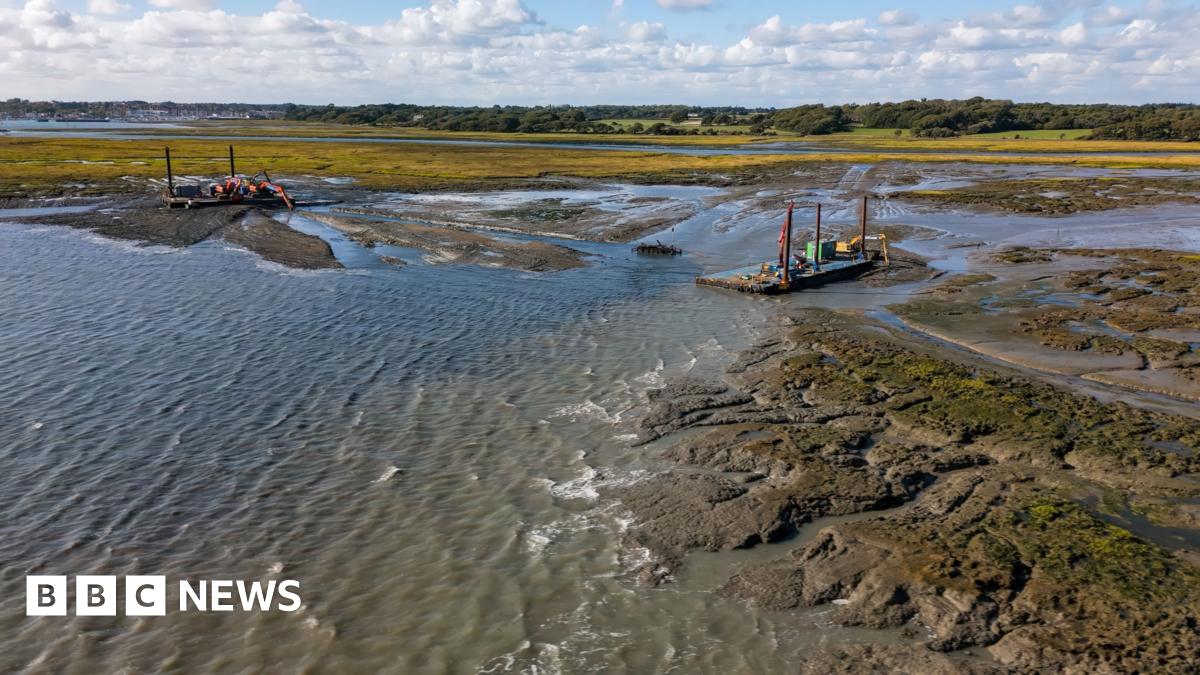
In 2024, the first year of the Environment Agency-funded trial, about 800 cubic metres of mud was placed in a sheltered part of the saltmarsh at a height designed to regenerate habitat.
Twelve months later, Mr Willegers said there was “really good quality saltmarsh growing in that location”.
Last year, with funding from the Crown Estate, the team transported sediment a shorter distance, allowing them to move two-and-a-half times more material in a third of the time.
Willegers said the material had survived the winter and was expected to colonise in the spring.
Maclean said once sediment reached the correct height, it would naturally recolonise with wind-blown and bird-carried seeds.
“Everybody involved has been dumbfounded by how quickly in 2024 the material colonised,” he said.
“So we know if we get that target height, nature will take over.”
Caroline Price, head of nature and environment at the Crown Estate, said traditional methods of restoring saltmarsh could be slow and expensive.
She said the organisation wanted to explore innovative and scalable ways to use sediment removed to keep harbours operational, and hoped the approach could be replicated elsewhere.