
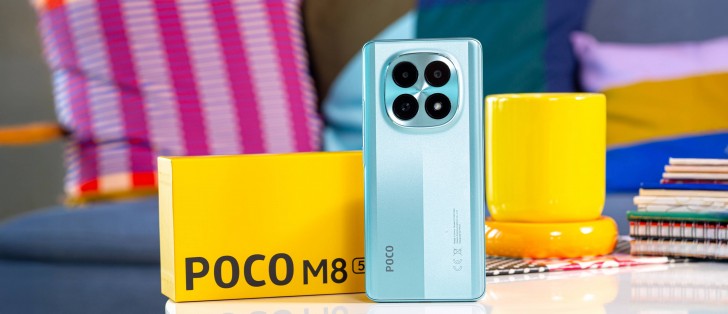
50MP rear camera, wide selfies
The Poco M8 has one of the most basic camera setups we’ve seen lately. It has a single real camera on the back (joined by an extra depth sensor for no apparent reason), and an unassuming front-facing camera. It’s clearly not a cameraphone, this one but let’s see how it performs.
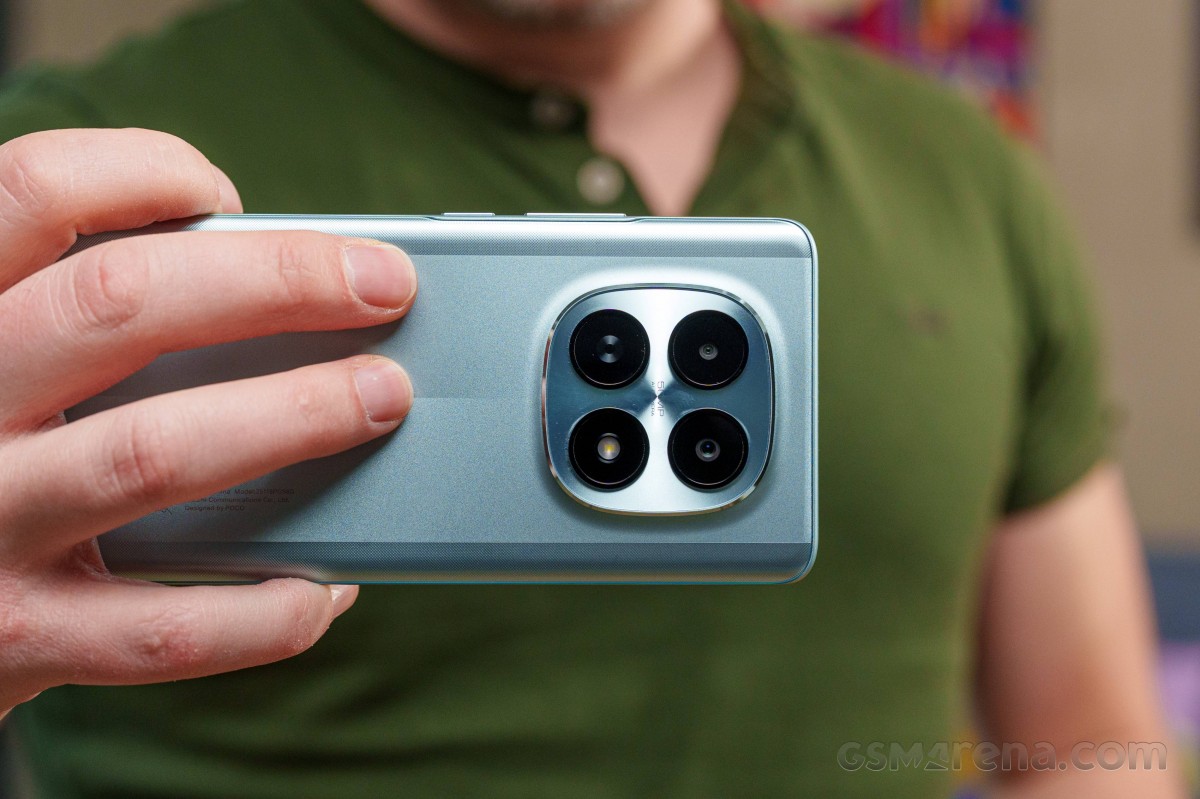
The main camera uses a relatively small 1/2.88″ OmniVision sensor that’s got a 50MP nominal resolution and saves 12.5MP files by default. It’s paired with a 29mm-equivalent lens – on the long end for a main camera, and just maybe a little limiting when there’s no ultrawide to support it.
Indeed, there’s no ultrawide camera, which you do get on the Redmi Note 15 (the 5G model). Also, both the 4G and 5G Redmi Note 15s have higher-res main cameras.
The selfie camera, meanwhile, is apparently shared between these three models. It’s a 20MP OmniVision sensor coupled with a relatively wide 21mm-equivalent lens with fixed focus – nothing too fancy, of course.
Wide (main): 50MP OmniVision OV50D (1/2.88″, 0.61µm-1.22µm); 29mm, f/1.8, multi-directional PDAF (8cm – ∞); 4K30 video recording.
Depth: 2MP OmniVision OV02B (1/5.0″, 1.75µm); mm, f/, ;
Front camera: 20MP OmniVision OV20B (1/4.0″, 0.7µm-1.4µm); 21mm, f/2.2, fixed focus; 1080p30.
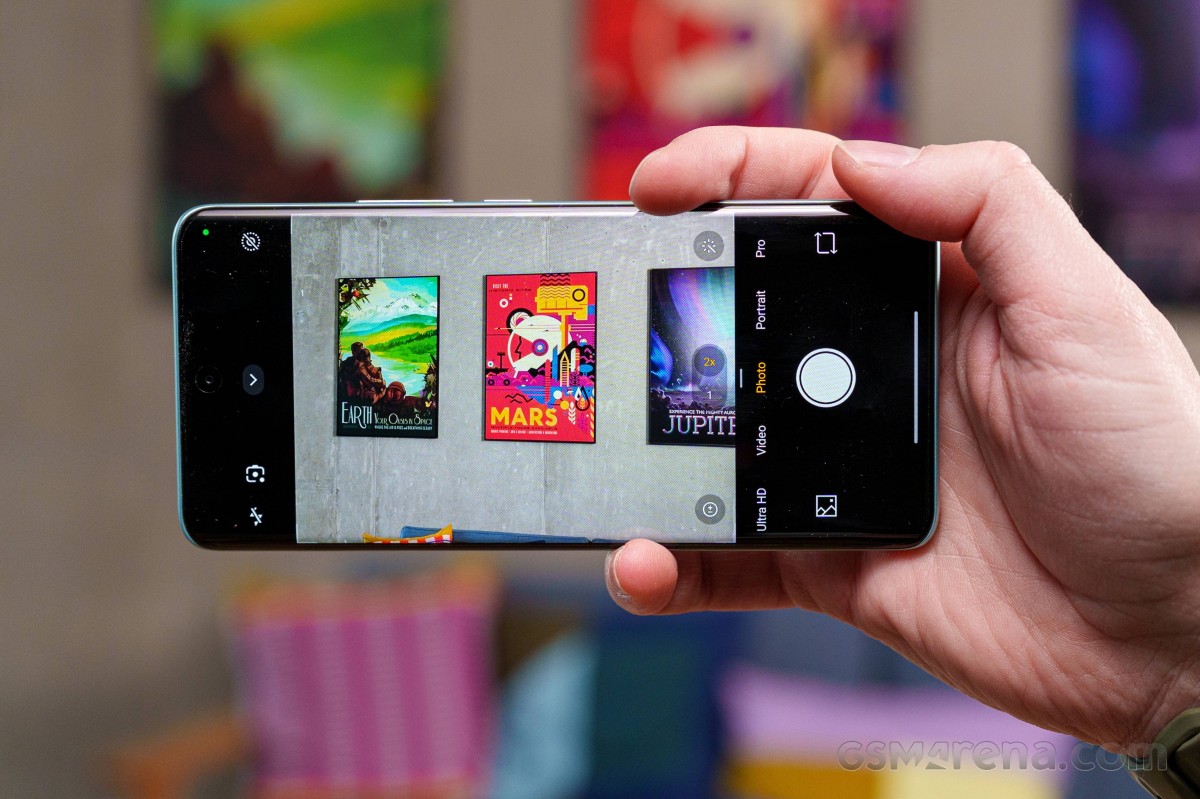
Daylight photo quality
Main camera
The Poco M8’s rear camera captures very good shots for the class. They have great detail, if a little bit smudgy with high-frequency textures, and well-controlled noise.
There’s a bit of a tendency for overexposure, to the tune of maybe half a stop, but dynamic range is good nonetheless. The auto white balance shows no blunders, and colors are quite likeable overall.










Daylight samples, main camera (1x)
People shots in our usual scenes are a little iffy, we’ll admit. They’re on the soft side, there’s some noise too and dynamic range is so-so. The Portrait mode’s artificial bokeh rendition is conservative, which is a good thing, though dynamic range gets even narrower in that mode.








Human subjects, main camera (1x): Photo mode • Portrait mode
The 50MP results are surprisingly decent, but not necessarily good enough to be your go-to mode – perhaps worth experimenting on occasion if you want to try and squeeze the most out of a scene.








Daylight samples, main camera (1x), 50MP
The 2x zoom 12.5MP shots have more or less the same actual detail as the 1x 50MP ones, only more intensely sharpened. Which is to say, the 2x zoom is usable, but not particularly good.










Daylight samples, main camera (2x)
Selfies
Selfies from the Poco M8 are quite decent for the class. They have great colors and mostly good dynamic range, and detail is alright too – not 20MP of it, certainly, but perfectly fine at normal viewing distances. The relatively wide lens is a welcome sight too.




Selfie samples
Low-light photo quality
Main camera
Low-light photos at 1x zoom are good for the class. Exposures are on the dim side, meaning you get well-preserved highlights and slightly too dark shadows, but it’s not necessarily a bad look. White balance is accurate, and color saturation is great. Detail is somewhat soft when you look up close, though it’s still alright all things considered.






Low-light samples, main camera (1x)
Zooming in at night isn’t a great idea though – the shots are very soft.






Low-light samples, main camera (2x)
Video quality
The Poco M8’s video recording capabilities are fairly basic. It can capture videos up to 4K30 with the rear camera, and you don’t get 60fps even in 1080p resolution. The selfie camera maxes out at 1080p30. You get video stabilization only in 1080p30, but not in 4K. You can still choose between the h.264 and h.265 (HEVC) codecs.
You can check out the playlist below, which includes multiple video samples.
Aside from the shakiness, which is inevitable when shooting 4K handheld, the M8’s videos are quite good. Details are very good for the class, dynamic range is excellent, and colors are easy to like. You will need a tripod, though, or at least a beanbag if you want usable clips at this resolution. 2x clips are just about usable too – again, if you can come with some means of support.
For what it’s worth, the phone’s 1080p30 stabilization is actually pretty competent – it’s just that you’ll have to choose between that and 4K.


Poco M8 video screengrabs, daylight: 1x • 2x
Low-light video quality isn’t too hot-looking – the white balance is off, and dynamic range isn’t all that great. There’s plenty of noise too, though detail can be pretty decent. 2x zoom is only good as a last resort.


Poco M8 video screengrabs, low light: 1x • 2x
Camera quality verdict
The Poco M8’s camera hardware is pretty basic, but it does a good job with what it’s got. The rear camera is quite good for photos during the day and alright at night, but don’t expect it to do miracles with zoom. 4K videos are shaky but otherwise very good, or you can opt for stable 1080p footage instead. Selfies are solid for the class.