
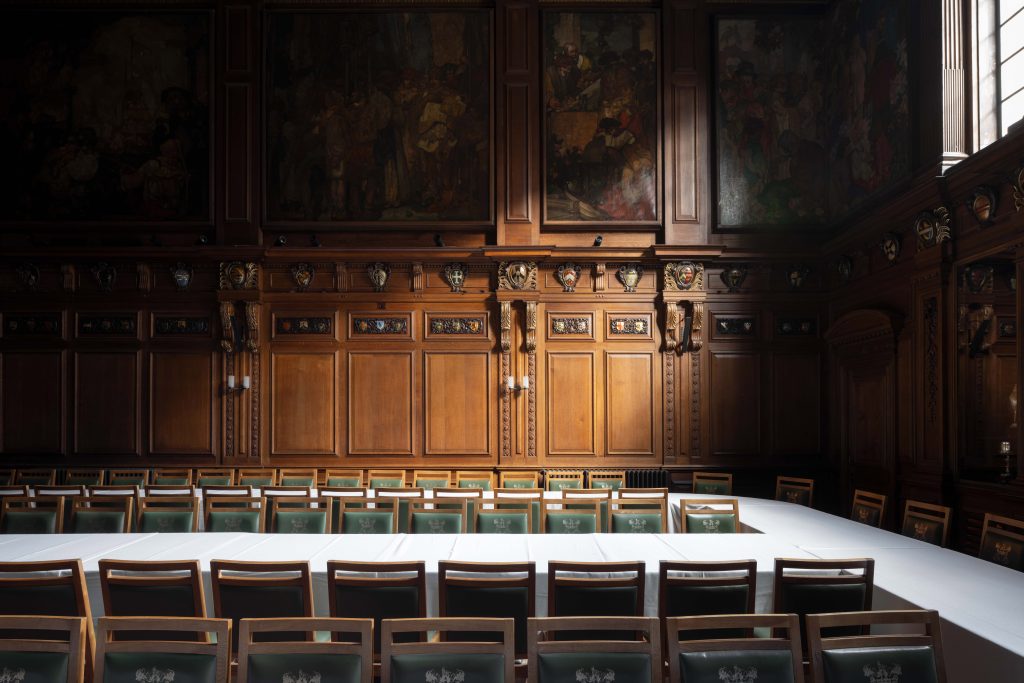
‘It’s probably the most complex project we’ve ever done,’ says 6a architects founding director Tom Emerson of their work at Skinners’ Hall in the City of London. The practice has restored, environmentally upgraded and extensively reworked this intertwined knot of buildings, dating from the medieval to the modern, introducing new elements, including three cantilevered stone staircases and a timber rooftop pavilion.
Sitting beside Cannon Street Station near the River Thames, it is home to one of the City of London’s oldest livery companies – the professional associations that developed around specific trades, in this case the lucrative fur trade originally plied with the Baltic states.
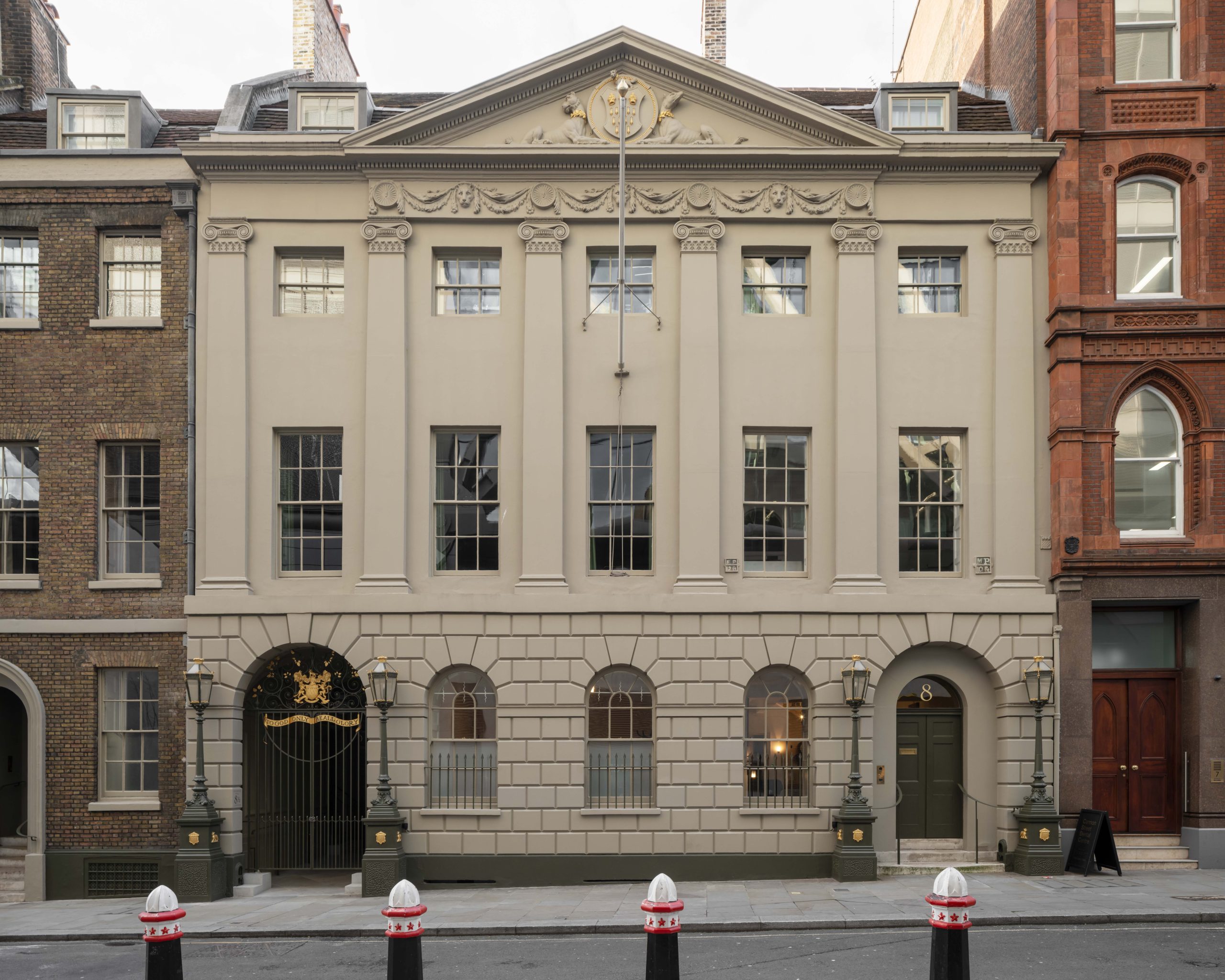
Gaining its Royal Charter in 1327, the Skinners’ Company had already occupied the site for a century. Over time, its premises and footprint expanded – with the inevitable blips of the Fire of London in 1666, when it was razed to the ground, and the Blitz, when part of it was destroyed by bombing. By the beginning of this century, the 3,200m2 site consisted of four main buildings: a Great Hall and Outer Hall, dating from 1672; a Court Room dating from 1680 to its west and to the east the 18th century Dowgate Range, which fronts onto Dowgate Hill. On the north-west corner of the site, Walbrook House was added in 1989, the last major development, occupying part of what had been a kitchen garden. The whole site is Grade I-listed, while the remains of a medieval basement that runs below is designated a Scheduled Monument – including a culvert constructed over the long-diverted Walbrook River, dating back in part to Roman times.
The evolution of the Hall’s fabric was also mirrored in the evolution of its activities – which by this century had become focused on educational and philanthropic work funded through charitable trusts drawing on centuries-old bequests of land and money. The building itself has also over time become a key source of income as a venue for corporate events and wedding hire.
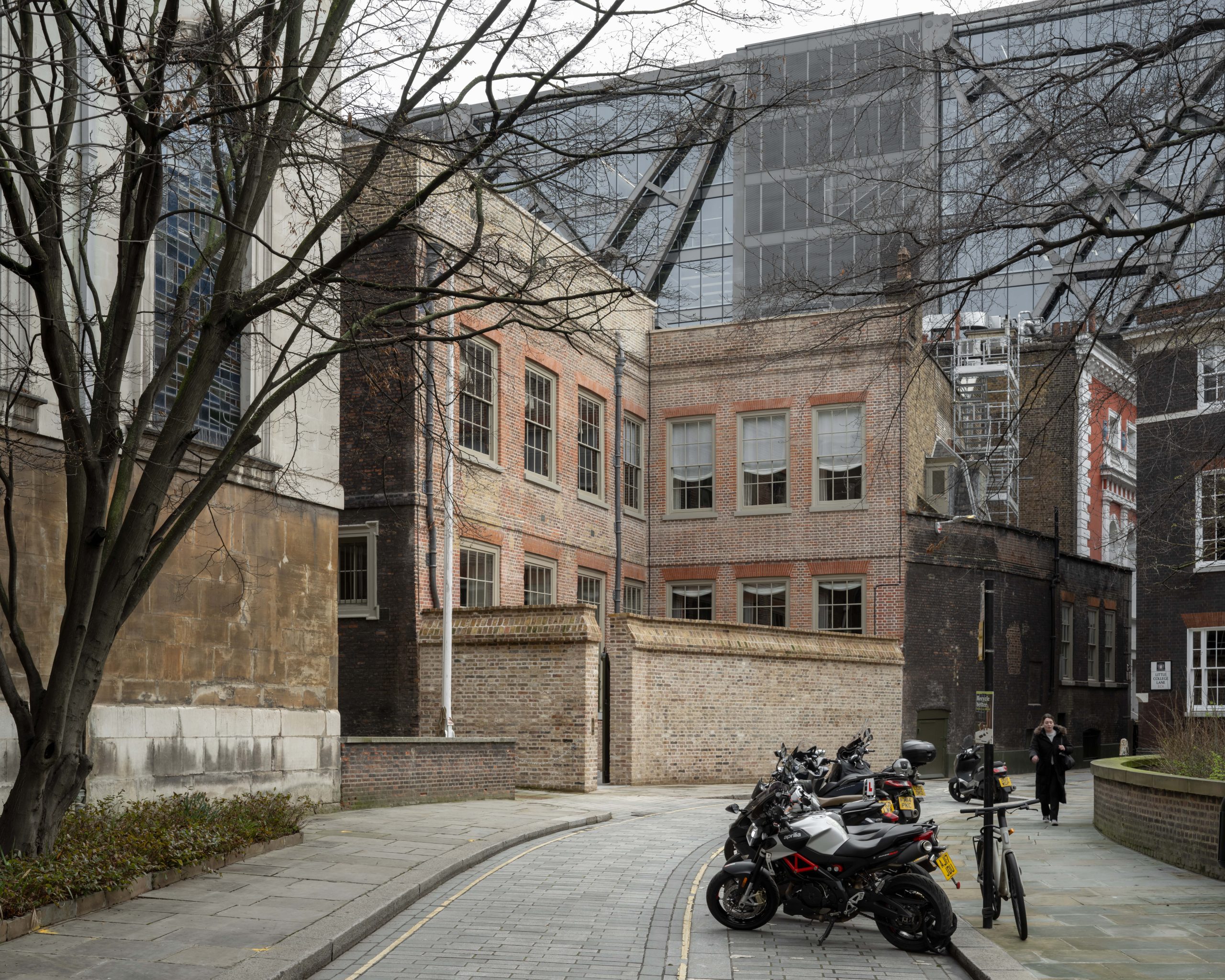
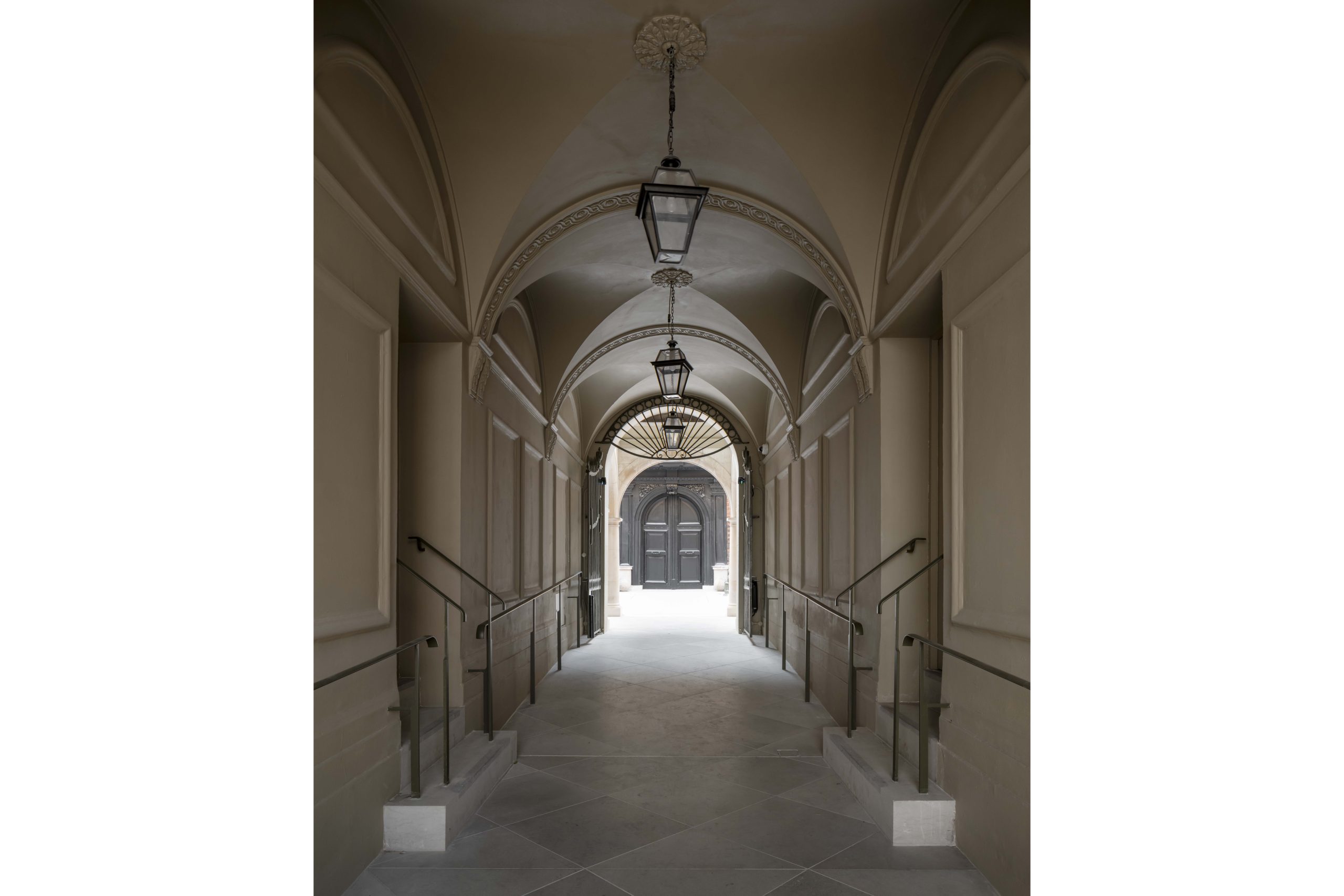
However, the use of the building was seriously constrained by the Skinners’ Company having effectively built itself into a corner over the years, with only a single point of access off Dowgate Hill. Having sold off the majority of its garden for development, the site had become locked in on two sides, while, on its south side, adjacent to College Street, there was no access due to the ground having been built up behind the boundary wall to create a raised ground-floor terrace. Access off Dowgate Hill was via a single doorway and passage, which was not fully wheelchair-accessible.
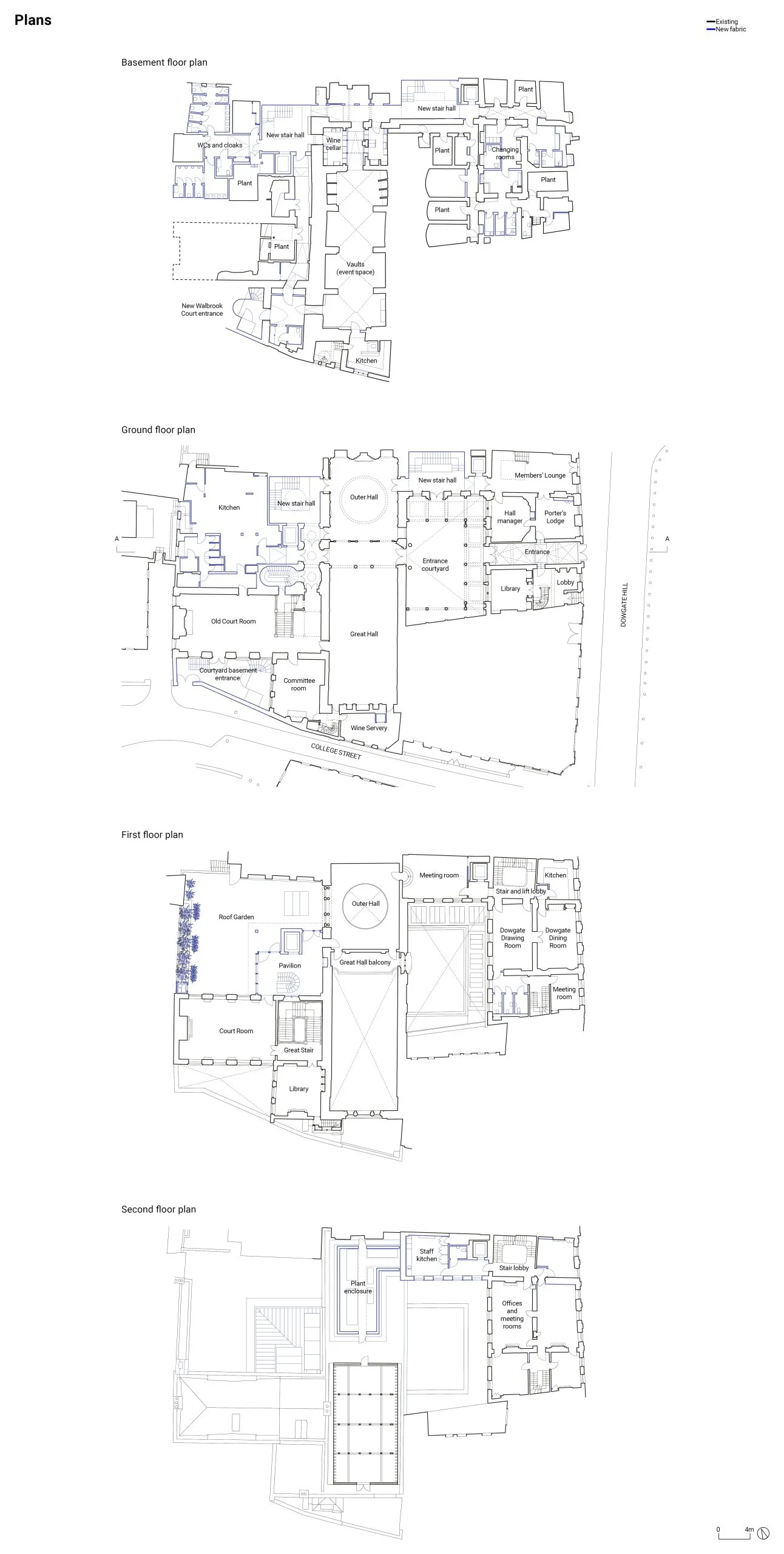
Given these shortcomings, the poor condition of the building’s fabric and the need to modernise its services, the decision was taken to completely renovate and upgrade the building and improve accessibility across the whole site, and 6a architects was appointed to the project in 2017. It has since developed into a comprehensive decarbonisation of all its fabric and services, together with a major reconfiguration and rationalisation of key internal areas, in particular of Walbrook House. The work has sought not only to improve the building’s access, circulation and energy efficiency but also to upgrade staff areas and expand space for events and hire, including opening-up the basement.
The practice has a track record of sensitive retrofit, not least at Raven Row, two Grade I-listed late 17th-century houses in Spitalfields, which it converted into a contemporary art space in 2011. That project involved not just a forensic analysis of the existing structure but a deep dive into its history and surviving documentation – old photographs in particular. The finished result is a blend of preserved, restored and newly-minted elements. The process was later ruminated over in the book Never Modern, written by architectural historian Irénée Scalbert together with the practice. It unpicked the sense of ‘bricolage’ in their approach – of working with the materials and means to hand – in the project’s physical and conceptual development. ‘The architect-bricoleur sniffs around, he rummages through old things, through materials and artefacts as well as ideas and concepts […] Like a detective, he looks for signs that might unlock a project.’
At Raven Row it was an old photograph of a door cornice, blackened by fire, which became totemic, influencing the decision to use charred cedarwood planks to form textured moulds for a new cast-iron façade. This invoking of the spirit or essence of the past through allusion rather than crude pastiche contributed to a sense of continuity between old and new. This element of necromancy in 6a’s work has continued since, even in new-build projects: its Milton Keynes Gallery of 2019 channels that city’s 1970s utopianism in its platonic geometry, huge circular moon-like window and stainless steel cladding.
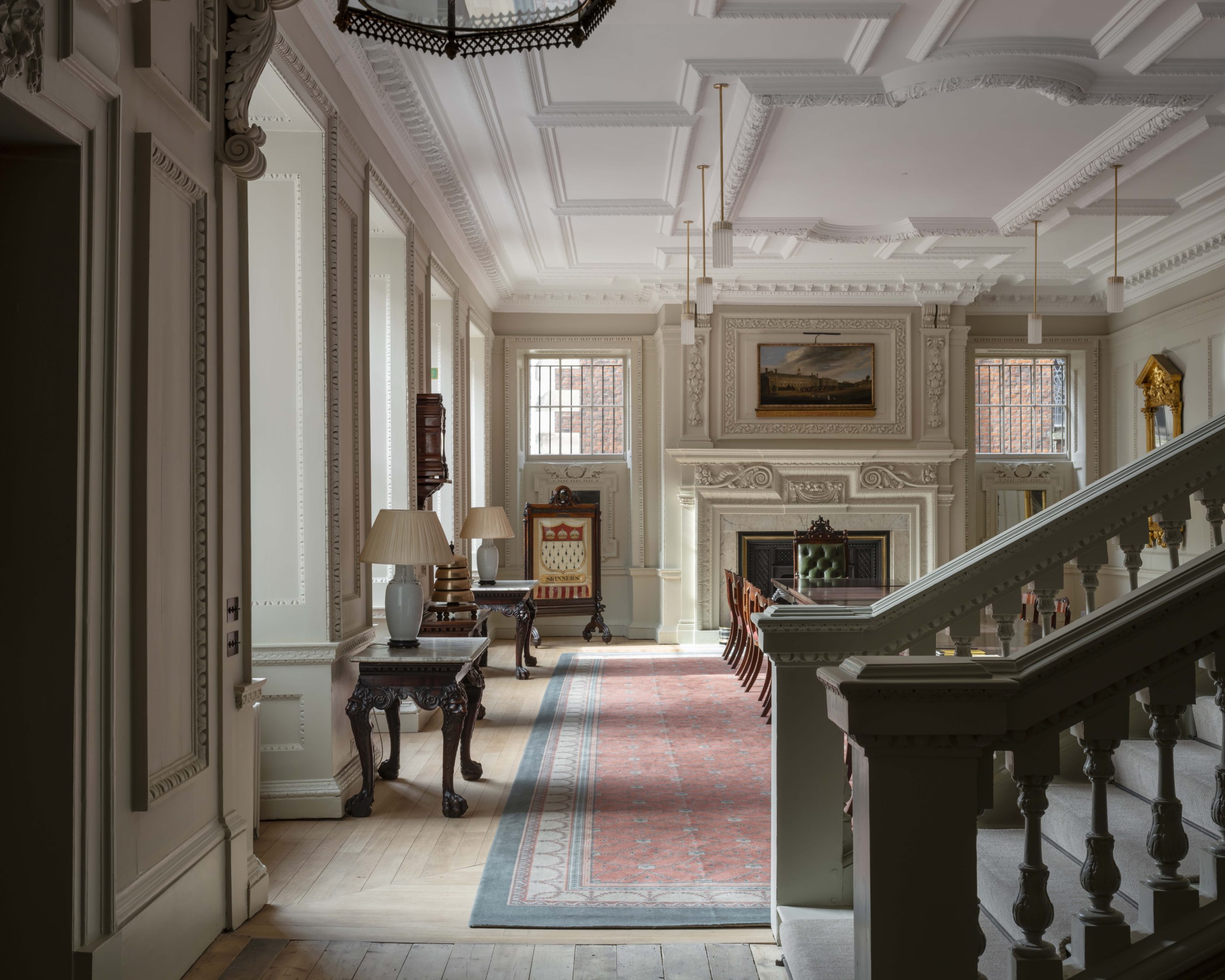
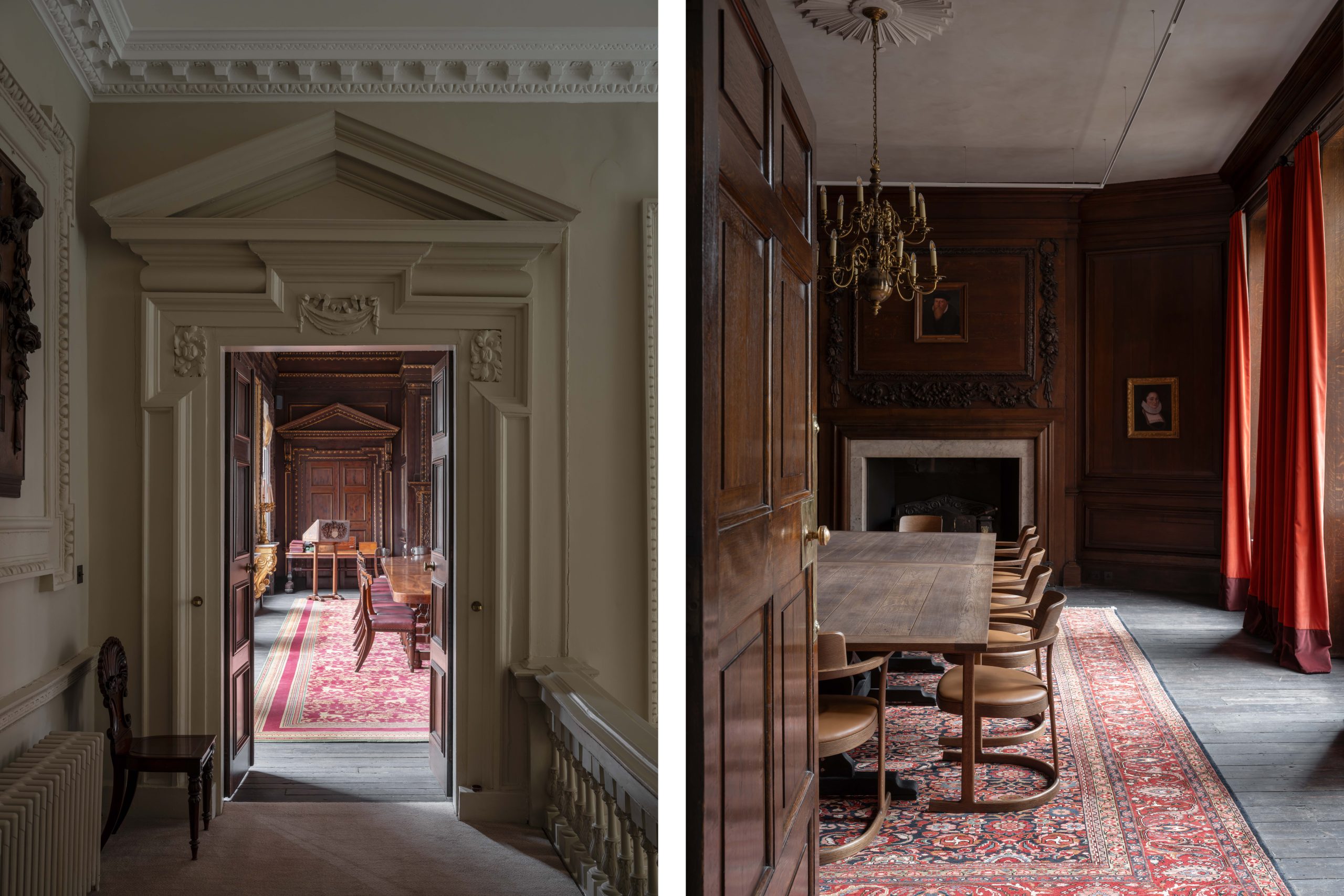
‘We’ve always been interested in how you develop a practice that specialises between the contemporary and heritage. Our work is always a sliding scale, tuning down here, turning up the contrast there,’ says Emerson. The same process of intense preparatory research seen at Raven Row was clearly at the core of the Skinners’ Hall project, too. The detailed surveying and opening-up of the existing fabric was likewise informed by the assembly of old photos and plans that Emerson shows on a laptop as we walk around. ‘Nothing was quite what it seemed,’ he recalls. ‘Victorian panelling alternating with 18th-century. What was thought to be 17th-century plasterwork turning out to be from the 1930s.’
The opening-up works in particular were the key to identifying voids in the historic fabric that have been used to introduce new services. This is part of the intricate and now mostly invisible MEP work, led by building services engineers Ritchie+Daffin, which totally replaced the existing system, taking the building all-electric.
At the core of this work is 80 tonnes of plant, including five air-source heat pumps, installed on a new structure above the roof of the Outer Hall behind a new screened enclosure. This is the most visible element of the building’s decarbonisation, which was achieved with new cables, ducts and pipework sensitively threaded through the fabric. Notably, fireplaces and chimneys in historic rooms have been repurposed as inlets and outlets for fresh air. Where access to natural ventilation was more restricted, MVHR has been introduced – for example in the basement and Great Hall. In the latter, new ductwork was concealed in the roof void.
The external fabric has been upgraded where possible. Windows in the Dowgate Range were reglazed to improve thermal and acoustic performance and shutters refurbished to provide both protection from sunlight in the day and secondary thermal insulation at night.
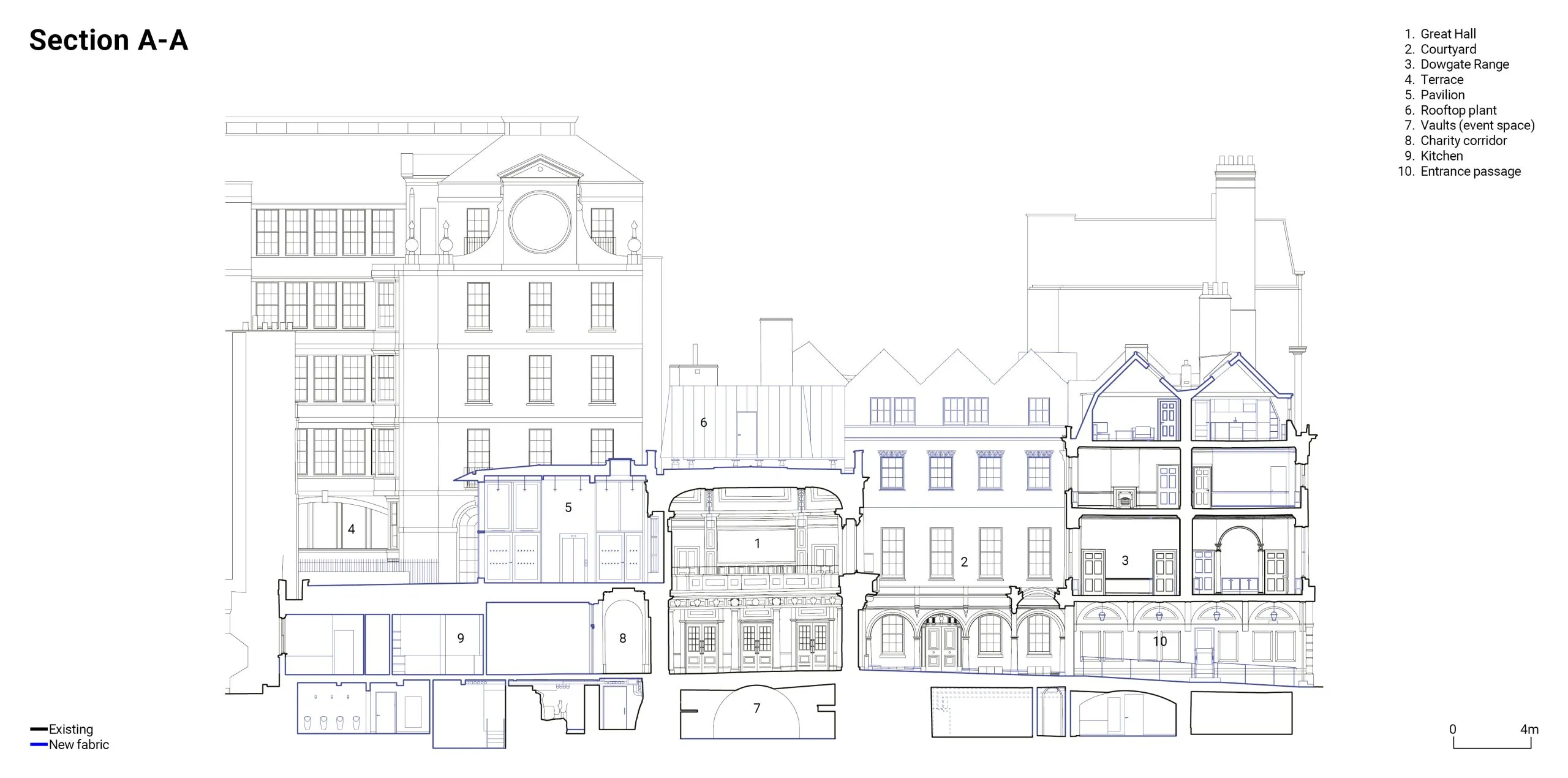
From Dowgate Hill, new entrance doors have been formed off the access passage, which has also been regraded to allow wheelchair access via the inner courtyard. To the south, off College Street, a service entrance has been created by lowering the raised terrace to street level. This created a gated yard, providing direct access to the basement via a short flight of steps and platform lift through a neatly arched new doorway. Its creation involved the formation of a new brick cross-vault through the existing vault.
In the process of this work, the culvert over the River Walbrook was uncovered and is now expressed as a clump of stones and an arch of bricks set into the base of the 17th-century Court House wall.
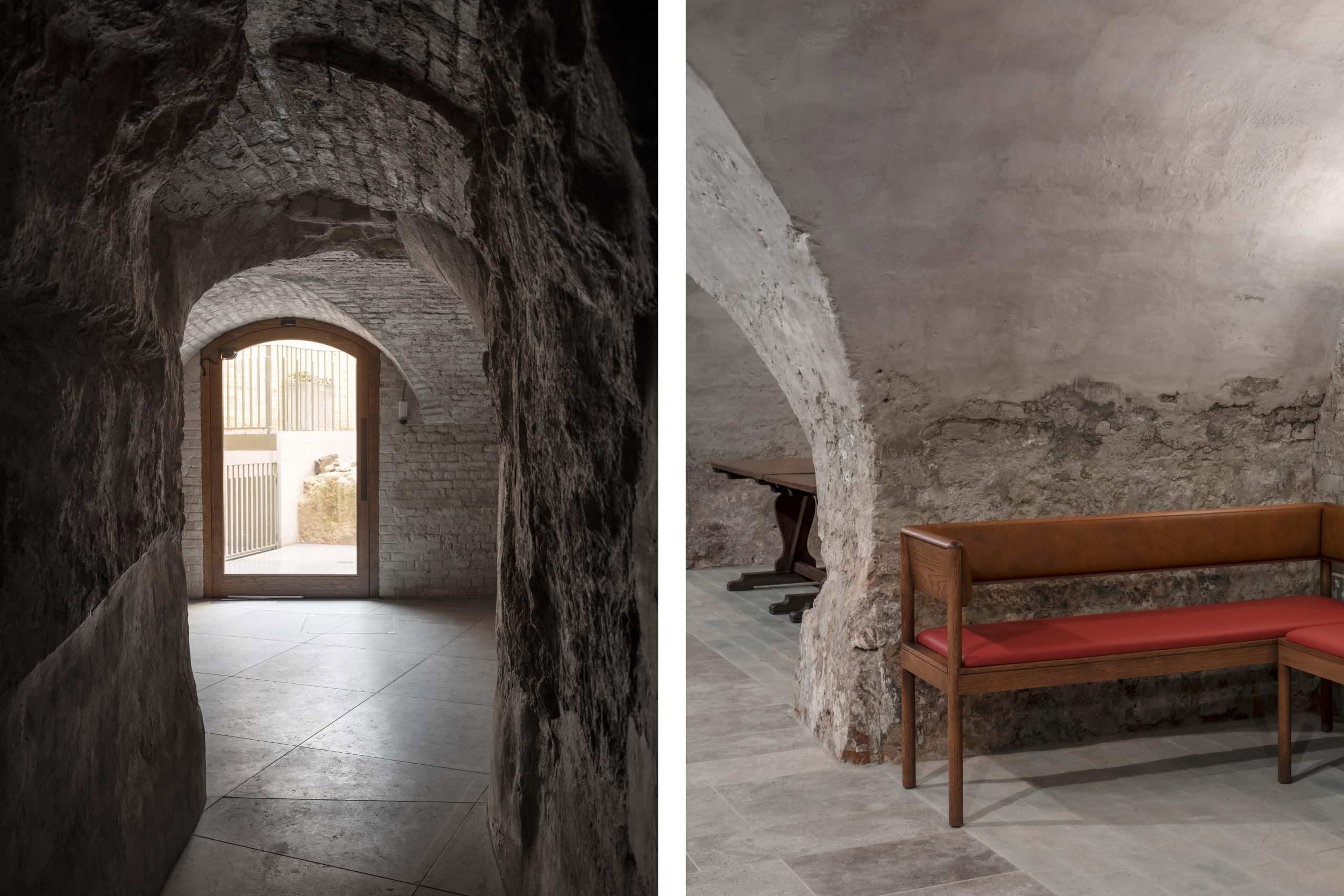
The lower level now also permits an inlet to a new plenum ventilation system that draws air into the basement. This takes the form of a semi-circular horizontal grill, reprising the culvert’s half-circle of brick while sitting neatly under a similarly shaped landing hovering above at the top of a new set of steps up to the Court House – a soft triple echo of curved forms. It’s just one example of the deft, quiet detailing of the newly introduced elements in the project, often echoing or referencing historic forms, that help them meld seamlessly with the existing fabric.
This is seen also in the sawtooth roof of the reconstructed upper floors in the link building between the Dowgate Range and Outer Hall, which now accommodate upgraded office space and staff flats. Its profile recalls that of the original roof destroyed in bombing during the Second World War and is clad in reused slates, removed elsewhere when the rooftop plant was installed.
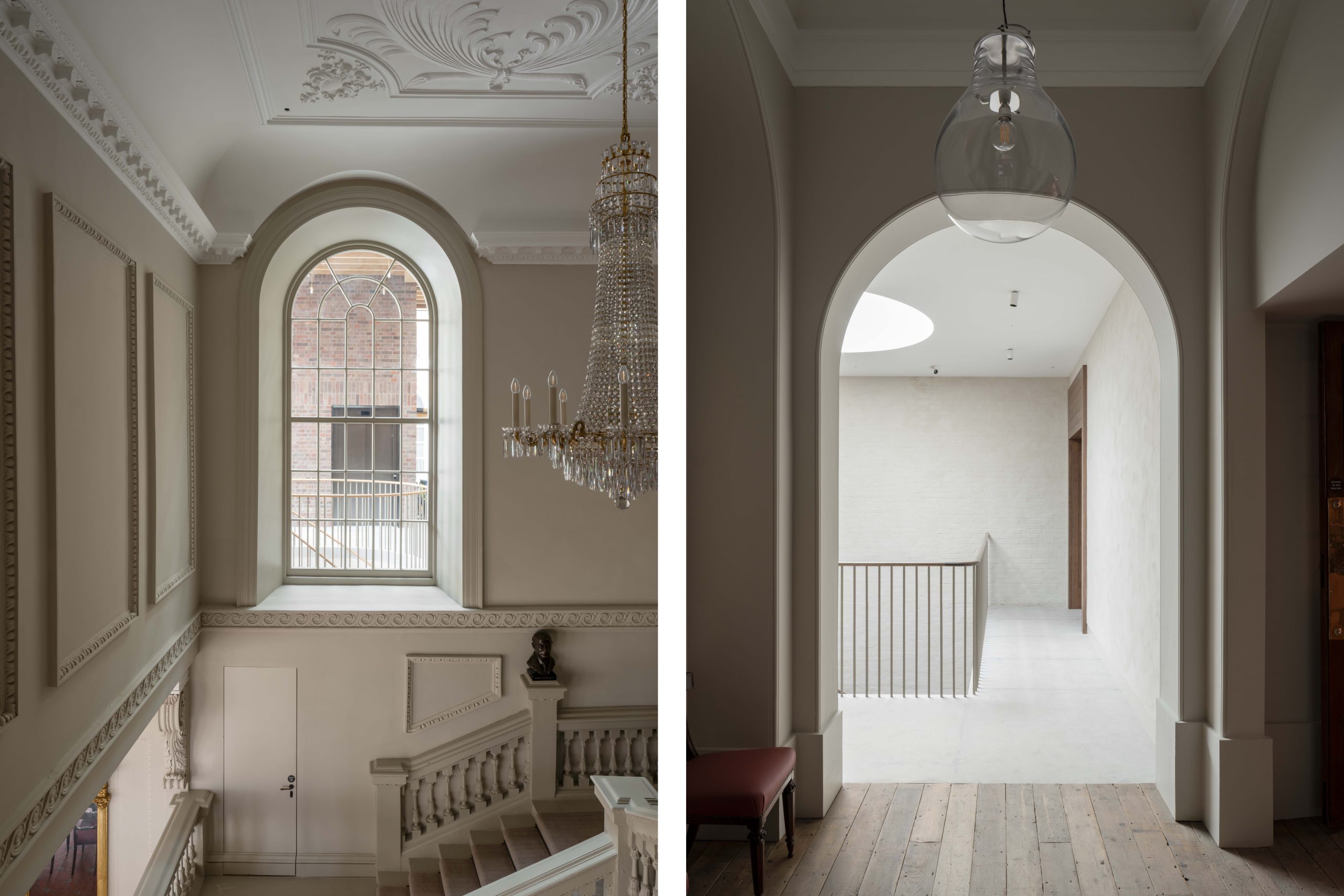
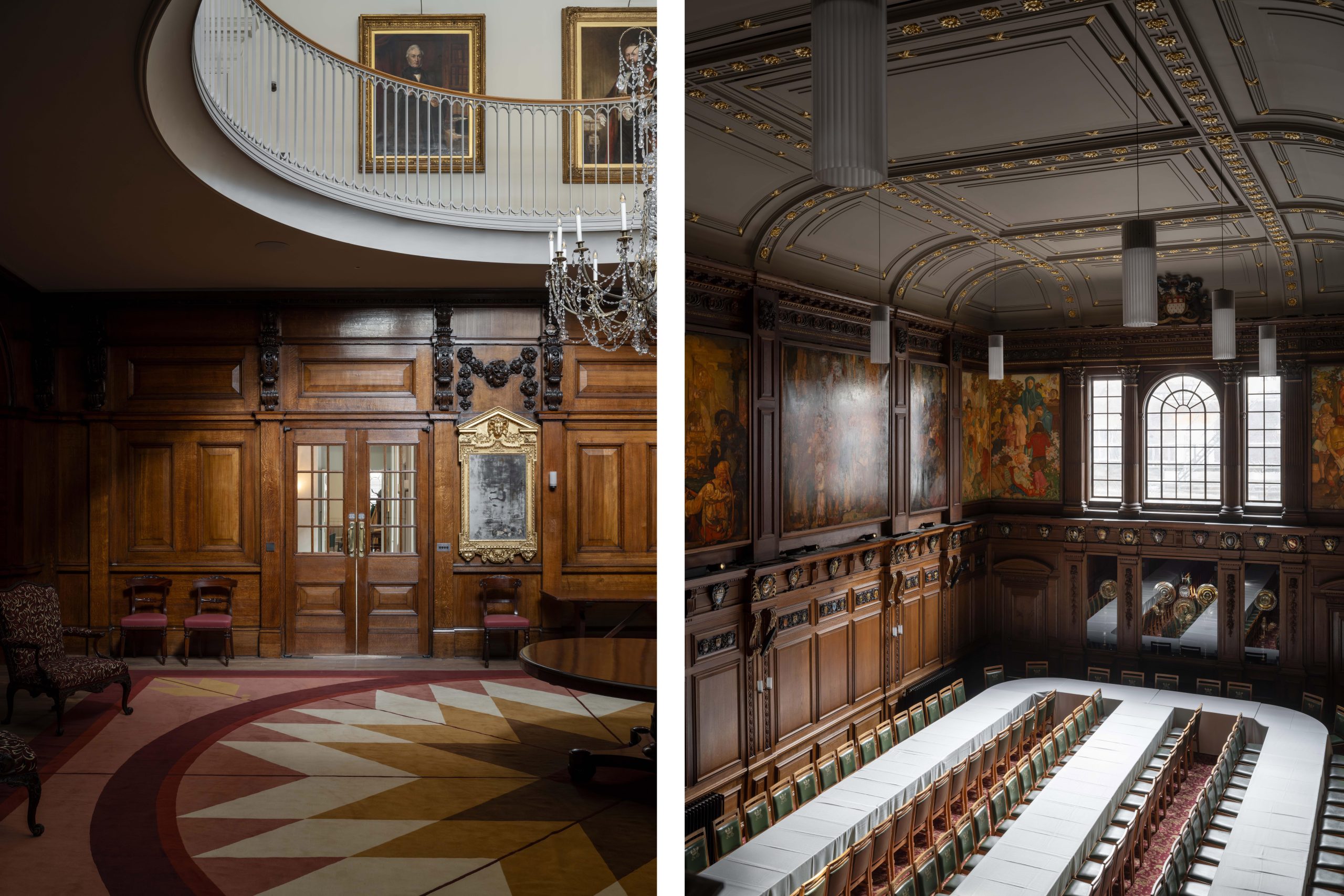
Internally, the most significant insertions are three new stairs, the largest sitting in a skylit stair hall alongside a newly sunk lift shaft, the smallest, a tightly coiled oval. All three stairs are formed of cantilevered limestone treads, finely detailed with slim steel balusters and turned timber handrails with an appropriate 18th century-like delicacy in their proportions. Together, these stairways provide full access to every level of this cat’s cradle of a building.
All serve the basement, which has allowed it to be opened up for the first time for public use. Here, a new vaulted events space has been formed from a series of earlier spaces, including the old wine cellar. Two large suites of toilets, incorporating showers and changing facilities, have also been accommodated. Notably, all these spaces have been reworked, rationalised and threaded with new services – including underfloor heating beneath the flagstones – while keeping their idiosyncrasies and features intact: old stone wine racks, lead sinks and roughly wrought store cupboards. New finishes, such as the craggy hand-made tiling in the bathrooms, emulate the roughness of the original rubble wall. Some tiles bear a precisely cut motif of ermine tails from the Skinners’ coat of arms.
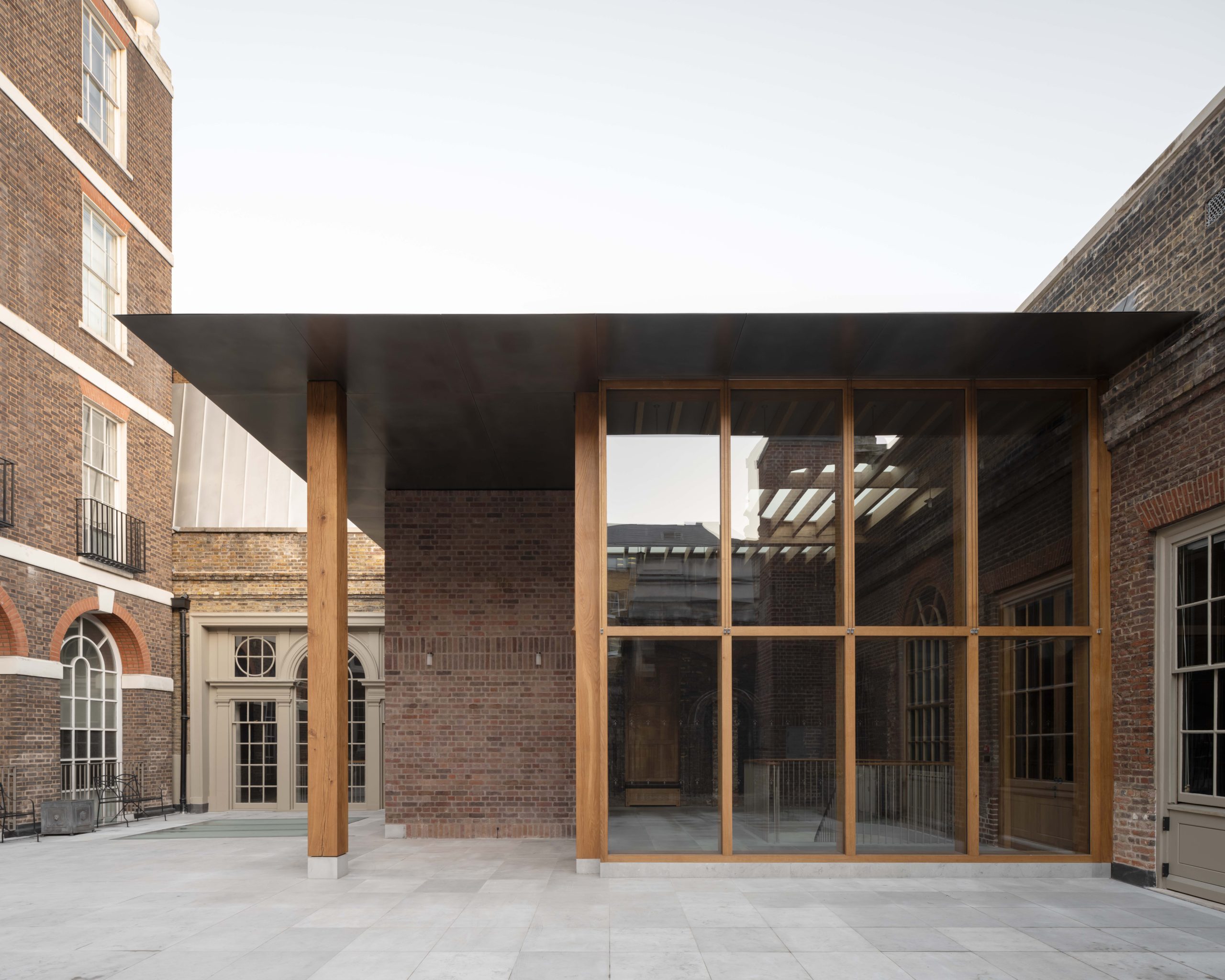
The most prominent new-build element is a timber pavilion that occupies a corner of the new roof terrace between the Court House and Great Hall ranges, helping support and service catered events held here, particularly in summer. The simplicity of its oak-framed structure, glazed walls and slim, overhanging blade of roof, clad in reflective stainless steel, are set off against the brick-clad lift-shaft, which reads in contrast like an anchoring chimney or hearth. It’s a precise, cleanly contemporary addition, but its timber aesthetic sits in harmony with the adjoining timber-lined Court House, panelled in 1680 with pencil cedar from Virginia, then a British colony. Apparently it still perfumes the room on hot days 350 years later.
The raised level of the new terrace also means this grand space is now fully accessible and has direct access out to it – low, panelled doors having replaced brickwork below the sash window sills. It’s just one example of the myriad smaller design adaptations that have been implemented across the project alongside the delicate conservation work to refresh its fabric, finishes and fittings. The latter has ranged from the removal and cleaning of Frank Brangwyn’s vast paintings, dating from the early 20th century, in the Great Hall, to the penny-roll pointing of mortar joints on the exterior of the Court House, to the regilding of the Skinners’ Arms high on the Dowgate Hill façade.
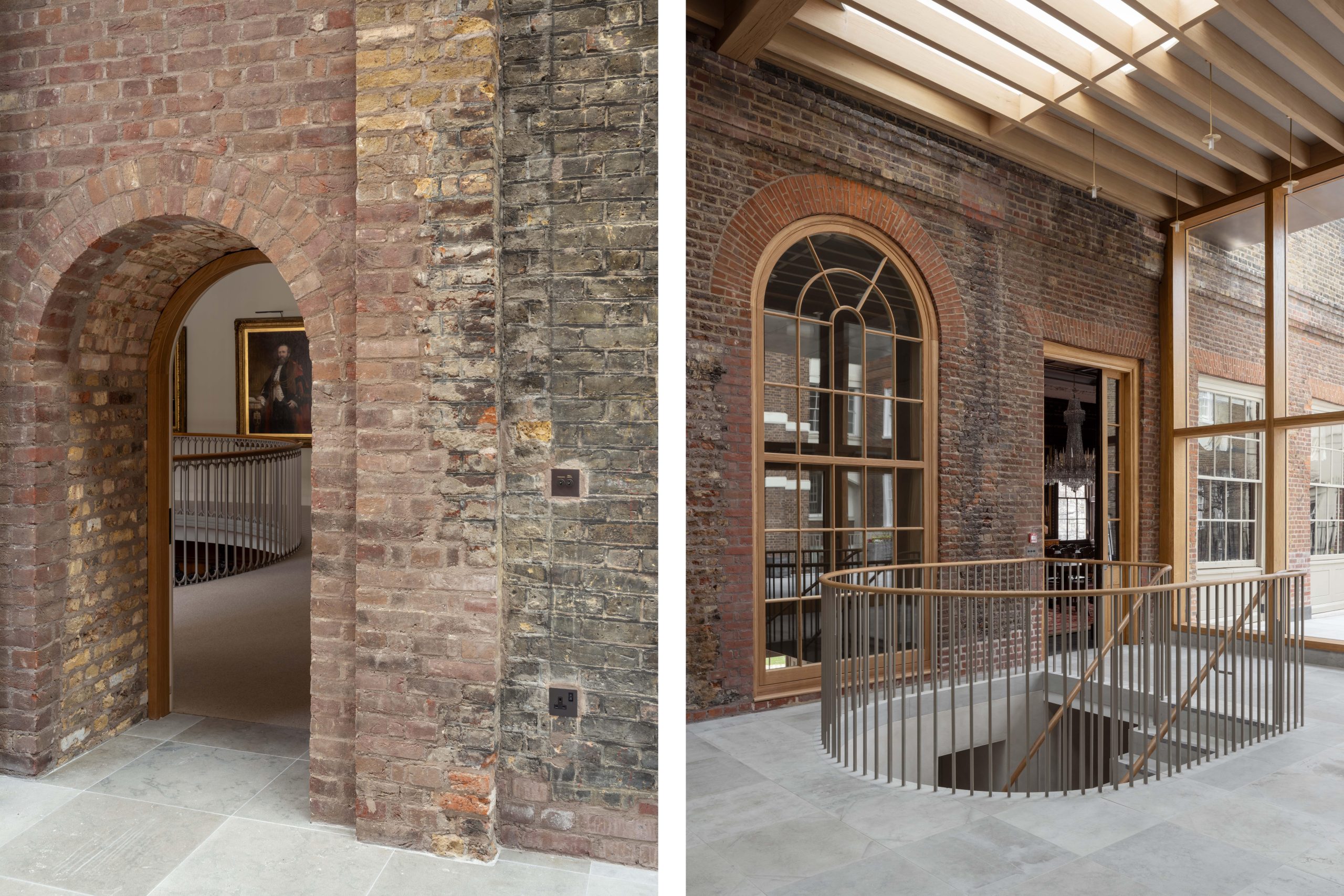
This project is a masterclass in how to decarbonise and revitalise a heritage building, drawing on its history neither as showy pastiche nor exaggerated palimpsest. There’s a sureness of touch in its calm, quiet interventions, using materials wisely and sparingly almost to non-effect: it’s a project of ‘nothing to see here’.
It has introduced a series of adaptations and additions that act like surgical stents, allowing the building to breathe and function as a contemporary venue. The result is a restrained, intricate mix of restoration, reimagination, retuning and conservation, with new-build elements already settling into the layered history of the place.

Architect’s view
6a architects has completed a once-in-a-generation transformation and decarbonisation of Skinners’ Hall, the ancient home of one of the Great Twelve Livery Companies in the City of London. Skinners’ Hall is a collection of exceptional buildings created in the centuries since the Great Fire of London that offer a variety of spaces for events and social functions. Revenue generated by the Hall supports the Skinners’ Company’s philanthropic mission.
The existing buildings are a three-dimensional puzzle of 17th-century, Georgian and Victorian architectural set pieces over late medieval vaulted foundations. The eight-year project has threaded contemporary interventions through seven centuries of building that have survived fires, bombs and death watch beetle. Every destructive event was followed by the commissioning of leading architects to rebuild the Hall, each era adding a distinctive architectural layer.
6a has surgically inserted new staircases, lifts and modern visitor facilities to create barrier-free access throughout the hall and connect the formal interiors of the upper floors down into the basement. These new interventions culminate in a rooftop pavilion which opens out onto a large terrace. Alongside the new additions and the painstaking conservation, repair and thermal upgrade of historic fabric, the Skinners’ Hall was decarbonised with the addition of air-source heat pumps within a contemporary rooftop enclosure.
Made of European oak, limestone and lime plaster, the new spaces add 21st century architecture to the layered historic ensemble. Basement vaults beneath the Great Hall have been transformed from back-of-house storage rooms into a large events space. The vaults are accessed from a newly excavated entrance courtyard that crosses the medieval culvert of the River Walbrook. More domestic-scale Georgian interiors have been restored as intimate dining spaces, offices and residential apartments.
Tom Emerson, founding director, 6a architects
Engineer’s view
When we first surveyed the building in 2017, the services were a mix of installations from different periods, incoherent and at the end of their life. All have been replaced, and systems rationalised and reorganised. Significant effort was required to thread new services through the listed structure, utilising existing voids, pockets, notches and chimneys. New mechanical ventilation systems with heat recovery have been introduced into the new basement rooms and the Great Hall. We worked with specialist suppliers to develop a family of lights and wall switches bringing coherence across the building.
A key change is the building’s transition from gas-fired systems to all-electric operation. A new external rooftop enclosure was designed to visually and acoustically screen air-source heat pumps, which provide all space heating and hot water. Computational fluid dynamics helped inform the air flows around this enclosure and its final design.
Large sash windows and tall ceilings maximise natural light and ventilation. These important historic features are retained along with an approach which sensitively upgrades the thermal performance of the original building fabric.
Our energy target is to get the building operating at 100-150 kWh/m2/yr (currently 130 kWh/m2/yr) and to achieve this will require the continuing effort of all who operate and use the refurbished building in the next phase of its life.
Neil Daffin, director, Ritchie+Daffin
Client’s view
Skinners’ Hall has always been more than a building to us. It is a home and a living record of the Company’s collective memory — a place where generations have met, celebrated, debated and worked. Entrusting its renewal to 6a architects was therefore an act rooted in both responsibility and hope: a desire to safeguard the spirit of the Hall while allowing it to travel more confidently into the future.
From the first conversations, 6a demonstrated an impressive understanding of the Hall’s character. Together with their heritage consultant they rigorously documented its layers — the course of the Walbrook culvert, the medieval foundations, the traces of the Great Fire, the 17th-century reconstruction, the additions and adaptations — and approached each element with respect.
Their work has brought coherence without diminishing richness. Light now reaches places long in shadow; sequences of rooms unfold with a sense of purpose; the garden court, once a hidden fragment, is renewed as a thrilling and lofty place of gathering. The aim has been continuity, rather than rupture: 6a has been deft and nuanced; new materials touch old fabric with clarity and care and the Hall’s patina has been allowed to speak. For us, this project was an act of stewardship — a commitment to honour those who shaped the Hall before us and to prepare it for those who will follow. 6a has helped translate that responsibility into architecture. The restored Skinners’ Hall feels at once familiar and transformed, carrying its centuries forward with renewed dignity and warmth.
Aidan Crawshaw, partner, Crawshaw Architects, skinner and member, Building Refurbishment Panel, Skinners’ Company

Working detail
The rooftop pavilion is a new event space opening the hall to a roof terrace. It is accessed by a new lift and staircase that make the 18th-century cedar panelled Court Room fully accessible for the first time. Its arrangement is the outcome of three-dimensional spatial constraints imposed by the historic fabric above and below. Its floor spans the restored timber frame of the Victorian corridor below while the roof sits on the 17th century corbelled brick cornice. The new stair echoes the restored arched window of the Great Stair in plan; both draw daylight from the circular rooflight above.
The roof pavilion structure is framed in English oak, except the two largest elements, which were sourced in France – an 8m-long beam and corner column that had been specially cut and seasoned for the restoration of a ship. Timber Workshop installed the prefabricated frame in a week. The oak-framed curtain wall is fire-rated and was detailed with specialist input from Neil Burke Joinery. External blinds protect the west-facing façade from late afternoon sun, while large opening vents in the façade and roof allow the pavilion to be naturally ventilated.
The primary material expression of the pavilion draws on the palette of limestone, oak and brick played out across the hall. The roof is clad in the same terne-coated stainless steel used on the new plant enclosure – a nod to leadwork across the Hall’s roofscape – terminating in sharp stainless steel eaves shading the glass and giving the roof an impossible thinness when viewed from the terrace.
John Ross, director, 6a architects
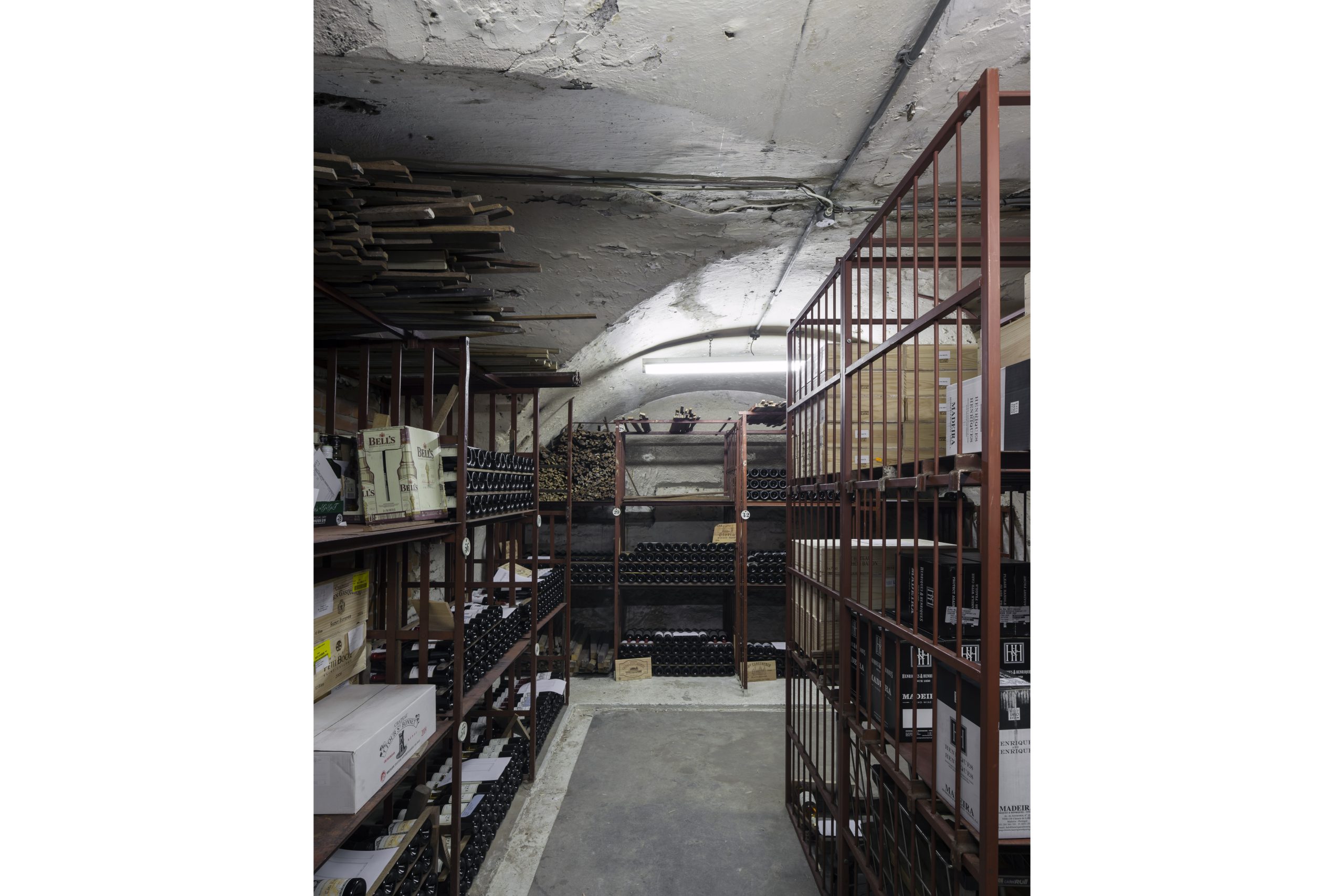
Skinners’ Hall before construction
Project data
Location: London EC4
Start on site: June 2022
Completion: December 2024
Gross internal floor area: 3,264m2
Construction cost: Undisclosed
Architect: 6a architects
Client: The Skinners’ Company
Structural engineer: Price & Myers
MEP consultant: Ritchie+Daffin
Quantity surveyor: Synergy
Project manager: Synergy
Principal designer: Goddard Consulting
Approved building inspector: Sweco
Heritage consultant: Nick Tyson
Interior designer: Carter Owers
Fire engineer: Hydrock
Façade engineer: Montrésor Partnership
Acoustic consultant: Ramboll
Catering consultant: Space Group
Access consultant: Withernay Projects
Main contractor: Rooff
CAD software used: MicroStation
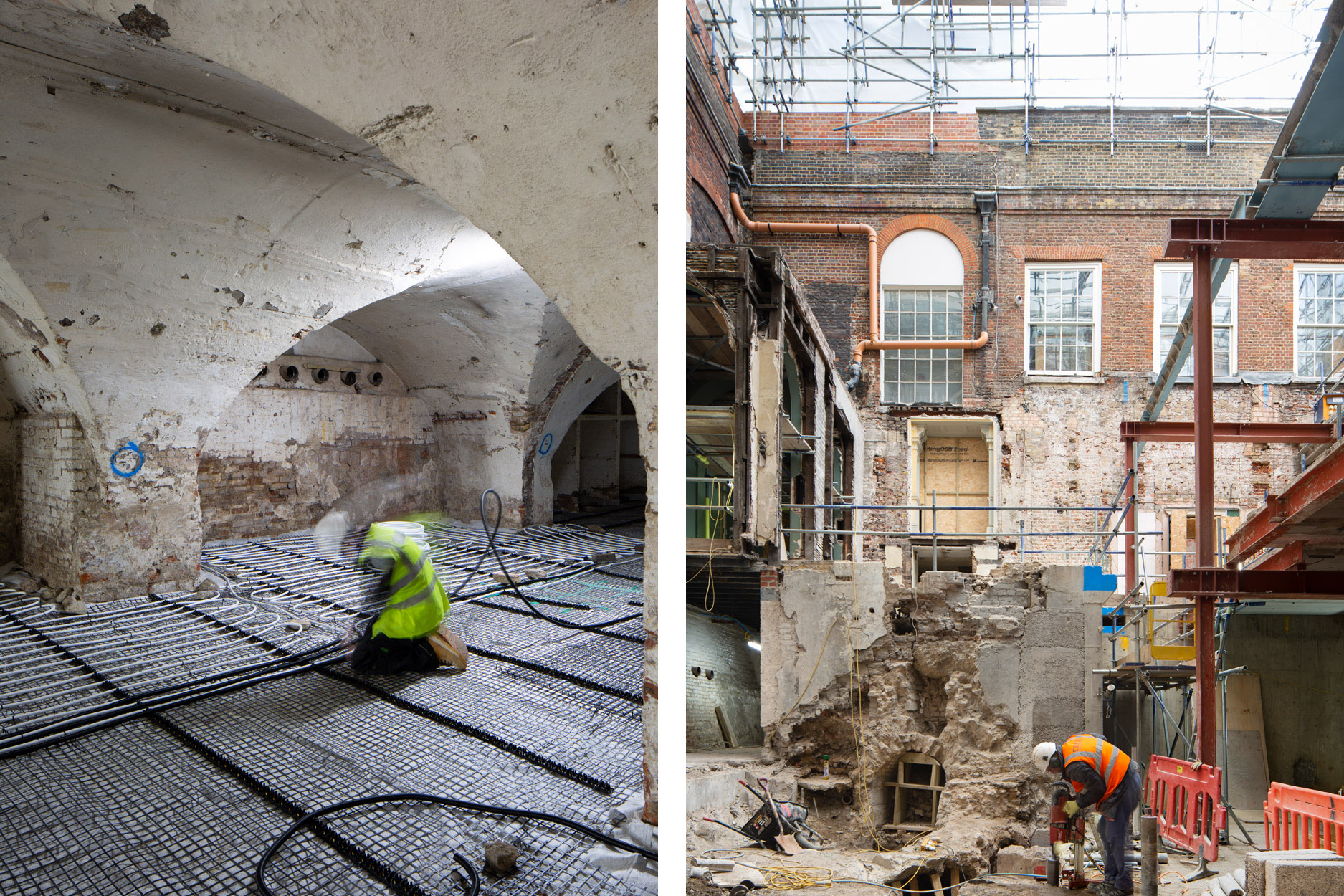
During construction (photo: Felix Koch)
Sustainability data
Percentage of floor area with daylight factor >2%: N/A (existing building)
Percentage of floor area with daylight factor >5%: N/A (existing building)
On-site energy generation: Nil
Heating and hot water load: 44 kWh/m2/yr (predicted)
Operational energy: 133 kWh/m2/yr
Total energy load: 133 kWh/m2/yr (predicted)
Carbon emissions (all): 24 kgCO2/m2 (predicted)
Annual mains water consumption: 80 m3/occupant/yr
Airtightness at 50Pa: Not calculated
Overall thermal bridging heat transfer coefficient (Y-value): Not calculated
Overall area-weighted U-value: Not calculated
Annual CO2 emissions: 24 kgCO2/m2
Embodied carbon: Not calculated
Whole-life carbon: Not calculated
Predicted design life: Not calculated
(Heating and hot water load, total energy load and carbon emissions figures prorated, based on six months’ monitoring data obtained throughout the building-wide commissioning and systems proving period)