
The Conservative Party have said they would cut the rate of interest charged on some student loans issued in the decade up to 2023.
Badenoch said the Plan 2 loans from that period “increasingly feel like a scam”.
An estimated 5.8 million people took out Plan 2 student loans between 2012 and 2023. For Plan 2 loans, interest is currently charged at the rate of Retail Prices Index (RPI) plus up to 3%, depending on how much a graduate earns.
READ MORE: How Reform are making inroads in rural Scottish communities
Badenoch said she would cap the interest charged to RPI only, which is currently 3.8%, arguing it would help a higher number of students pay off their debts.
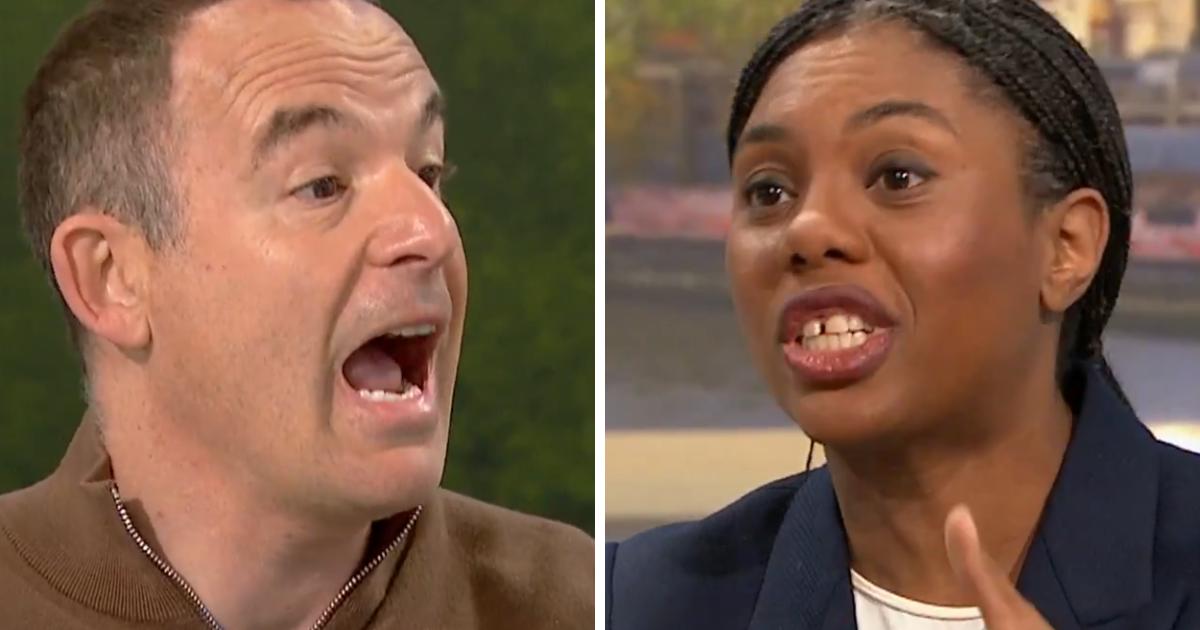
Lewis appeared alongside Badenoch on Good Morning Britain on Monday where he disagreed with her plan, suggesting it would not help middle and lower earning graduates.
The pair got into a heated exchange and spoke over each other for several minutes.
Standing up in the studio, Lewis said to Badenoch: “If you want to help the middle earning students, the most important thing is the repayment threshold should have been increased.”
🚨 WATCH: Kemi Badenoch clashes with Martin Lewis on her plans for student loanspic.twitter.com/pSNrUi8PkR
— Politics UK (@PolitlcsUK) February 23, 2026
Badenoch immediately became defensive and came in and said: “This is exactly why young people are suffering. We’ve got lots of people who finished university, they didn’t have to pay fees, didn’t have to take out loans and now you’re all saying ‘nothing can be done, don’t do this’.
“I’m the first person even trying to solve this problem…”
Lewis then came back in to say: “Well can we have a chat? Because I think you’ve got the right idea, but this is not a solution that will help middle and lower earning students.”
Badenoch then became visibly annoyed and said: “If you want us to have a debate, I’m very happy for us to have a debate. You’re all talking over me, excuse me, let me explain what my policy is.
“I want to make sure those young people who are paying and paying, and their debt is not going down, get a relief.”
READ MORE: Andrew ‘charged taxpayers for massages during UK envoy role’
Badenoch went on: “The whole student loan system is not working properly, someone has to do something, and the thing that shocks me is that the minute I say ‘let’s do something’, everyone says ‘oh no, no, no this is not the right thing’. We’re going round in circles. We should not be making money off graduate student loans.”
Lewis said he agreed with Badenoch “in principle” before criticising the previous Tory UK government for bringing in above inflation interest rates on Plan 2 student loans.
The Conservative-LibDem coalition government introduced Plan 2 loans in 2012 and tripled tuition fees to up to £9000 a year.
“That was five years before I became an MP. A new generation of Conservatives are here and we are changing things,” said Badenoch, as the pair continued to argue.
Lewis replied: “Now, as the interest has already been added to so many student loans, lowering the interest rate now will only help those who can clear within the 30 years which means lower and middle earning graduates won’t benefit from that change. If you have a billion pounds to help students, the most direct thing that would help all students would be not freezing the repayment threshold, it would be increasing the repayment threshold.”
Lewis has since apologised for “gate crashing” Badenoch’s interview after walking onto the set mid-discussion.
Badenoch said after the show that she loves a “feisty debate” would “genuinely love” to appear on Lewis’s show for a further discussion.
The Plan 2 loans were introduced in September 2012 and phased out across England in 2023 but still apply in Wales.
Repayments for the loan begin once a graduate starts earning above £28,470 at roughly 9% of income earned above the threshold.
The UK Government announced the Plan 2 threshold would be frozen at £29,385 for three years from April 2027, meaning workers earning above that amount will be dragged into making larger repayments on their student loans than if the thresholds had risen in line with inflation.