
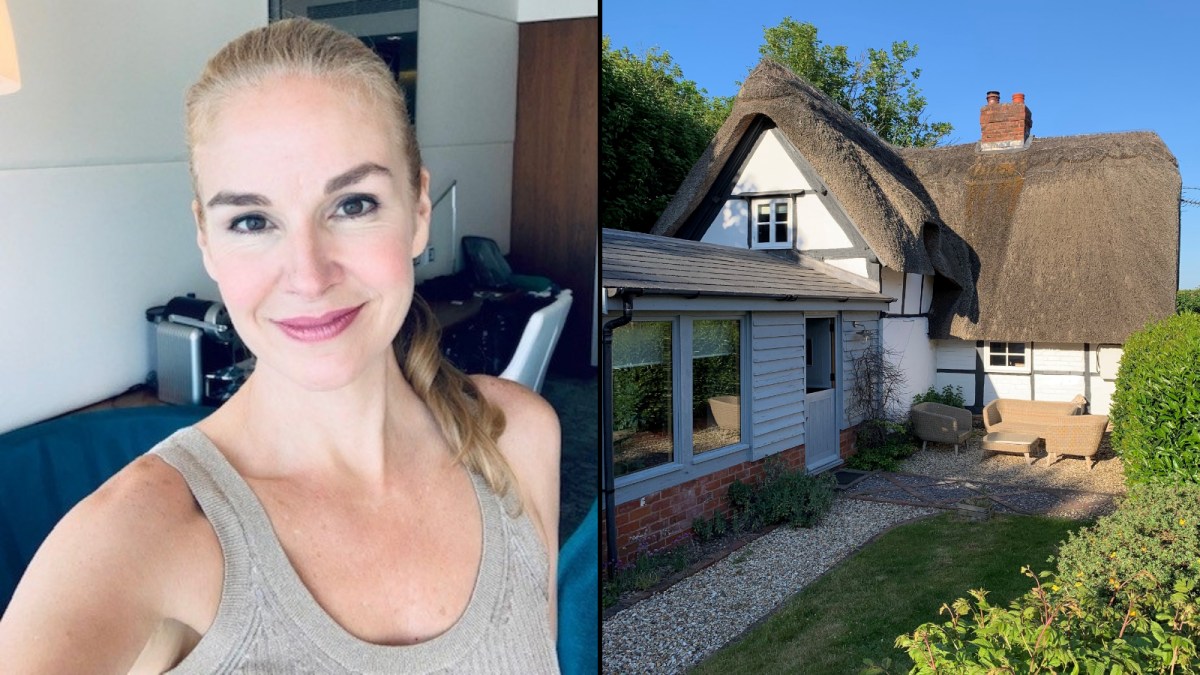
They are quintessential chocolate-box houses that are wildly popular among history-loving homeowners and tourists, who flock from around the world to see them. However, the reality of actually owning one of the UK’s 60,000 thatched-roof homes is an entirely different matter.
Years-long waits for an increasingly sparse number of thatchers — plus a chronic shortage of thatching material due to poor harvests and supply chain delays — have made them very difficult and expensive to maintain.
This is made worse by the fact that 25,000 of the UK’s thatched buildings — about 42 per cent — are listed, which means that owners don’t have the option of simply giving up and removing the material from their roof or replacing it with anything other than like-for-like thatch.
Now, partly due to these issues, thatched cottage owners are experiencing a new problem: difficulty obtaining home insurance covering the structure of these heritage buildings.
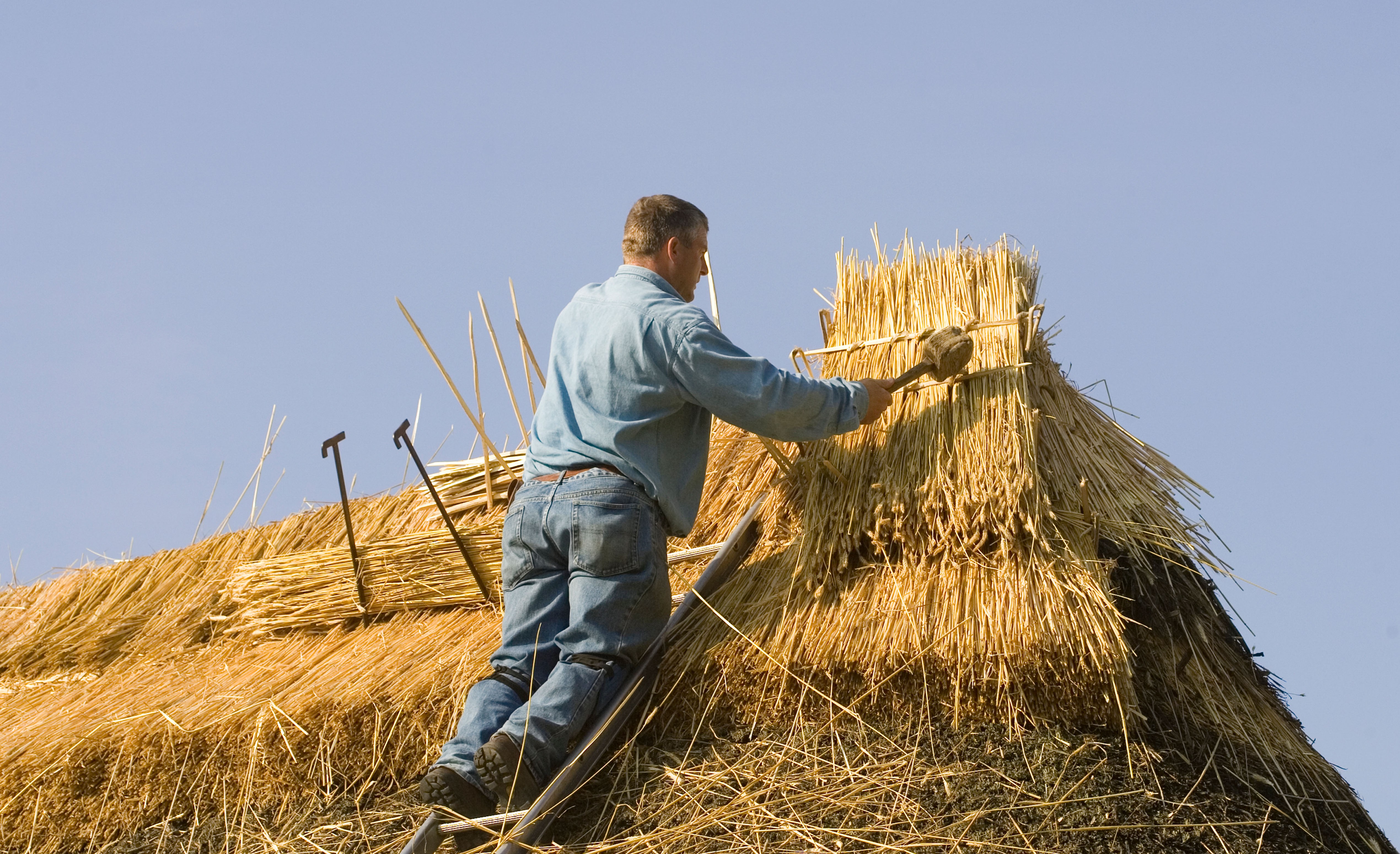
About 42 per cent of the UK’s 60,000 thatched homes are listed
ALAMY
This month Nationwide said it would not be renewing home insurance on hundreds of traditional thatched cottages following a change of underwriter last September, from Intact to Aviva. Since then homeowners in thatched properties have been receiving letters and being told they no longer meet Nationwide’s criteria and will not be renewed at expiry.
The decision has been a frequent subject of discussion on internet forums used by thatched cottage owners. On the Facebook group Thatched Roof Owners UK, which has 5,900 members, a number of Nationwide customers looking for new policies are discussing with others where they should go and how to find new policies. Other contributors describe a doubling of the premiums they already have with other insurers, even though they had never made a claim.
‘My chimney is too short. I can’t use my fire’
Policyholders who can still get insurance are telling The Times that they are finding restrictive clauses appearing in their policies that leave them with a choice of either not using some of their home’s facilities or paying a fortune to do so.
Kimberlyn Furst bought a “lovely” thatched cottage near Hereford for £517,000 in May last year with the aim of pursuing her British chocolate-box dream but has since experienced a series of problems.
Furst, who is from Texas and works for a veterinary diagnostics company, initially struggled to find many firms who could insure the property, discovering there were a “very, very limited” number of companies who would do it. Finally she found Prestige after using a broker at The Listed Property Owners’ Club and obtained a policy for £839 a year — more expensive, as expected, than the average cost of £229 for a home with a slate or tile roof, according to the comparison site Go Compare, but still reasonable in comparison to an average of £989 for a thatched home.

The village of West Lulworth in Dorset is known for its thatched cottages
GETTY IMAGES
However, there was a catch. The policy came with the clause that she must never use her log-burner because her chimney stack is below a 1.8m minimum height specified by the insurer. This clause is in place because the insurer is worried about the low stack setting fire to the thatch — and Furst has subsequently found no insurer that will now cover a chimney less than this height. However, as her home is grade II listed, Furst is unable to extend the chimney without getting listed planning consent. This is hard to obtain under present rules, so she is stuck.
“I’m very new to this and it’s not something that was made entirely clear to me when I was purchasing the property,” she says. “Obviously, I am a homeowner so I take every interest in making sure that my home doesn’t burn down. I have the chimney sweep come every three months. I try to take every precaution that I can and now I’ve been told specifically that I cannot use it at all or they will cancel my entire policy.”

Albury House, a grade II listed four-bedroom thatched cottage near Thame in Oxfordshire is on the market for £795,000 with Michael Graham
Specialist insurers left alone in the market
Insurers are, industry experts say, increasingly worried about the sharply rising cost of replacing thatch. This is because there is a shortage of wheat straw on Britain’s farms following a succession of wet winters, along with supply-chain disruptions affecting water reed after the Ukraine war. The higher costs would mean massive payouts if cottages are damaged by fire.
“This issue is one that exercises quite a few people here. It’s one that is beginning to interest the property industry and politicians too,” says Glenn Coiley, who runs the Facebook forum and lives with wife, Maggie, in a grade II listed thatched property near Huntingdon.
He is spending £1,400 to insure his own house — well above the average — and says policies remain available if you shop around. However, others on his forum are paying up to £2,500.
How to maintain your thatched property for insurancePolicyholders need to get chimneys swept at least once a year, or twice if you burn wood, while flue inspections should be carried out every three to five years. To avoid faulty wiring, which is the second most common cause of thatch fires, insurers usually insist you get an electrical installation condition report carried out by a registered electrician every five years.Ensure that the “ridging” — the top section of the roof — is replaced every ten to 15 years. A master thatcher may need to provide a condition report before a new insurance policy is allowed to commence.You can sometimes lower your premiums by installing a fire-retardant barrier between your rafters, and use a fire-retardant spray on top of it.
As mainstream insurers become increasingly reticent to cover owners, they are being left with industry specialists. These include NFU Mutual, Stanhope insurance, Prestige and Heritage Insurance. As part of these specialist policies owners are being told to agree to verifiable programmes of chimney maintenance, electrical checks, regular inspections by a master thatcher and occasionally keeping fire-retardant sprays in the house.
Meanwhile, repair costs have gone up. The price to rethatch an average large cottage varies depending on location, what material is used and the supply chain, but is generally about £60,000 plus VAT and scaffolding — and it is going up. Thatchers who spoke to The Sunday Times said they were paying suppliers about £1,500 per thatcher’s square for wheat straw, compared with £800 in 2010 — a cost passed on to homeowners. Meanwhile, a shrinking number of master thatchers (there are between 800 to 1,000 in the UK) are increasing costs. In some areas thatchers are so rare that a young and in-demand journeyman contractor can earn £100,000 a year.
“Thatch is becoming more and more expensive to insure,” says Nigel Turton, vice-president of National Society of Master Thatchers, who is based in Dorset. He adds that he is concerned about rising costs. “Some companies are no longer taking on new policies and some are changing to underwriters that do not cover thatched properties.”

The two-bedroom Cabin in Grafton Regis, Northamptonshire, is for sale at £500,000 with Michael Graham
‘Offer us grants to help us survive’
As the problems grow, thatched cottage owners — who are seen most commonly in the West Country, Wiltshire, East Anglia, Kent, Surrey, Hampshire and Suffolk — say they should be offered government grants amid growing financial hardship in recognition of their duty to preserve some of England’s most important historic homes.
“You can liken them to a vintage car purchase. It’s about the rarity of them, the historical significance of them, the condition of them when you get them and their provenance and their sort of character,” Coiley says. “While some may think that the owners of a thatched property are well off, this really isn’t always the case. These properties are important to the heritage of this country and the cost of maintenance of them, particularly rethatching them, is something that used to be recognised by grants. These have long since disappeared.
“House insurance has been increasing dramatically in recent years but the shortage of insurers for thatched properties has forced some to consider replacing their roofs with tiles — which is usually impossible without planning permission — or even to consider not insuring their homes at all.
“Most of our group soldier on because, like me, we love these beautiful houses and want to keep them up but I feel that some pressure should be put onto the industry or government to ensure this part of our heritage is safeguarded for future generations.”
He adds that one way the government could help owners would be to make thatched roof repairs or replacements VAT-exempt.

Old Church Cottage in Long Marston, Hertfordshire, is on the market for £895,000 with the Nash estate agency
NASH PARTNERSHIP
Marianne Clark lives in a grade II listed thatched property near Bury St Edmunds in Suffolk, which is “so old that the under-thatch is soot blackened, meaning it [was built] before chimneys were invented”. She says the only way she would be allowed to use her “small chimney” would be to pay £4,000, or £897 if she didn’t — an option she has chosen.
She understands the scrutiny by insurers, however, given the extra fire risk posed by the thatch and increasing rarity of their materials. “Any owner needs to balance the risk versus the reward and the cost [of a thatched cottage],” she says. “Everyone loves a cosy fire but these chimneys and thatch are not designed for the heat from a log-burner — if you want that, the reality is you must pay for that risk.”
A Nationwide spokesman says it had “worked with Aviva to design products that would accommodate the policies that were previously underwritten by Intact”. However, he added: “There were a very small number of existing policies that we were unable to renew and move on to the new products because it was a thatched property. We made the decision not offer renewal for these customers onto a product that we wouldn’t be able to support if a claim was made.”
The company said the number affected was in “the low hundreds” and that the firm had written to customers “at least 28 days before their policy was due for renewal”.
A spokesman for Prestige Underwriting, Furst’s insurer, says: “Organisations such as Historic England and the Thatch Advice Centre have long warned about the higher fire risk linked to wood-burners and other solid fuel appliances in thatched homes.
“Insurers look for chimney pots to extend at least 1.8m above the roof ridge. This helps carry sparks and embers away from the thatch and reduces the risk of a fire spreading. Low chimneys have a risk of downdrafts so the 1.8m requirement improves draft efficiency.
“When insurers assess thatched homes, pricing is influenced more by the overall risk, including fire, the cost and complexity of rebuilding, how the property is occupied and its location, rather than the presence of thatch alone.
“Most serious fires in thatched properties start from internal sources, such as solid fuel appliances. Homes without wood-burners, or where strong fire prevention measures are in place, will usually be viewed more favourably by insurers.
“For these reasons, chimney height and solid fuel requirements reflect established safety guidance and are standard practice in the specialist thatched property insurance market.”