
There was a time when cooking shows were just that. Someone calmly demonstrating how to roast a chicken without incident. Someone explaining why a sauce splits and how to rescue it. The stakes were low, the tone gentle, the kitchen a place of competence rather than combustion.
Even when competitive formats arrived, they retained at least a basic reverence for skill. Early MasterChef contestants were judged on cooking, not their charisma, clothes or “chat”, let alone romantic intrigue.
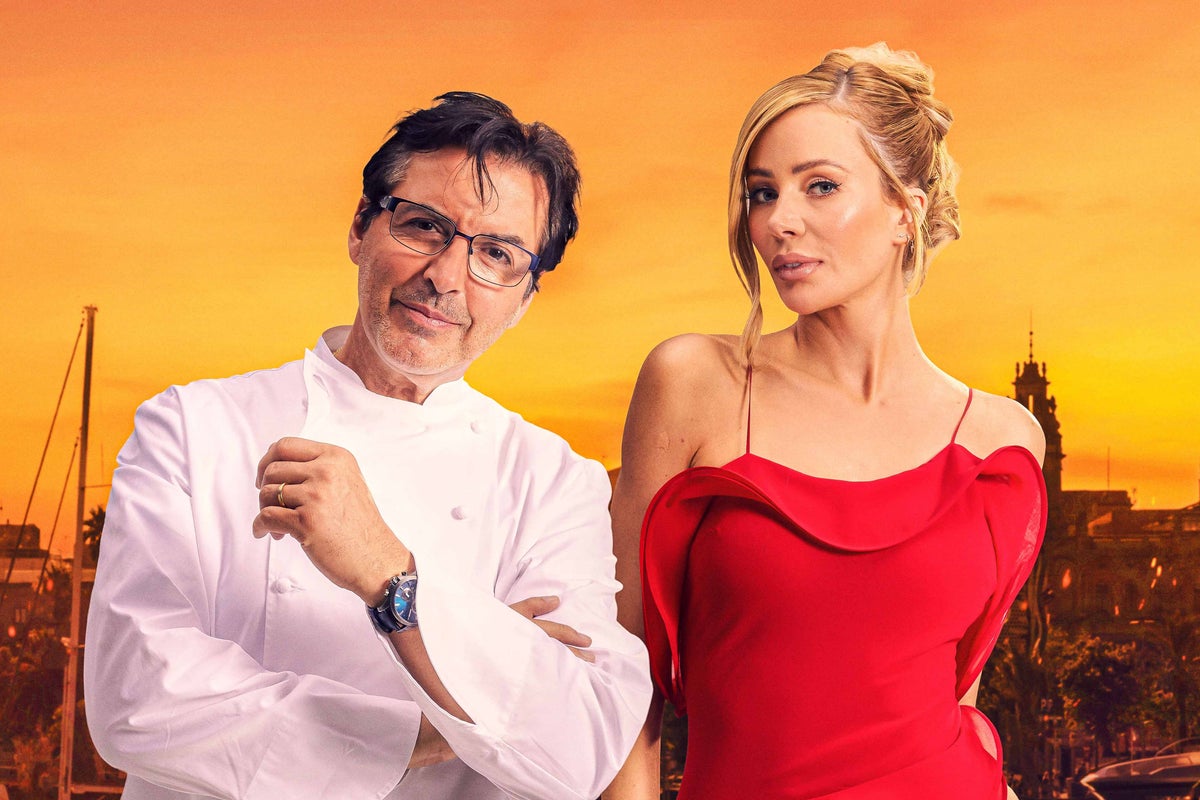
The Heat – ITV’s latest reality experiment, airing tonight at 9pm – by contrast, takes a rather different approach. The series strands 10 chefs in Barcelona, installs them in four-Michelin-starred Jean-Christophe Novelli’s glossy restaurant as he searches for the “next rising star”, and, for good measure, sticks reality royalty Olivia Attwood in the role of glamorous presenter, love-red ballgown and all.
Sounds normal, until the cameras keep rolling and we’re promised staff nights out, post-shift dates and the sort of personal entanglements that tend to arise when attractive, sleep-deprived people are forced to live and work together. In other words, the result looks suspiciously like the Love Island villa, with aprons… and knives. What could possibly go wrong?
The kitchen as competition, soap opera and dating show all at once. It might be the strangest cooking show yet, although food television has always had a curious relationship with reality. Even its early incarnations carried a faint whiff of performance. Fanny Cradock, swathed in theatrical makeup and chiffon frocks, did not merely teach Britain to cook after the war – she made it feel glamorous, decadent and something closer to stagecraft than domestic duty.
Nigella Lawson, of course, pushed that idea further, transforming the act of stirring a saucepan into something sensual with a raised eyebrow and double entendre. Gordon Ramsay raised the temperature with Boiling Point, and later Hell’s Kitchen, where screaming in someone’s face because they’ve wrecked the Wellington became not just normal, but entertaining. Anthony Bourdain added romance of a different kind: chefs as sleep-deprived wanderers, kitchens as gritty worlds of excess and camaraderie. Even the Hairy Bikers, hardly pin-ups, turned cooking into something driven as much by friendship and personality as recipes.
Along the way, food television settled into two familiar modes. MasterChef gave us pressure, precision and the quiet terror of undercooked steak. The Great British Bake Off offered the opposite – bunting, handshakes and the sort of jeopardy where the worst outcome is a slightly deflated genoise. Between them, the modern televised kitchen became either intensely stressful or aggressively cosy.
By the time Netflix joined the feast, chefs were filmed like auteurs. At one end sits Chef’s Table, a series so reverent it borders on devotional. At the other, Is It Cake?, where people spend less time cooking than squinting suspiciously at objects that may or may not be sponge.
Kitchens, and their inhabitants, have been aestheticised, mythologised and lightly fetishised for years. If anything, Fanny Cradock might have rather enjoyed the notion of chefs shedding their professional composure – and possibly their dignity – once the working day was done.
Which makes The Heat feel less like a radical departure than the obvious conclusion. Food television no longer trades solely on aspiration or comfort. Viewers want jeopardy. They want tension. Ideally, they want to be feet-up on the sofa, tea in hand, while a stranger visibly sweats over a sauce refusing to emulsify.

open image in gallery
After-hours, where The Heat looks most like Love Island (ITV)
The Heat understands this perfectly. The problem is not that the format feels contrived, but that it is presented as even remotely realistic.
The first episode wastes little time clarifying the programme’s priorities. Novelli greets the contestants with the reassuringly enigmatic declaration: “You are here because I can smell potential.” One suspects he can also detect the faint aroma of reality-TV hormones, because the kitchen drama is swiftly intercut with Big Brother-style confessionals in which contestants muse less on seasoning than romantic prospects. “I’m in my dating era,” announces one.
“I’d be open to dating a chef,” offers another, which is not so much a meet-cute as a statistical gamble. They work unsociable hours, operate under chronic pressure and industry surveys suggest that one in five hospitality workers use drugs, half report feeling depressed due to being overworked and over a quarter admit they rely on alcohol simply to get through shifts. As dating pools go, it’s somewhat of a high-risk category.
The structural borrowings from Love Island are not subtle. A surprise “hot chef” is introduced at the episode’s close, deployed with the theatrical timing of a villa bombshell. Rooftop drinks and party games follow service. Contestants exchange awkward flirtations while discussing who they fancy, occasionally forgetting to include the front-of-house staff (all female, by the way) in these calculations – a lapse that feels, if nothing else, faintly authentic to hospitality life.
Kitchen competence, meanwhile, proves secondary to narrative jeopardy. The inaugural head chef (a man) describes himself as “loud”, a trait that does not prevent dishes from emerging late and cold and customers complaining. Novelli declares he has received more complaints that day than during his entire career. Failure results in ritual demotion to pot wash.
open image in gallery
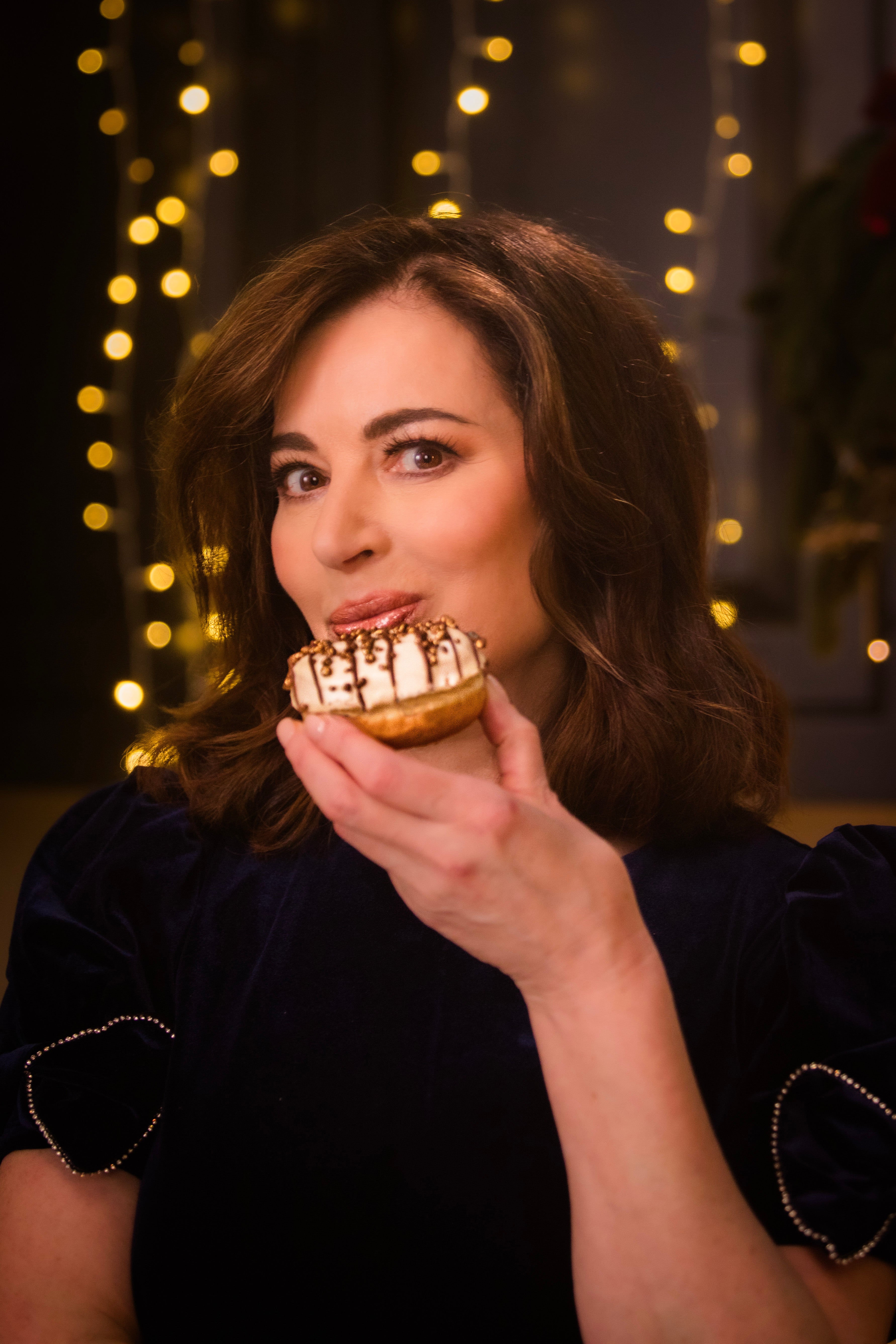
Nigella Lawson, long proof that food television has never been entirely about the food (PA)
Elsewhere, the edit delivers some unintended intrigue. The female contestants, broadly speaking, appear to keep their composure. The male contestants, broadly speaking, do not. Whether this reflects kitchen reality or editorial preference is difficult to say, though anyone who has witnessed a busy domestic kitchen – particularly one overseen by a working mum juggling toddlers, dinner and a well-meaning but conspicuously unflappable “fun dad” – may find the dynamic quietly familiar.
Hospitality itself, however, tells a rather different story. Roughly 70 per cent of the workforce is female, yet leadership roles remain disproportionately male, with only 20 per cent of head chefs being women. Michelin’s upper tiers are more lopsided still, with just 8 per cent of star holders in the UK being women. The sexy chef archetype persists, but its gender coding rarely shifts.
The industry’s fault lines are hardly theoretical. Only last year, dozens of female chefs and hospitality professionals published an open letter condemning sexism and inequality in restaurant kitchens after chef Jason Atherton claimed he had not personally witnessed such behaviour. The letter described sexism as pervasive and structurally embedded, a description unlikely to surprise anyone who has spent meaningful time in professional kitchens.
The Heat, however, inhabits a rather different tonal universe. In the trailer, one of the female chefs is heard cheerfully demanding, “Let me see your balls!”, a remark presumably culinary in intent, though swiftly followed by a male colleague’s eager “Yes, chef!” that lands with all the cadence of Carry On Barcelona. Later, when the episode’s head chef is informed by the maître d’ that diners are complaining about slow service, he reflects to camera: “She was on me, and not in a good way.” If The Heat is anything but realistic – and it rarely pretends otherwise – this may, perversely, have been one of its more authentic moments.
Set beside lived realities, some of the show’s breezy flirtation feels oddly detached from the world it purports to represent. Research suggests sexual harassment in hospitality is far from rare: according to a large survey of workers, around nine in 10 people in the sector report having experienced at least one incident of sexual harassment on the job, with more than half saying they were targeted by a customer and nearly a quarter by a manager. For many workers, particularly women, it’s less a dramatic subplot than an exhausting reality.
This is not a trivial detail, even if the show risks making it feel like one. It is the day-to-day reality for many people who work in bars, restaurants, hotels and clubs. A world in which unwanted comments, touching and propositioning are often treated as “part of the job”.
Which makes The Heat’s breezy conflation of kitchen life and romantic intrigue feel faintly surreal. Professional kitchens are not carefree arenas of rooftop cocktails and playful flirtation over the pass. They are intense, hierarchical workplaces defined by urgency, fatigue and pressure. Were the show to depict kitchen culture with genuine fidelity, it would be a very dark show indeed – and one unlikely to survive regulatory scrutiny.