
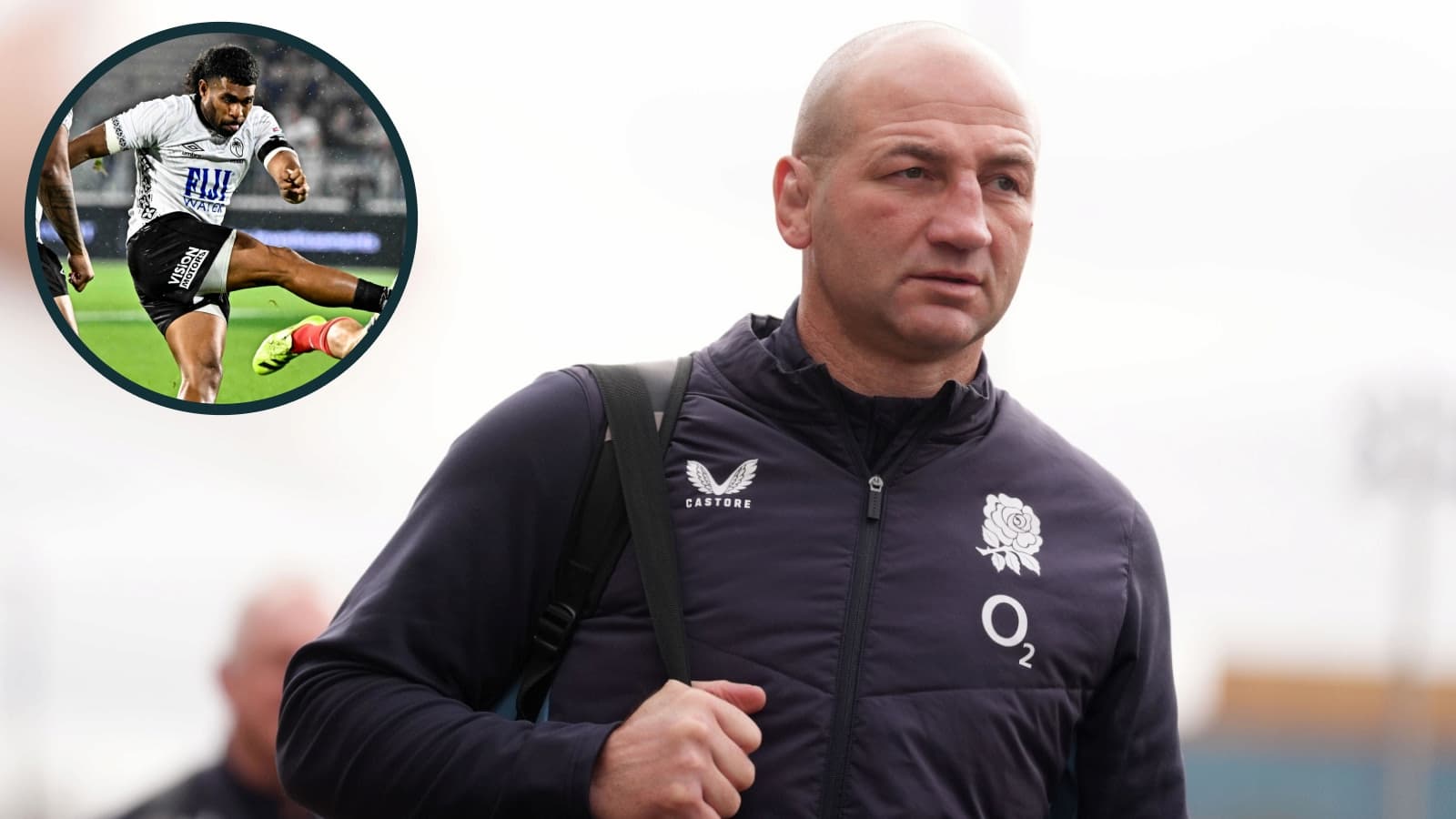
This week we will mostly be concerning ourselves with coach killers, skewed landscapes and the downward reach of professional match oversight…
England’s error count must be understood
If you want to talk about coach killers from the weekend past, you’d be tempted to start in Cardiff. A quick piece of thinking from Finn Russell it was, backed up by some epic kick-chasing by Darcy Graham, but there was no mistaking the gobs of sleepydust falling from the eyes of both James Botham and, to a lesser extent, Gabriel Hamer-Webb as Louis Rees-Zammit opened his arms enquiringly.
A game-killer as well. One single moment, undoing all that good work.
But only one moment. If it is coach killers you want, and if you fancy a wider spectrum of choice, you’d need to head to Twickenham. What kind of killer do you want, sir? An attacking penalty kicked past the corner flag and into touch in-goal? Not your thing. OK, how about seeing your flair player and purported game-changer hunted down and reeled in over 50m by a 30-something centre, and looking for all the world like he was in his first pre-season fitness session. Still not sure? Maybe we can chuck in a yellow card for diving in on a scrum-half, and give you two for the price of one with another yellow card 90 seconds into the second half with a half-time chat about discipline no doubt still ringing in the ears…
That’s just the shop window. We’ve not delved into the depths of England’s extraordinary error-count yet, but something has gone horribly wrong in the England camp this past fortnight. November’s wins against New Zealand et al doubtless further collateralised the Steve Borthwick account at the RFU’s bank of tolerated mishaps, but the credit is surely maxed out now. Trips to Rome can be expensive at the best of times, but errors on this one could cost the house.
It was noted at the time that although England cruised to victory over Wales, it was not as if the game-plan and execution was particularly inspiring or dynamic in the same manner as, say, France’s, against whom it was thought England might be playing off for a Grand Slam in a couple weeks’ time. But it was shrugged off; after all, 48 points against Wales can’t be all that bad either, right? Against Scotland, while there was justifiable criticism of England, it was also noted that Scotland delivered a tournament performance.
Saturday was different. The constant errors; not just coach killers and cerebral meltdowns but unforced handling errors and unnecessary penalties, telegraphed play-by-the-numbers passes, insipid kick-chases, all spoke of a set-up not at ease with itself. The cumulative score of the opening quarters of the past two games is England 0, The Others 39, an astonishing consideration. Neither Italy nor France are shy of a nice, fast start either.
The coaches got restless too. Luke Cowan-Dickie and Freddie Steward were both subbed out before half-time, one of those moves that can destroy confidence in players and give outward impressions that the coaches aren’t getting their messages across. But it could have happened to half a dozen of them. Noticeably, it was the recalled Ollie Lawrence who stood out for playing well, almost as if he had not had the requisite time in the set-up to look as dazed and confused as his team-mates.
It looked as though, despite the critics bemoaning its rigidity and reliance on control over all, England’s game had started to mature in November. It now looks pre-pubescent again, with an inexplicable inability to understand what and how to change in-play further undermining it. But most damning of all is the disharmony among the team’s moving parts.
Coach killers is a term often thrown around for fun, pertaining to one-off errors. Accumulate them as fast as England have, and it takes on a whole different meaning. That opening quarter in Rome has a pivotal feeling for Borthwick and co.
Nations Championship flaws blown open
This column has long since been vehemently against the Nations Championship. It seems to work as an extra World Cup, thoroughly devaluing the real thing. It slams a glass – perhaps a bank vault is a better analogy – door closed in the faces of countries such as Portugal, Spain, Georgia, Samoa, Tonga, even Chile and Uruguay, who are doing such good work in improving their competitive rugby on the most meagre of resources. And it thus perpetuates the two-tier status quo that has rendered the 2027 World Cup fixture list look remarkably jeopardy-free.
But faced with the news around Fiji‘s July fixtures this week, Loose Pass began tearing proper lumps of hair.
Nations Championship venues confirmed for Southern Series but it comes with a twist
All of Fiji’s scheduled home games will be played in the UK. There are hundreds of thousands reasons for this, all of them with the Queen’s head on, none of them to do with giving Fiji any form of advantage. The most likely form of advantage available to them is that, because of the ludicrous travel itinerary (how deep IS that carbon footprint?), they’ll be playing a second-string England team while England’s firsts enjoy a tour of Argentina and South Africa.
Money has a voice, but so does a raucous crowd in Suva, irrespective of the number of bums on seats. It would have been a far preferable voice to have heard than only money’s. But now we have a tournament where the weaker teams cede home advantage and the stronger teams use weaker sides. Meanwhile Georgia’s first team will surely be playing someone else’s first team in Tbilisi. Which might be for more worth watching.
Swiss Timing
Meanwhile the tentacles of professional match-commissioning stretch further downwards. Switzerland beat the Netherlands 29-23 on Sunday, a huge upset and one that hinged on a number of TMO decisions in the final, frantic minutes.
Want more from Planet Rugby? Add us as a preferred source on Google to your favourites list for world-class coverage you can trust.
But the usual gripes about intrusive TMO did not do justice to this. Each crucial decision was talked about for a few moments through the headsets, after which the referee and his assistants needed to trot down a tunnel and wait a number of long and excruciating moments before the TV editor managed to queue up what it was the referee needed to see, after which the referee needed to trot back onto the pitch and patiently explain to the captains what it was he had seen.
The game took two hours and five minutes in all. Not all of that extra is TMO-attributable, there was a long break for a concussion as well. But much of it was, and it did little to entertain those hardy souls who had braved the stands, very much dampening down what ought to have been a nail-biting finale. Professionalism has arrived in tier two. Execution thereof less so.
READ MORE: Mike Tindall claims Ireland victory ‘given to them’ by England