
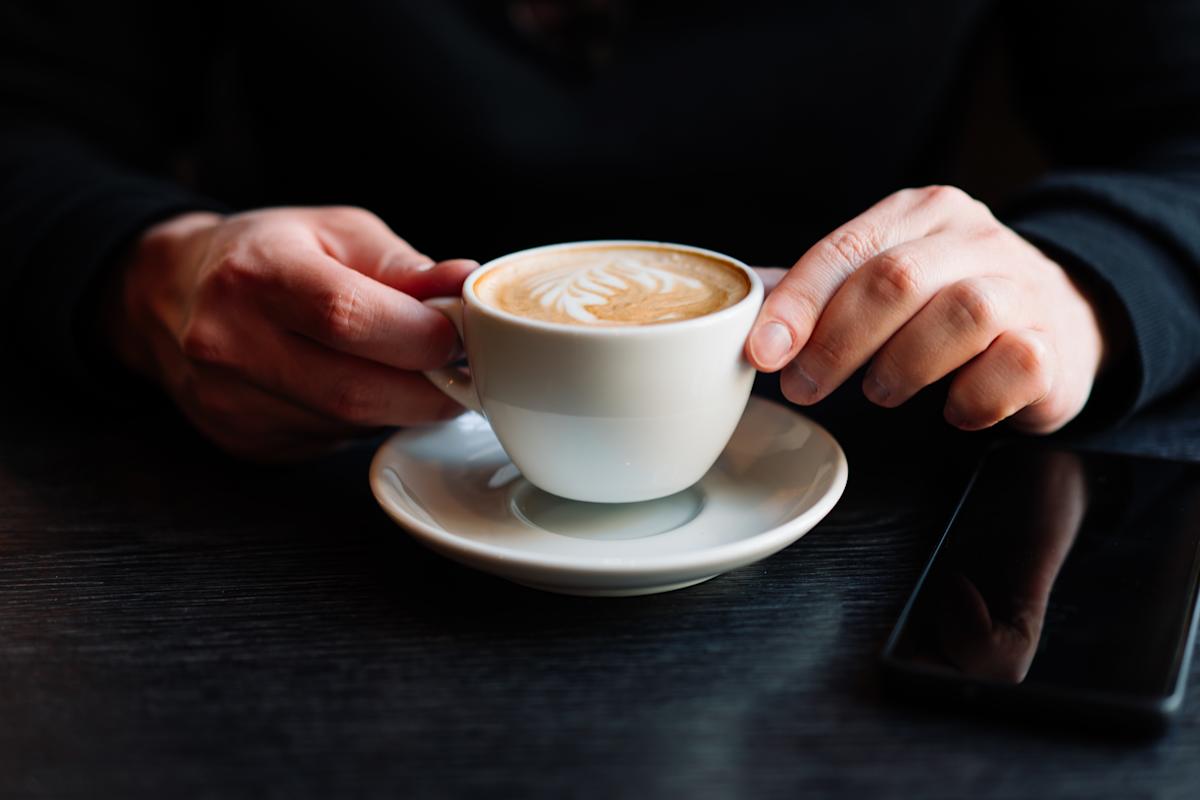
A cup of coffee is a huge part of many people’s morning routine.
(Olena Malik via Getty Images)
For many people, a hot cup of coffee is the only thing that can drag us out of bed in the morning. But when it comes to the ideal timing of that first life-giving brew, opinions are fairly divided.
Some people swear by clicking on the kettle the moment they’ve thrown off the duvet, while others think it’s better to get their caffeine fix much later, waiting until they’ve eaten breakfast first.
In recent months, it’s a topic that’s been dissected on TikTok, with some users claiming that drinking caffeine on an empty stomach can contribute to everything from gut health issues to surging levels of the stress hormone cortisol.
But with fasting diets still popular, it’s hard to know what’s true.
To help us get to the bottom of the issue, we spoke to a nutrition expert to find out if timing your coffee is important, and which side ultimately wins out.
Is it bad to drink coffee on an empty stomach?
While coffee increases the production of stomach acid, it doesn’t appear to cause digestive issues for everyone.
(draganab via Getty Images)
Good news, if you reach for the cafetiere minutes after waking. “For most healthy people, drinking coffee on an empty stomach isn’t inherently harmful,” clarifies Doctify-rated dietitian Katie Sanders. “However, for people with gut-related issues like acid reflux and gastritis, it’s usually wise to eat something first, as caffeine stimulates the release of stomach acids that can aggravate your symptoms.
“A number of people also experience nausea, shakiness or stomach discomfort when they drink coffee before eating food, which can make the whole experience far less enjoyable,” Sanders continues.
“But this is usually a reflection of your personal tolerance to caffeine, rather than a universal risk.”
Do men and women respond to caffeine differently?
On TikTok, some users have claimed that women are more sensitive to the effects of drinking caffeine on an empty stomach, suggesting it could have the potential to disrupt hormonal balance, resulting in higher levels of the stress hormone cortisol.
And when cortisol stays chronically high, it’s been linked to anxiety, sleep disruption, weight gain and, in some cases, menstrual irregularities.
So should we be worried? “It’s true that there can be some differences between men and women,” Sanders explains. “For example, the way your body processes caffeine is directly influenced by the female sex hormone oestrogen.
“When oestrogen levels are higher during pregnancy, or if you’re taking the combined pill, the body breaks down caffeine more slowly, meaning it can stay in your system for longer, and its effects can feel more pronounced.”
Outside of these specific scenarios, though, Sanders says that how sensitive someone is to caffeine is usually more of a personal thing, rather than a blanket gender-based rule.
“Things like your genetics, how much caffeine you normally drink, how well you sleep and your general sensitivity make a bigger difference,” she reckons. “Hormonal changes in midlife, like the menopause, can also affect caffeine tolerance for some people,” she continues, “but everyone responds differently.”
Does having a high-protein breakfast before coffee help?
The idea that loading up on a round of protein-rich eggs on toast can balance your cortisol levels ahead of a strong coffee has recently gained traction online, but Sanders says the science is not so black-and-white.
“Cortisol naturally follows a circadian rhythm in your body, with levels naturally rising early in the morning, as part of the normal waking process,” she explains. “This rise, known as the ‘cortisol awakening response’, is primarily driven by the brain’s internal clock – not by whether you’ve eaten a certain type of breakfast.”
“While food can trigger small, short-term hormonal fluctuations, your overall daily cortisol pattern is largely dictated by circadian biology,” she adds.
That said, tucking into a protein-rich breakfast can have other benefits for our health. “Meals containing good amounts of protein can promote satiety and help regulate blood glucose levels, which many people interpret as steadier energy and fewer mid-morning crashes,” Sanders says.
In other words? If eating a high-protein breakfast before coffee feels good for you, it’s likely because you feel satiated and well-fuelled – not because it’s meaningfully altered your cortisol curve.
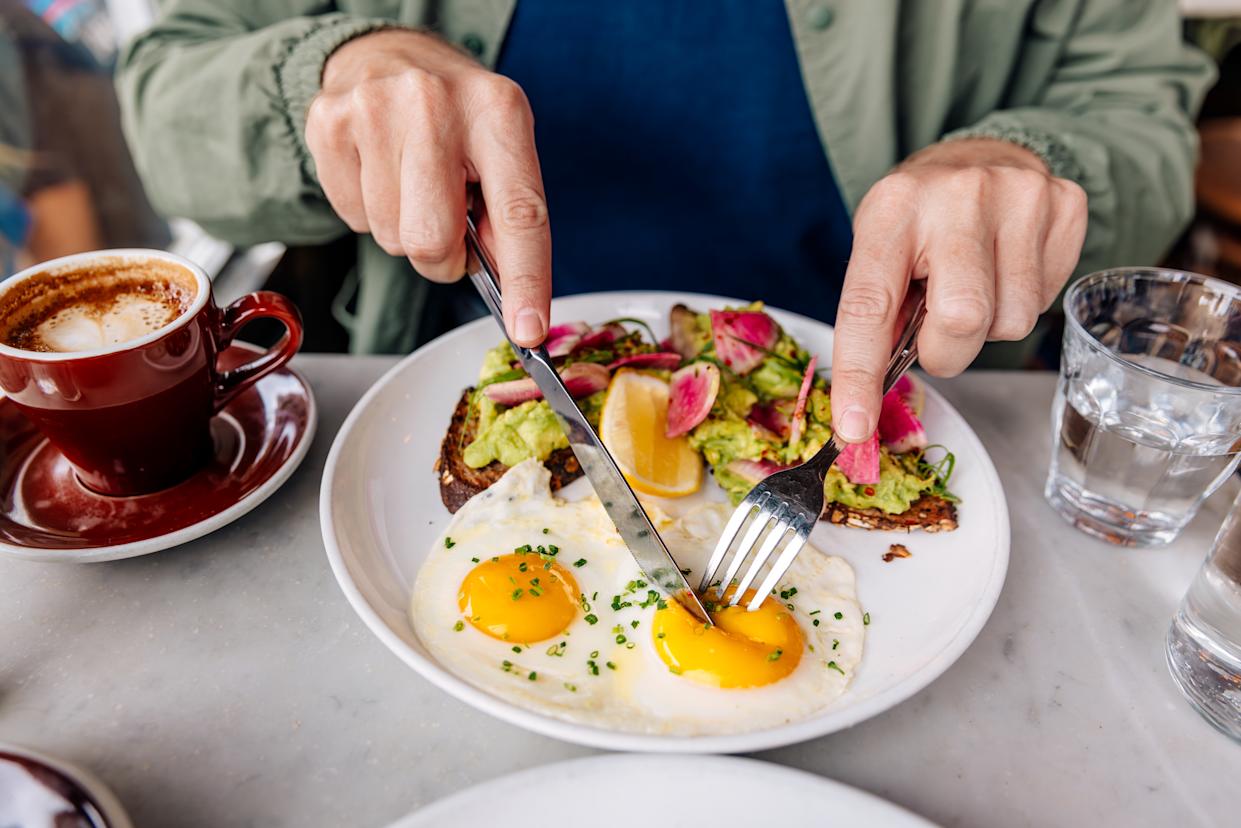
While a high-protein breakfast won’t necessarily ‘lower’ your cortisol levels, which naturally peak in the morning, it can have other benefits.
(Alexander Spatari via Getty Images)Bottom line: Should you drink coffee before or after breakfast?
Like most things in health, Sanders says there’s no one-size-fits-all rule.
“For many people, drinking coffee after eating simply feels better, particularly if you have sensitive digestion,” she explains. “Having food first can also slow caffeine absorption, which might reduce the likelihood of feeling jittery and anxious after your first cup.”
That said, she adds that plenty of people tolerate coffee perfectly well before breakfast, so you shouldn’t panic if you regularly hit up your barista before you’ve even touched your porridge.
As Sanders says: “The key is less about following a strict timing with caffeine, and more about listening to how your body responds.”