
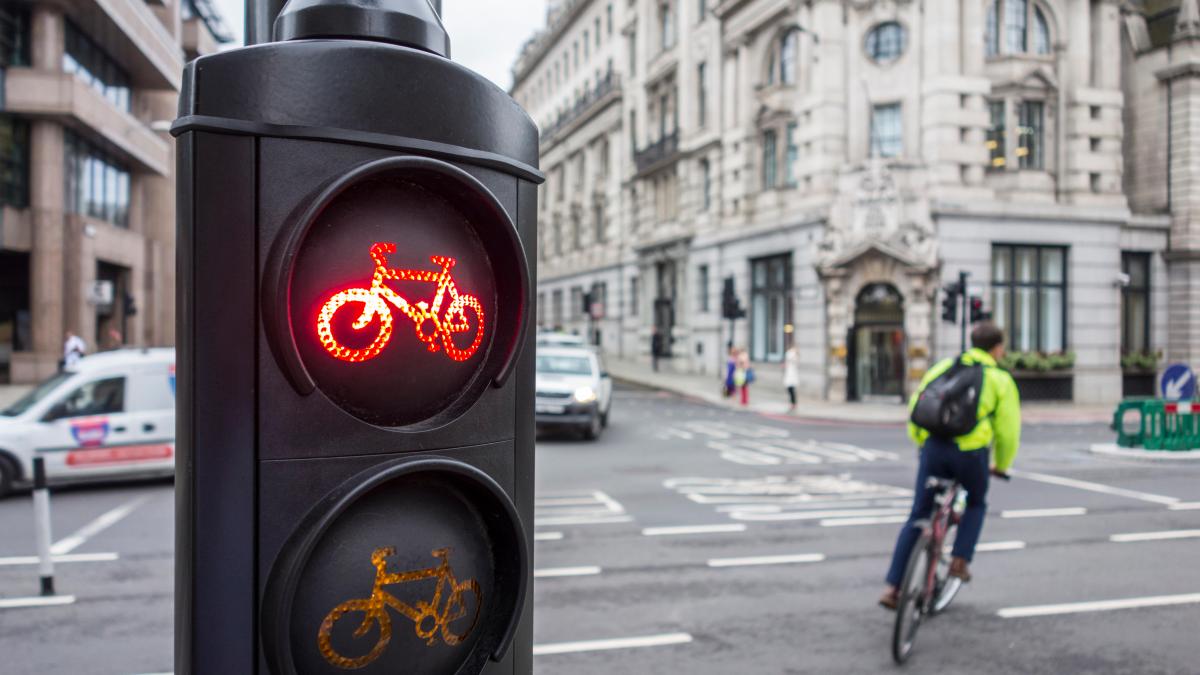
Recorded cycling offences in London have dropped by two thirds over the past three years despite a large rise in the number of cyclists.
The number of cycling offences recorded by the Metropolitan Police slumped from 4,369 in 2023 to 2,650 in 2024 and then 1,438 in 2025, according to data analysed by The Times.
The fall in recorded offences comes despite a substantial increase in the number of cyclists on the streets and amid continued anger at a small but significant proportion of bike users jumping red lights or using pavements.
• Why do cyclists go through red lights? We asked them
In September, City of London police — a separate force from the Met responsible for the financial heart of the city — said it was debating the introduction of stronger sanctions than the current £50 for traffic offences amid complaints of cyclists running red lights and the increased dangers of e-bikes, particularly in pedestrianised areas like the walkways of the Barbican estate.
Transport for London, chaired by Sir Sadiq Khan, the mayor of London, in September launched a campaign telling cyclists to observe red lights and zebra crossings. Will Norman, the mayor’s cycling commissioner, admitted that some cyclists rode like “idiots” but claimed that most cyclists observed the rules of the road.
The death of Hilda Griffiths, 81, who was hit by a cyclist in Regent’s Park in June 2022 while walking her dog, and another serious injury in May 2024, led to calls to remove routes in the Royal Parks from popular cycling apps. No prosecution resulted from what a coroner recorded as an “accidental cycling collision death”.

New pedestrian crossings with traffic signals are being introduced in the park this spring. In the Royal Parks, which had their own dedicated force until it was shut down in November, the number of recorded offences fell from 47 in 2023 to five in 2025.
The offences recorded by the Met range from cycling on footways to ignoring orders from a police officer. Police have also stopped cyclists without lights during darkness and those with an “unauthorised passenger” sharing their bike.
By far the most common offence recorded was cyclists failing to obey a traffic sign or light. More than 3,900 cyclists committed the offence in 2023. More than 3,300 did so across each of the subsequent two years. The next most common offence, at 440 over the three years, was cycling on the footway, while more than 130 cyclists did not have proper lights.
Only five cyclists were written up for having an unauthorised passenger, while 27 failed to stop for a constable.
• Reckless cyclists could get points on their driving licence
By month, offences peaked at 483 in March 2023. In 2025, the highest number of monthly offences recorded was 202, in February.
“Most illegal cycling behaviour doesn’t lead to collisions, injuries and road danger — unlike most illegal driving behaviour, that happens in similar proportion — but it is still selfish, and helps creates hostile streets other people won’t cycle or walk on,” said Tom Fyans, chief executive of the London Cycling Campaign.
“Sadly what seems most likely to be the cause of a drop in recorded crime by cyclists is not that cyclists are behaving better, but because the Met has disbanded its cycle safety team, disbanded its Royal Parks-based teams and given up on much of the enforcing it has done in the past on London’s roads at present.”
Reports emerged in December that police were fining cyclists £50 if they went above 12mph in Tooting Bec Common, southwest London. Wandsworth council said concerns had been raised about reckless delivery riders in an open letter by the volunteer group Friends of Tooting Common.
Ten cyclists have been fined by the council since penalties were introduced in November, according to separate data, raising £300. The council has clocked speeds of up to 18mph, it said. Four fines were under appeal at the time of the council’s response.
• Polly Vernon: I’ve gone to war with toxic cyclists. Get off my pavement!
The Metropolitan Police said part of the drop in offences was down to changing focus to crimes involving e‑scooters and modified e‑bikes, which are captured under a different category.
“Over the last four years, there has been a shift in enforcement and educational activity in response to the growth of e‑scooters and illegally modified e‑bikes,” a spokesperson said. “As part of this, our cycle safety team has delivered sessions to frontline officers as well as engaged with more than 36,000 school children to explain the risks these powered two-wheeled [vehicles] can pose.”