
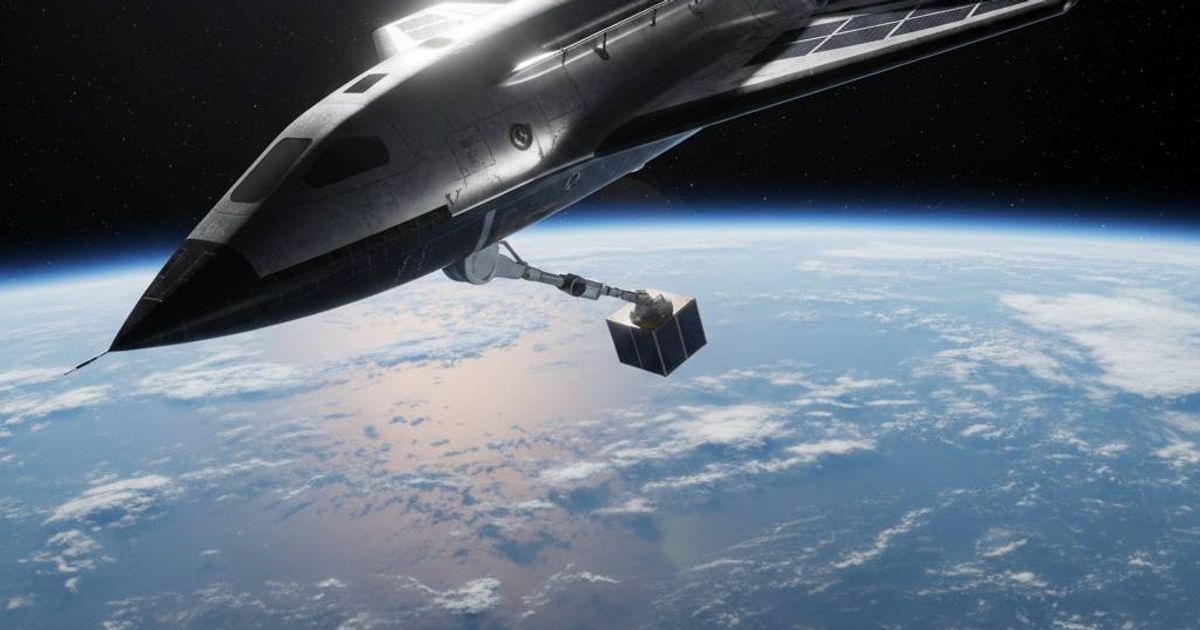
China’s secretive Shenlong space plane, also known as the ‘Divine Dragon’, has been sent into orbit for a fourth time, with the craft’s mission shrouded in mystery
Daniel Smith Interim Head of Operations – Content Hub & GAU
15:26, 24 Feb 2026
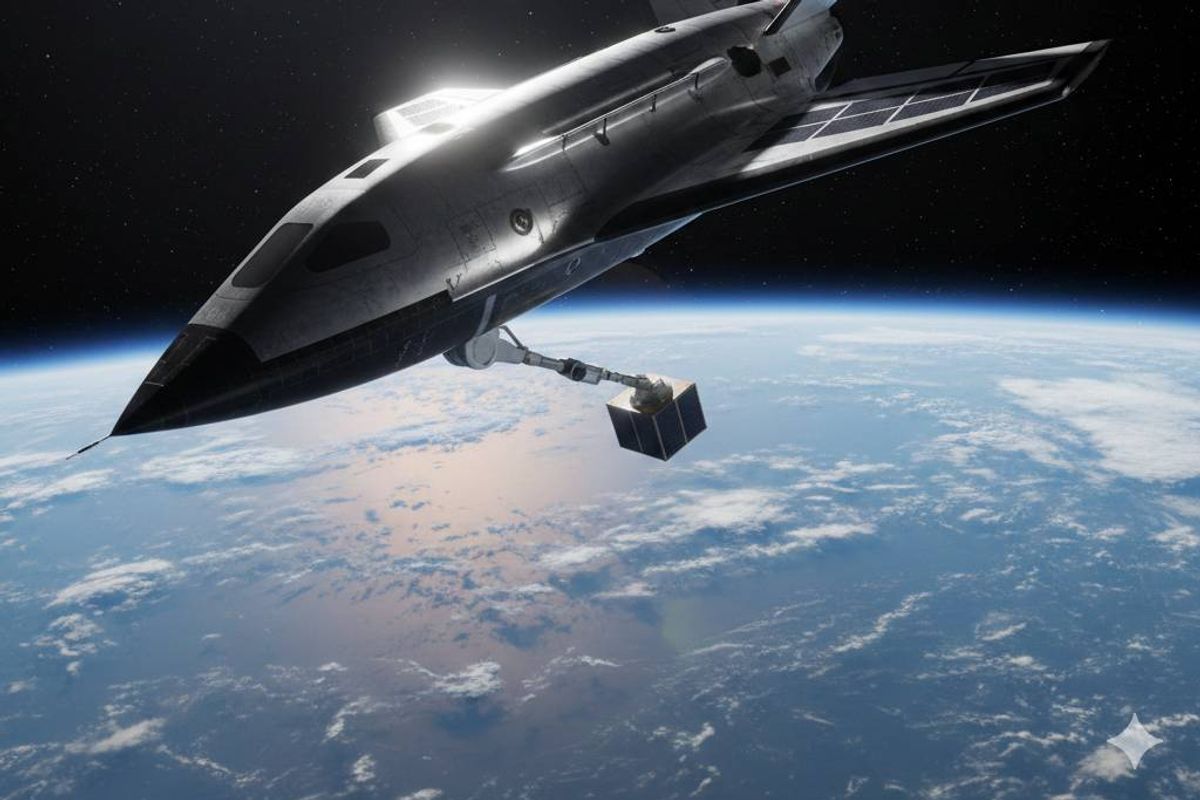
No official photos of the Shenlong have ever been released
China has discreetly launched its secretive space plane into orbit for the fourth time, leaving defence analysts speculating about what the enigmatic spacecraft is actually doing overhead.
The reusable vehicle – dubbed Shenlong, which translates as ‘Divine Dragon’ – took off earlier this month from the Jiuquan Satellite Launch Centre in north-west China aboard a Long March‐2F rocket.
Beyond that initial detail, Beijing has kept remarkably tight-lipped about the craft’s fourth known deployment. There’s been no information on its orbital duration, payload, or the experiments scheduled.
Authorities have merely stated that the programme aims to test technology for developing “more convenient and affordable round‐trip methods for the peaceful use of space” in the years ahead, according to Chinese state media.
The Chinese government has never published official photographs or technical details, so the veil of secrecy forces external watchers to assemble fragments from orbital monitoring information and reports from enthusiasts.
Shenlong is believed to share similarities with the US military’s X‐37B – an autonomous mini‐shuttle capable of altering orbits, remaining aloft for extended periods, and returning equipment to Earth.
In contrast to the American X-37B, Shenlong has been spotted deploying companion satellites into orbit before manoeuvring to rendezvous with or retrieve them.
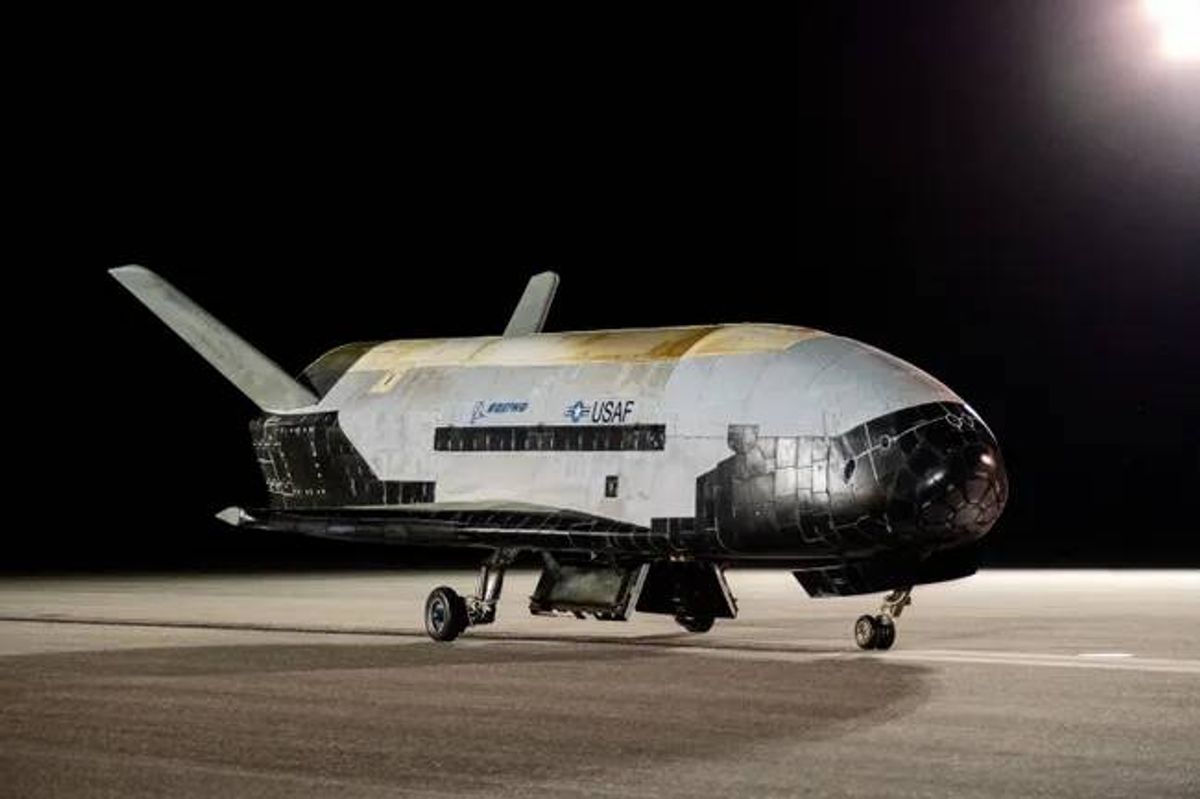
The U.S. Space Force’s X-37B space plane is seen shortly after landing at NASA’s Kennedy Space Center(Image: oeing/US Space Force)
nsure our latest headlines always appear at the top of your Google Search by making us a Preferred Source. Click here to activate or add us as your Preferred Source in your Google search settings.
Earlier missions have varied from just a few days to over eight months, indicating remarkable endurance and adaptability.
Whilst China insists the craft is for the “peaceful use of space,” defence analysts believe it is trialling technologies for satellite maintenance, debris clearance, or possible anti-satellite operations.
The timing of the present mission is significant. It launched precisely as the US Space Force is gearing up for its eighth X-37B mission.
The rivalry between these two ‘shadow’ spacecraft signals a new chapter in space dominance, where the ability to remain in orbit for years and navigate around other objects represents the ultimate achievement.