
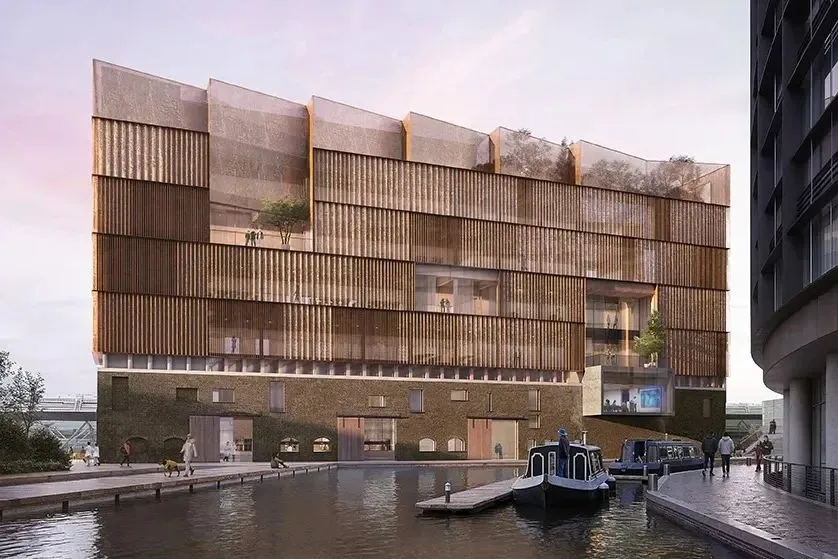
The research and public engagement centre on the historic west London hospital campus forms part of the wider Fleming Initiative plans, which aim to tackle antimicrobial resistance around the world.
The Stanton Williams design retains and adapts The Bays – a set of industrial warehouses from around the 1850s which were used for transport and distribution before being incorporated into the hospital in 1983 – while inserting new elements. These include a Discovery Centre which, the architects say, will offer the public ‘views into laboratories and curated exhibition spaces’.
A new pavilion building will be created for parking and storage, allowing the ground floor of The Bays to be kept as open to the public as possible, and to function as a venue for public art. The upper floors will contain a public research facility, laboratories and workspaces.
Set above The Bays building, an extension will be physically and visually separated, with a new façade formed by perforated aluminium panels that will both ‘reveal and conceal’ the work being done within.
Stanton Williams won the competition for the project in January last year, selected ahead of four other finalists in the two-stage contest for the job, which was organised by the RIBA on behalf of Imperial College Healthcare NHS Trust.
Also shortlisted were Allford Hall Monaghan Morris, Allies and Morrison, Grimshaw, and WilkinsonEyre partnering with White Architekter.
A three-day design exhibition showcased the five shortlisted concept designs. The RIBA said that feedback from more than 300 visitors ‘helped guide the final selection’.
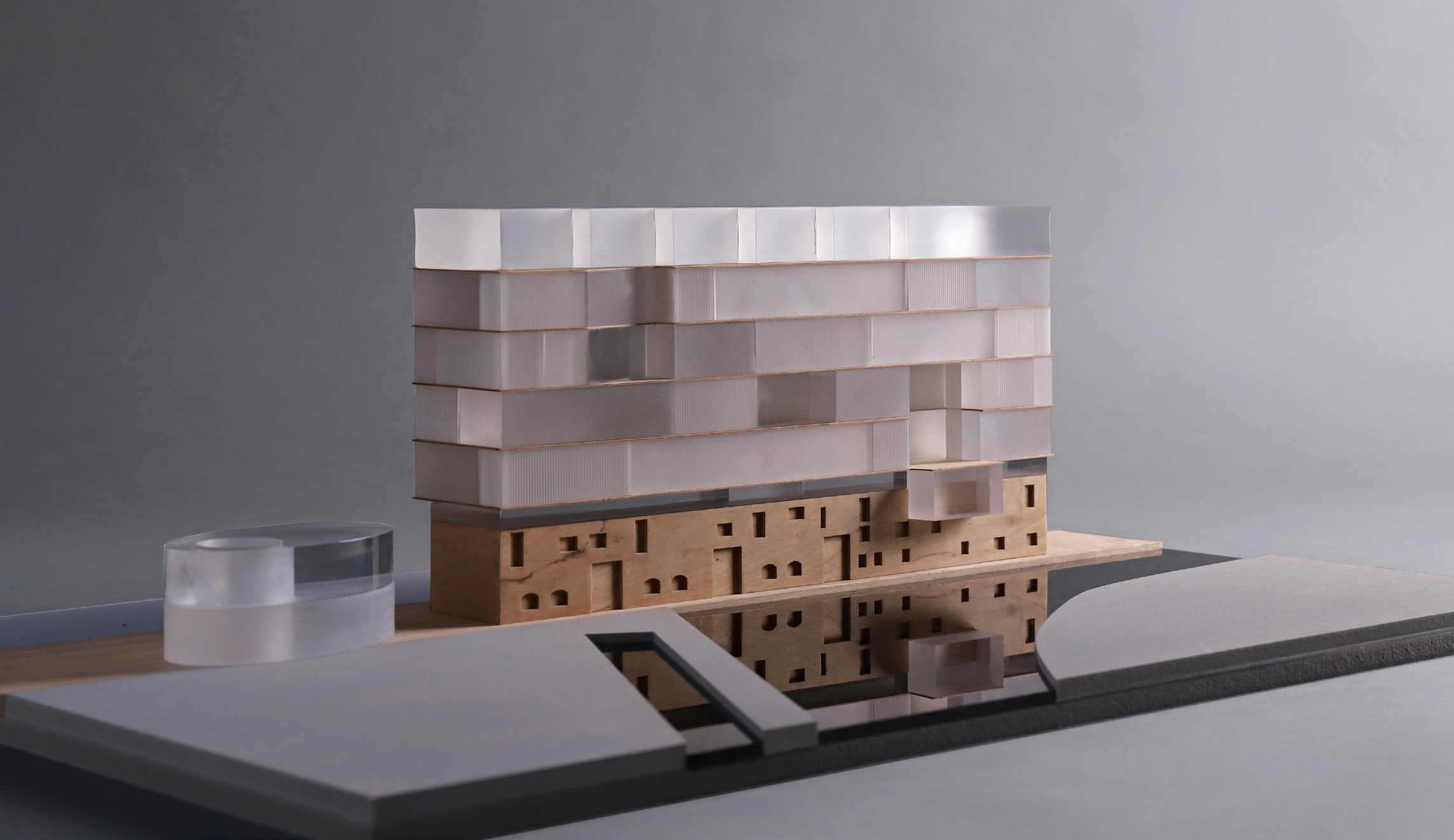
Concept model, north-east elevation, credit Stanton Williams
The new building will occupy a waterfront site overlooking the Regent’s Canal and will be the first new building to open at St Mary’s as part of ongoing plans for the site’s wider redevelopment under the government’s New Hospital Programme.
The design prioritises sustainability, with a water-source heat pump, PV panels, biodiverse landscaping and a low-carbon structure.
The roof of the Fleming Centre will integrate a landscaped terrace, while the area around the building will be enhanced to provide an improved public realm.
Its opening date is scheduled for 2028, marking 100 years since Alexander Fleming discovered penicillin at St Mary’s.
Deirdra Orteu, redevelopment clinical design director at Imperial College Healthcare NHS Trust, said: ‘The Fleming Centre will be dedicated to tackling antimicrobial resistance, one of the most pressing global health threats we face. It will also be a precursor to the wider redevelopment of the whole St Mary’s site, and bring new opportunities and investment to the area as part of Paddington Life Sciences.’
St Mary’s Hospital, a mix of historic and post-war buildings, is located immediately next to Paddington station.
Allies and Morrison was appointed in June last year to masterplan a redevelopment at the west London campus, which features a new hospital tower within a redeveloped life sciences campus.
Meanwhile, HOK has submitted plans to Westminster City Council for a 48,800m² clinical life sciences hub at St Mary’s Hospital, close to Renzo Piano’s Paddington Cube
The hospital redevelopment was one of the 40 new hospitals the previous government committed to rebuilding by 2030. Farrells drew up a masterplan for a new Paddington Health Campus on the site in the late 1990s, but the proposed PFI project was scrapped in 2005 after more than £15 million of public money had been spent on it. David Morley Architects later drew up a new masterplan but this project also never came to fruition.
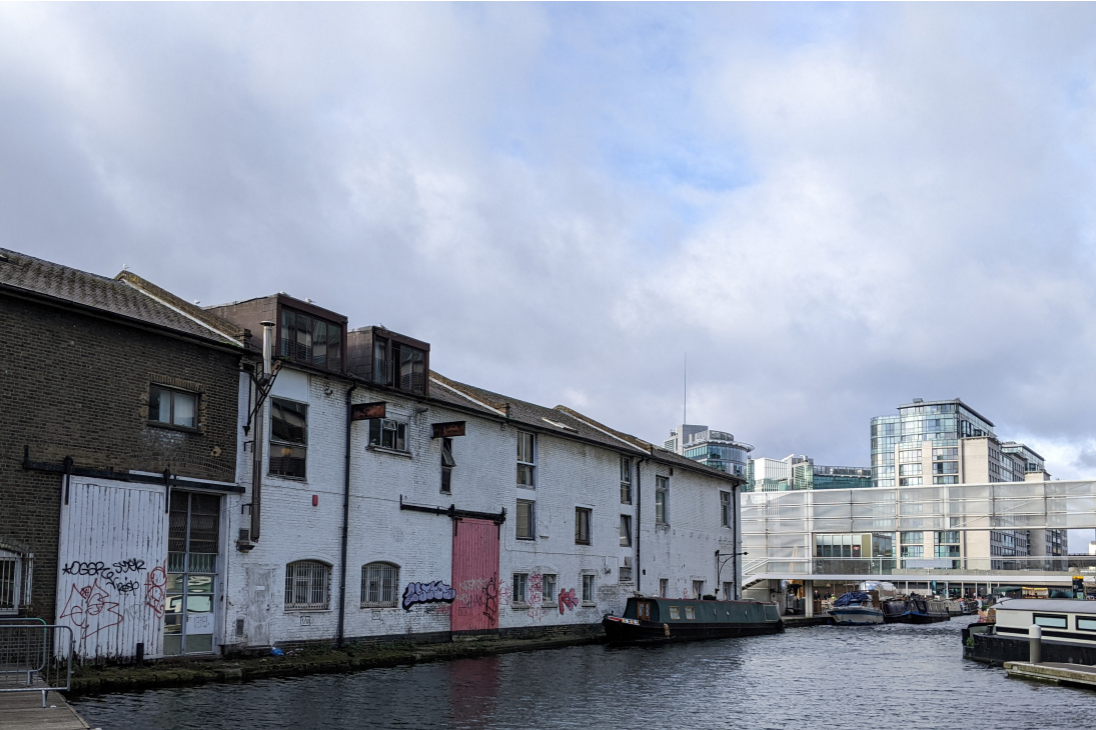
Contest site: Fleming Centre at St Mary’s Hospital, Paddington, image by © Imperial College Healthcare NHS Trust