
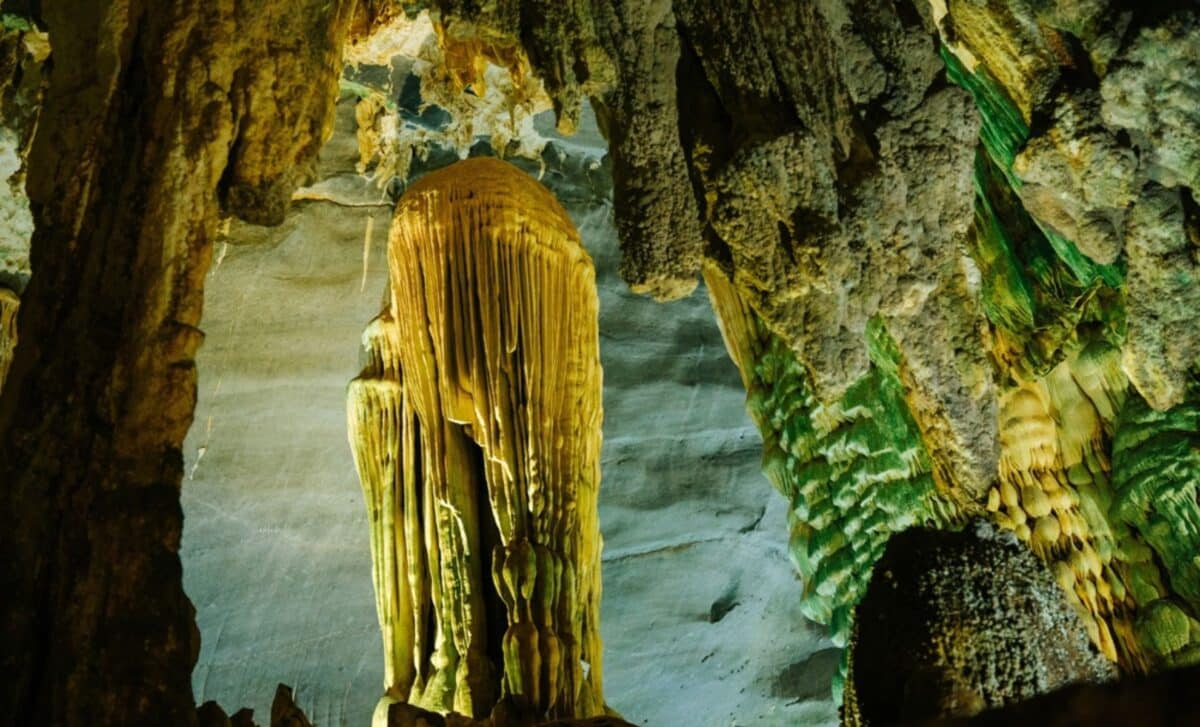
In a limestone cave system in Australia’s Northern Territory, more than 80 translucent crustaceans were found swimming in shallow underground pools. The specimens measured nearly six millimetres in length. Within their taxonomic group, that counts as enormous.
The species, named Megabathynella totemensis, carries up to 11 claws. Most of its relatives carry seven. The combination of size, claw count and other physical features was so distinct that researchers determined the organism could not be placed in any existing genus.
The discovery, published in the European Journal of Taxonomy, represents the first recorded instance of a Bathynellacea species in an Australian cave. It also raises questions about what happens to life forms that evolve in isolation underground, and why some of them grow larger than their surface relatives.
What Counts as Giant Underground
The study defines size thresholds explicitly. “Here, we consider species larger than 4 mm to be ‘giant‘ and those of 2.5-4 mm to be ‘large’,” the authors stated. At nearly six millimetres, M. totemensis clears the giant threshold by a wide margin.
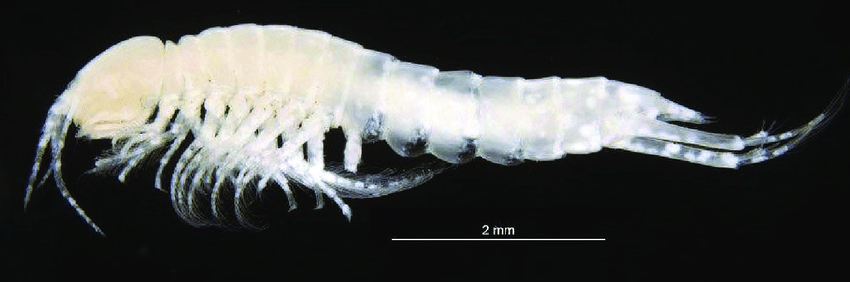 The image shows a preserved male specimen of Megabathynella totemensis. Credit: European Journal of Taxonomy
The genus name derives from the Greek megas, meaning big. The species name refers to Totem Pole Cave, where the organisms were collected. The location sits within the Pungalina karst area along the Gulf of Carpentaria, a limestone landscape that dissolves over time to form caves, sinkholes and underground waterways.
The specimens’ physical description includes segmented bodies, protruding teeth, enlarged spines along the inner wall of the thorax, and translucence consistent with adaptation to aphotic environments. Pigmentation is typically lost over generations in cave-dwelling organisms.
Fifty-Seven Percent More Claws than Most Relatives
The claw count drew particular attention from the research team. “The new genus has numerous claws, … up to 11, and only some species of Billibathynella come close, with 10 claws, but the most common state is seven claws,” according to the study.
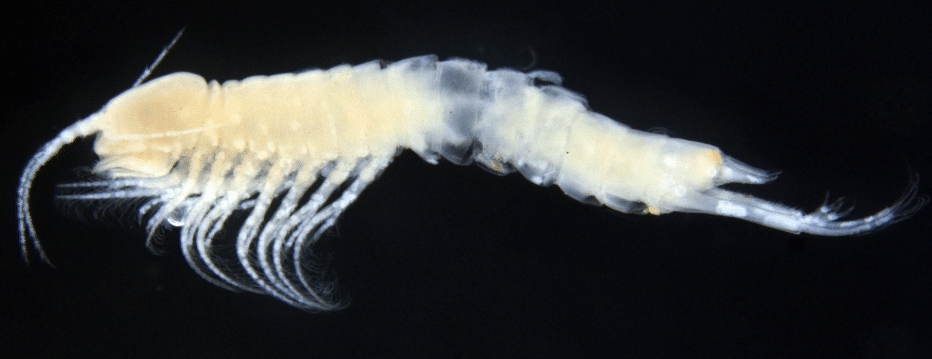 The image shows a preserved female specimen of Megabathynella totemensis. Credit: European Journal of Taxonomy
The difference represents roughly 57 percent more claws than most related species carry. This placed the organism outside existing taxonomic boundaries and warranted the establishment of a new genus, not merely a new species within an existing one.
The study documented additional distinctive features. The specimens have more than 12 articles on the antennules, each bearing a short, curved barbed seta from the fifth article onward. The exopod of the thoracopods contains up to 17 articles, each with a strong spine at the base of the external seta. The male thoracopod VIII, a reproductive appendage, differs from all previously described forms within the family Parabathynellidae.
Giant Crustaceans Are Turning up Everywhere
The discovery fits a broader geographical pattern. The authors noted that “as new species continue to be discovered and described in Australia and around the world, it is interesting to observe that large and giant species (of Bathynellacea) occur on every continent.”
Giant Bathynellacea have now been documented on every continent, according to the study. In Australia, previous discoveries of related species have occurred in groundwater systems in Western Australia and Queensland, but none in cave habitats.
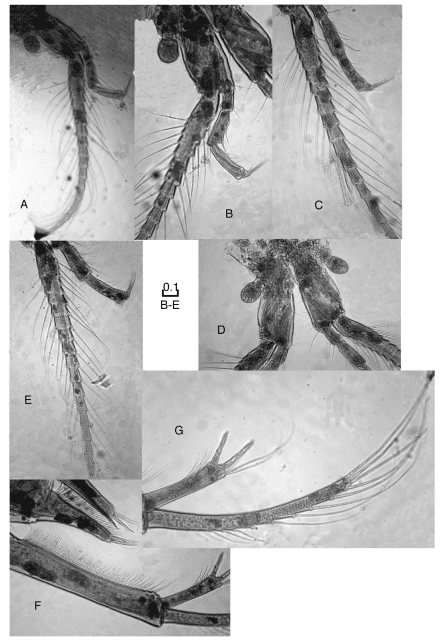 Microscope photographs of anatomical details from the holotype male of Megabathynella totemensis. A – Thoracopod I (ThI), showing segmented limb structure and setae. B – Thoracopod II (ThII) details, focusing on distal segments and fine setation. C – Thoracopod III (ThIII), highlighting articulation and hair-like setae. D – Basipod and epipod of Thoracopod V (ThV), showing proximal limb structures. E – Thoracopod V (ThV), elongated with visible terminal elements. F – Furca and uropod, posterior appendages used in species diagnosis. G – Exopod and endopod of the uropod, showing branching structure and terminal spines. Credit: European Journal of Taxonomy
The researchers expect additional finds. “It is likely that numerous new species will be discovered in these and other countries with further survey of prospective habitats, as is the case in Australia,” they stated.
Large portions of Australia’s cave systems and groundwater aquifers remain unsurveyed for microscopic crustaceans. Karst environments are expected to yield additional undescribed species as sampling efforts expand.
What Scientists Still Do Not Understand
The factors driving larger body size and increased morphological complexity in subterranean crustaceans remain unconfirmed. The authors wrote that “future studies could explore the factors that lead to this unusually large size and proliferation of articles and setae observed.”
The specimens were collected from shallow pools in Totem Pole Cave. More than 80 individuals were observed. The researchers noted that the organisms were “hiding in plain sight” in an area previously unsurveyed for such fauna.